
Destination Guide
The ultimate Northern Europe
cruise guide.
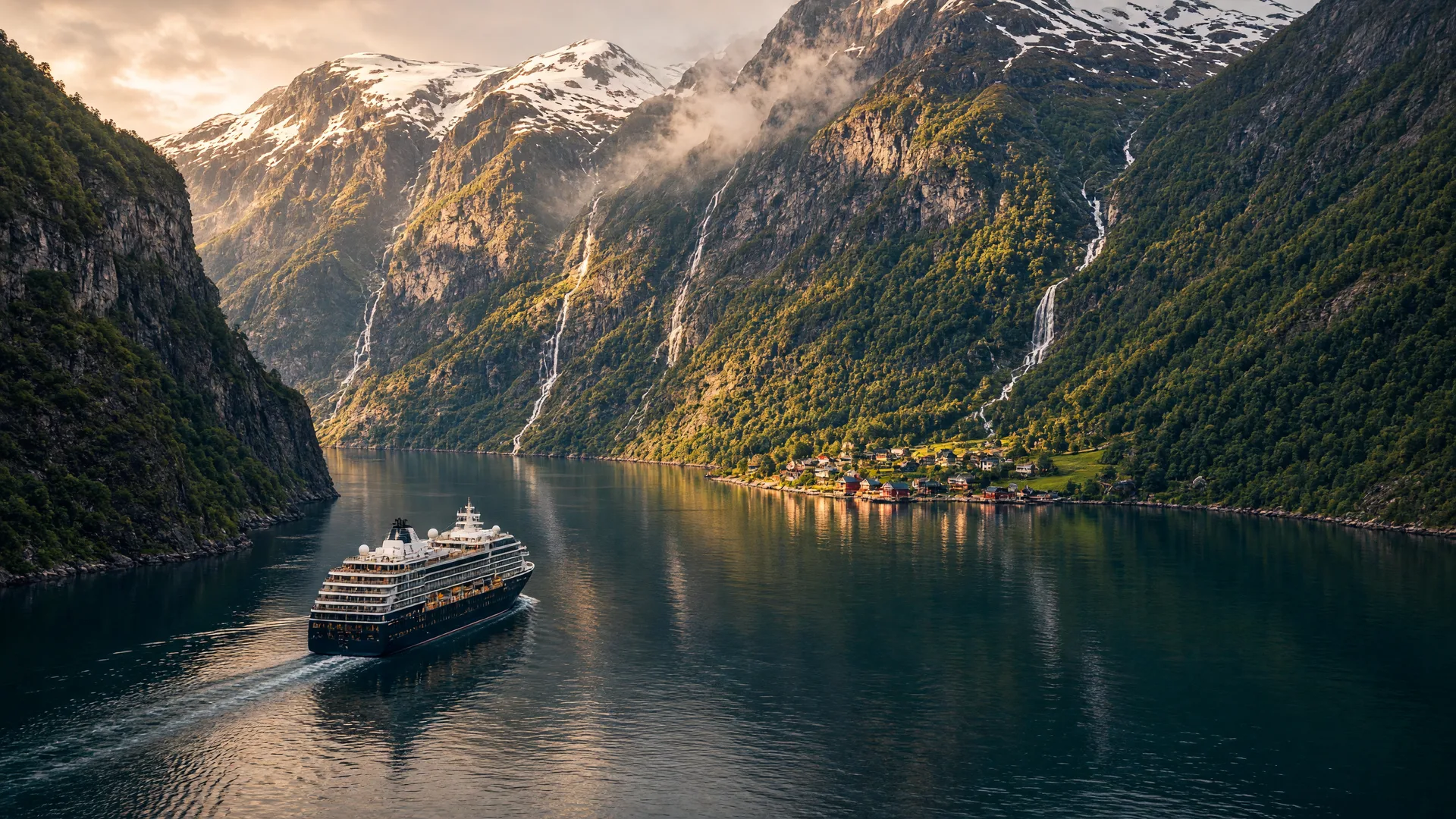
The world's most dramatic coastline, and the cities above it.
Northern Europe is where ocean cruising meets its grandest scenery: the Norwegian fjords, the Baltic capitals, Iceland's volcanic shores, and the historic harbors of the British Isles, all connected by short sea legs and long summer light.
The same region also holds Europe's most intimate river cruising: the Elbe, the Rhine, the Main, and the Moselle, where small ships dock in the center of each city. This guide covers both worlds, the ocean itineraries and the river routes, the lines we book, and when to go.
Best time to visit
Long light, cool air, and the aurora as a bonus.
The Northern Europe season runs from roughly May through September, when fjord, Baltic, and British Isles itineraries sail almost daily. June and July bring the midnight sun north of the Arctic Circle, with daylight that barely fades.
May and September offer the best balance: long light, fewer ships in port, and lower fares than the peak weeks. August stays warm and lively, especially in the Baltic capitals.
From late September into early spring, dark, clear nights above the Arctic Circle light up with the aurora, which is why autumn sailings to Norway and Iceland pair fjords and volcanoes with the northern lights. Christmas-market river cruises on the Rhine extend the season into December.
Cruise itineraries
Five ocean routes, and two great river corridors.
Ocean sailings divide into the fjords, the Baltic capitals, Iceland, and the British Isles, plus the Norwegian Coastal Express. On the rivers, the Elbe and the Rhine-Main-Moselle network anchor the itineraries. Most sailings run 7 to 15 nights.
01
The Norwegian Fjords
The classic Northern Europe cruise
Round-trip fjord itineraries sail from Southampton and Copenhagen through the summer, threading the UNESCO-listed Geirangerfjord and Nærøyfjord and calling at Bergen, Flåm, Olden, and Stavanger. Most run 7 to 14 nights, with full days of sailing between sheer cliffs and a new harbor town each evening.
- Best for
- First-time cruisers to the north who want the postcard fjords, waterfalls, and storybook villages.
02
The Baltic Capitals
Best for grand cities and medieval old towns
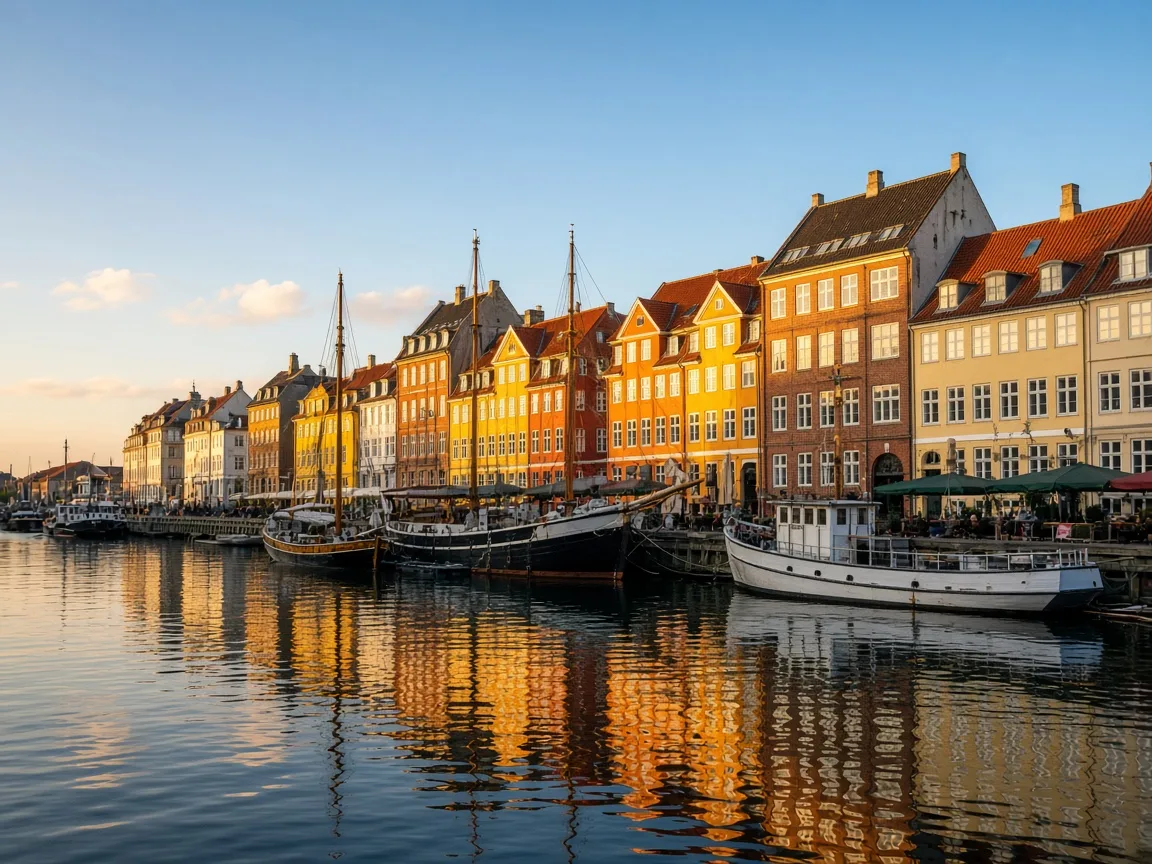
Baltic loops connect Copenhagen, Stockholm, Helsinki, and Tallinn with Riga, Visby, Gdańsk, and Klaipėda, often in 7 to 15 nights. Ships dock in the heart of each capital, so the old towns of Tallinn and Visby, the Vasa in Stockholm, and Copenhagen's Nyhavn are all walkable from the gangway.
- Best for
- Travelers who love architecture, museums, and the mix of Scandinavian and Hanseatic culture.
03
Iceland & the North Atlantic
Best for landscapes, whales, and the aurora
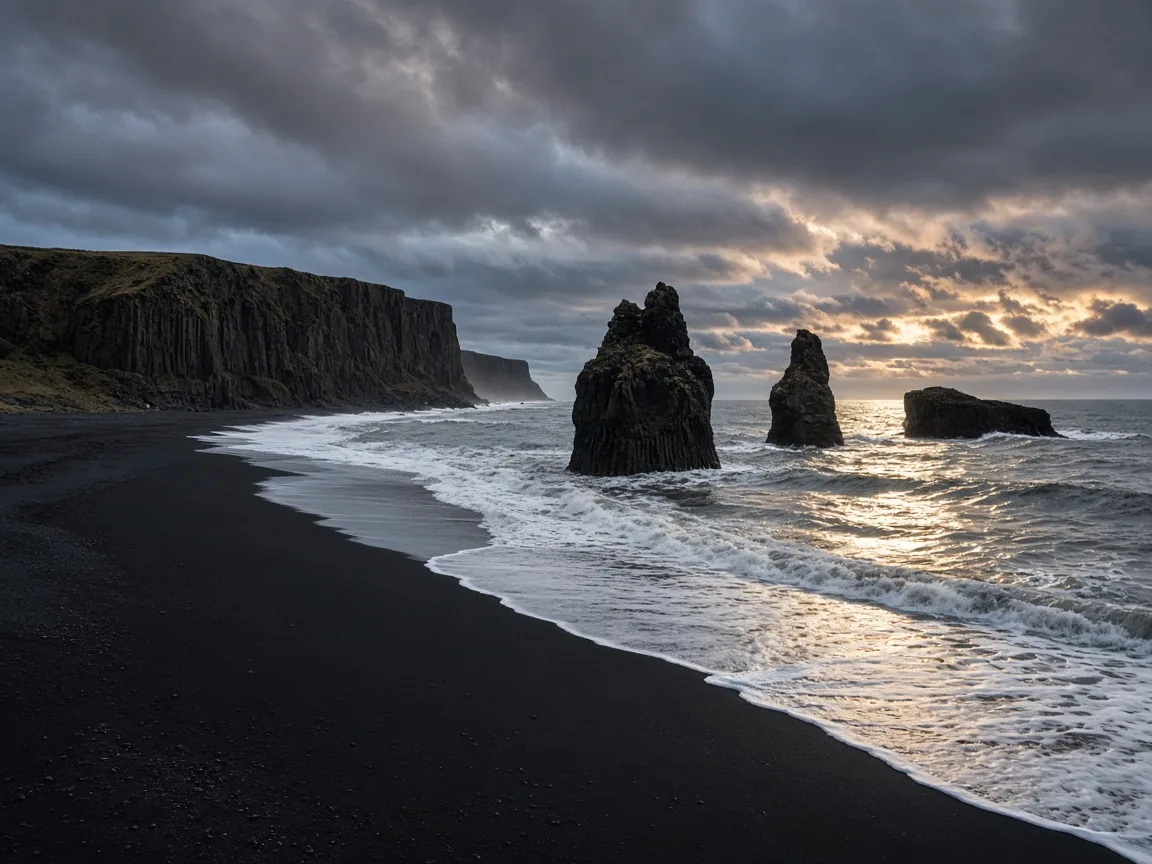
Iceland calls anchor at Reykjavík, Akureyri, and Ísafjörður on sailings that often pair the island with the Norwegian coast or the British Isles. Summer voyages run under the midnight sun; late-season sailings hunt the northern lights from the harbor.
- Best for
- Adventurous travelers drawn to volcanoes, glaciers, black-sand beaches, and long northern light.
04
The British Isles
Best for history, castles, and Celtic culture
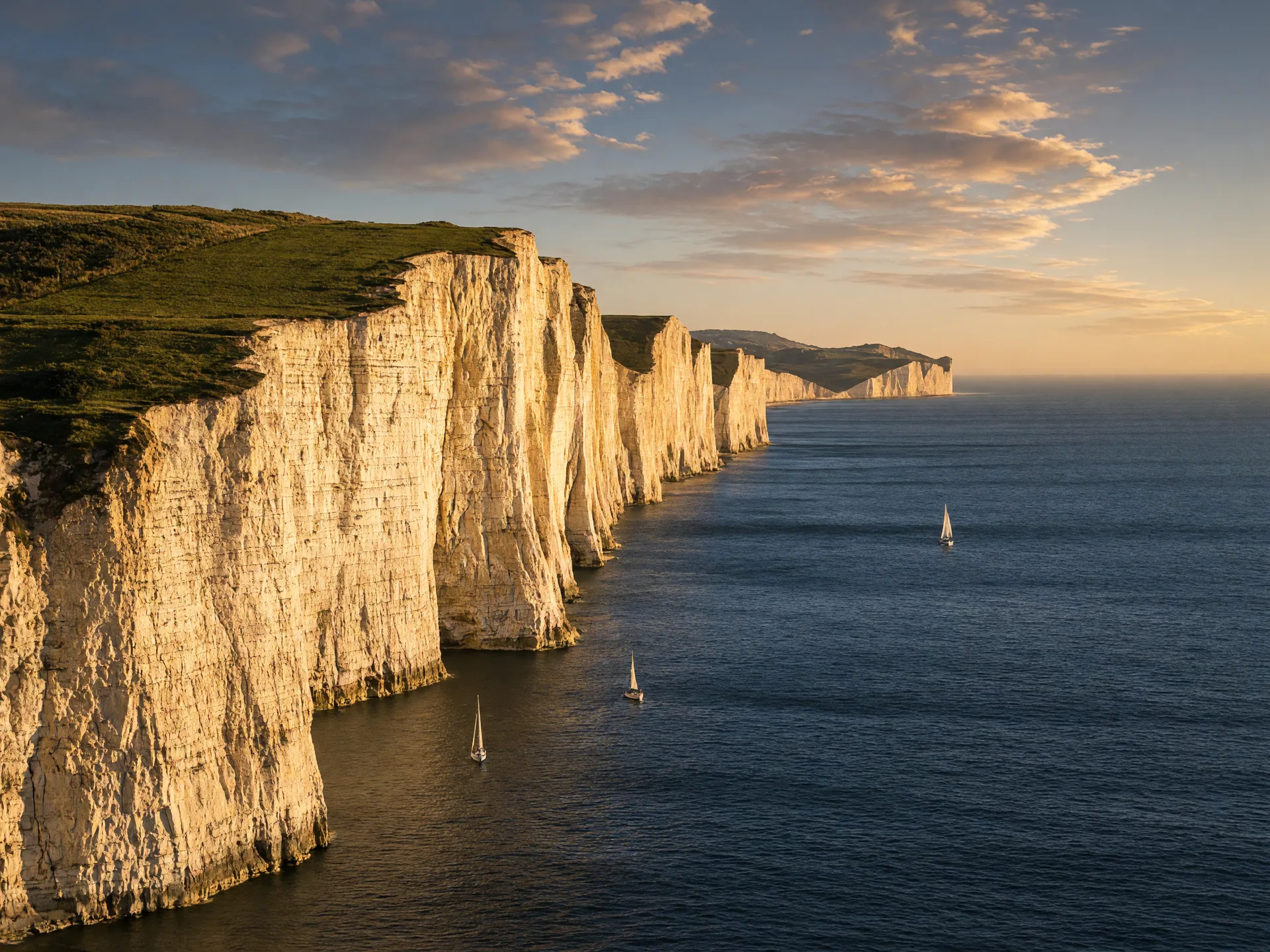
British Isles round trips from London and Southampton link the white cliffs of Dover, Edinburgh, Belfast, Dublin, and Liverpool with the Viking-era harbors of Kirkwall and Lerwick, often with a fjord call in Norway as the northern turn.
- Best for
- Cruisers who want Edinburgh's castle, Dublin's pubs, Liverpool's docks, and the islands of Orkney and Shetland in one voyage.
05
The Norwegian Coastal Express
The original voyage up the fjord coast
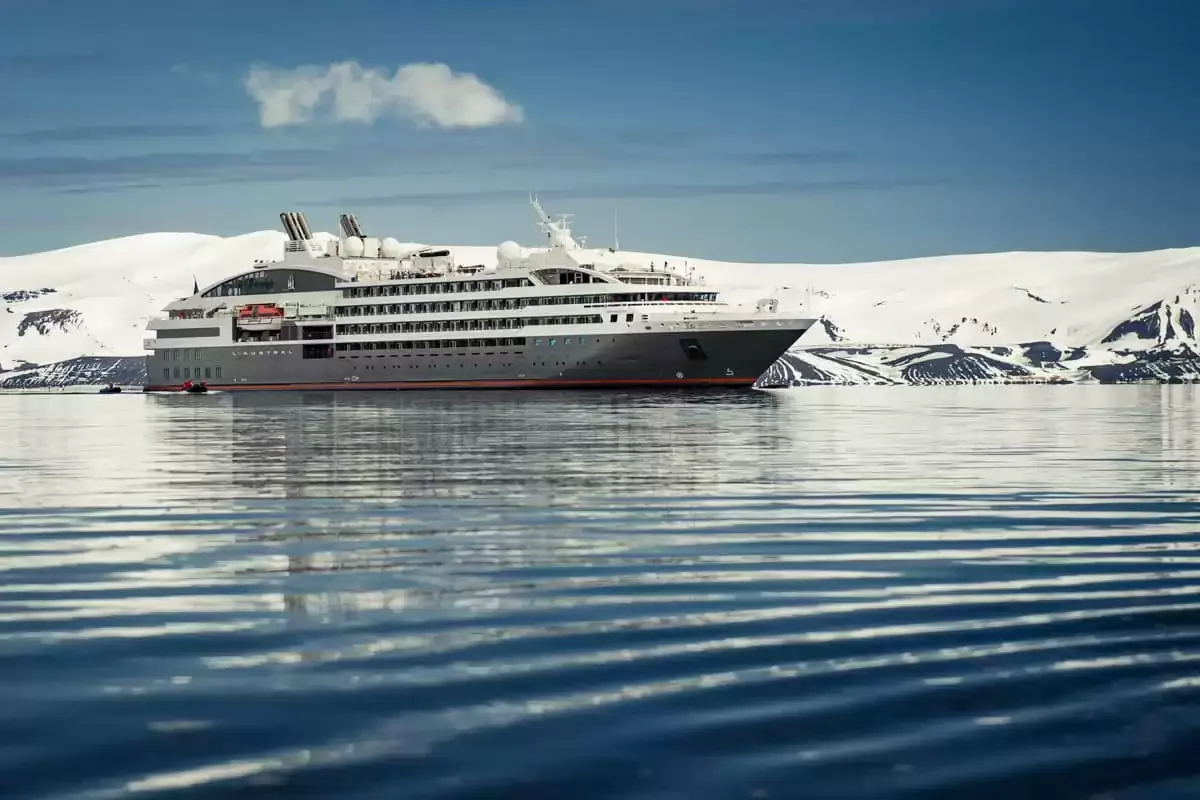
Hurtigruten's Coastal Express links Bergen to Kirkenes in about seven days northbound, calling at more than thirty ports, among them Ålesund, Trondheim, the Lofoten islands, Tromsø, and Honningsvåg at the North Cape. Seven ships rotate the route, so the vessel you sail depends on the departure date.
- Best for
- Travelers who want the real Norway: working ports, small towns, and the Arctic beyond the tourist trail.
06
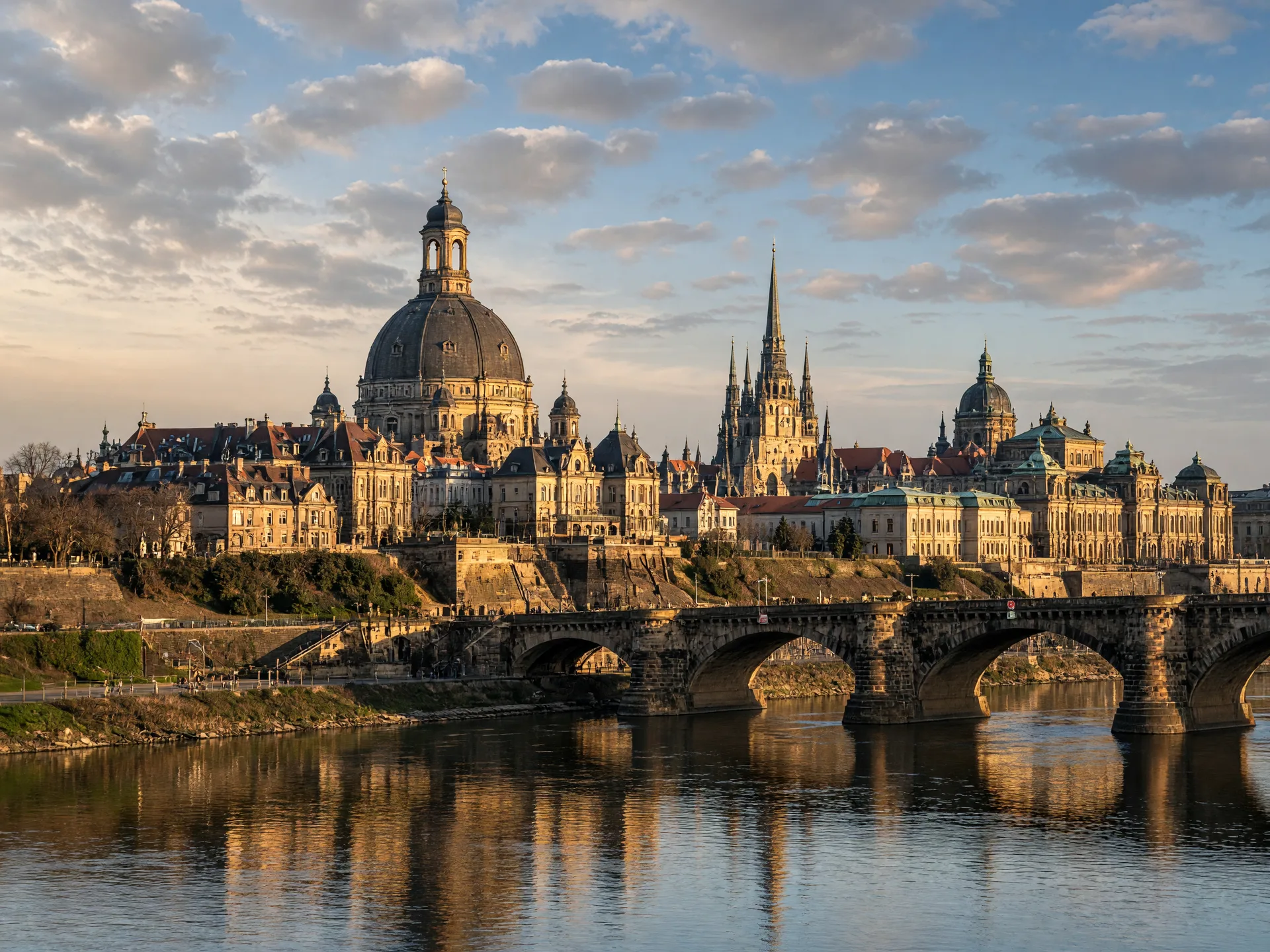
The Elbe: Berlin to Prague
A quieter, more intimate river
Viking's Elegant Elbe cruisetour sails between Berlin and Prague in about 10 nights, with the river segment running from Berlin past Potsdam, Wittenberg, Meissen, Dresden, and the sandstone towers of Saxon Switzerland to Decin, paired with hotel nights in Berlin and Prague.
- Best for
- Travelers who want Dresden, Saxon Switzerland, and the great cities of the north without the big-ship crowds.
07
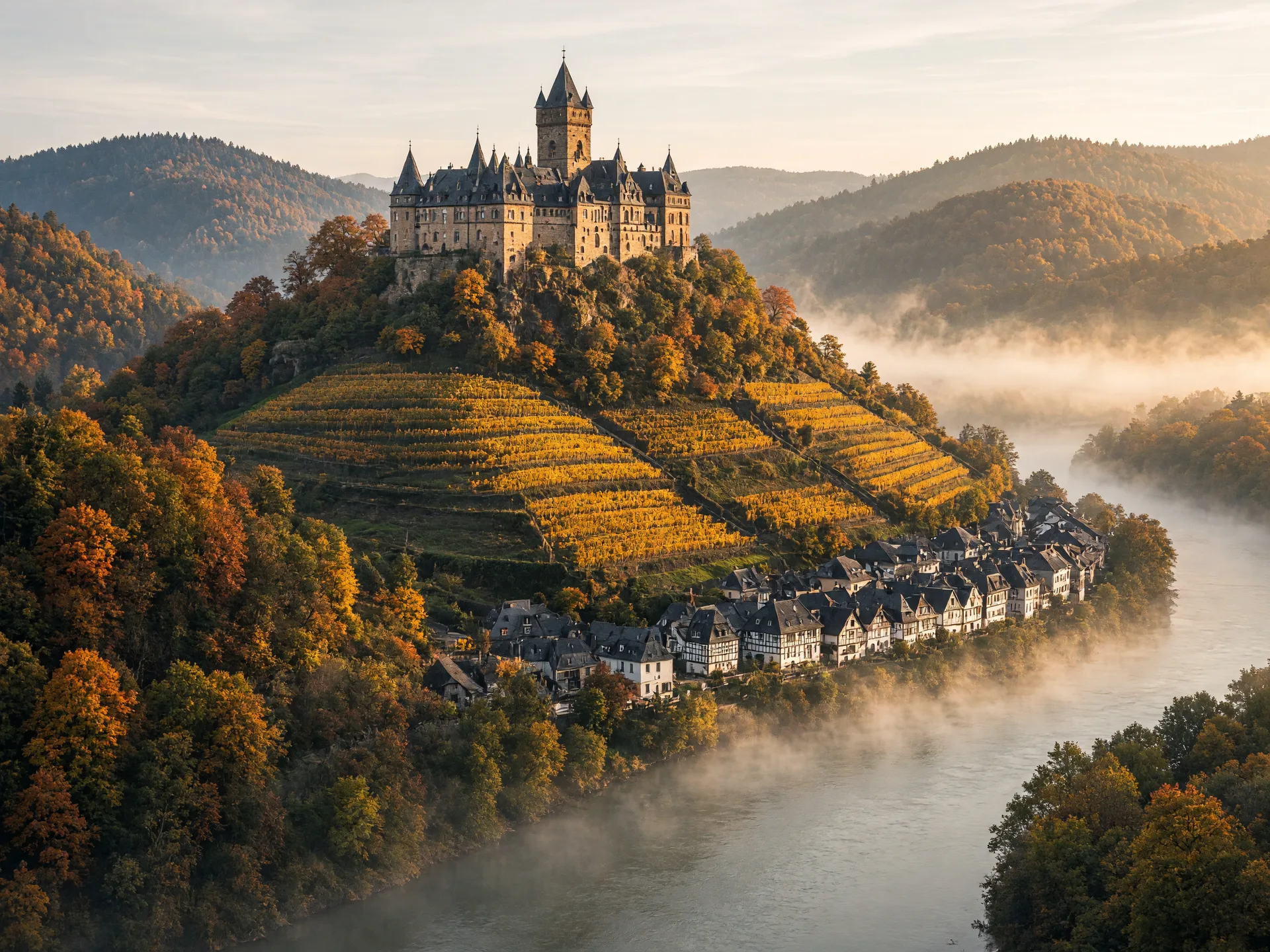
The Rhine, Main & Moselle
Castles, vineyards, and storybook scenery
The Rhine links the Netherlands, Germany, France, and Switzerland, with the Middle Rhine gorge between Koblenz and Rüdesheim as its showpiece. Avalon and Emerald add the Moselle's steep vineyards and half-timbered villages at Cochem, Bernkastel-Kues, and Trier, and the Rhine-Main-Danube corridor carries ships up the Main through Würzburg, Bamberg, and Nuremberg.
- Best for
- Travelers who want the Middle Rhine's castle-dotted gorges and the wine country of the Moselle and the Main.
Elbe
Germany's northeastern river from Berlin past Dresden and the sandstone peaks of Saxon Switzerland, sailed as a cruisetour that finishes by road in Prague.
Rhine
The great corridor from Amsterdam to Basel, past Cologne's cathedral, the Middle Rhine's castles, and the wine terraces of Rüdesheim.
Main
The Franconian river that links the Rhine to the Danube through Würzburg, Bamberg, and the market towns of the Steigerwald.
Moselle
A slower, greener branch of the river network, winding through some of Germany's steepest vineyards and fairy-tale towns to Roman Trier.
Published itineraries
The region's published itineraries, line by line.
The route cards above give a region-by-region view. Press a cruise line tile to open that line's Northern Europe page, where its published itineraries are listed with the ships, dates and years each line publishes, and a route map with pins on every itinerary whose ports are named. Itineraries already described in the route cards or the partner listings above keep their original entries there.
Greenland from North America homeports
Greenland in 2027, without crossing the Atlantic to start.
The 2027 sailings below all call at Greenland ports but begin and end at North American home ports: New York, Boston, Toronto, Halifax or St. John's. Each entry is verified against the line's official 2027 program; anything we could not confirm from official sources reads "Not published". The same voyages also appear on each line's Northern Europe page.
HX Expeditions
- Grand Greenland: The Icy Giants of Disko Bay11 days, New York round-trip with round-trip flights to Nuuk, aboard MS Fridtjof Nansen, June-July 2027 departures (Nuuk embarkation June 14, June 24 and July 4, 2027)Sea days: Not published
- Grand Greenland: Mythical Lands of the North16 days, New York round-trip flying to Nuuk (High Arctic / Thule region), aboard MS Fridtjof Nansen, July 2027 departures (July 14 and July 28)Sea days: Not published
- Discovering Greenland: From Reykjavik to Nuuk13 days, Reykjavik to New York via Nuuk, aboard MS Fridtjof Nansen, June 27, 2027 departure with the New York gatewaySea days: Not published
- Greenland, Labrador and Newfoundland: Encounters at the Edge17 days, New York to St. John's (Newfoundland), aboard MS Roald Amundsen, September 19, 2027Sea days: Not published
Holland America Line
- Legendary Voyage of the Vikings35 nights, Boston round-trip, aboard ms Volendam, July 17-August 21, 2027: Greenland, Iceland, Norway, the Netherlands and IrelandSea days: 13 at sea, with scenic cruising on 4 days (Isafjardardjup, Eyjafjordur, Hardangerfjord and Prince Christian Sound)
- 21-Day Cultural Crossing with Icelandic Fjords and Greenland21 days, Amsterdam to Boston, aboard ms Zuiderdam, August 14, 2027Sea days: Not published
- 28-Day Legendary Canada, Greenland and Iceland28 days from Boston, aboard ms Volendam; the verified departure sailed June 20, 2026. 2027 departure: Not publishedSea days: Not published
- 2027 Boston homeport seasonms Volendam homeports in Boston in 2027: Voyage of the Vikings (July 17) plus the Canada and New England departures (May 29 and September 1, 2027)Sea days: Not published
Royal Caribbean International
- Iceland and Greenland15 nights, Southampton to Boston, aboard Brilliance of the Seas: Glasgow (Greenock), Reykjavik, Qaqortoq, Nuuk, Sydney (Nova Scotia), Halifax and Boston. 2027 sailing dates and a Boston-based 2027 season for this ship: Not publishedSea days: 7 (Days 2, 4, 7, 9, 11, 12 and 15 at sea)
Viking
- Canada and Greenland Explorer15 days, Toronto to Nuuk, aboard Viking Octantis or Viking Polaris, departures June 2027 through July 2029 (the reverse Nuuk to Toronto also sails)Sea days: Not published
Silversea Cruises
- Nuuk (Godthab) to Halifax14 nights, September 17-October 1, 2027, aboard Silver Wind, Voyage WI270917014: Evighedsfjord, Sisimiut, Iqaluit, Lady Franklin Island, Monumental Island, the Lower Savage Islands, Torngat Mountains, Hopedale, Gannett Island, Battle Harbour, Woody Point and HalifaxSea days: Not published
Explora Journeys
- Greenland and Iceland31 nights, Hamburg to New York, aboard EXPLORA IV, departing August 25, 2027; officially titled A Journey Through Greenlandic Villages & North American Icons, calling at Iceland and Greenland before crossing to Canada and the United StatesSea days: Not published
Reverse itineraries
Can you sail the same route the other way?
We deep-scanned the official Northern Europe programs of every cruise line we work with, ocean and river, looking for reverse itineraries: the same route sailed in the opposite direction, such as Berlin to Prague versus Prague to Berlin, or Amsterdam to Basel versus Basel to Amsterdam. Verified pairings are listed by line below, each with its forward version. Anything we could not confirm from official sources reads Not published.
Ocean lines
Azamara
Not publishedNo same-route reverse sailing was confirmed from Azamara's official Northern Europe program.
Celebrity Cruises
Not publishedCelebrity's Northern Europe season runs round-trip loops from Southampton and Amsterdam; no reversed port order was confirmed.
Cunard
Not publishedNo identical itinerary sailed in both directions was confirmed for Cunard's 2026-27 Northern Europe program.
Explora Journeys
Verified- Southampton to Copenhagen: forward Southampton to Copenhagen and reverse Copenhagen to Southampton (EXPLORA III sails both directions of this Northern Europe corridor in 2026-27).
Holland America Line
Not publishedHolland America's Northern Europe sailings are round-trip loops from Rotterdam and Dover; no reversed port order was confirmed.
MSC Cruises
Not publishedMSC repeats its Norwegian fjord loop from different homeports, but no same-route reverse sailing was confirmed.
Norwegian Cruise Line
Verified- Baltic: forward Copenhagen to Helsinki and reverse Helsinki to Copenhagen (Norwegian Sun, 7-night Baltic: Germany, Sweden & Poland, 2026; Norwegian Jewel, 9-night Baltic, 2027).
- Iceland, Scotland & Norway: forward Southampton (London) to Reykjavik and reverse Reykjavik to Southampton (Norwegian Star, 2026).
Oceania Cruises
Not publishedNo same-route reverse sailing was confirmed from Oceania's official Northern Europe program.
Ponant
Verified- Norwegian Fjords: forward Fredrikstad to Bergen and reverse Bergen to Fredrikstad (7 nights, Le Lapérouse).
- Scottish Isles & Norwegian Fjords: forward Glasgow to Bergen and reverse Bergen to Glasgow (7-8 nights, Le Champlain and Le Lapérouse).
- Baltic to the North Sea: forward Helsinki to Bergen and reverse Bergen to Helsinki (10 nights, Le Commandant Charcot, 2026-27).
Princess Cruises
Not publishedPrincess's British Isles and fjord sailings repeat in a single port order; no reversed version was confirmed.
Regent Seven Seas
Not publishedNo same-route reverse sailing was confirmed from Regent's official Northern Europe program.
Royal Caribbean
Not publishedRoyal Caribbean's Norwegian fjord loops each keep a single port order; no reverse pairing was confirmed.
Seabourn
Not publishedNo same-route reverse sailing was confirmed from Seabourn's official Northern Europe program.
Silversea
Verified- Greenland: forward Reykjavik to Nuuk (Godthab) and reverse Nuuk to Reykjavik aboard Silver Wind. The 13-day southbound voyage WI260618013 sails June 2026; the 10-day northbound reverse WI270709010 sails July 2027, both with the full published port list.
Viking
Verified- Viking Homelands: forward Stockholm to Bergen and reverse Bergen to Stockholm, the classic one-way ocean pairing offered in both directions.
Windstar
Verified- Endless Days in Norway: forward Copenhagen to Leith (Edinburgh) and reverse Leith (Edinburgh) to Copenhagen, the same fjord circuit sailed in opposite order (Star Legend and Star Explorer, 2026-27).
River lines
AmaWaterways
Verified- Rhine: forward Amsterdam to Basel and reverse Basel to Amsterdam (Captivating Rhine and Grand Rhine & Dutch Canals sail southbound; Enchanting Rhine sails northbound).
Elbe: Not published. AmaWaterways does not currently operate a ship on the Elbe, so the Berlin-to-Prague reverse pairing could not be verified from official sources.
Avalon Waterways
Verified- Romantic Rhine: forward Amsterdam to Basel (Southbound) and reverse Basel to Amsterdam (Northbound).
Elbe: Not published. Avalon's official program does not include Elbe cruises.
Emerald Cruises
Verified- Jewels of the Rhine: forward Amsterdam to Basel and reverse Basel to Amsterdam.
Elbe: Not published. Emerald's official program does not include Elbe cruises.
Scenic
Verified- Rhine Highlights: forward Amsterdam to Basel and reverse Basel to Amsterdam (alternating departures).
Elbe: Not published. Scenic's official program does not include Elbe cruises.
Viking
Verified- Elegant Elbe: forward Berlin to Prague and reverse Prague to Berlin.
- Rhine Getaway: forward Amsterdam to Basel and reverse Basel to Amsterdam.
Celebrity River Cruises
Verified- Rhine, inaugural 2027 season: forward Amsterdam to Basel and reverse Basel to Amsterdam (7-night sailings).
Elbe, Main and Moselle: Not published. The inaugural 2027 program covers the Rhine and Danube only, so no reverse pairing on those rivers could be verified.
Not published means we could not confirm a reverse sailing from the line's official program. We never show a reverse itinerary we cannot verify.
Cruise lines
22 lines anchor the Northern Europe season.
The Northern Europe ocean season draws nearly every major line, from luxury and premium ships to contemporary and small expedition vessels. The choice comes down to ship size, onboard style, and price point. Open a card for that line's ships, routes, and maps, or explore the interactive tool below to compare them port by port. Ship capacities and full schedules beyond the verified seasons: Not published.

Azamara
Premium
Norway Intensive cruises to the North Cape plus Scandinavia, Iceland and the Faroe Islands on Azamara Journey and Azamara Quest.
Ships, routes, and maps
Carnival Cruise Line
Carnival Miracle's Northern Europe summer from Dover: 10-night Northern Europe, 12-night Scandinavia & Baltic and 9-night British Isles sailings.
Ships, routes, and maps
Celebrity Cruises
Premium
Edge-class sailings from Southampton and Amsterdam with Norwegian Fjords and Best of Scandinavia itineraries aboard Celebrity Apex.
Ships, routes, and maps
Cunard Line
Premium
Queen Anne, Queen Victoria and Queen Elizabeth sail Norway, the Baltic and Northern Europe from Southampton and Hamburg.
Ships, routes, and mapsExplora Journeys
Luxury
EXPLORA III and EXPLORA IV sail summer Northern Europe seasons from Southampton and Copenhagen through the fjords, the Baltic, and Iceland and Greenland.
Ships, routes, and maps
Holland America Line
Premium
Rotterdam and Nieuw Statendam sail seven-day fjord, Baltic and Iceland routes from Rotterdam and Dover.
Ships, routes, and maps
Hurtigruten
Small Ship & Expedition
The Norwegian Coastal Express from Bergen to Kirkenes calling at more than thirty ports, plus expedition sailings beyond the Arctic Circle.
Ships, routes, and mapsHX Expeditions
Expedition sailings to Svalbard, Greenland and Iceland from Reykjavik, Nuuk and New York aboard MS Fram, MS Spitsbergen, MS Fridtjof Nansen and MS Roald Amundsen.
Ships, routes, and maps
Lindblad Expeditions
National Geographic Expeditions charters through Scotland's wild isles, Iceland, the Faroes and the Nordic capitals.
Ships, routes, and maps
MSC Cruises
Contemporary
Norwegian fjord seasons from Kiel, Warnemünde, Hamburg and Southampton on MSC Euribia, Magnifica and Preziosa.
Ships, routes, and maps
Norwegian Cruise Line
Contemporary
Fjord round-trips and Baltic capital loops from Southampton, Copenhagen and Reykjavik aboard Norwegian Star, Sun and Jewel.
Ships, routes, and maps
Oceania Cruises
Luxury
Fjordland, Iceland, British Isles and Baltic voyages on Oceania Insignia, Marina and Vista, from 7 to 18 days.
Ships, routes, and maps
Ponant
Small Ship & Expedition
Norwegian fjords, the Scottish isles and a Baltic-to-North Sea crossing on Le Lapérouse, Le Champlain and Le Commandant Charcot.
Ships, routes, and maps
Princess Cruises
Premium
Resort-style European seasons from Southampton, with Norwegian Fjords and Scandinavia aboard Majestic Princess and British Isles sailings on Sky Princess.
Ships, routes, and maps
Regent Seven Seas Cruises
Luxury
28 Northern Europe voyages in 2026-27 on Seven Seas Grandeur, Navigator and Voyager, from the Norwegian fjords to Iceland and the Baltics.
Ships, routes, and maps
Royal Caribbean International
Contemporary
Liberty of the Seas sails Norwegian Fjords, Norway and Northern Europe circuits from Southampton.
Ships, routes, and maps
Seabourn
Luxury
Seabourn Ovation sails fjord voyages to the North Cape plus British Isles and Iceland cruises, while Seabourn Venture runs Arctic expeditions.
Ships, routes, and maps
Silversea Cruises
Luxury
Silver Spirit, Silver Dawn and Silver Wind cover the northern coastline and capitals, with expedition sailings on Silver Endeavour and Silver Cloud.
Ships, routes, and mapsSwan Hellenic
Small Ship & Expedition
Discovery-style expedition cruises around Svalbard, the Norwegian Arctic, Iceland, Greenland and the British Isles aboard SH Diana and SH Vega.
Ships, routes, and maps
Viking Ocean Cruises
Premium
Destination-led ocean voyages on the midnight sun, the Baltic capitals and the British Isles aboard Viking Mira and Viking Saturn.
Ships, routes, and maps
Virgin Voyages
Adults-only sailings through the Norwegian fjords, Scandinavia and the Baltic aboard Valiant Lady, with examples published across 2027-2028.
Ships, routes, and maps
Windstar Cruises
Small Ship & Expedition
Endless Days in Norway cruises the fjords with a one-way Copenhagen to Leith (Edinburgh) routing on Star Legend and Star Explorer.
Ships, routes, and mapsRiver partners
On the rivers, we book the same six partners as our European river guide: AmaWaterways, Avalon Waterways, Emerald Waterways, Scenic Luxury Cruises and Tours, Viking, and Celebrity River Cruises.
AmaWaterways
Avalon Waterways
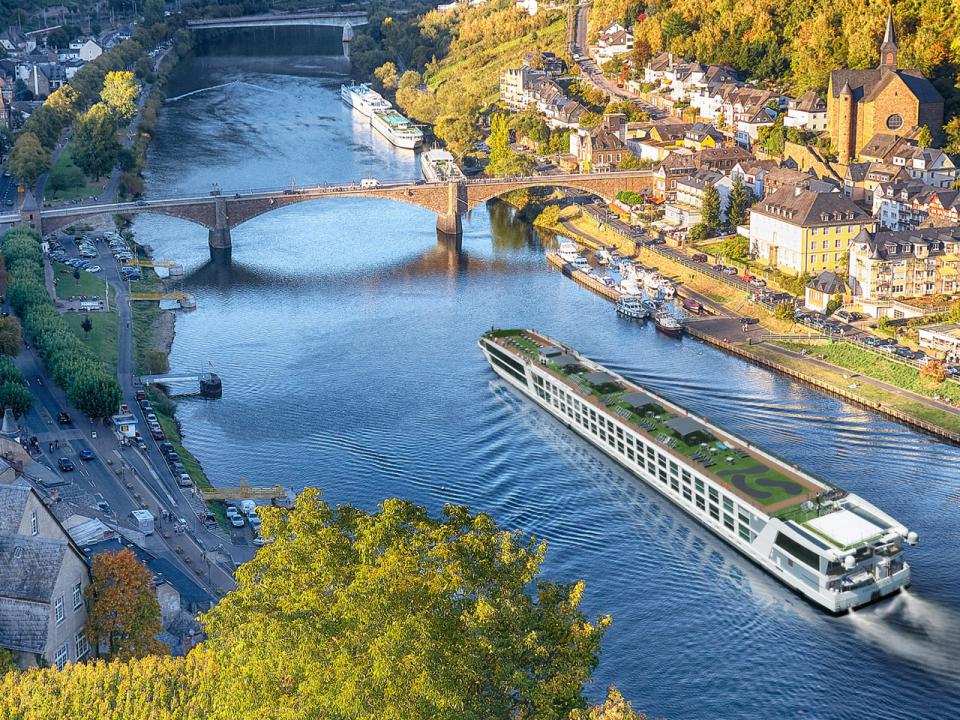
Emerald Waterways
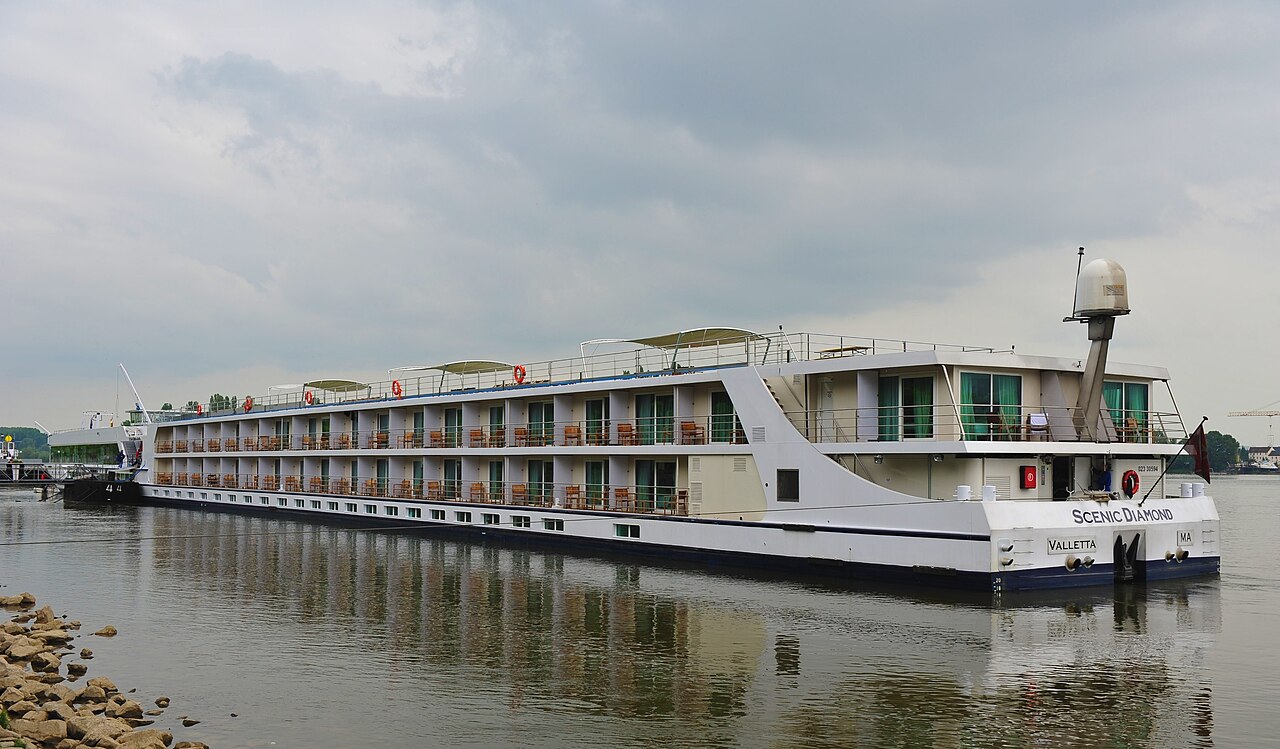
Scenic Luxury Cruises and Tours
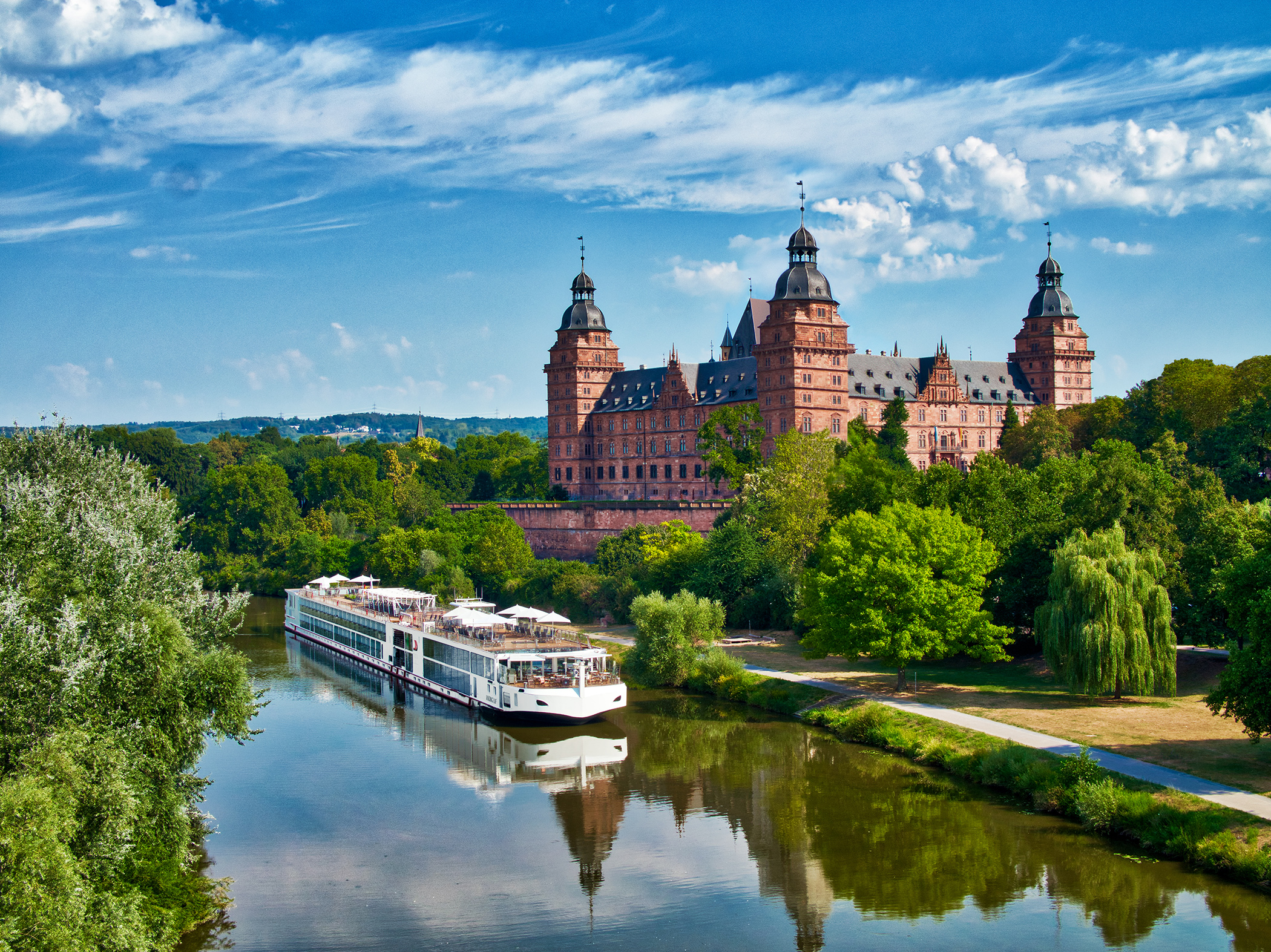
Viking
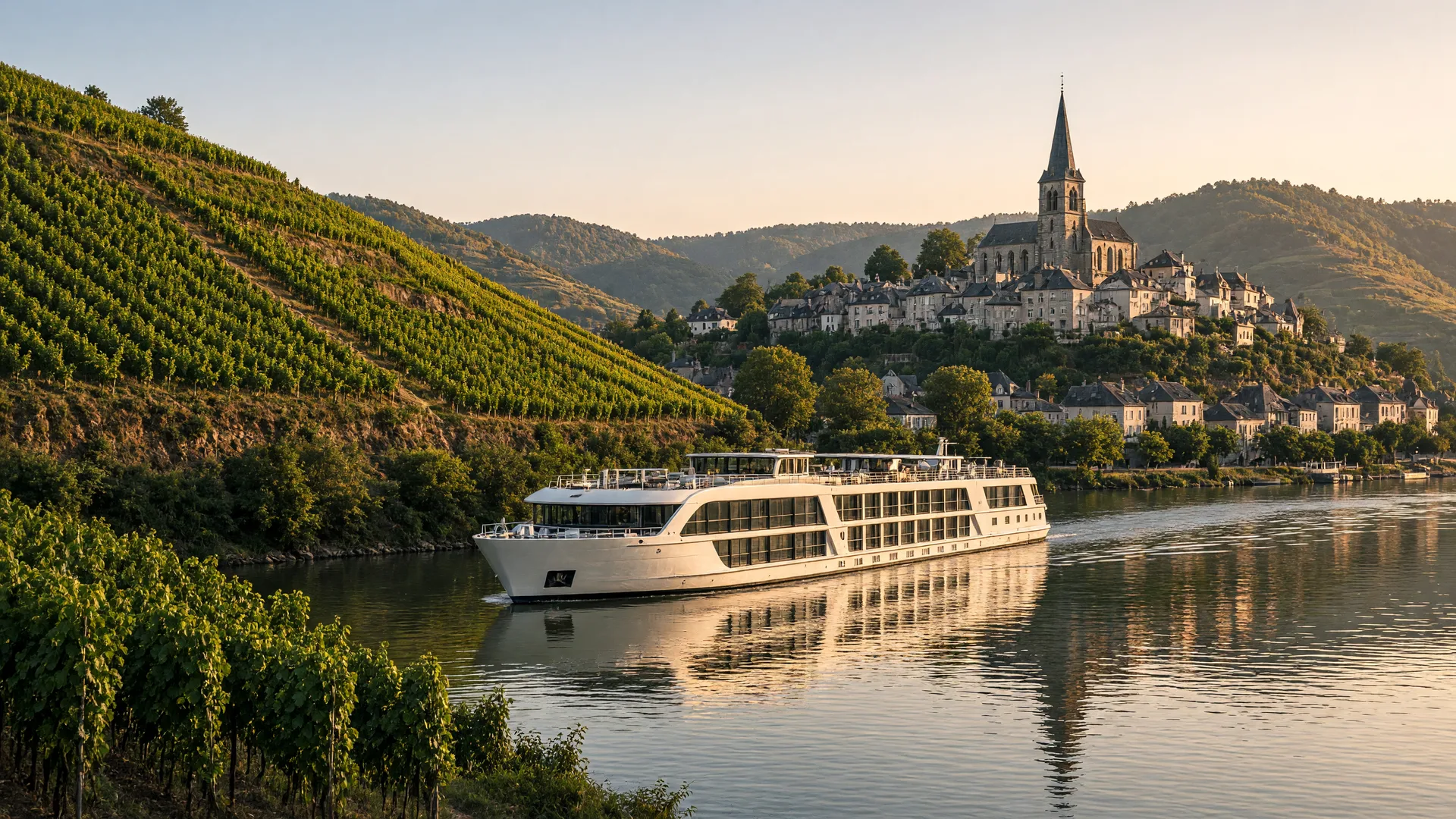
Celebrity River Cruises
Inaugural 2027 season
Interactive map
The Best Northern Europe Cruising Tool Anywhere!
Plan a Northern Europe cruise the way you would plan the voyage itself: on a live, zoomable map that brings the region's ocean and river lines together, from Hurtigruten, Norwegian, Viking, Celebrity and Princess at sea to the six river partners on the Elbe, Rhine, Main and Moselle. Every home port and port of call sits pinned at its true location, from Southampton, Copenhagen and Reykjavik to the Norwegian fjords, the Baltic capitals, Iceland and the British Isles, plus the river cities of Amsterdam, Basel, Berlin and Dresden. Use the Cruise type filter to show ocean cruises, river cruises, or both, then filter by cruise line, ship, port or itinerary, and combine ports with a powerful multi-select filter that narrows your options instantly. Click any itinerary to trace its route across the map in our brand burgundy, open full port cards packed with highlights and local tips, and enjoy every label, hint, and detail in both English and Spanish. It is powerful, it is easy, and it makes planning your dream Northern Europe cruise genuinely fun.
Check one or more cruise lines of interest. Itineraries from any checked line are shown together.
Click as many ports you would like in your itinerary. If no matching itineraries exist with that port combination the Itinerary Filter will respond No Match Hint: For multiple port selections, start with two ports of interest and if you get a match, add any additional ports until a no match appears.
If you know which ships you are interested in, check one or more ships from the list. Itineraries from any checked ship are shown together.
This will show the results of the filter criteria settings from Cruise Lines, Ports and Ships.
 Bergen
 Ålesund
 Geiranger
 Flåm
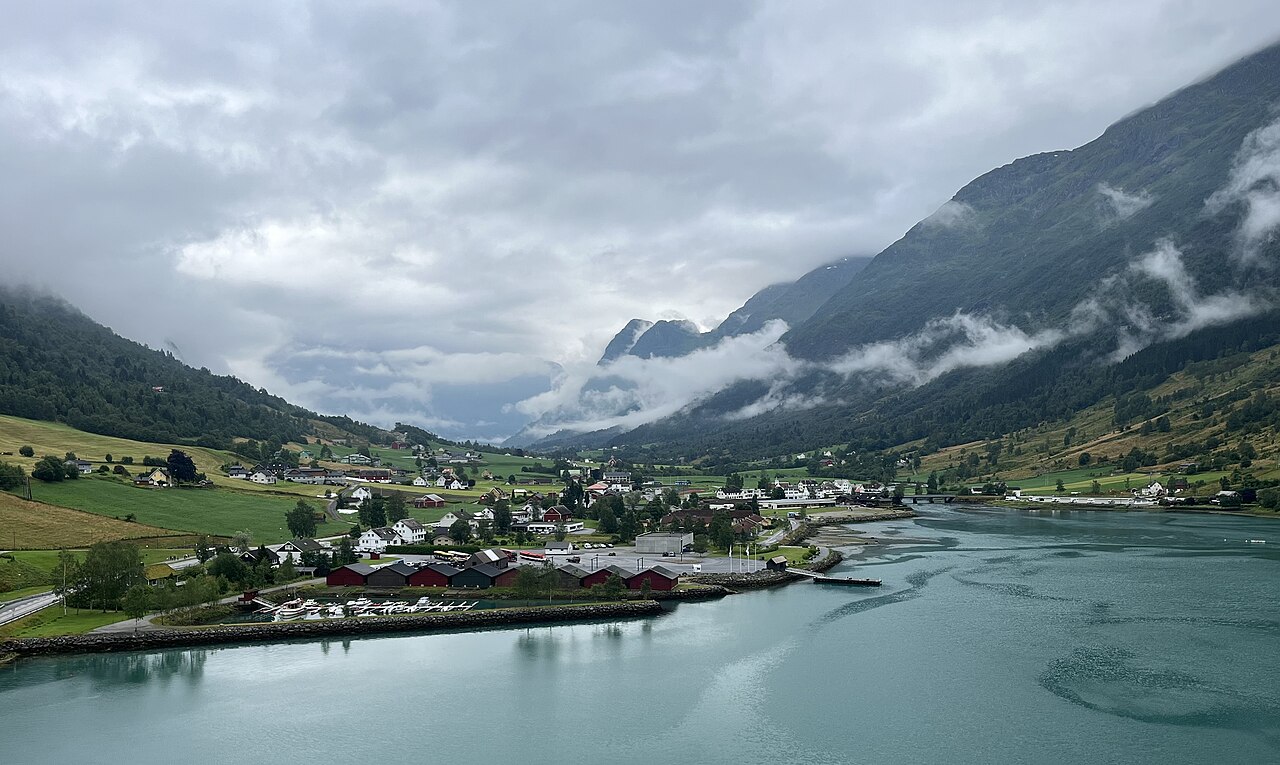 Olden
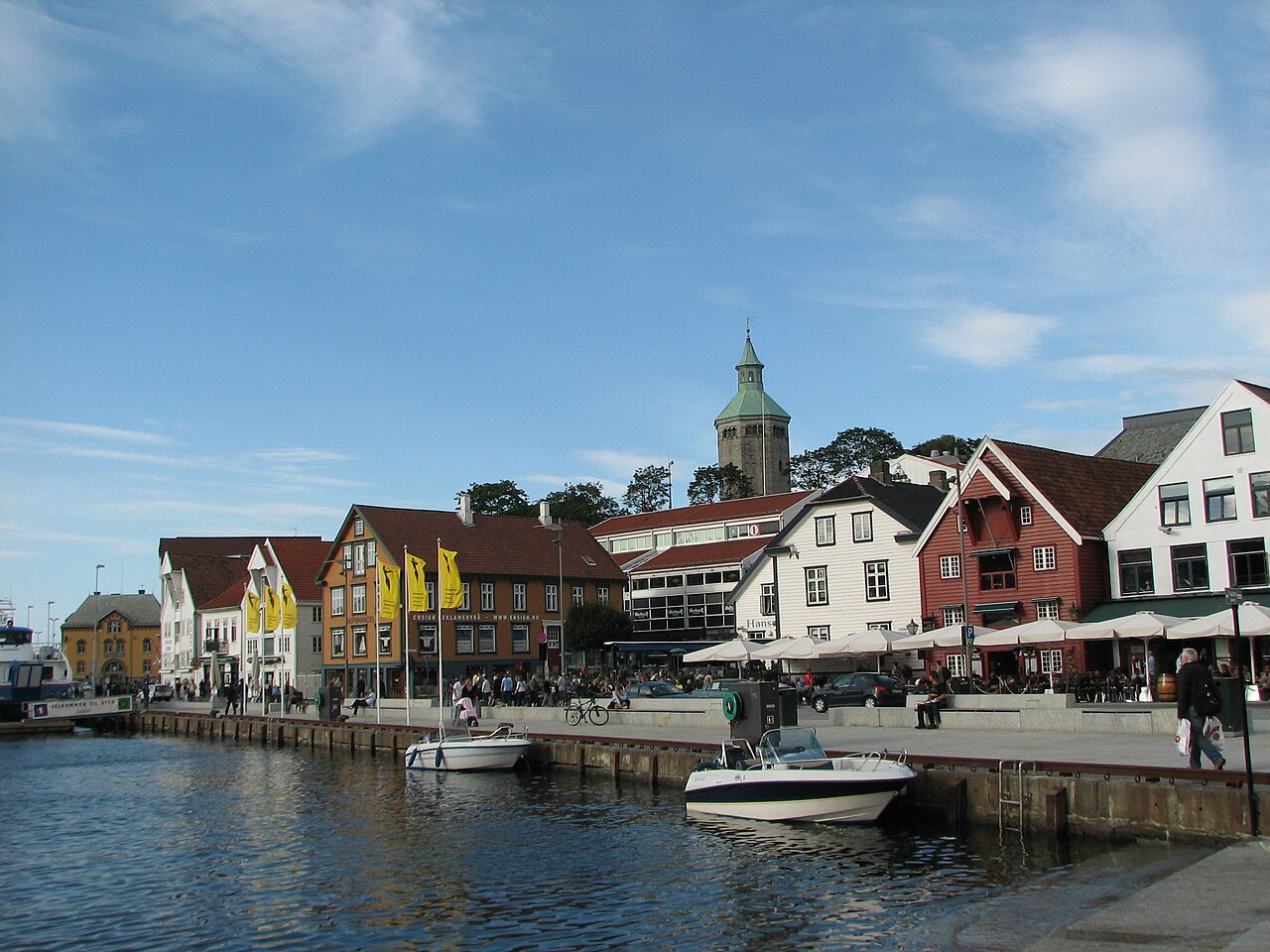 Stavanger
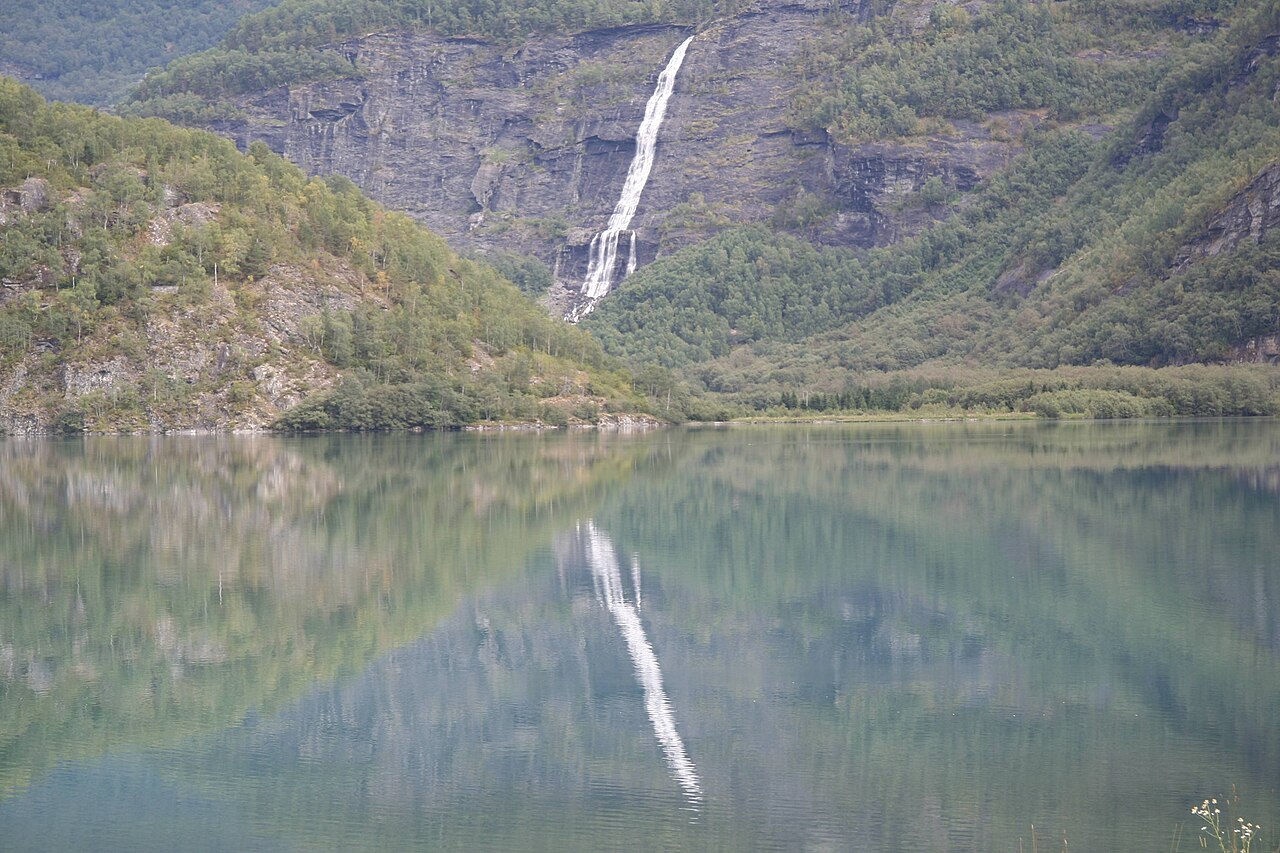 Skjolden
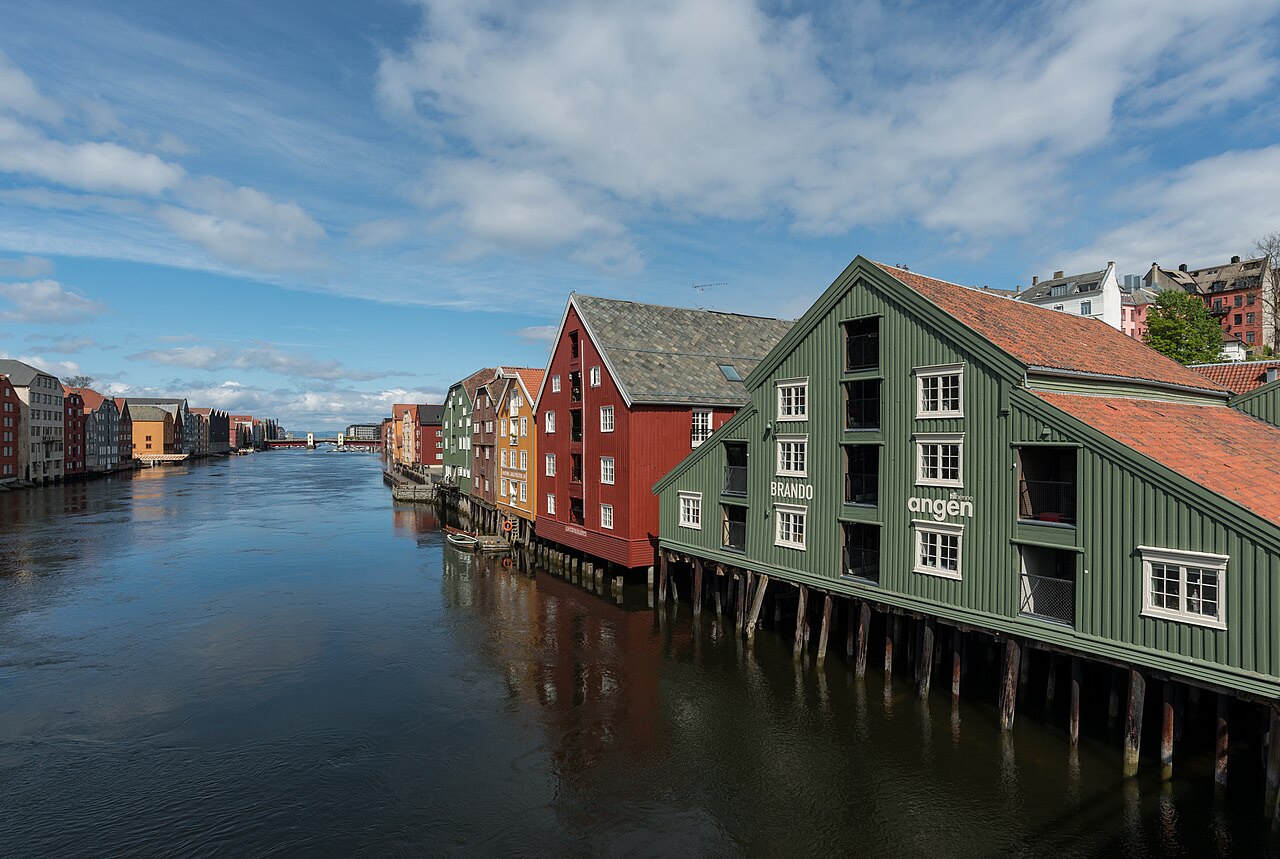 Trondheim
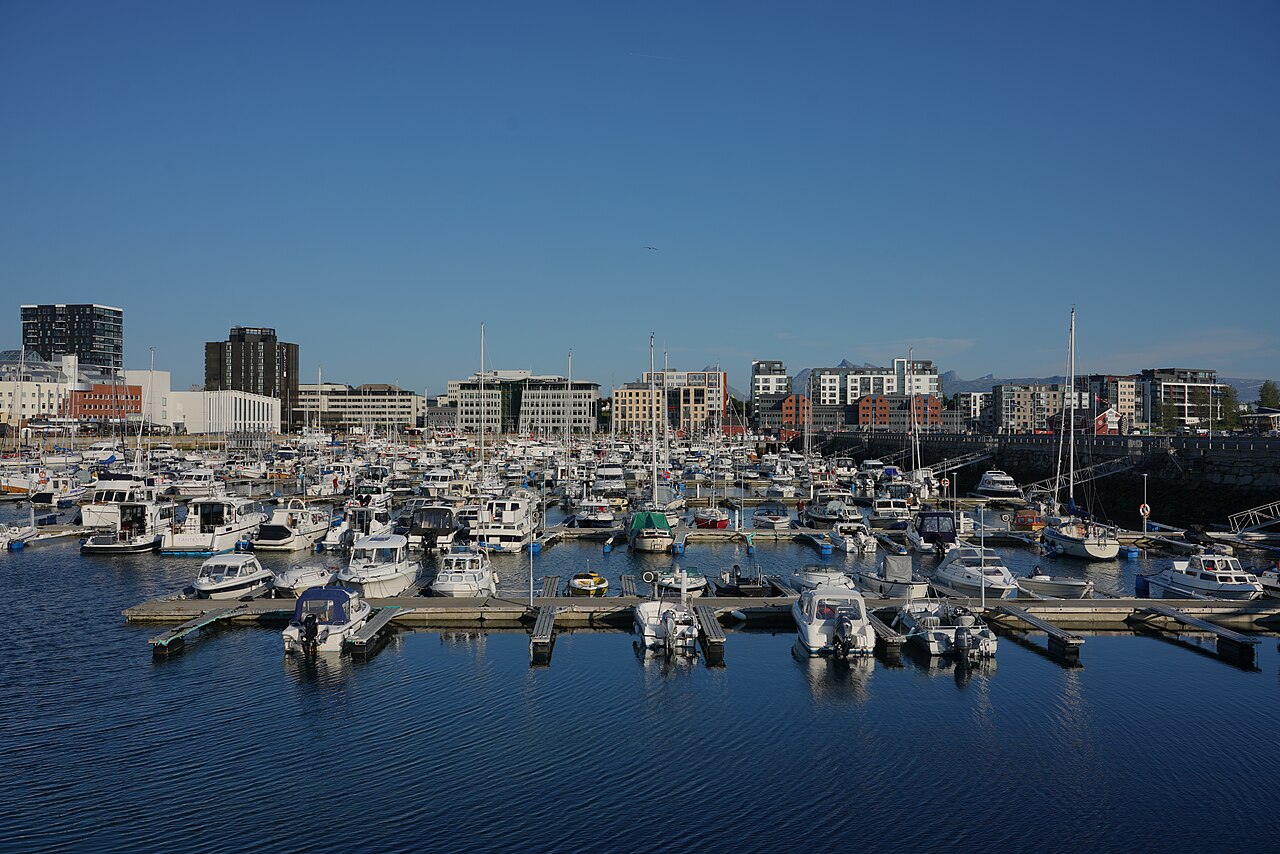 Bodø
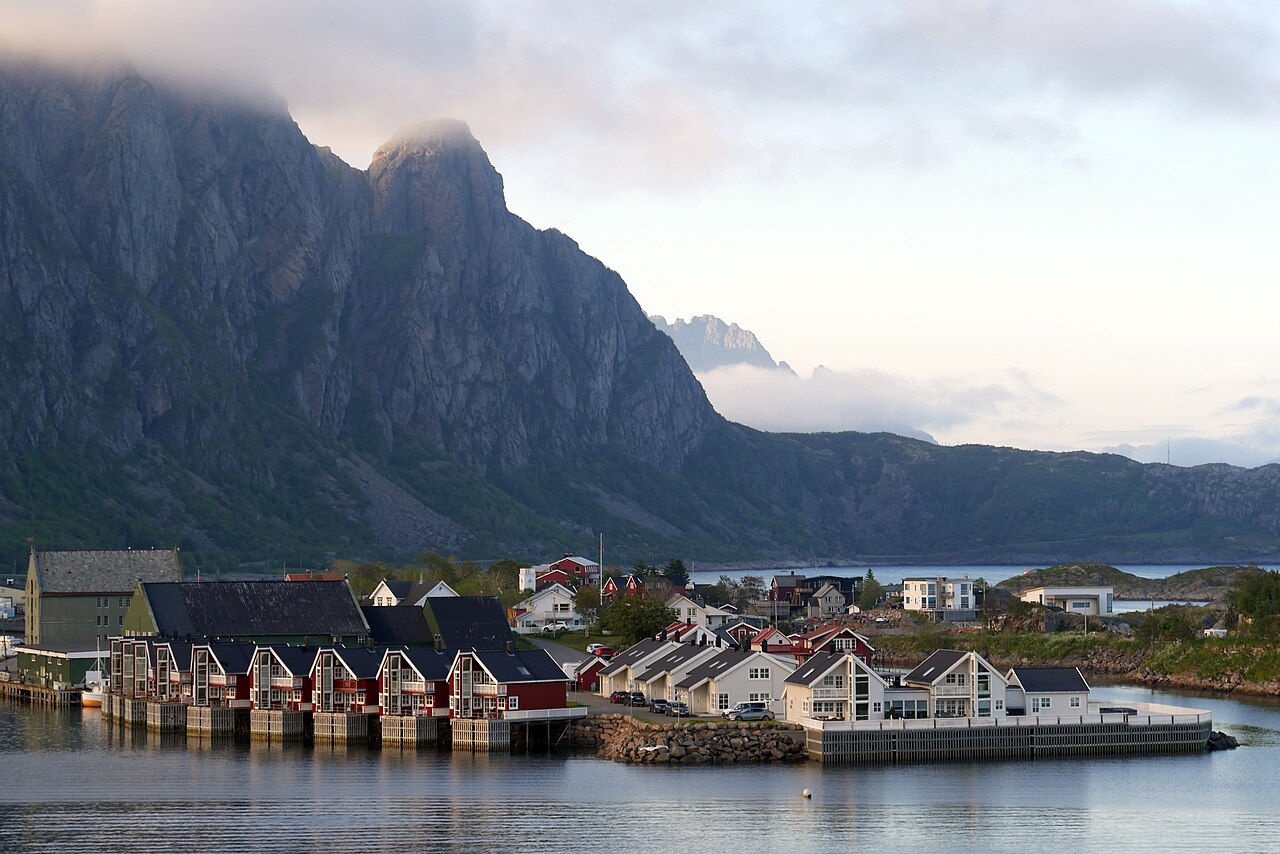 Svolvær
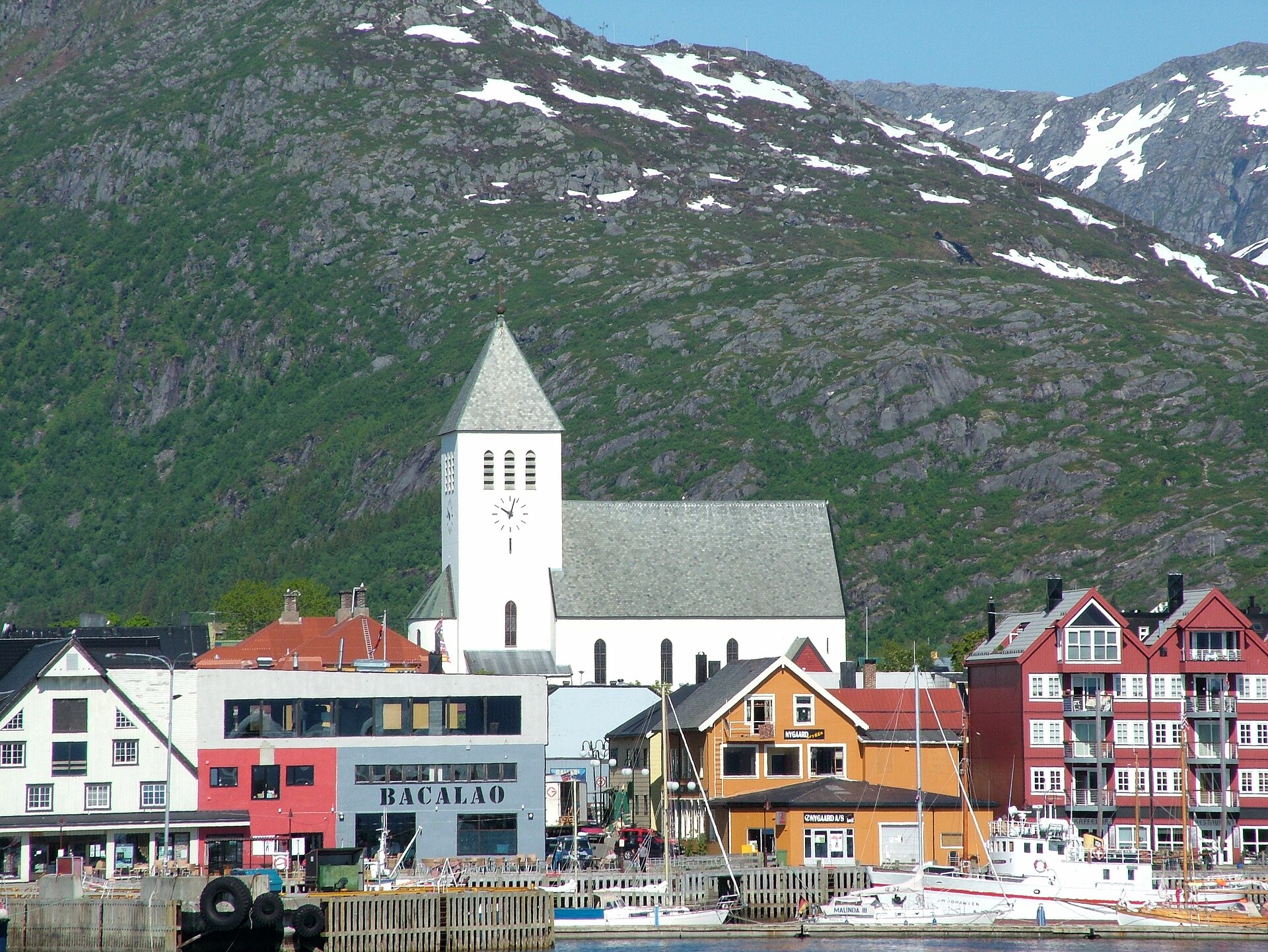 Lofoten (Leknes)
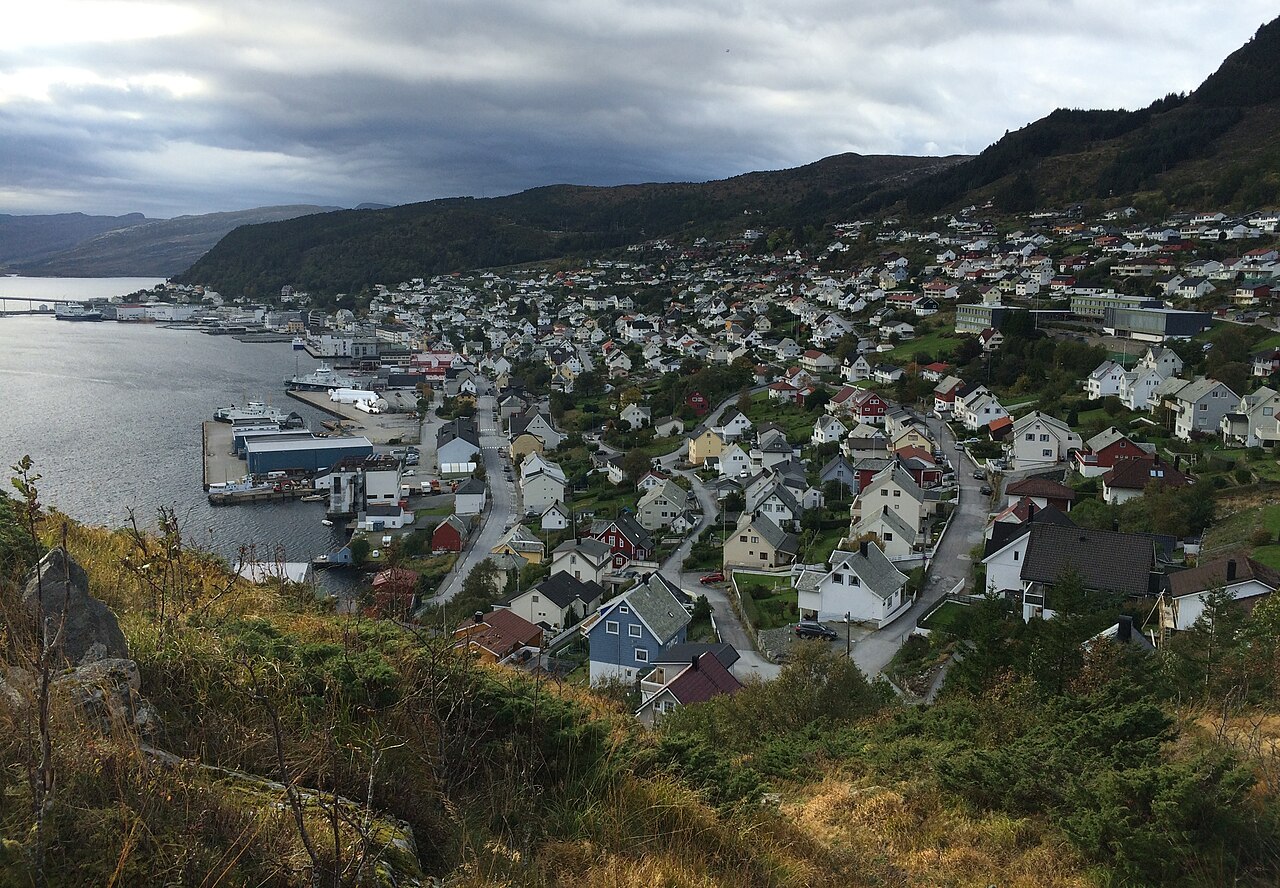 Måløy
 Leirvik (Stord)
 Skagen
 Copenhagen
 Oslo
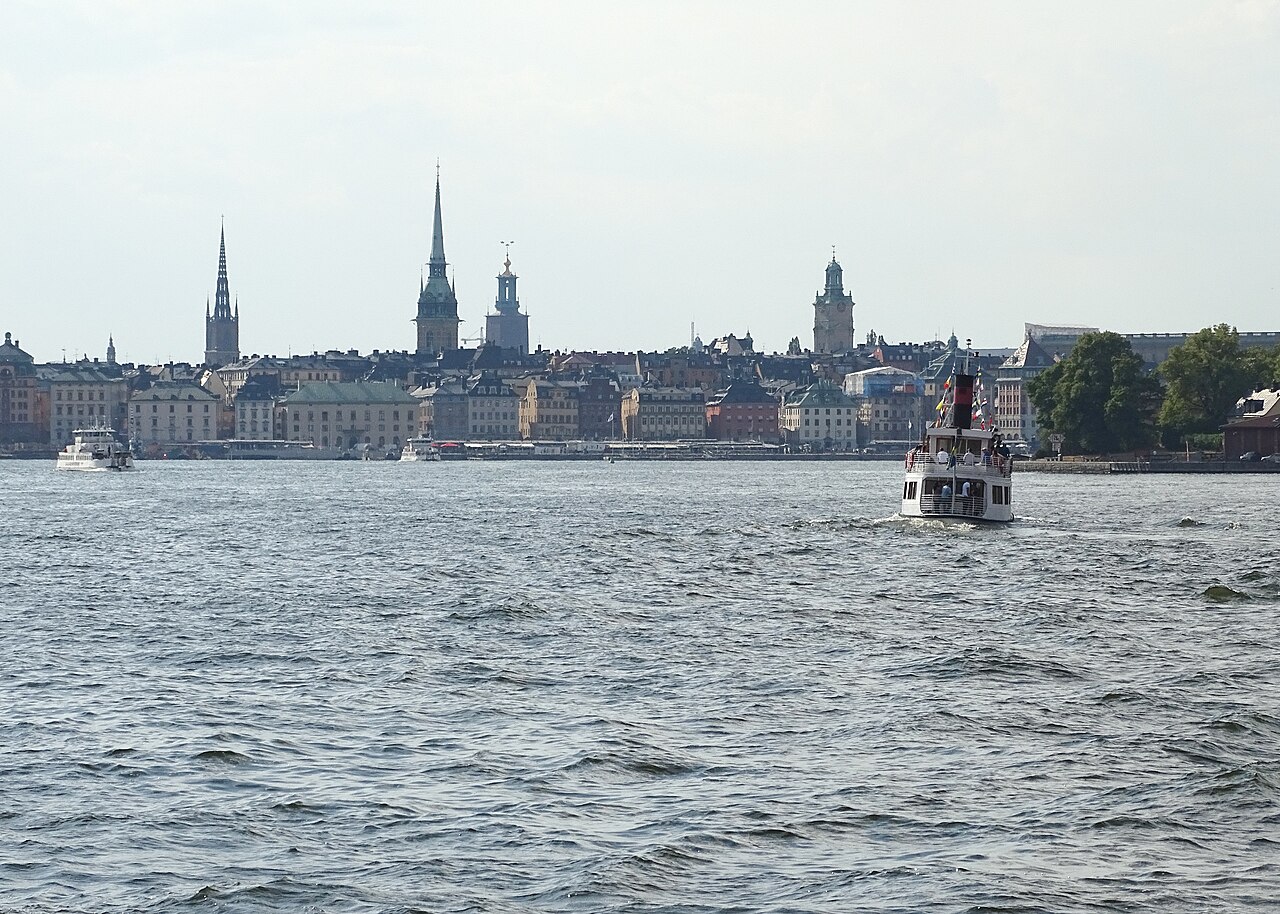 Stockholm
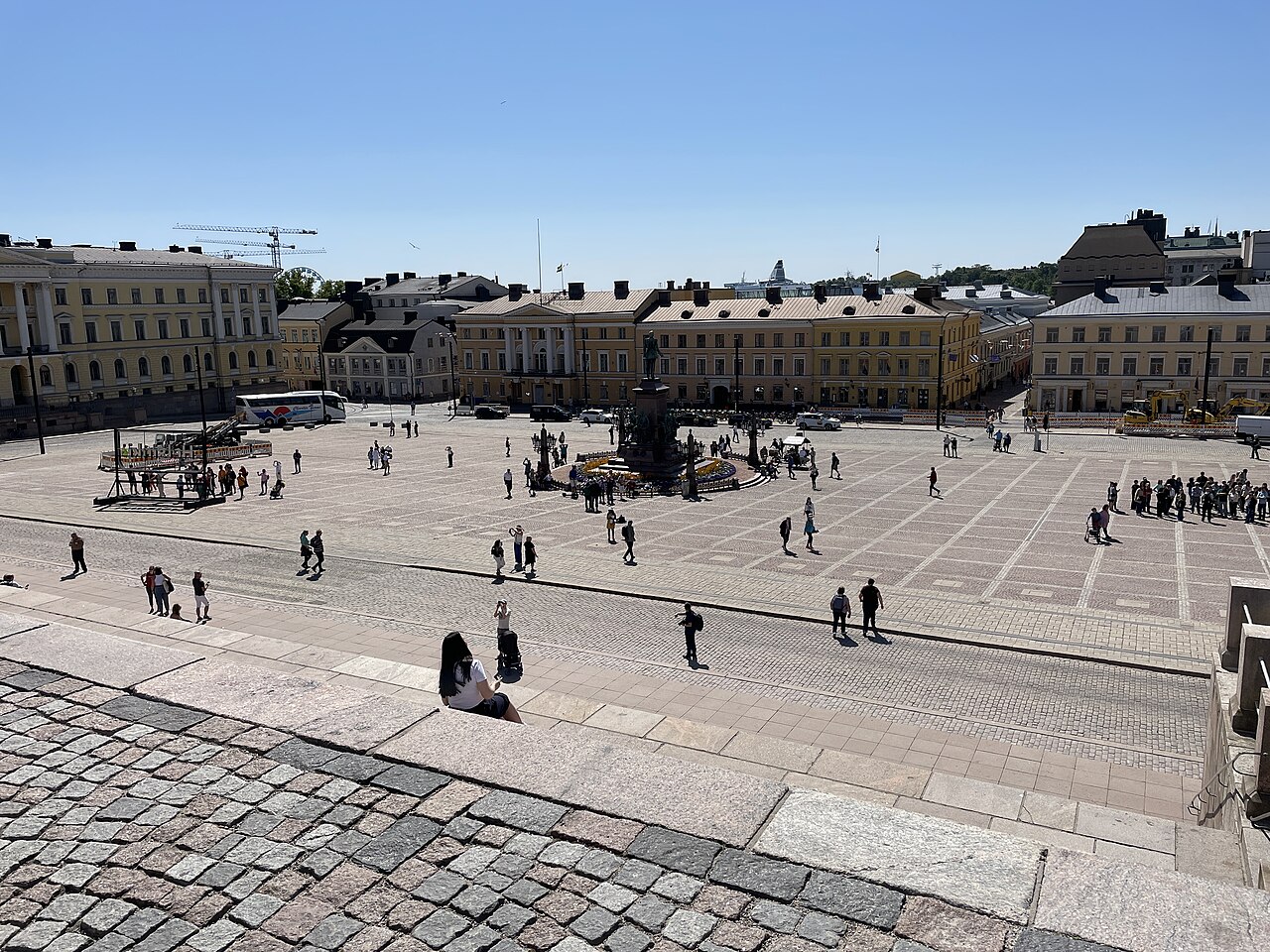 Helsinki
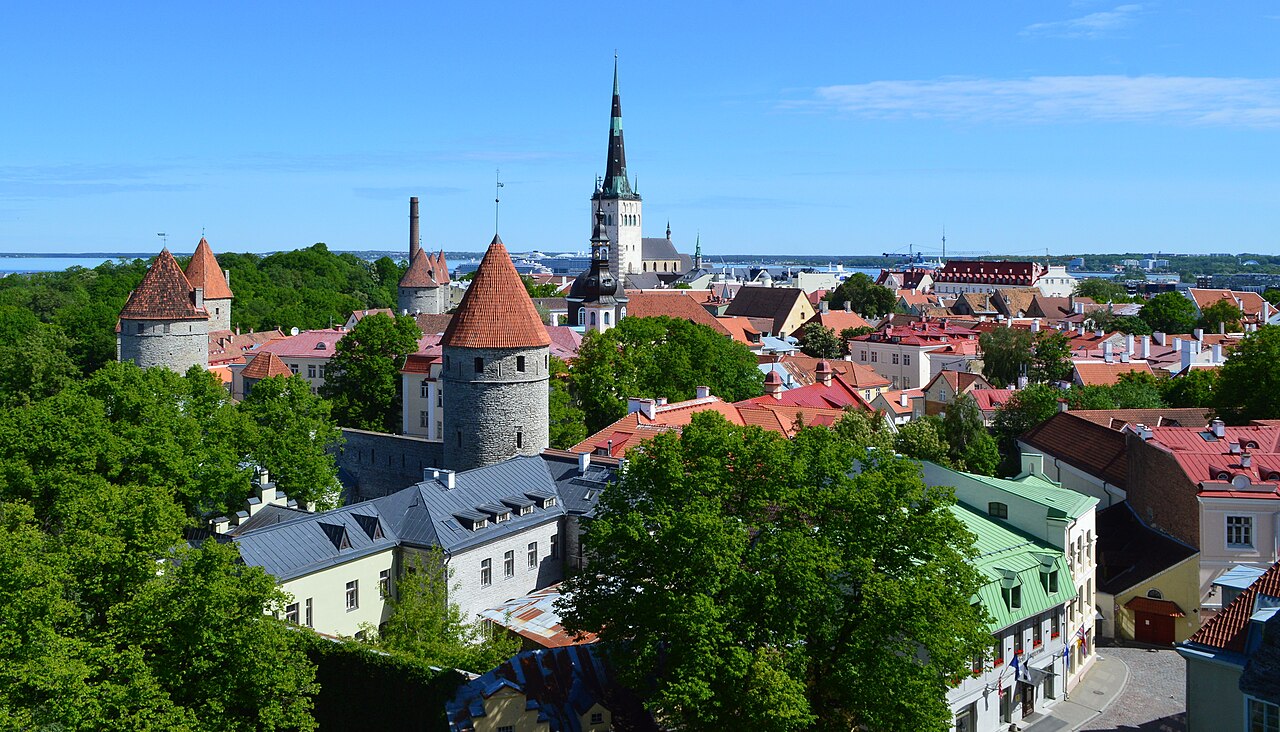 Tallinn
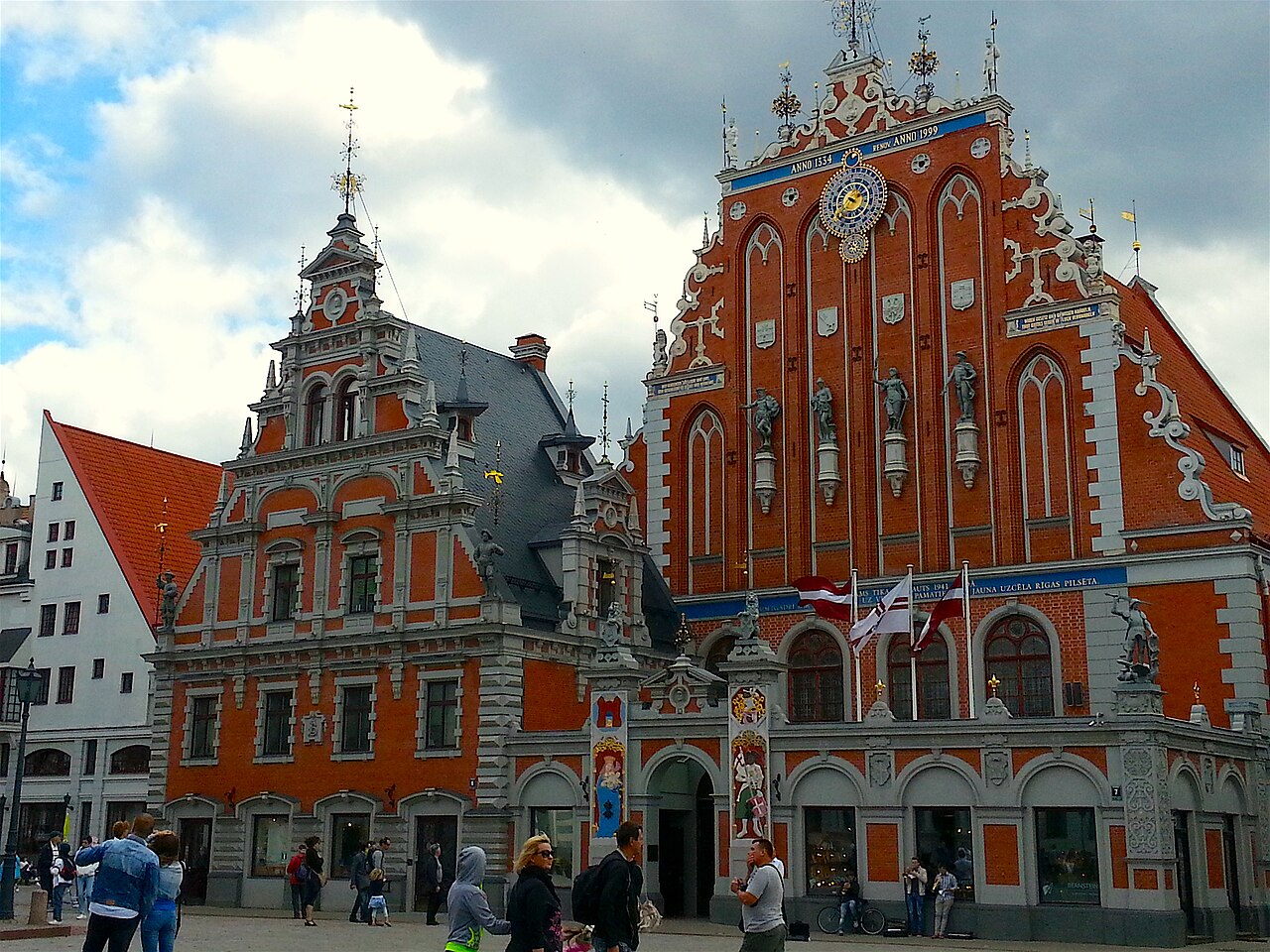 Riga
 Visby
 Gdańsk
 Klaipėda
 Warnemünde
 Gothenburg
 Karlskrona
 Åland (Mariehamn)
 Reykjavík
 Akureyri
 Ísafjörður
 Southampton
 London (Greenwich)
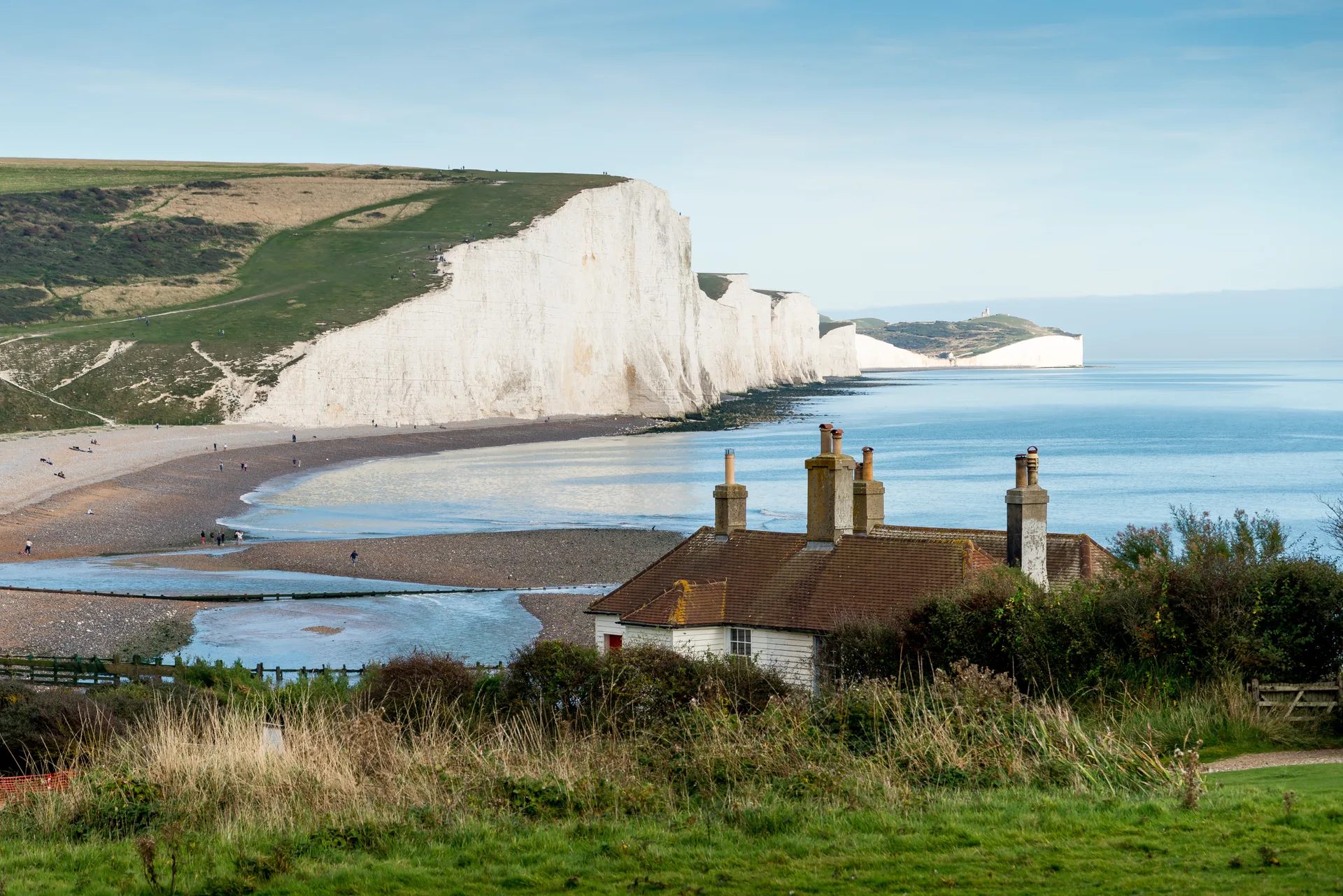 Dover
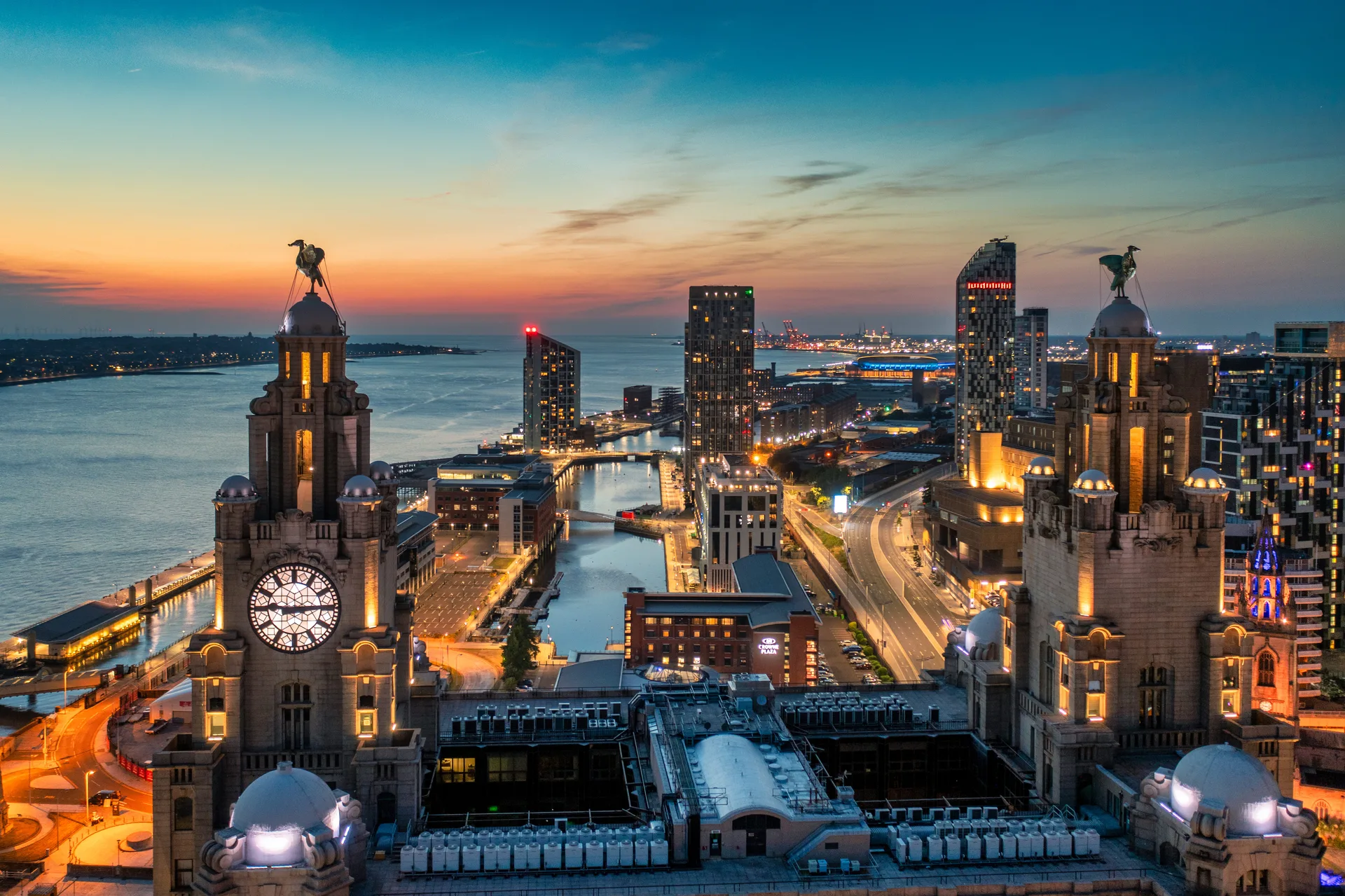 Liverpool
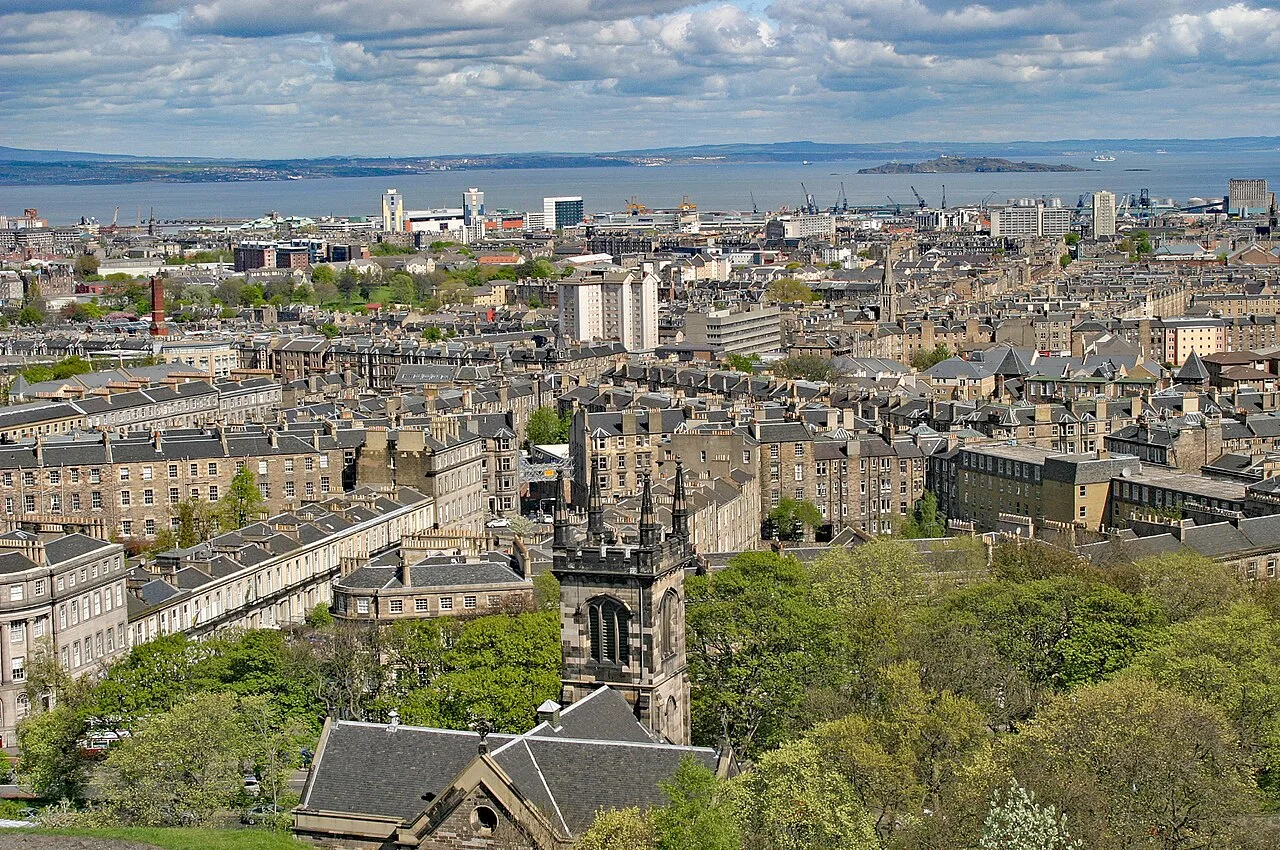 Edinburgh
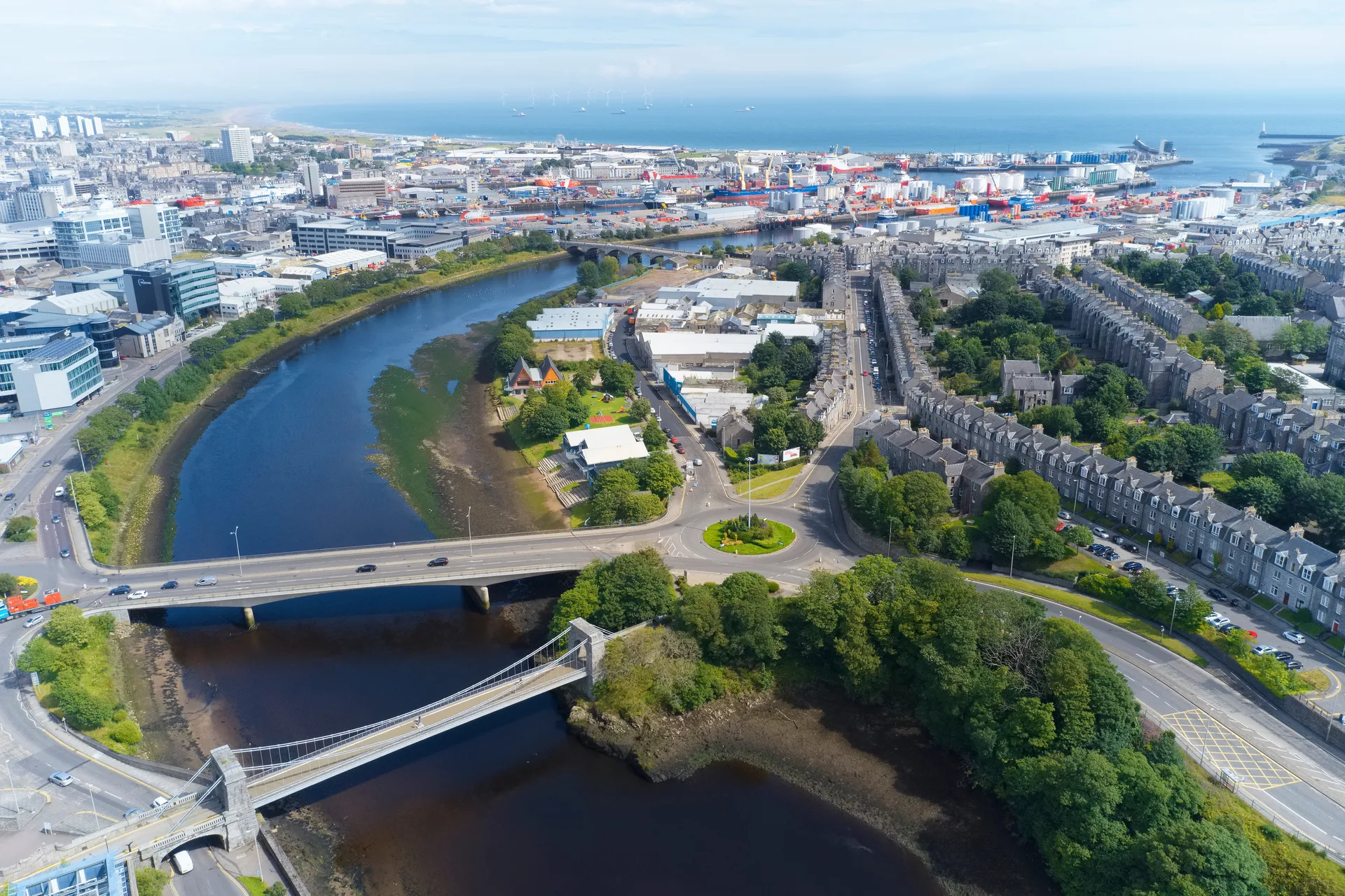 Aberdeen
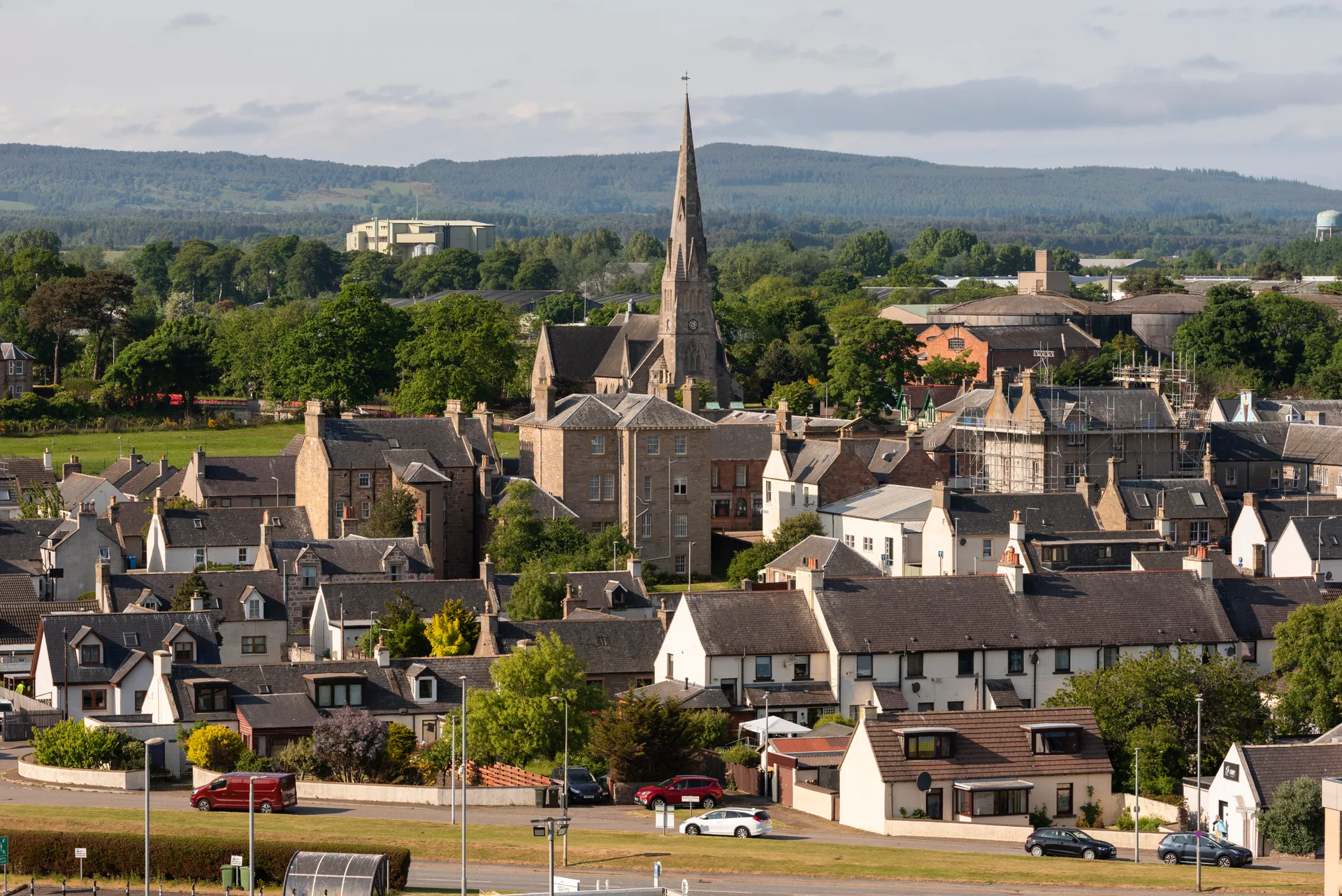 Invergordon
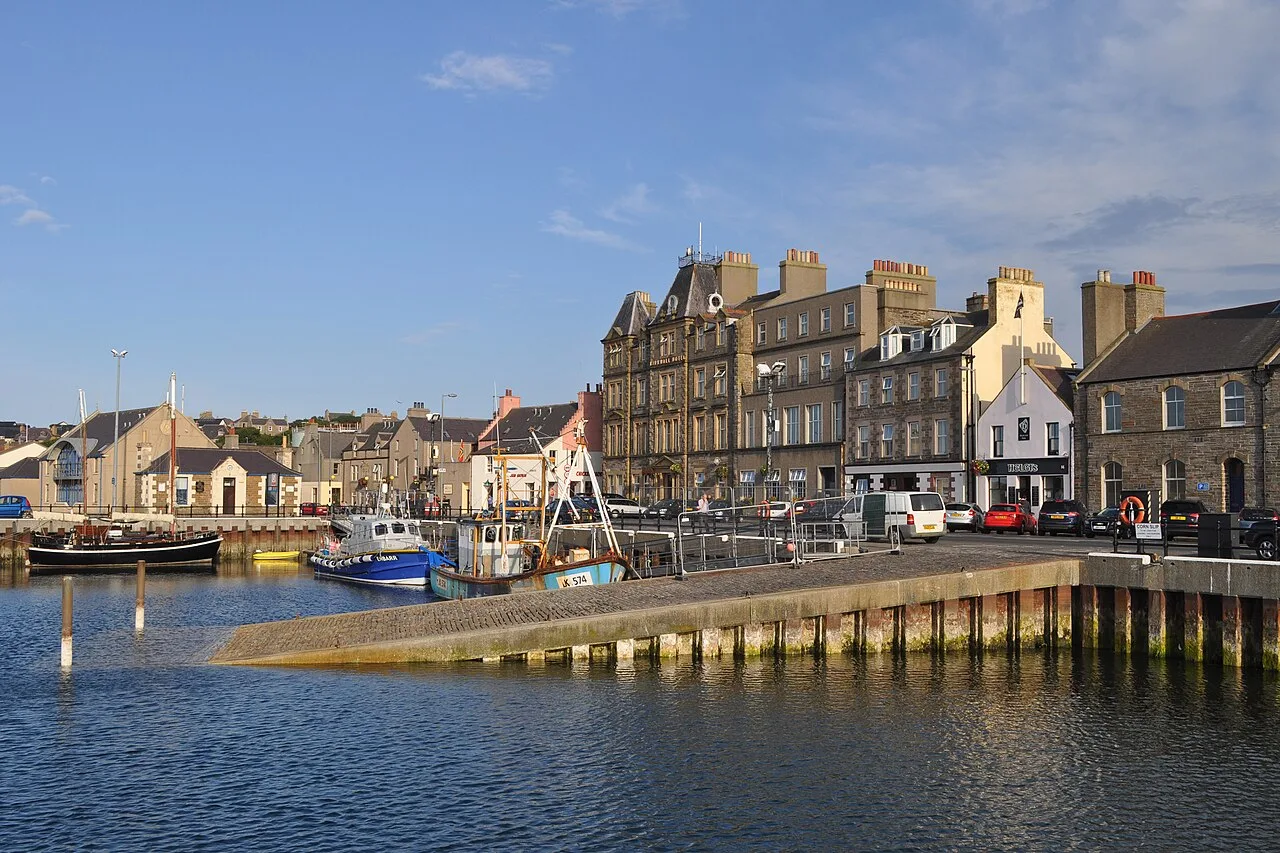 Kirkwall
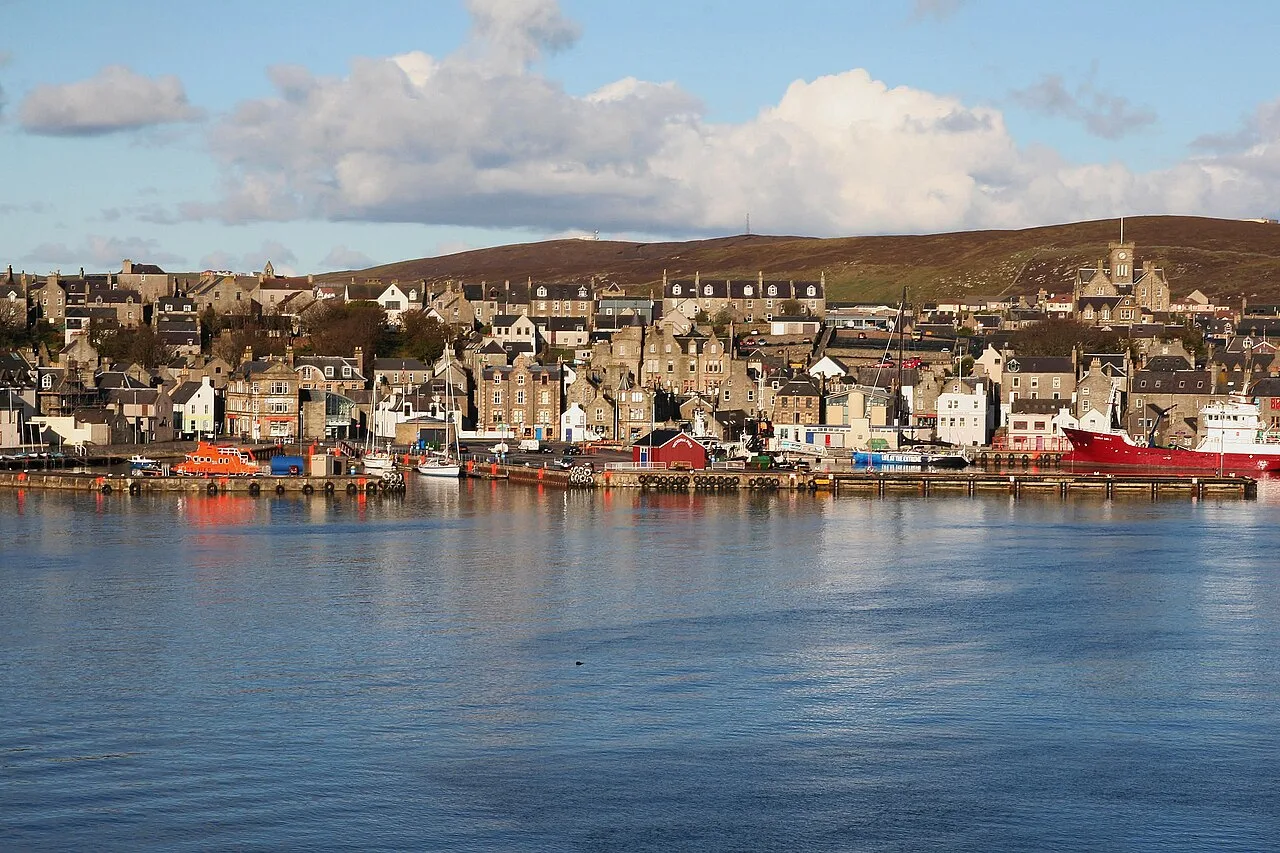 Lerwick
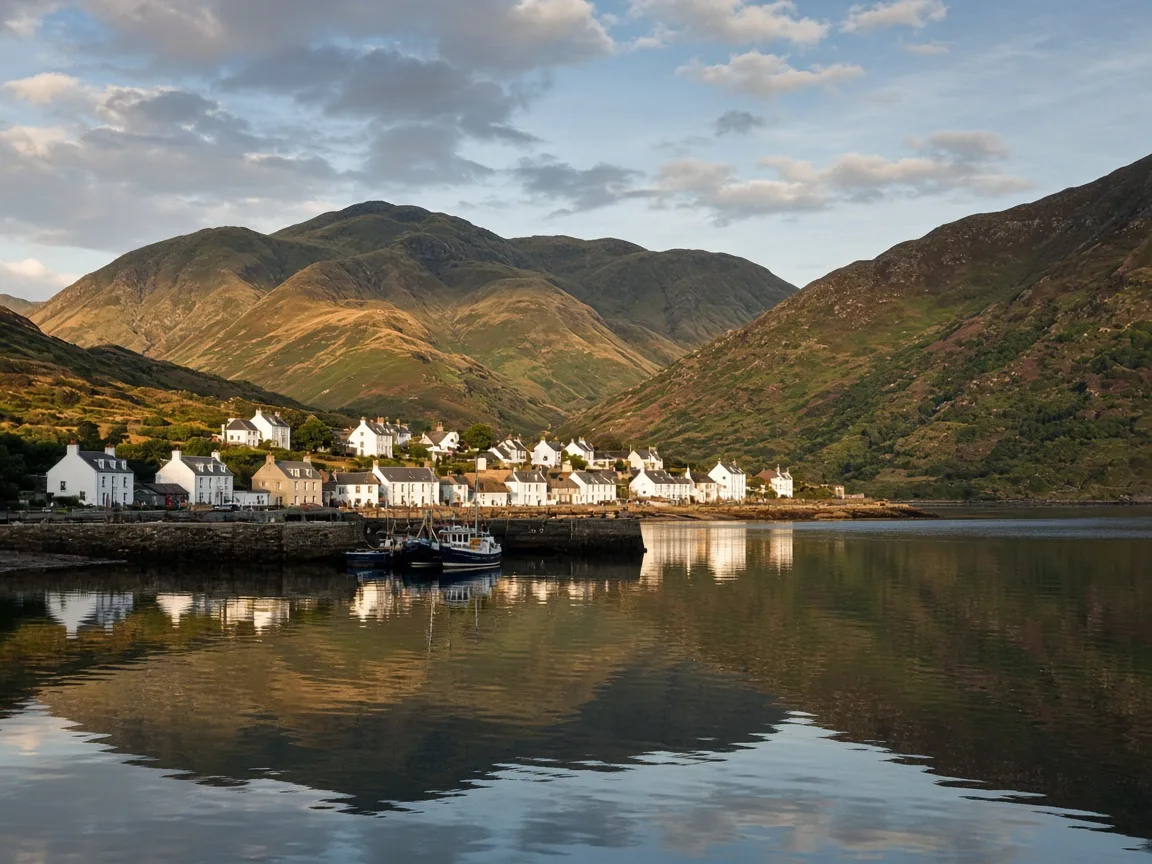 Ullapool
 Dublin
 Holyhead
 Belfast
 Cobh (Cork)
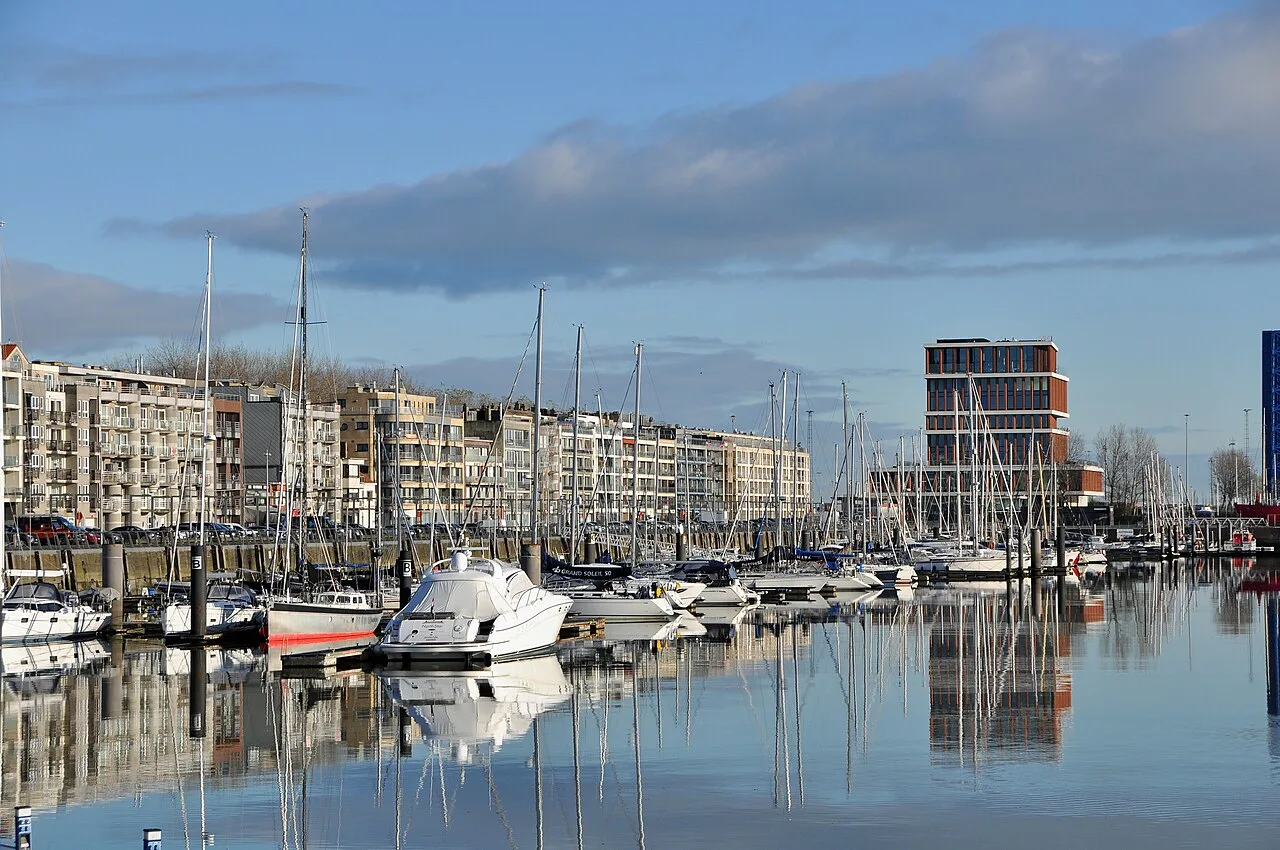 Zeebrugge
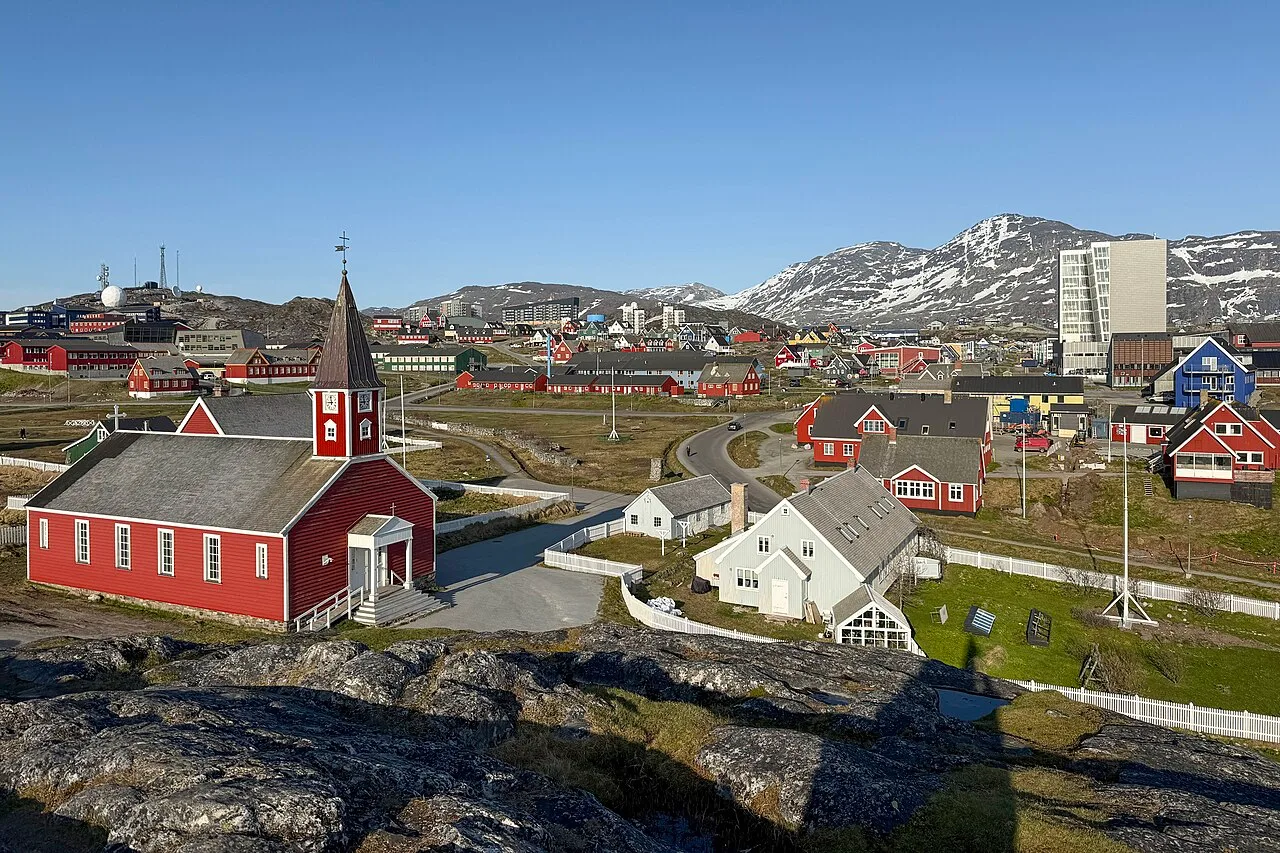 Nuuk (Godthab)
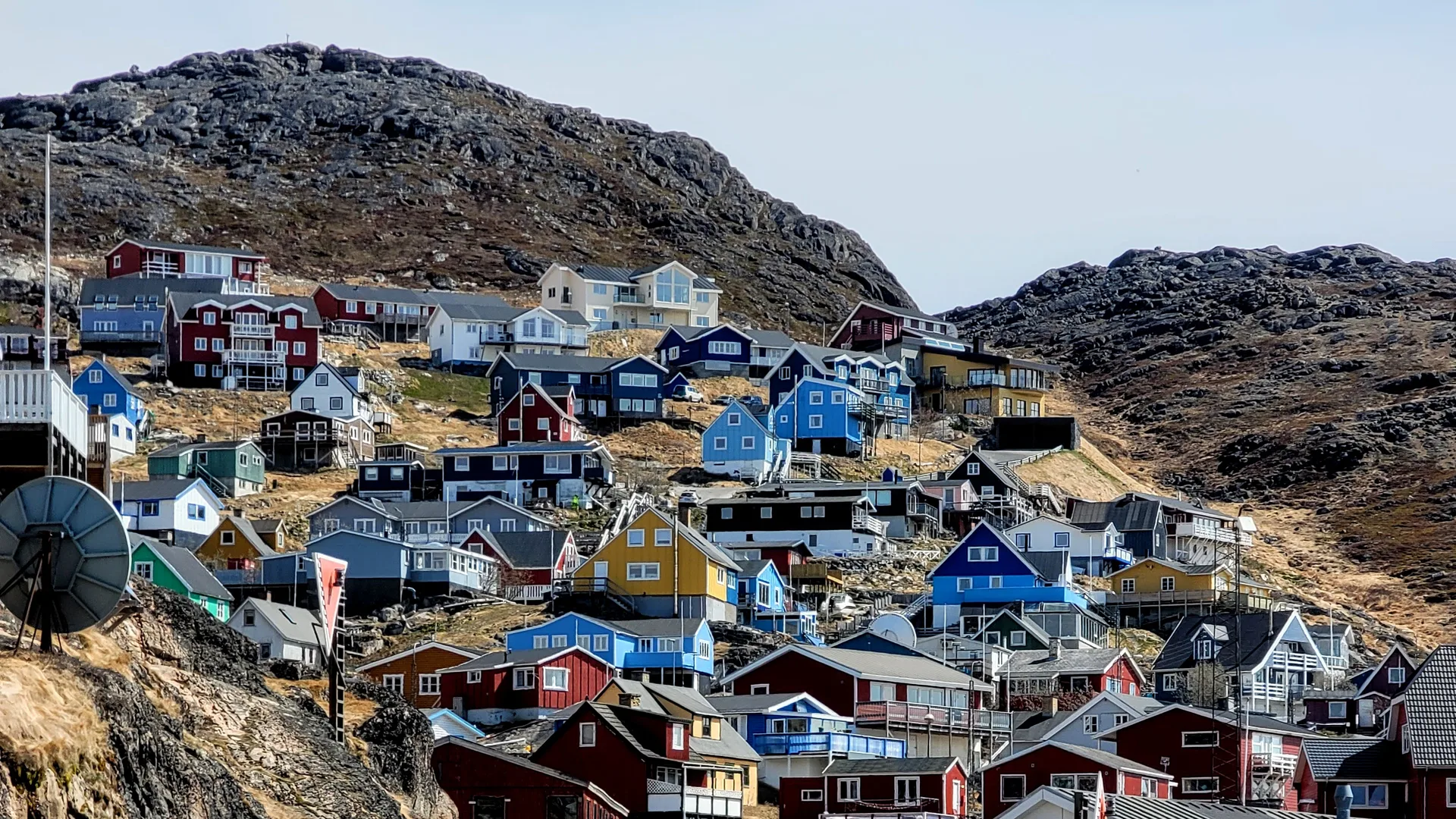 Qaqortoq (Julianehåb)
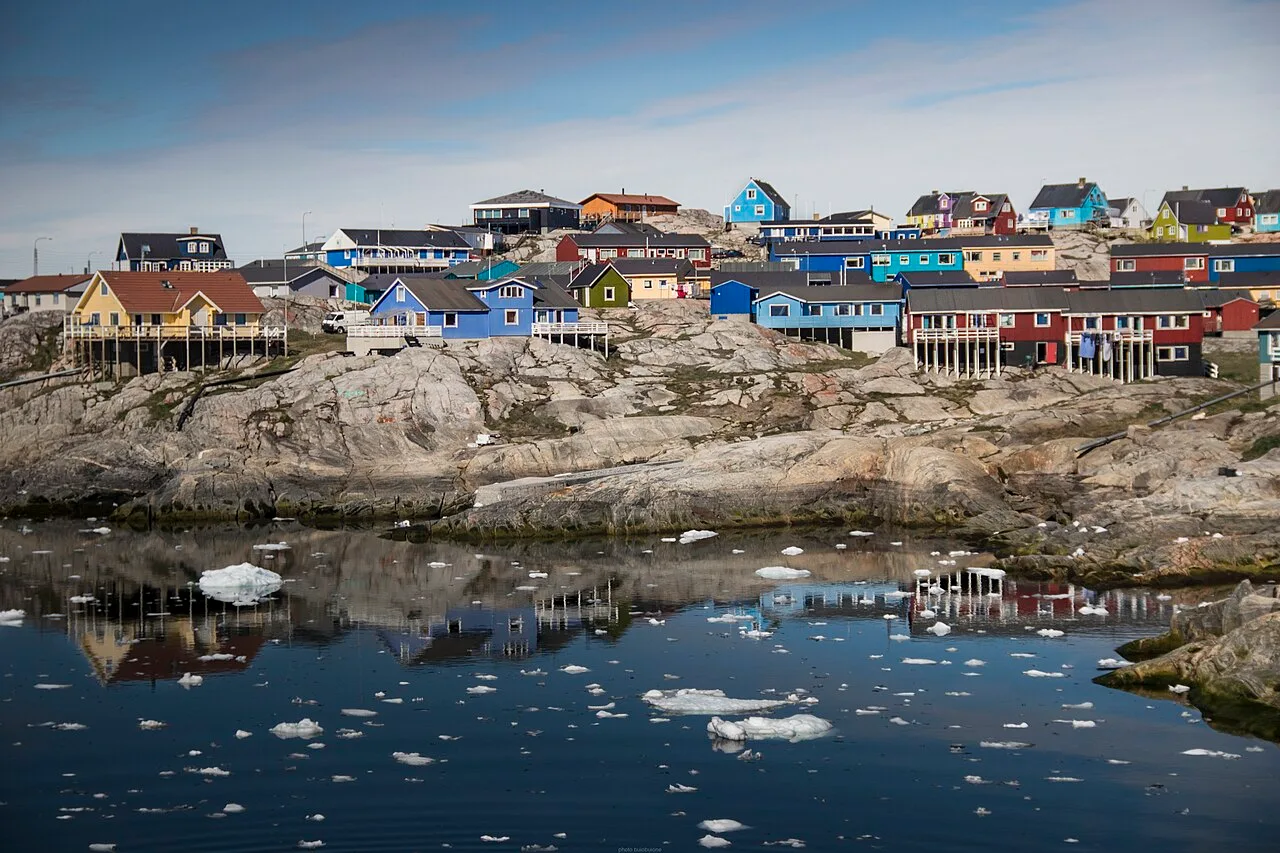 Ilulissat
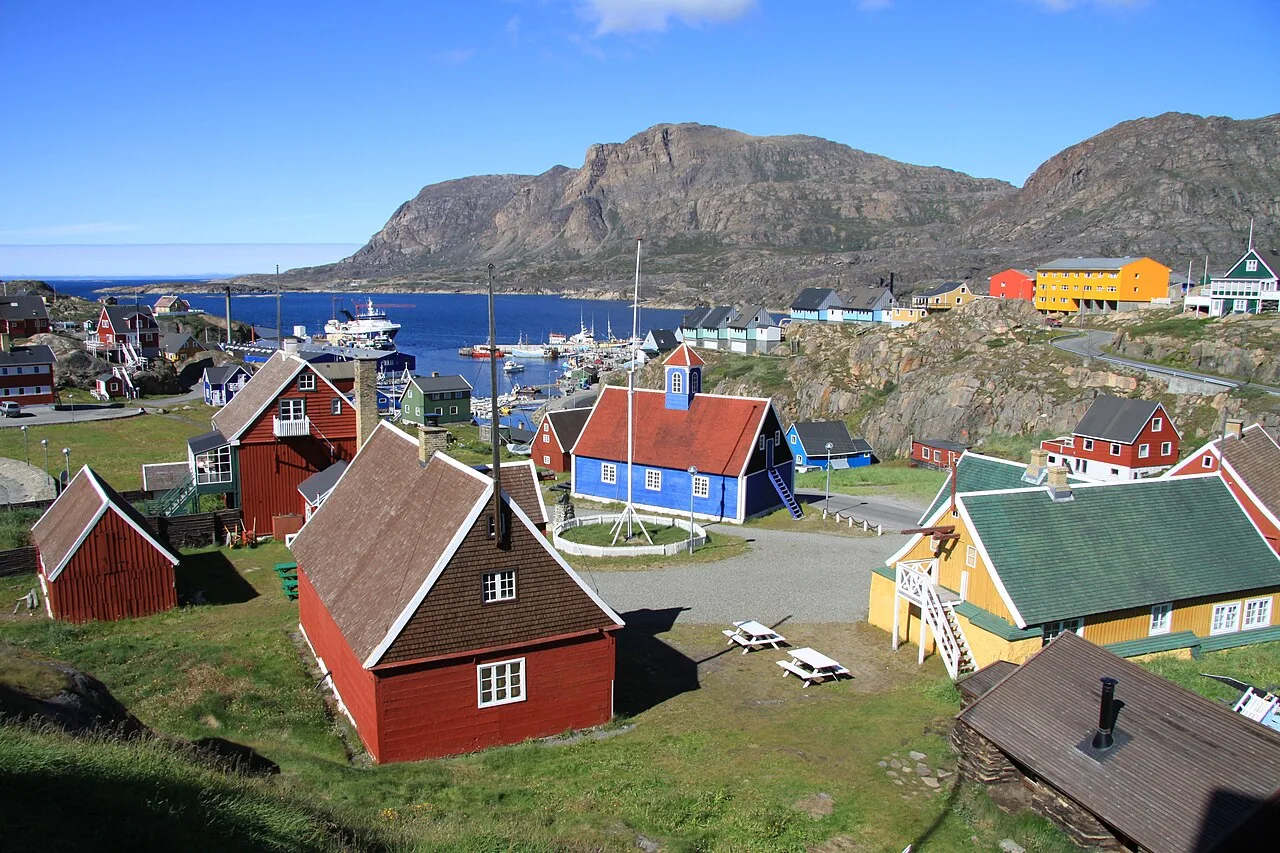 Sisimiut
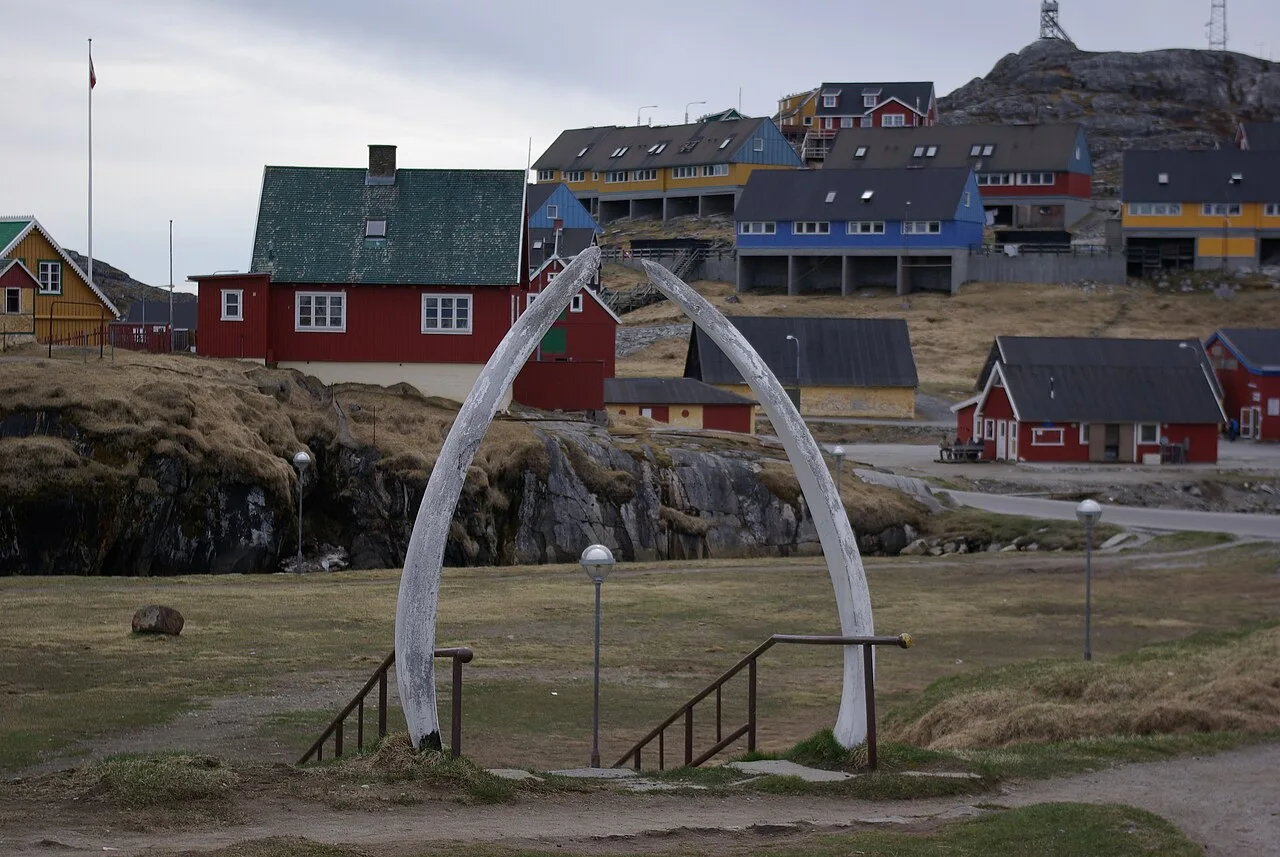 Paamiut
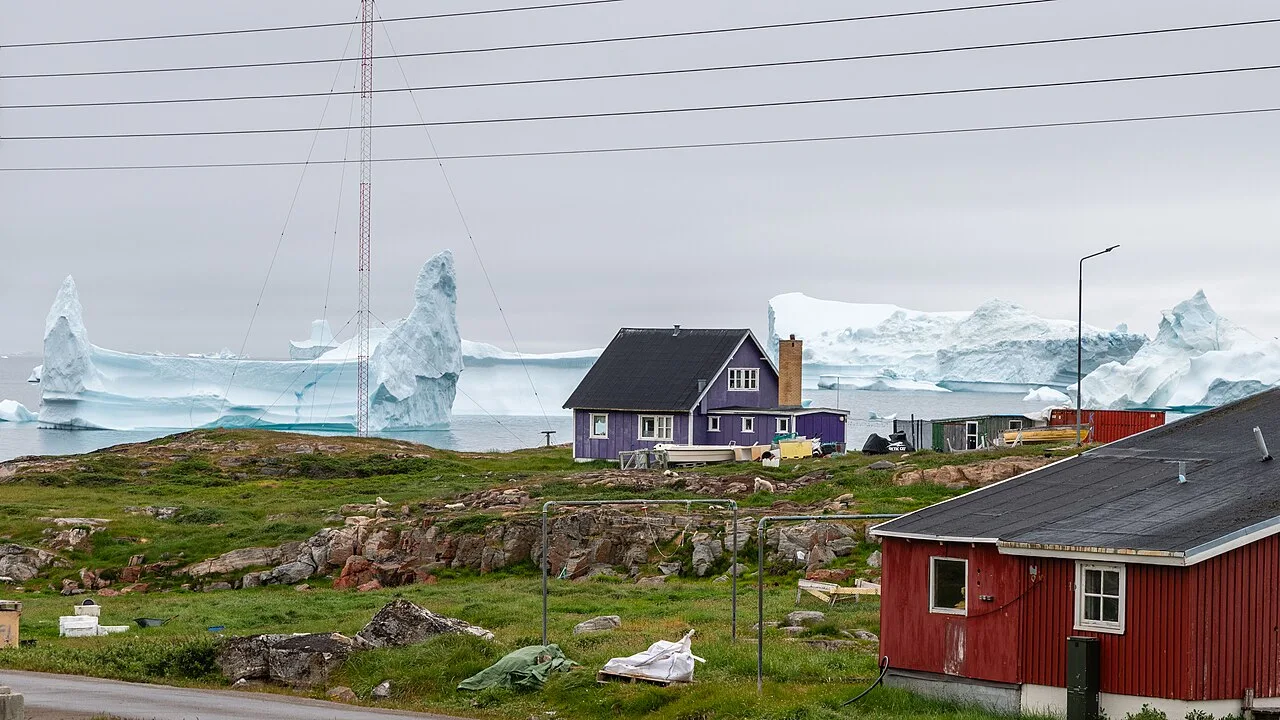 Qeqertarsuaq
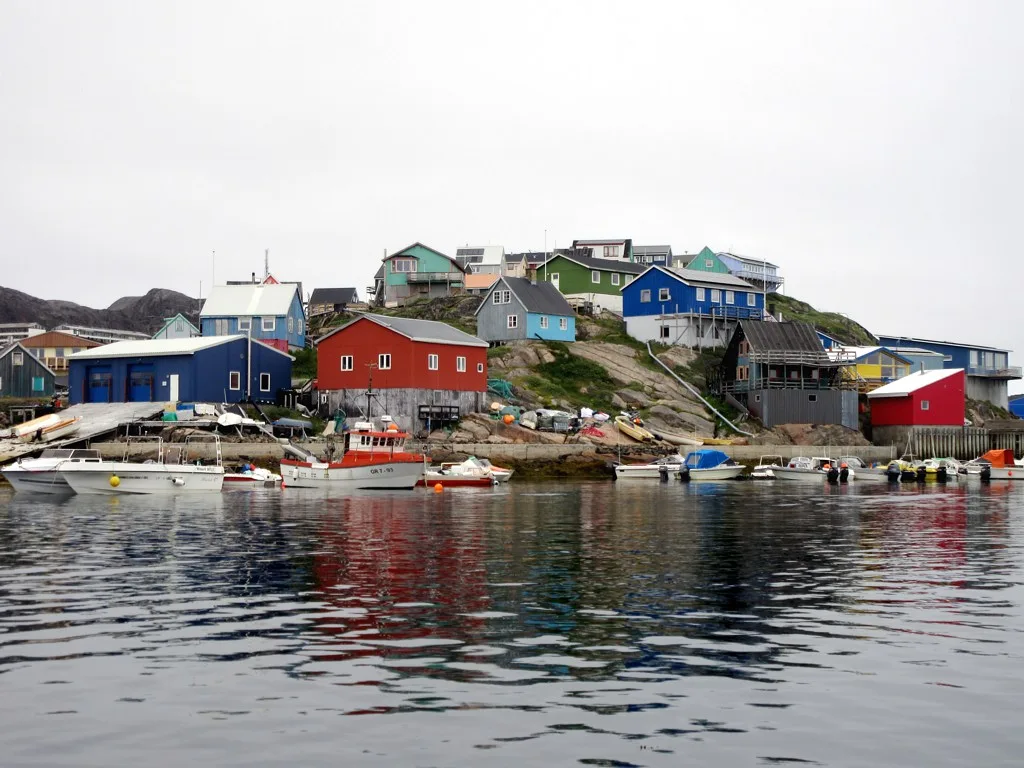 Maniitsoq
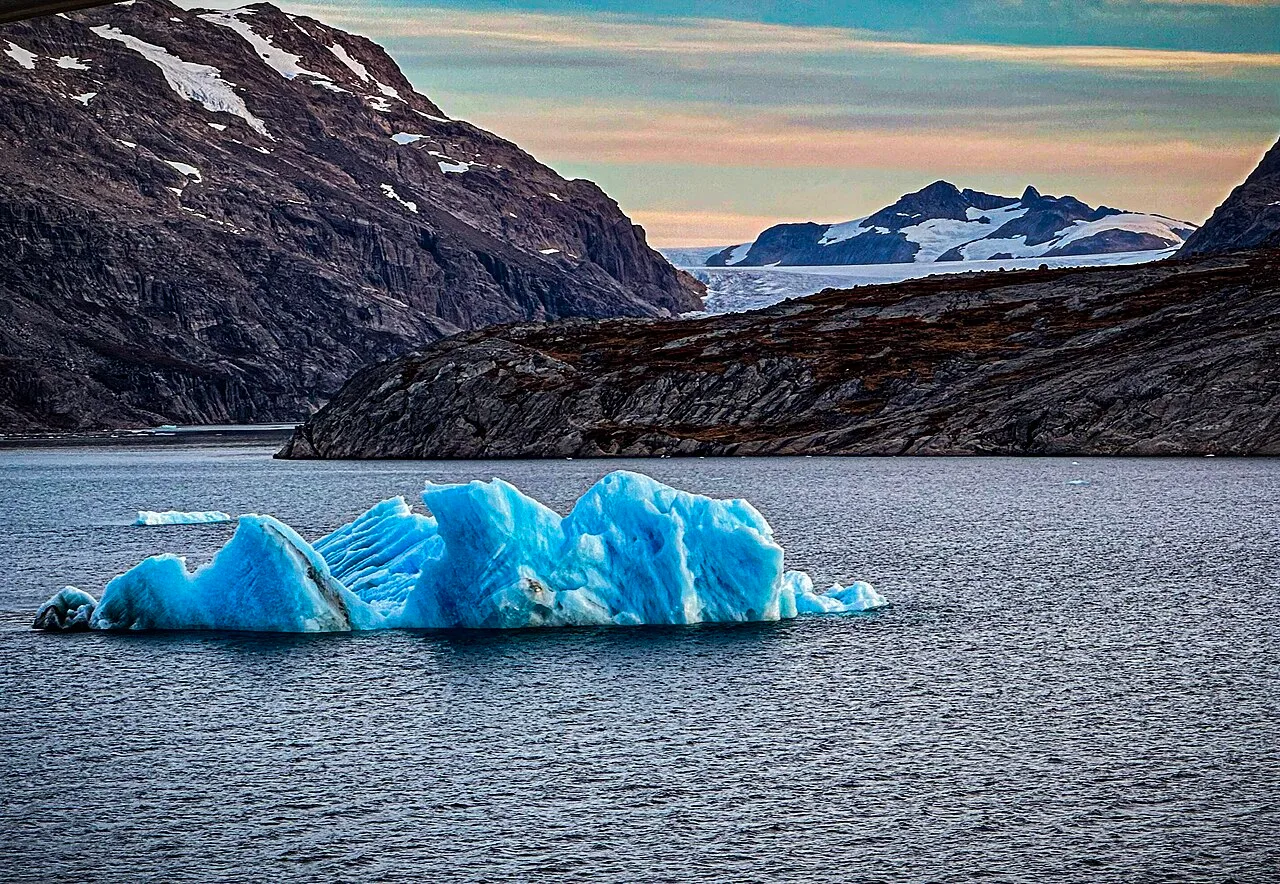 Prince Christian Sound
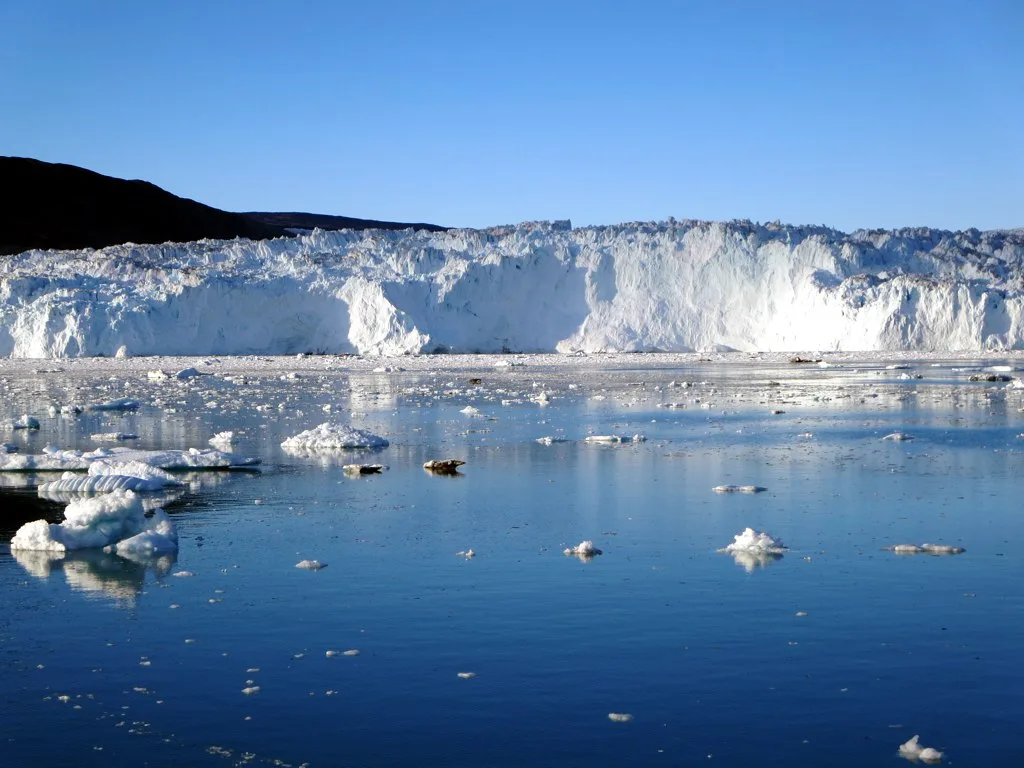 Eqip Sermia Glacier
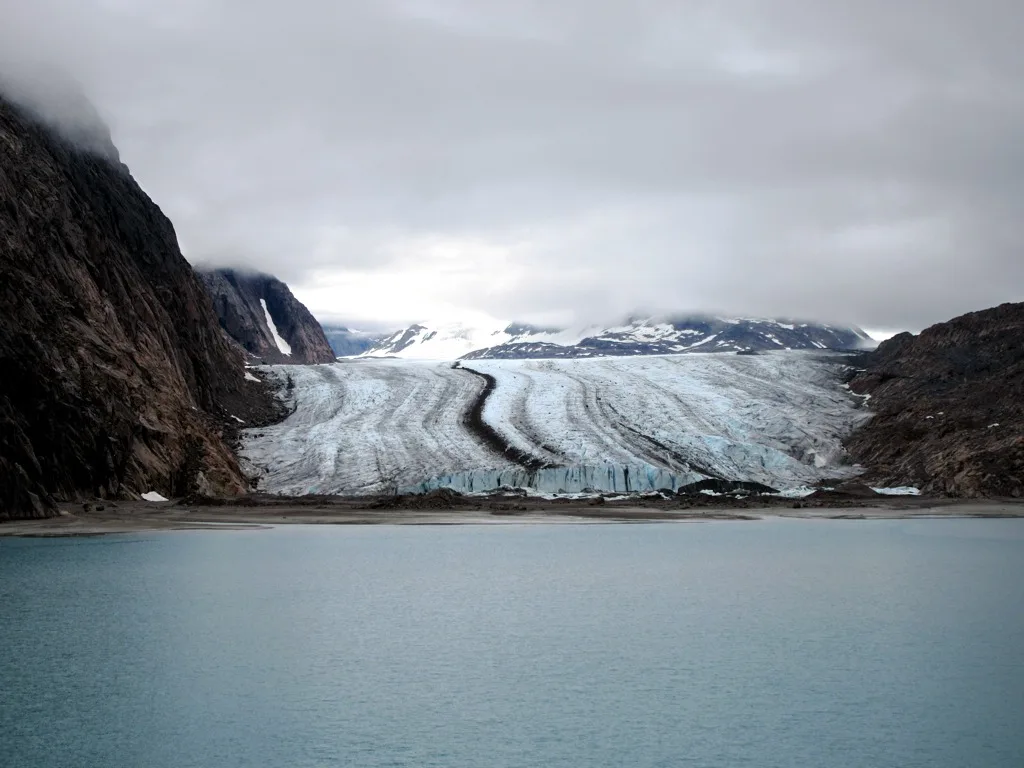 Evighedsfjord
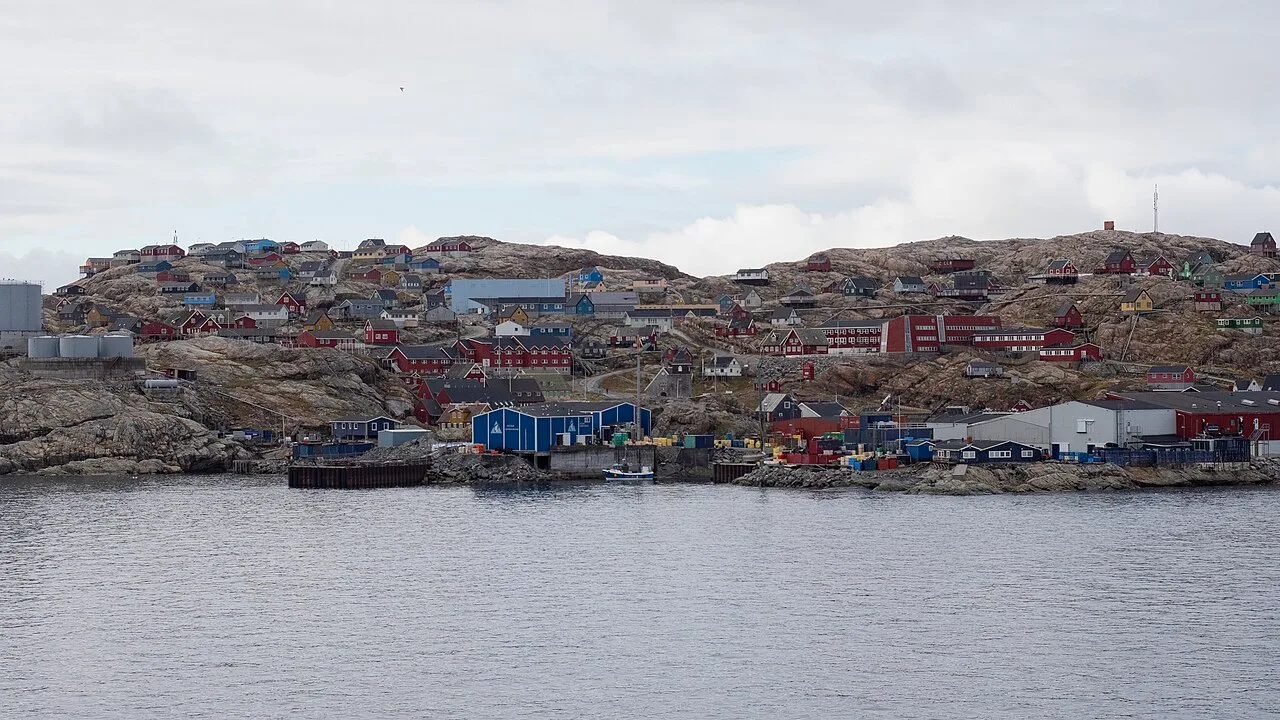 Uummannaq Fjord
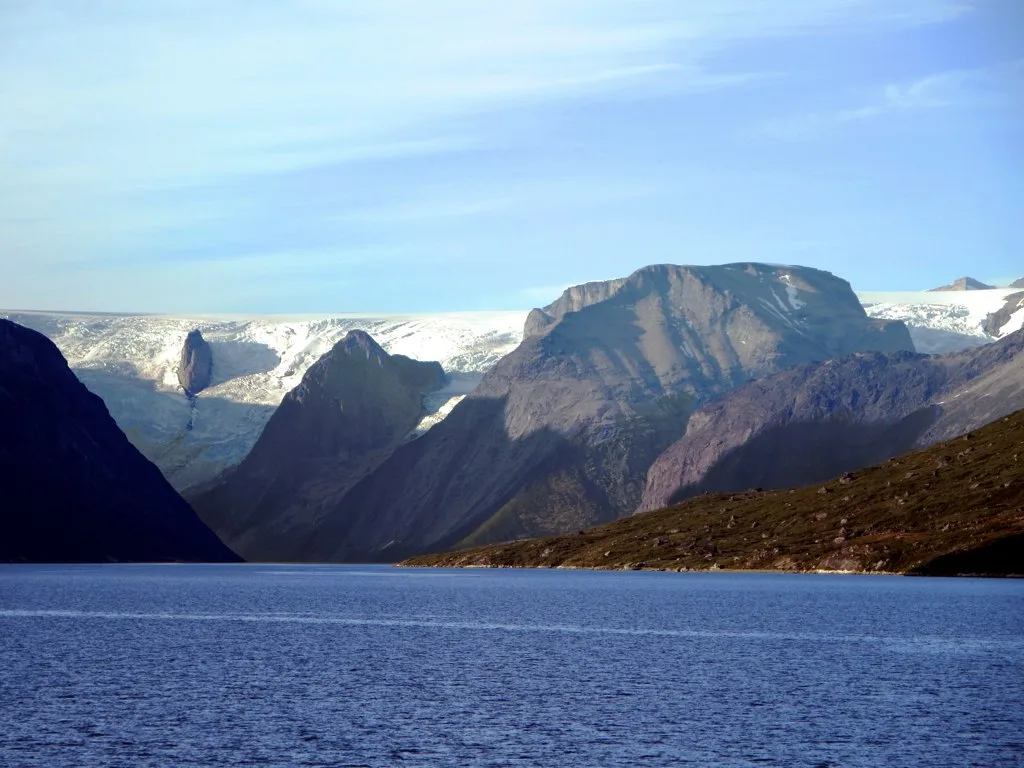 Tasermiut Fjord
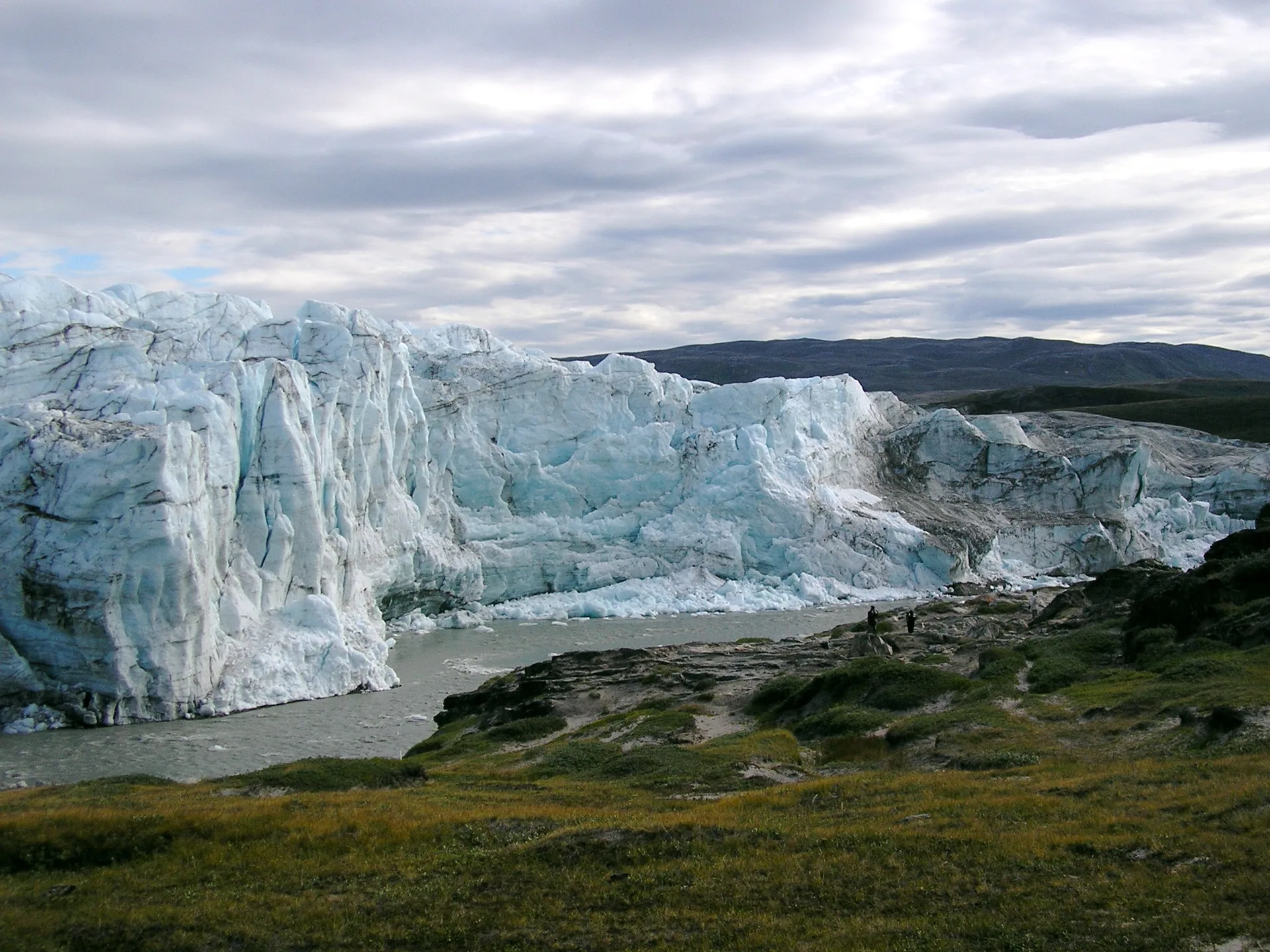 Kangerlussuaq
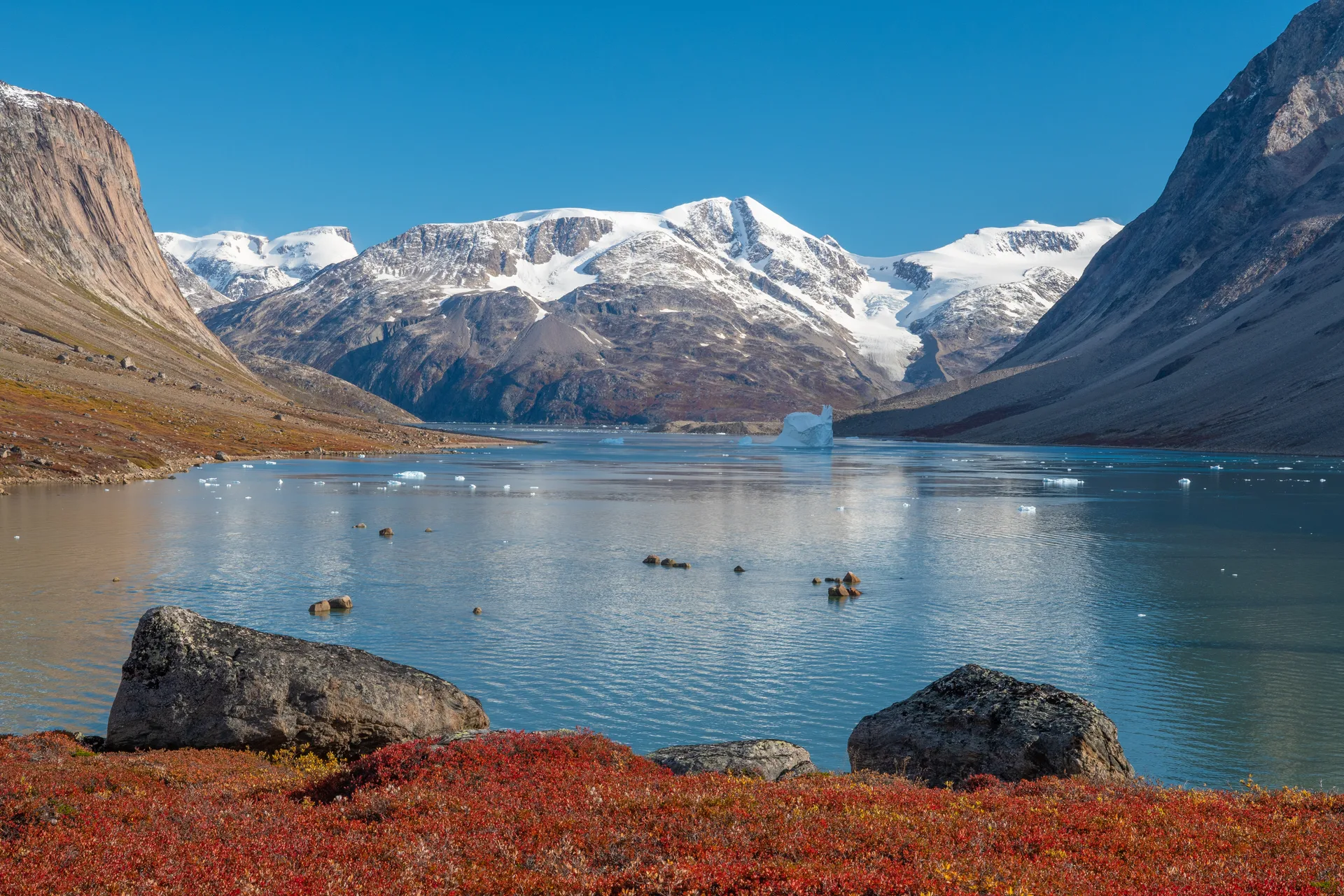 Skjoldungen
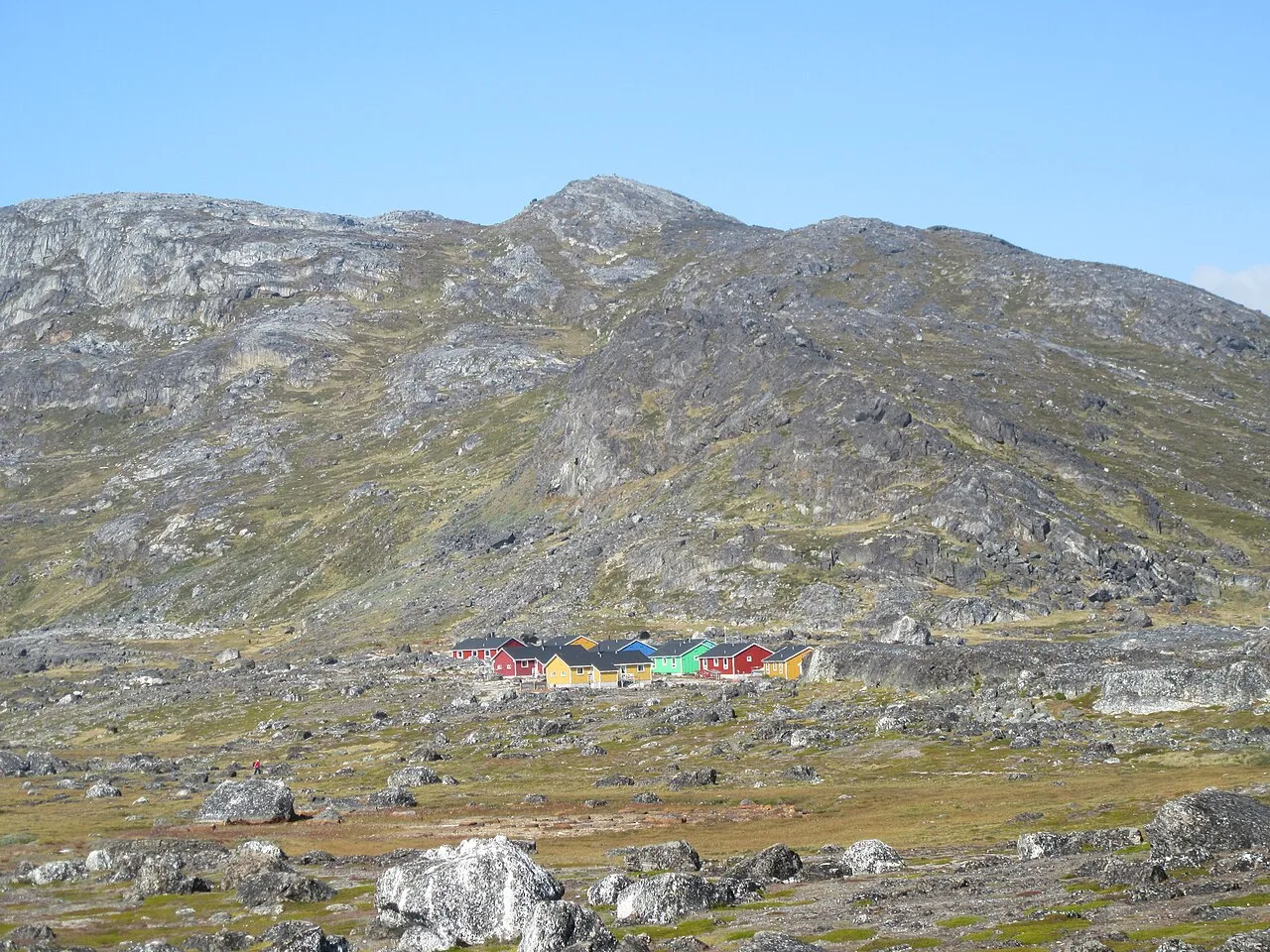 Nanortalik
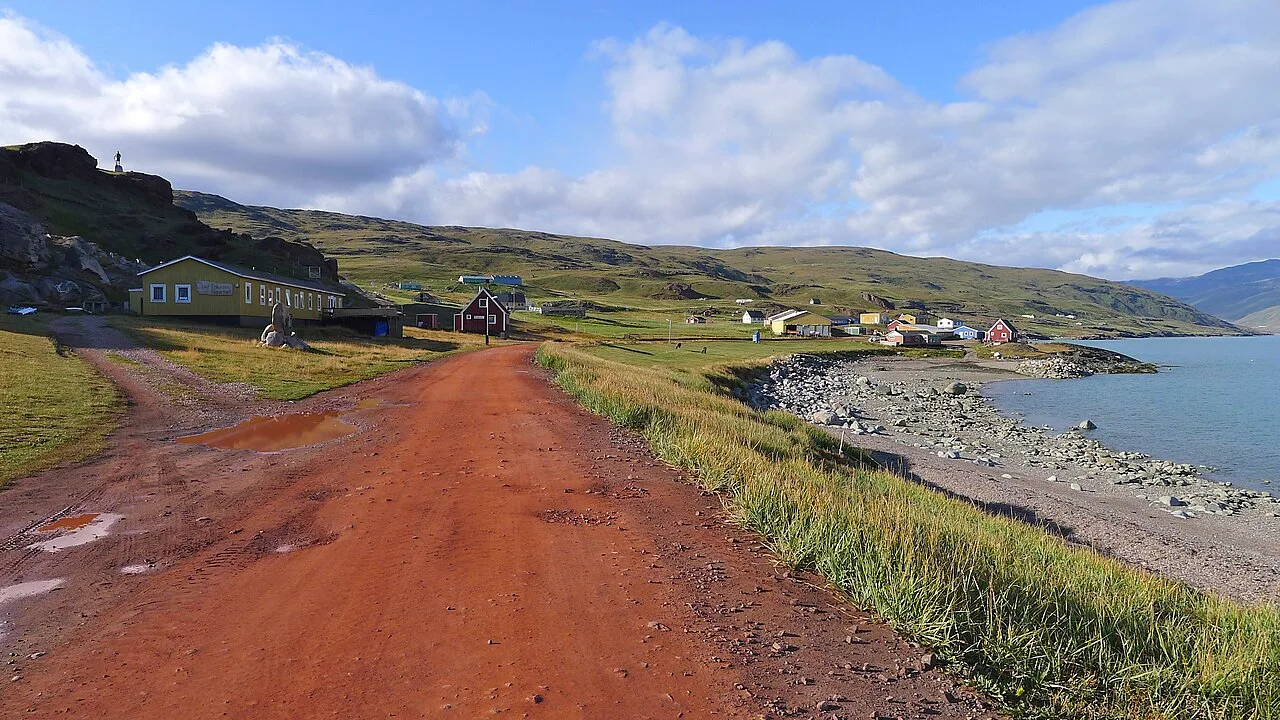 Qassiarsuk
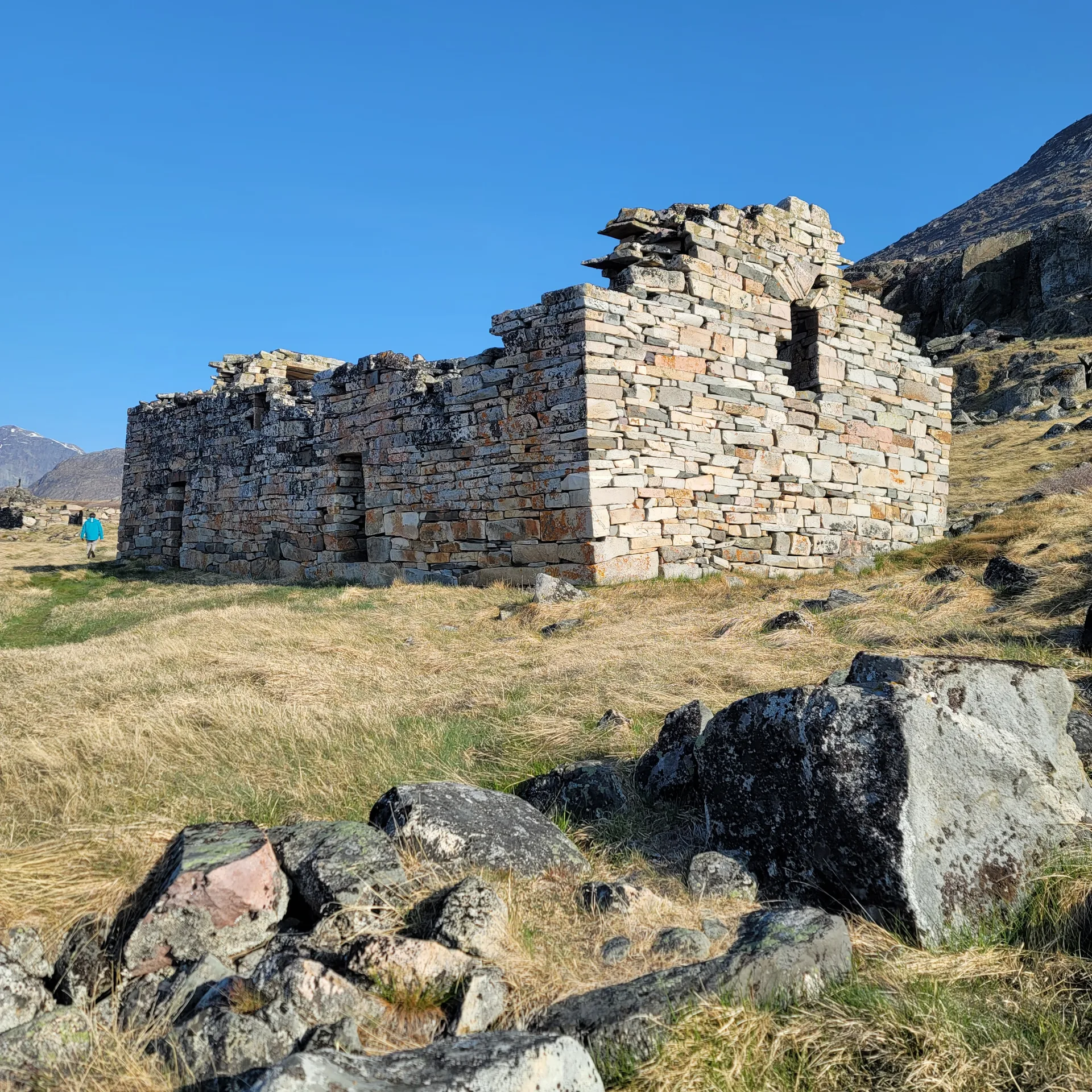 Hvalsey
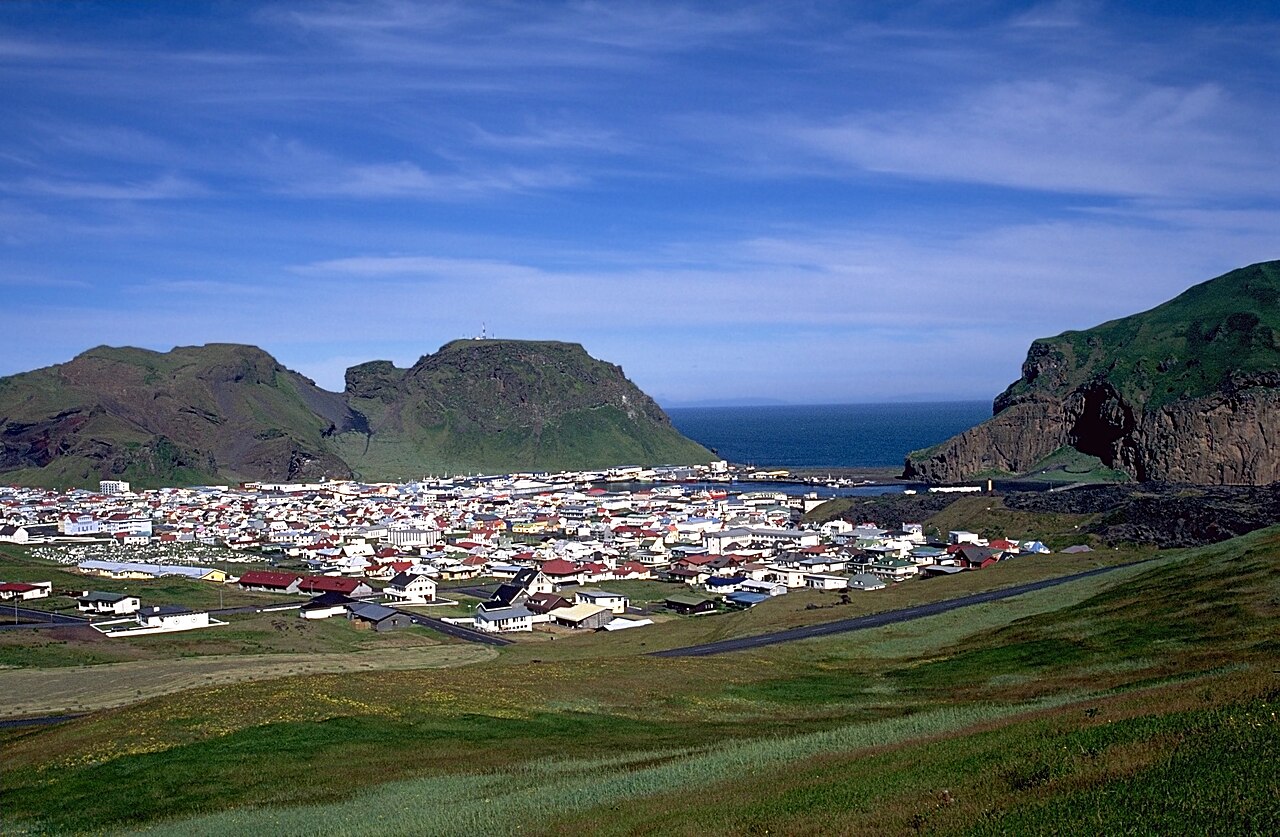 Vestmannaeyjar (Westman Islands)
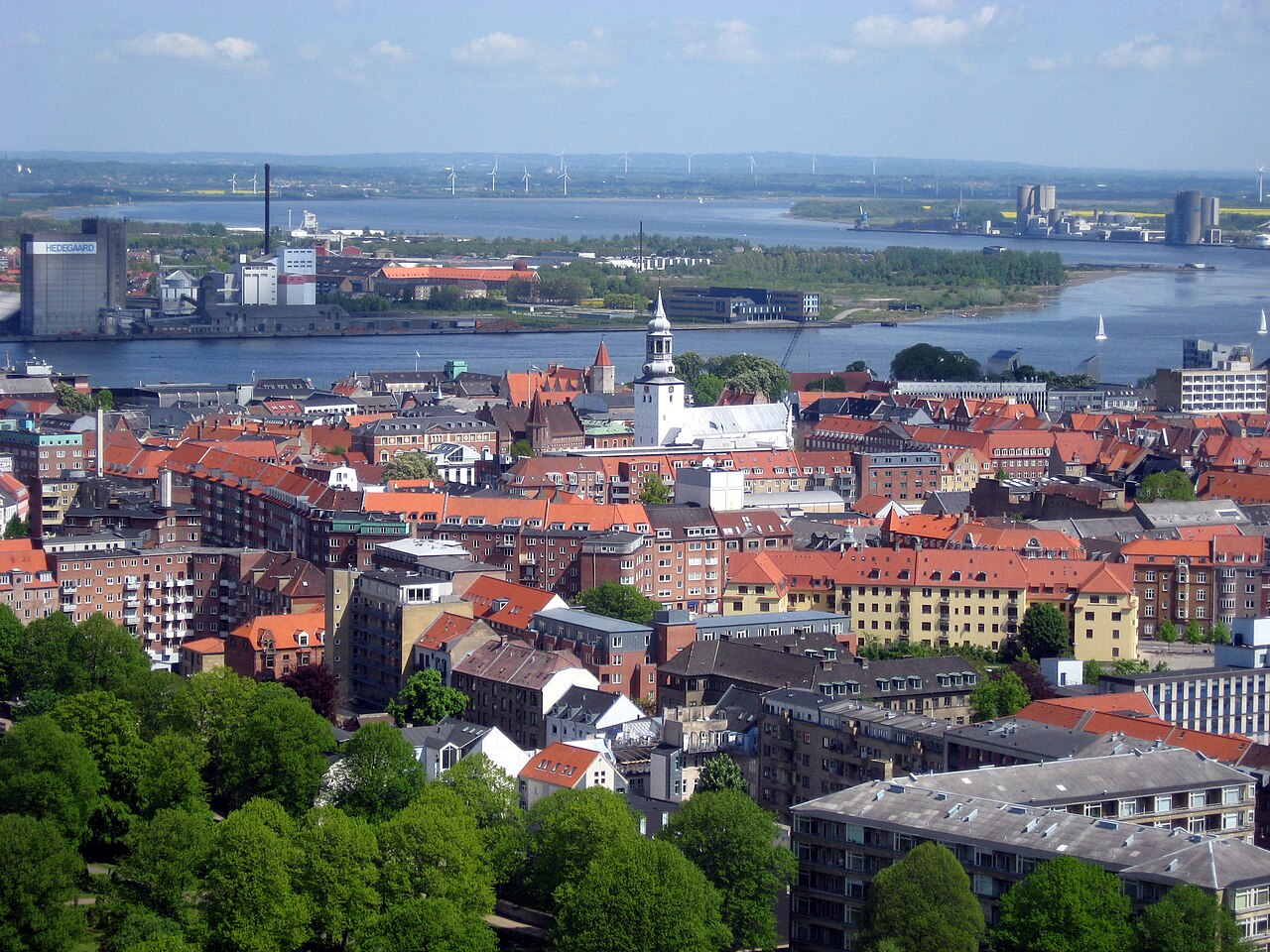 Ålborg
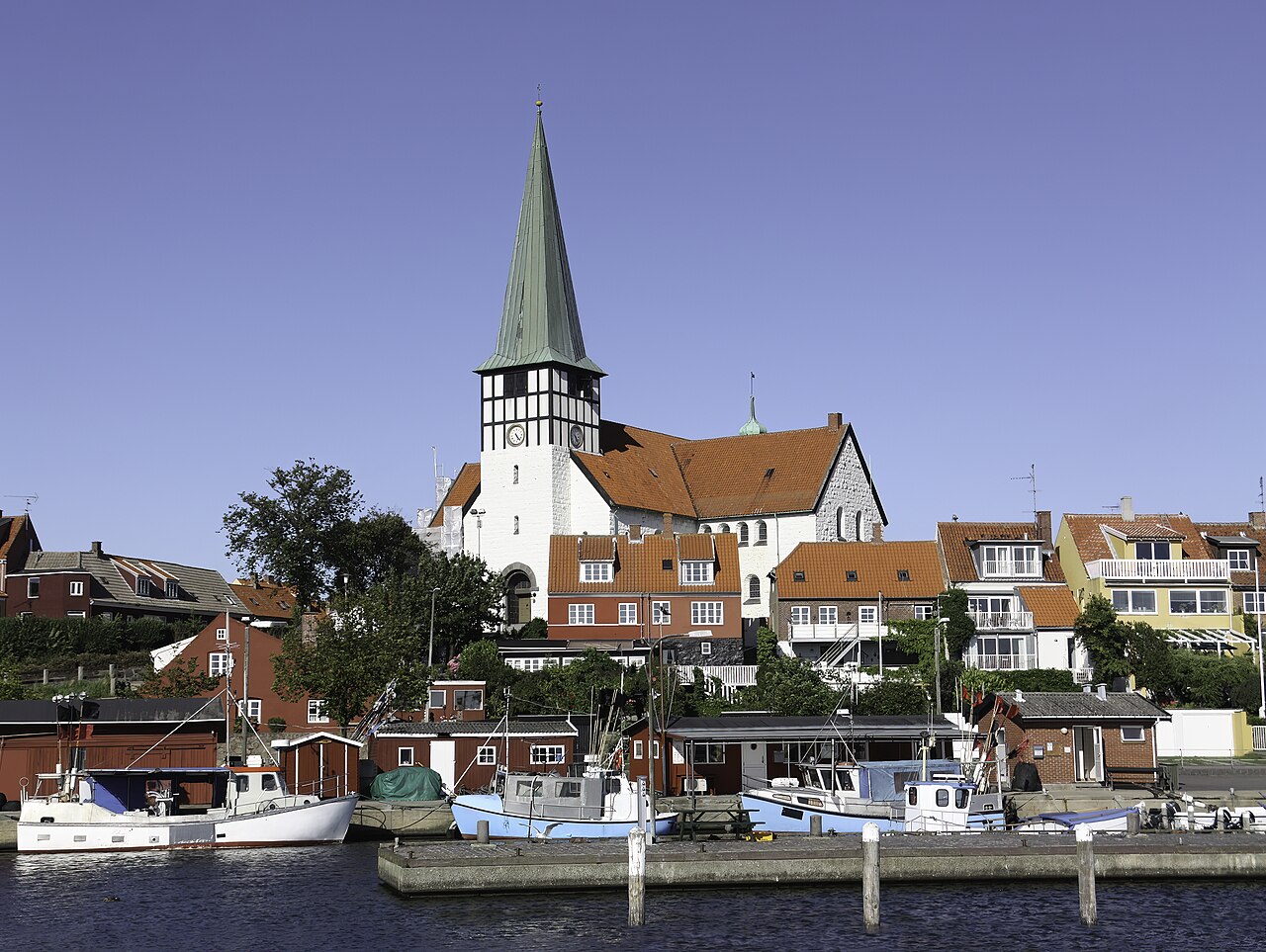 Rønne (Bornholm)
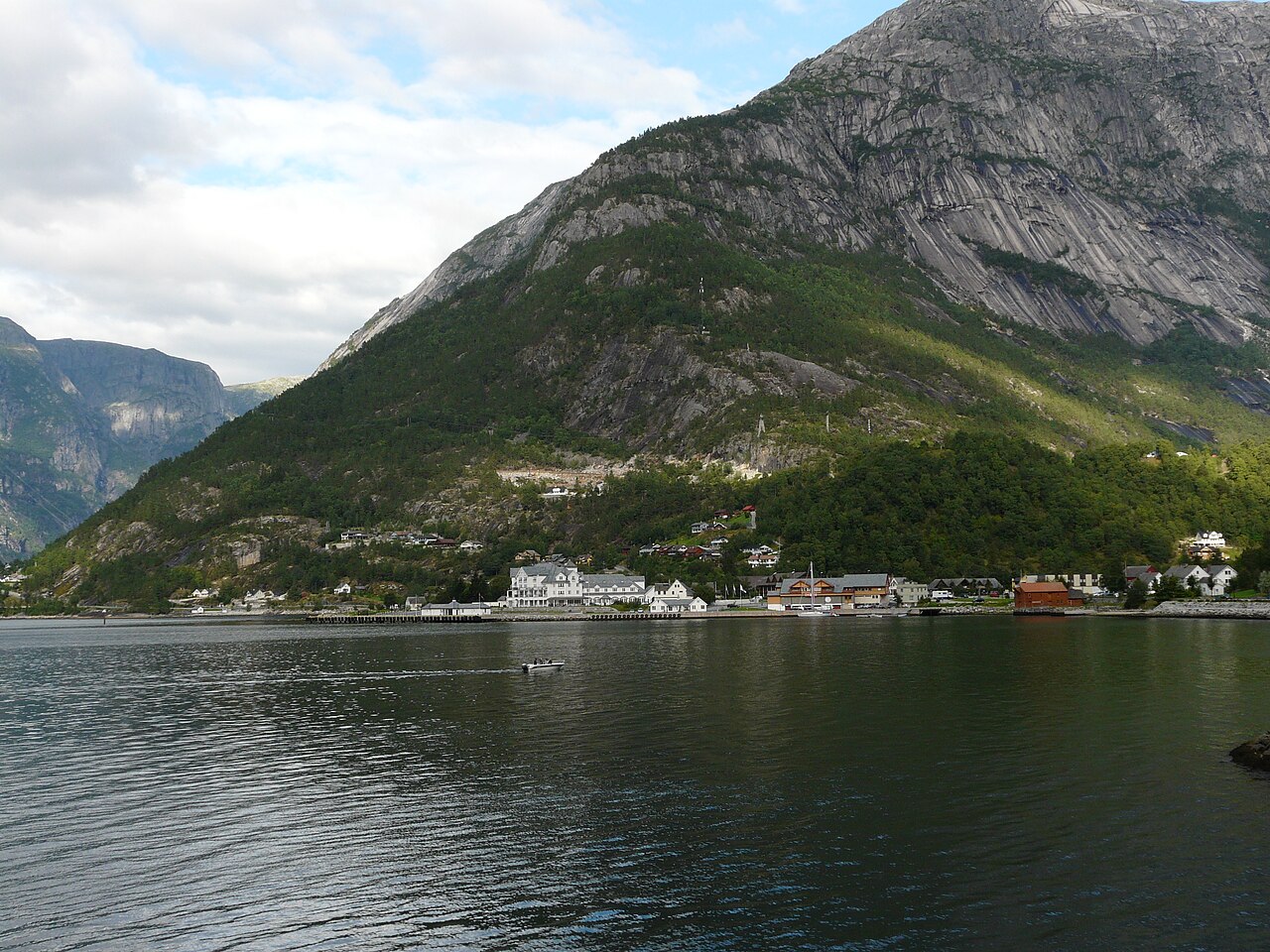 Eidfjord
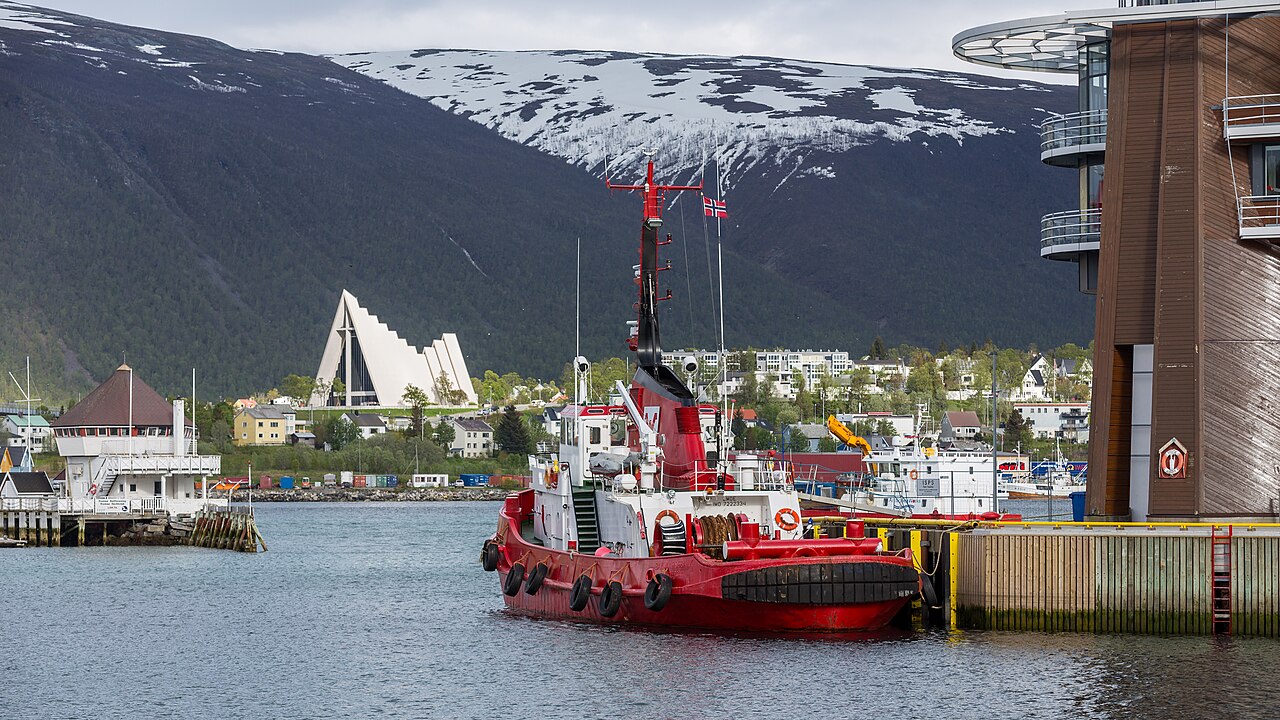 Tromsø
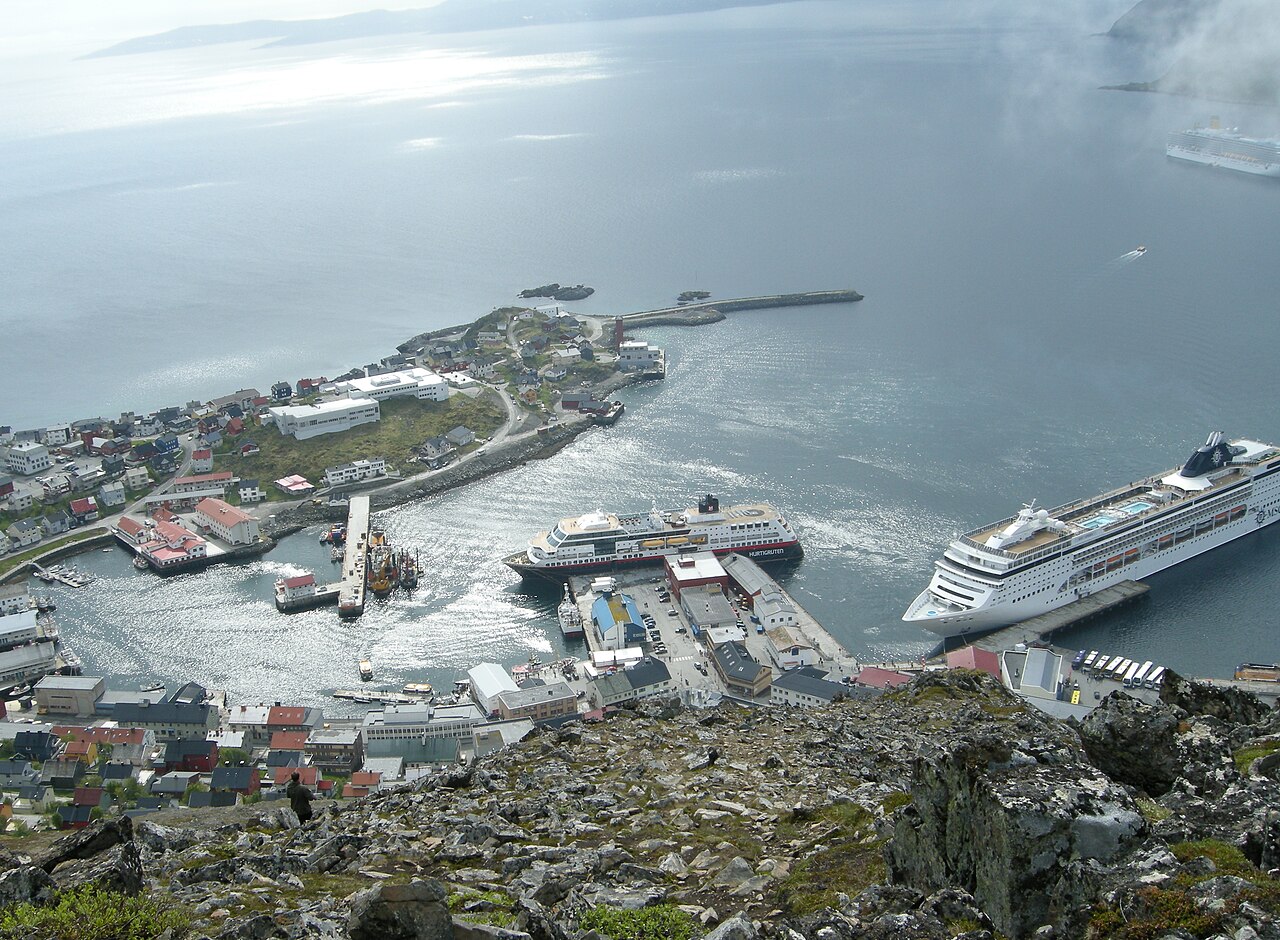 Honningsvåg
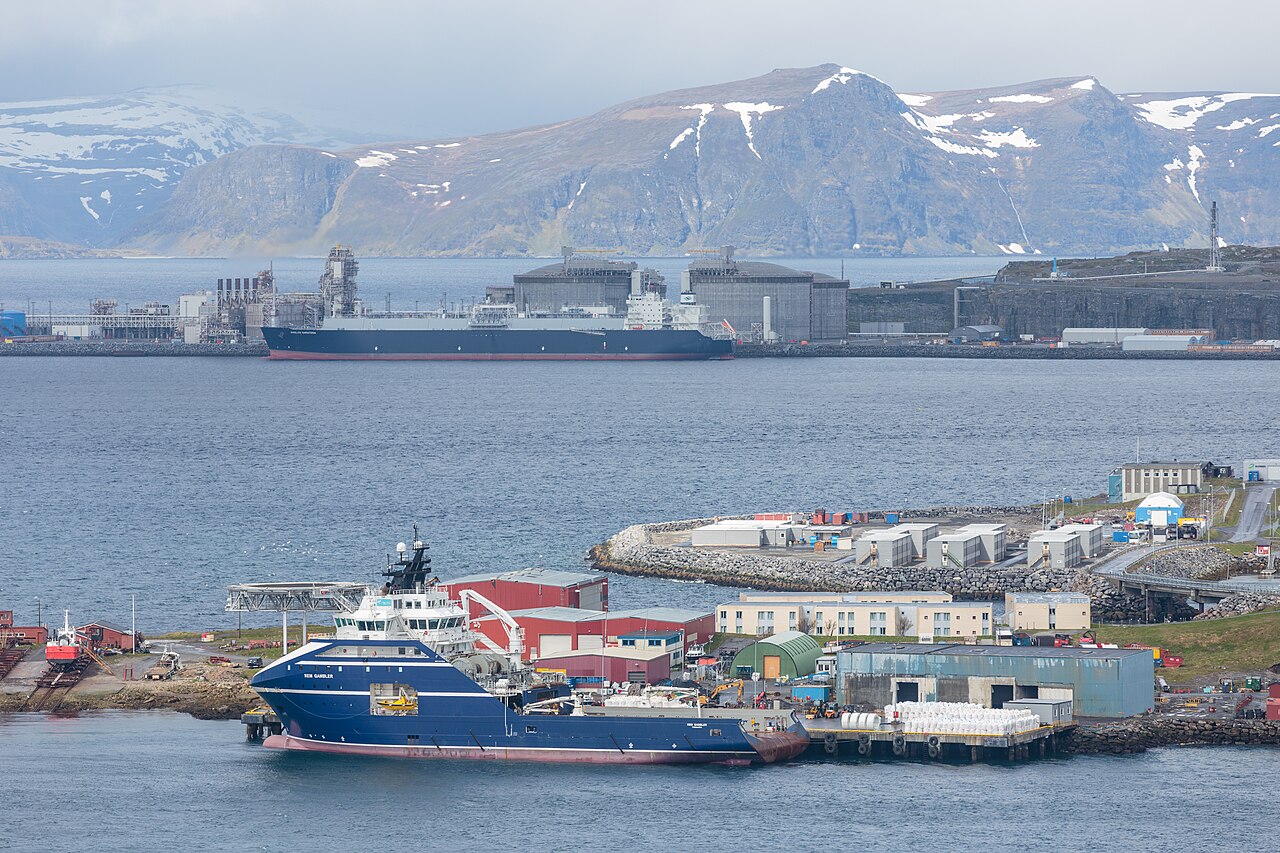 Hammerfest
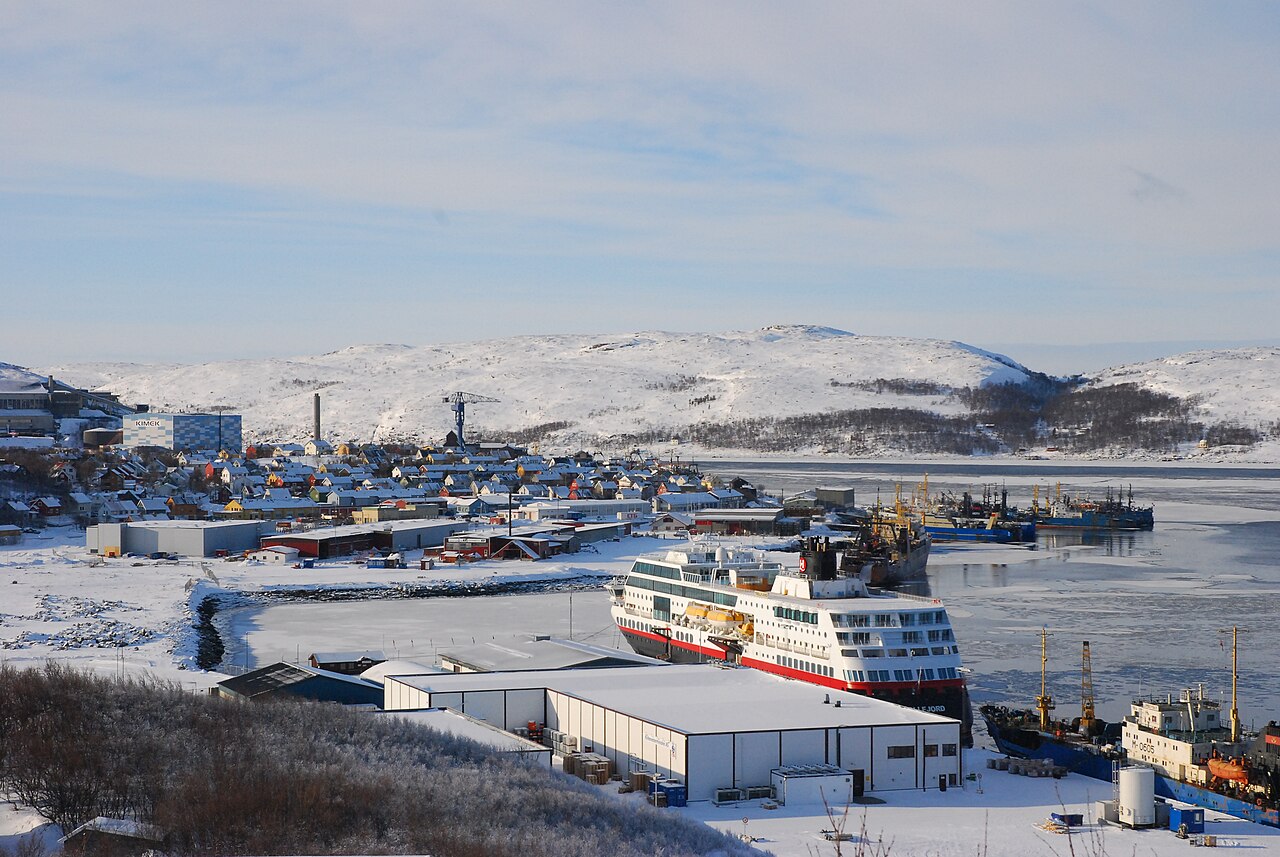 Kirkenes
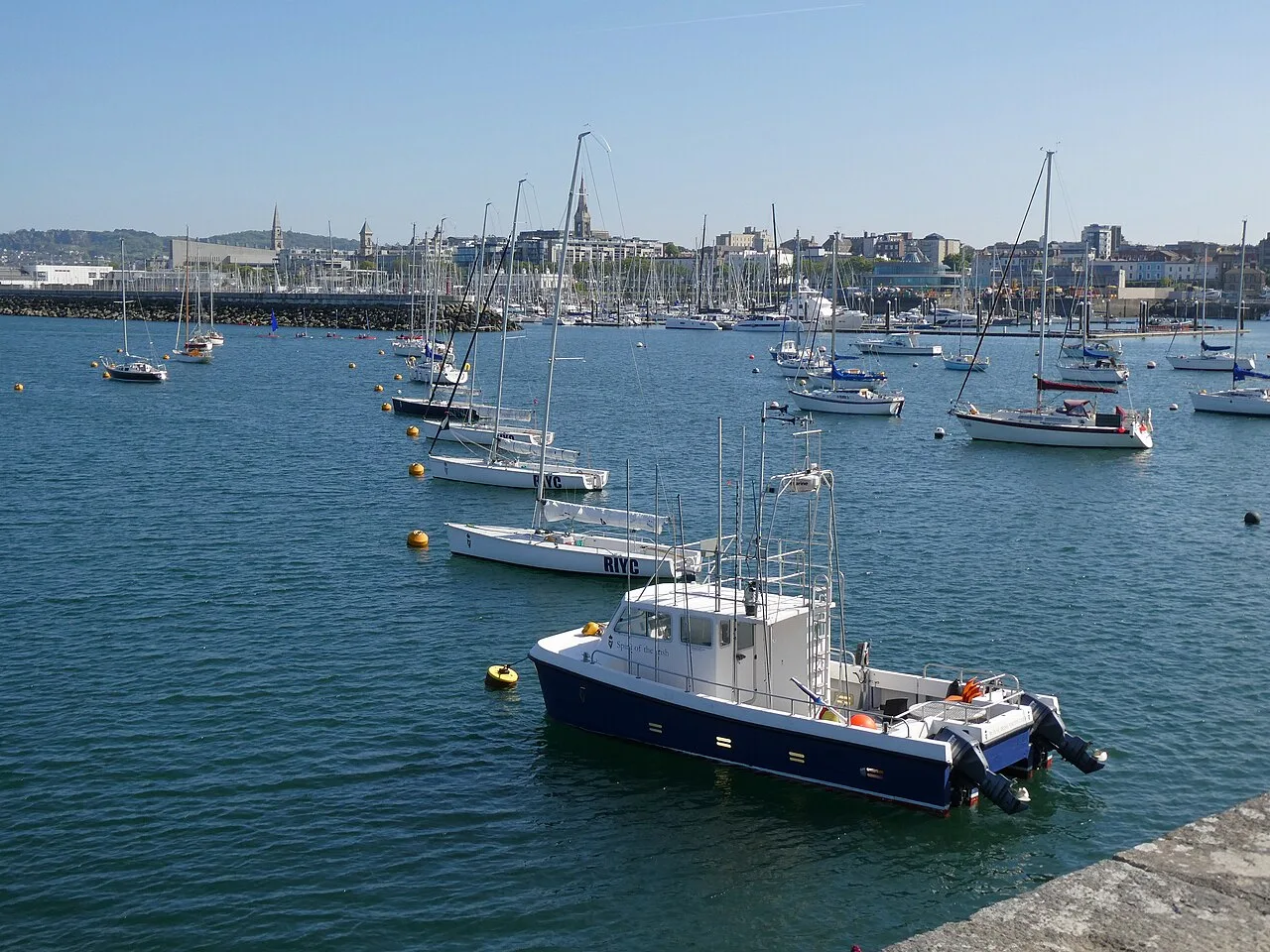 Dún Laoghaire (Dublin)
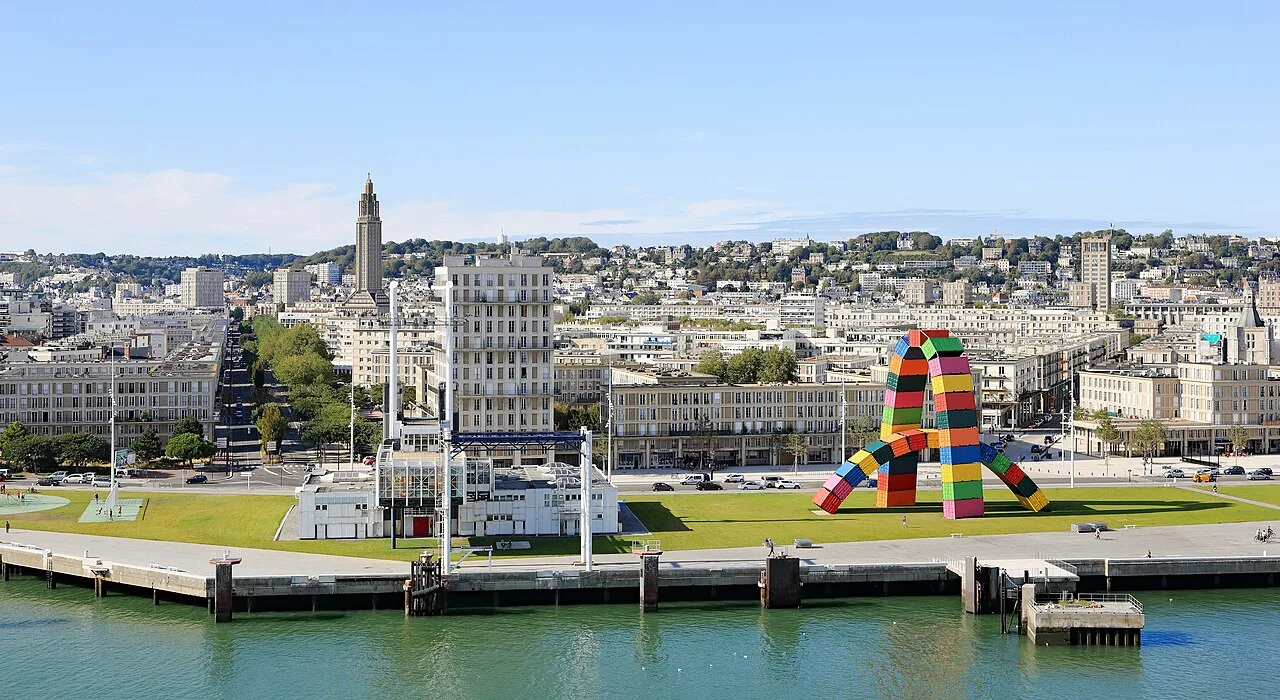 Le Havre
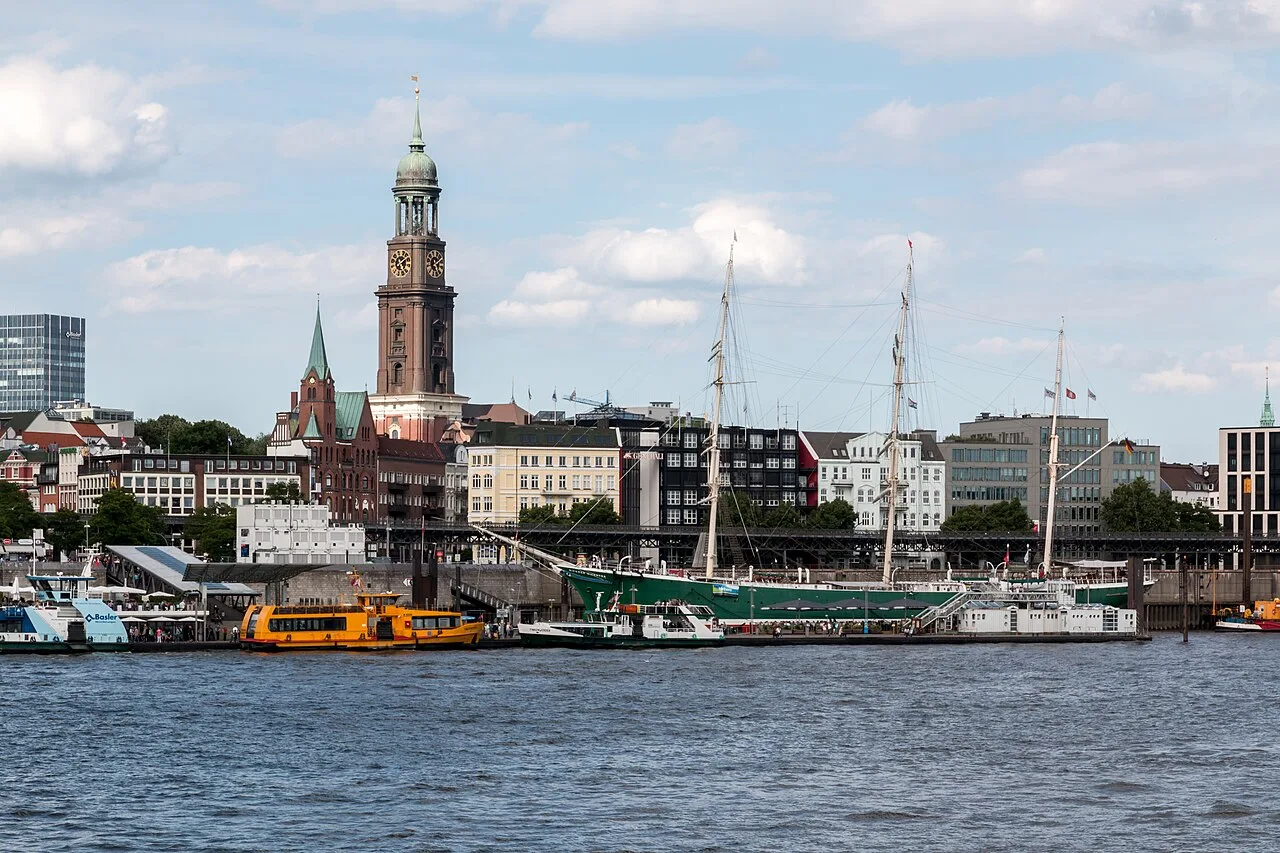 Hamburg
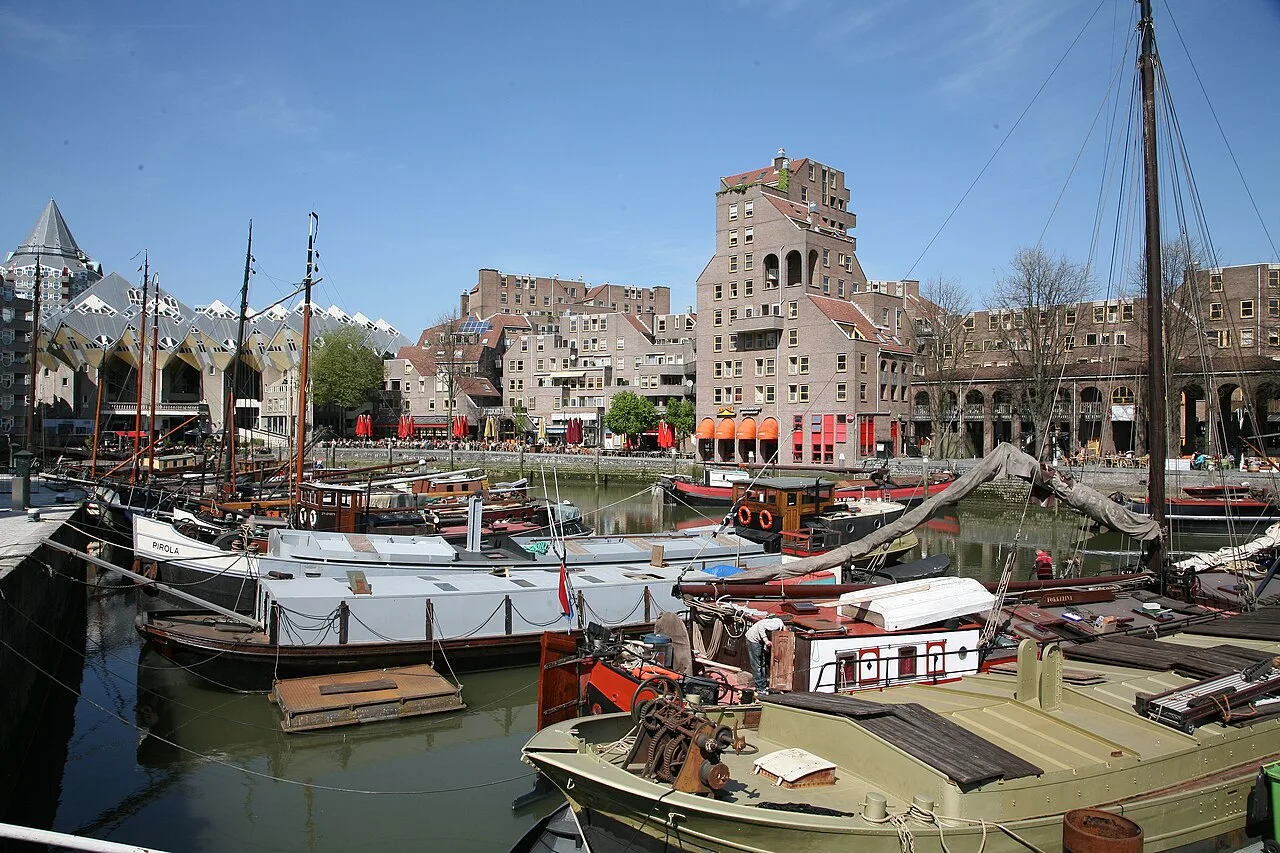 Rotterdam
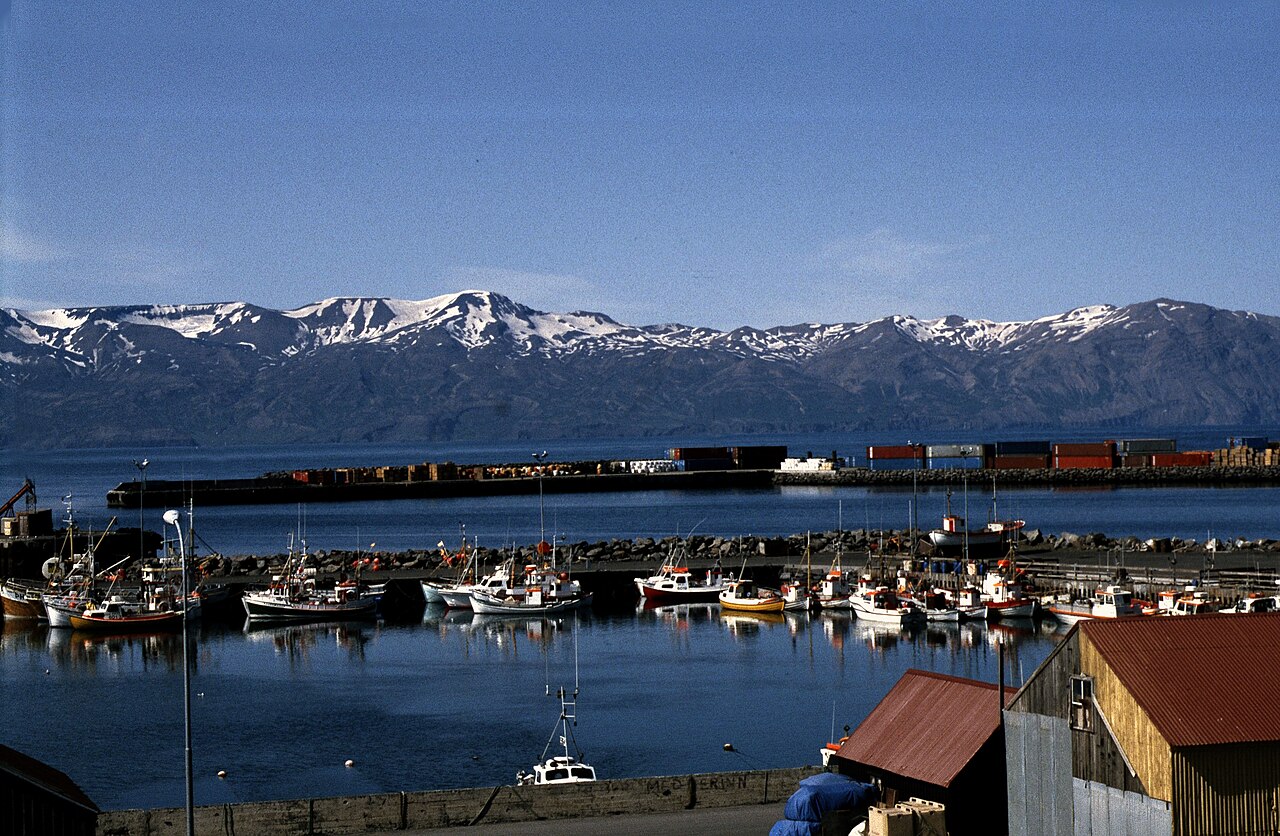 Húsavík
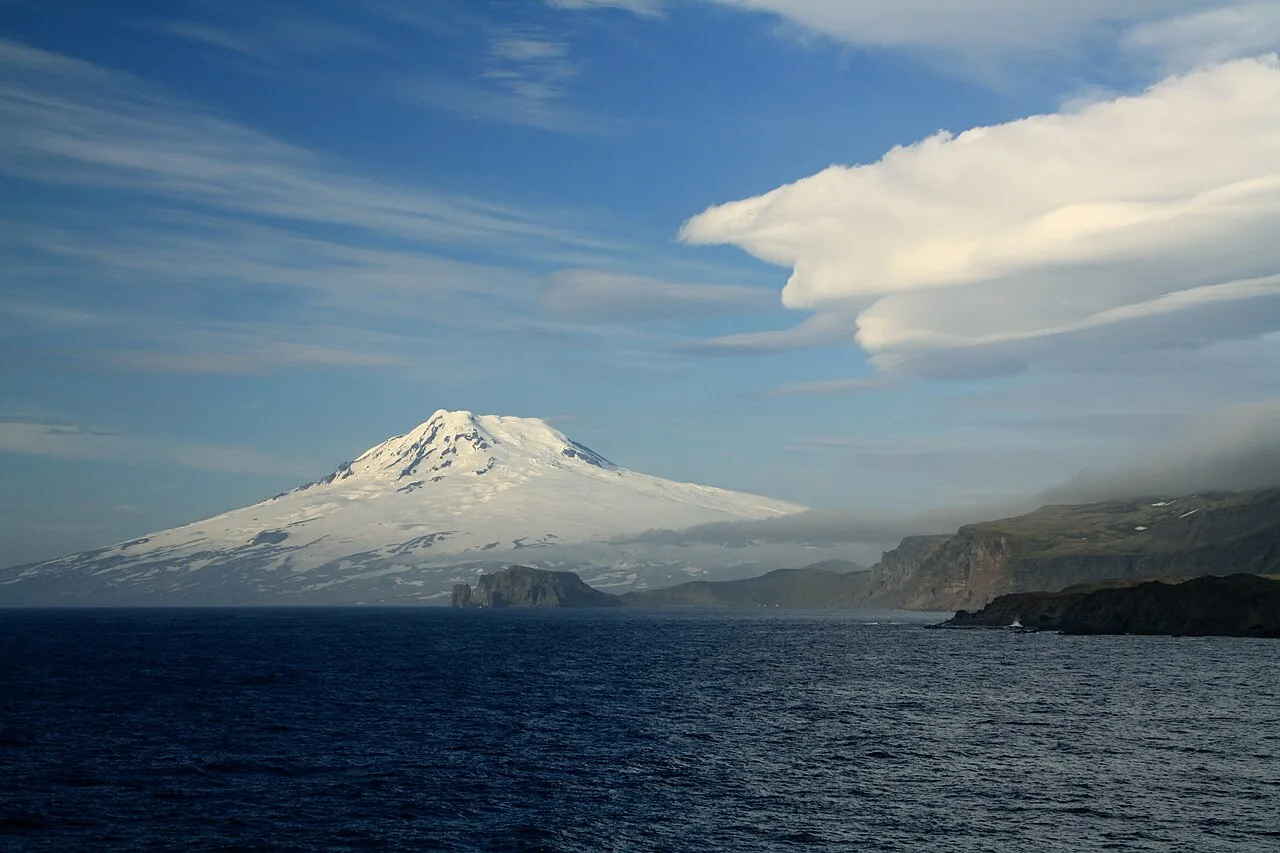 Jan Mayen
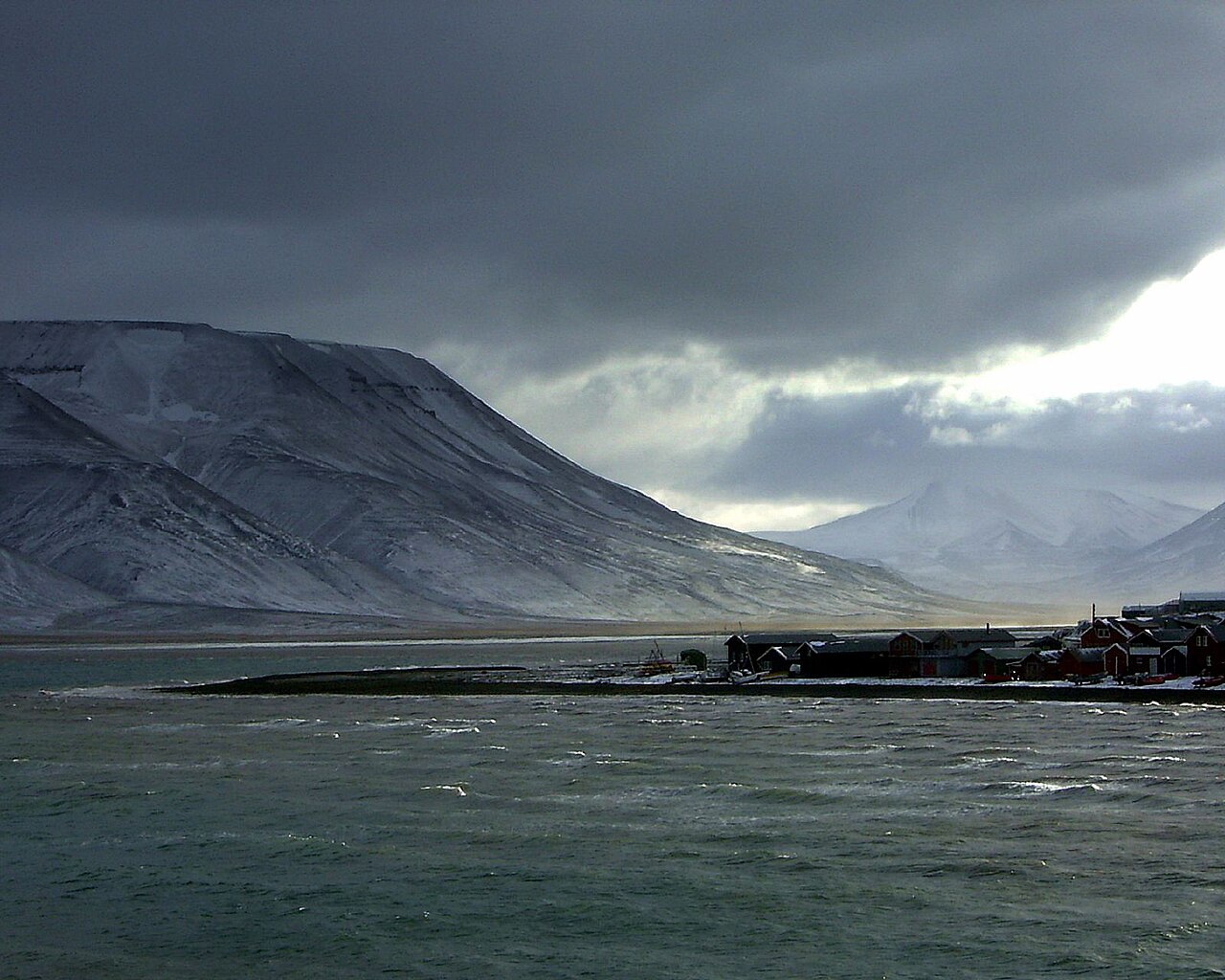 Longyearbyen
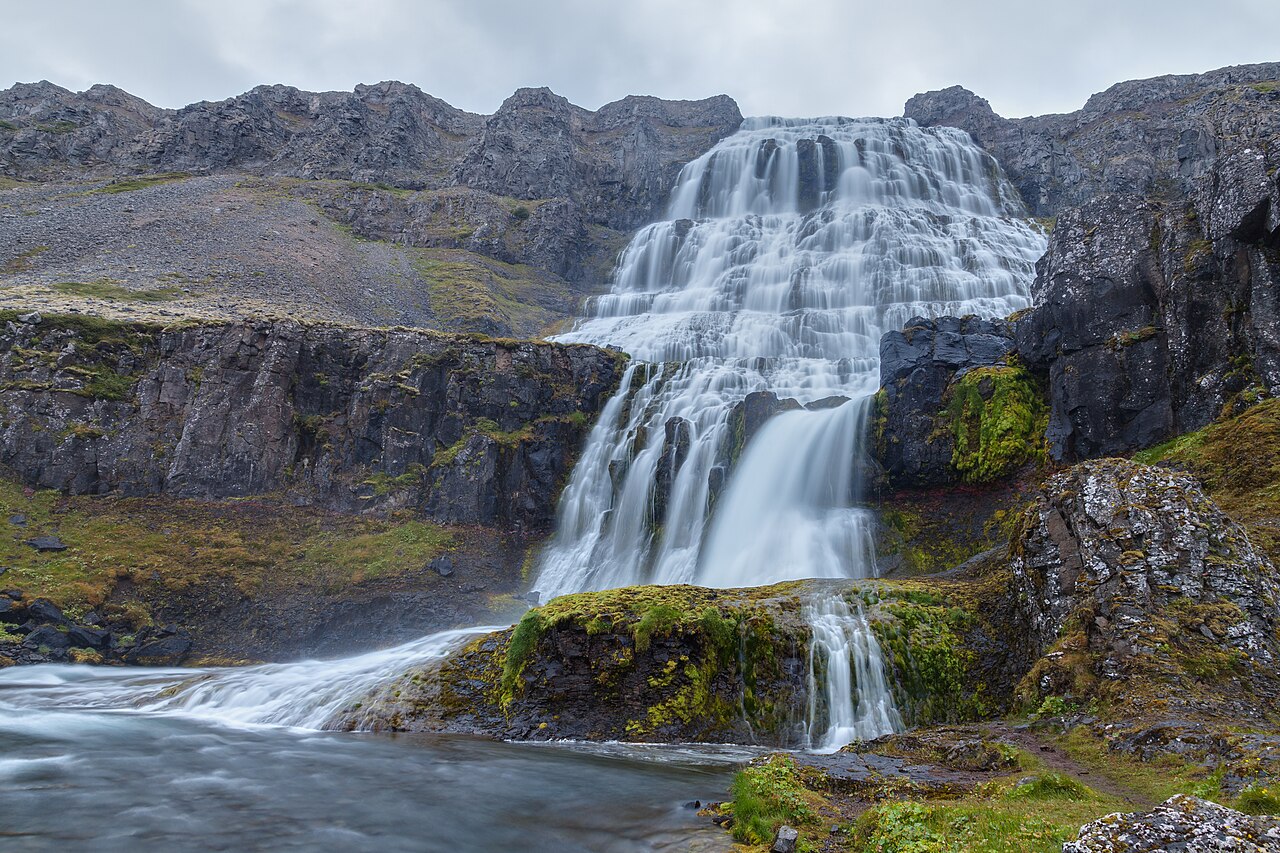 Dynjandi
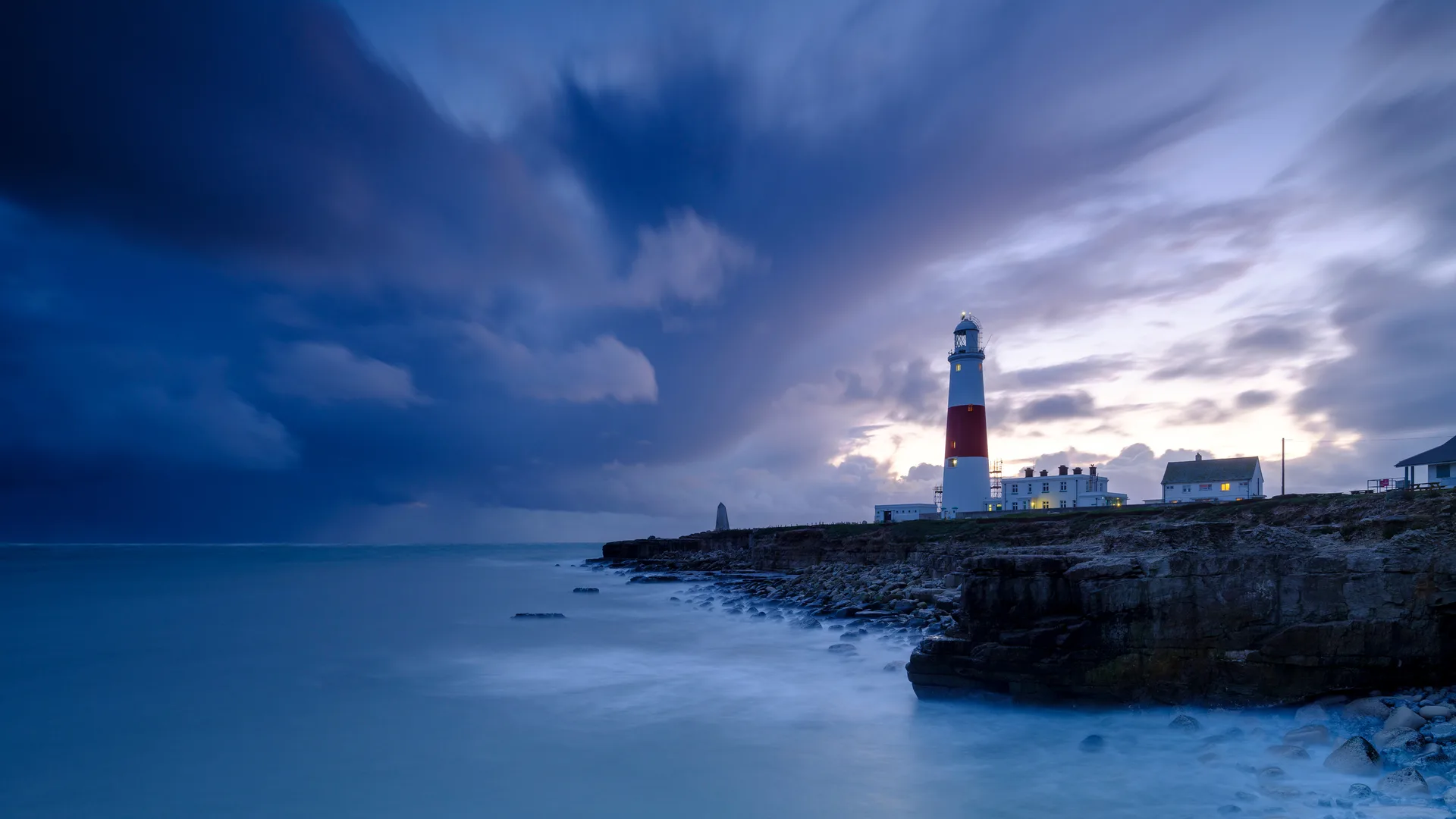 Portland (Weymouth)
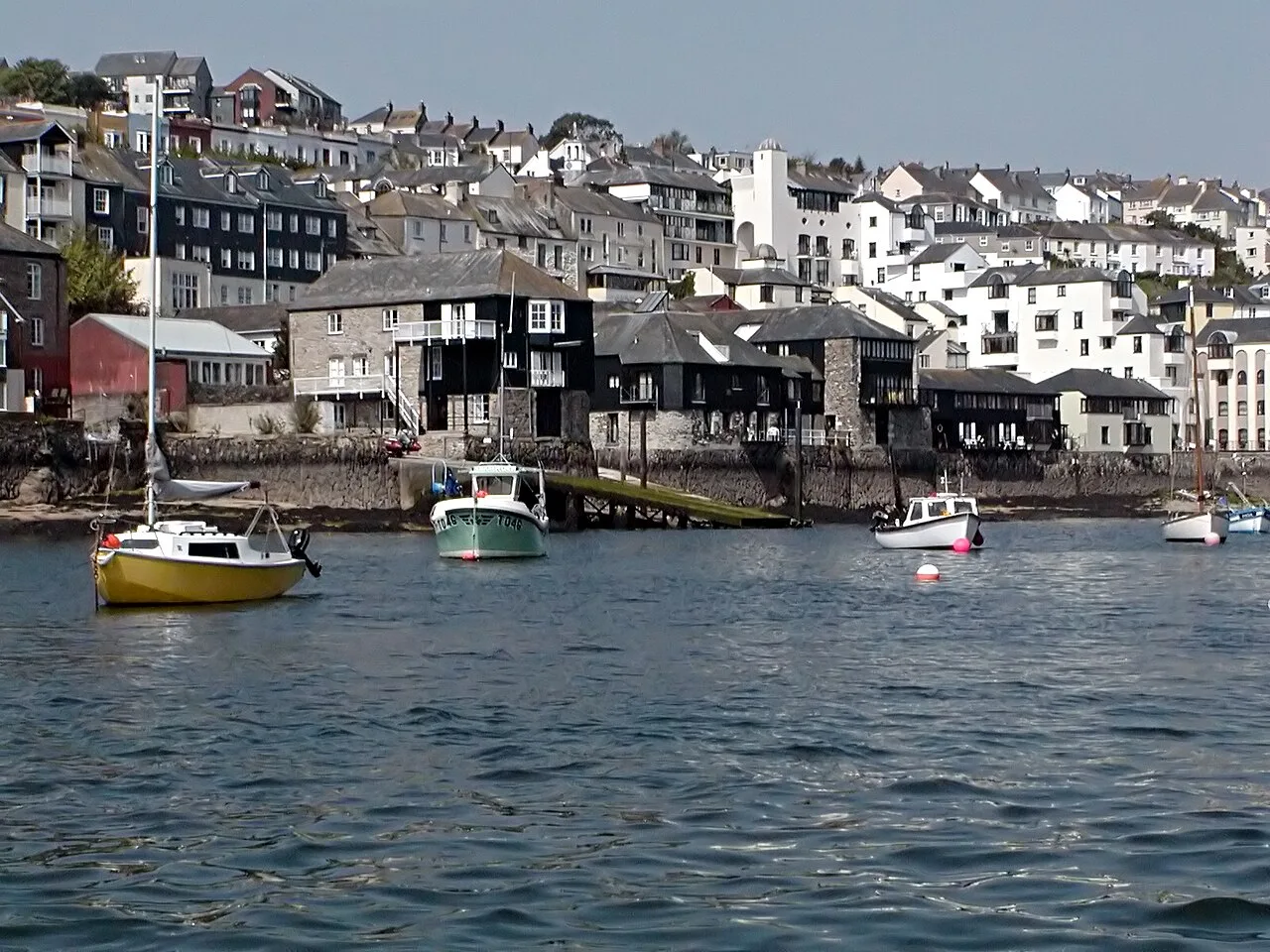 Falmouth
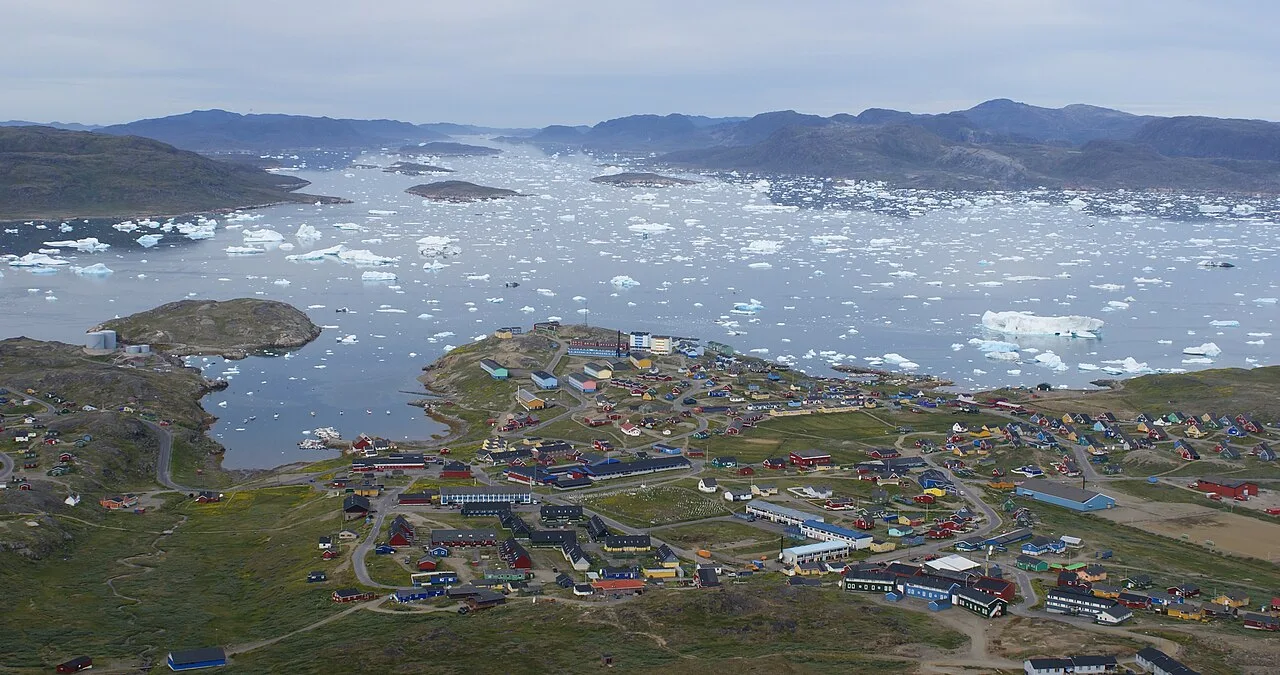 Narsaq
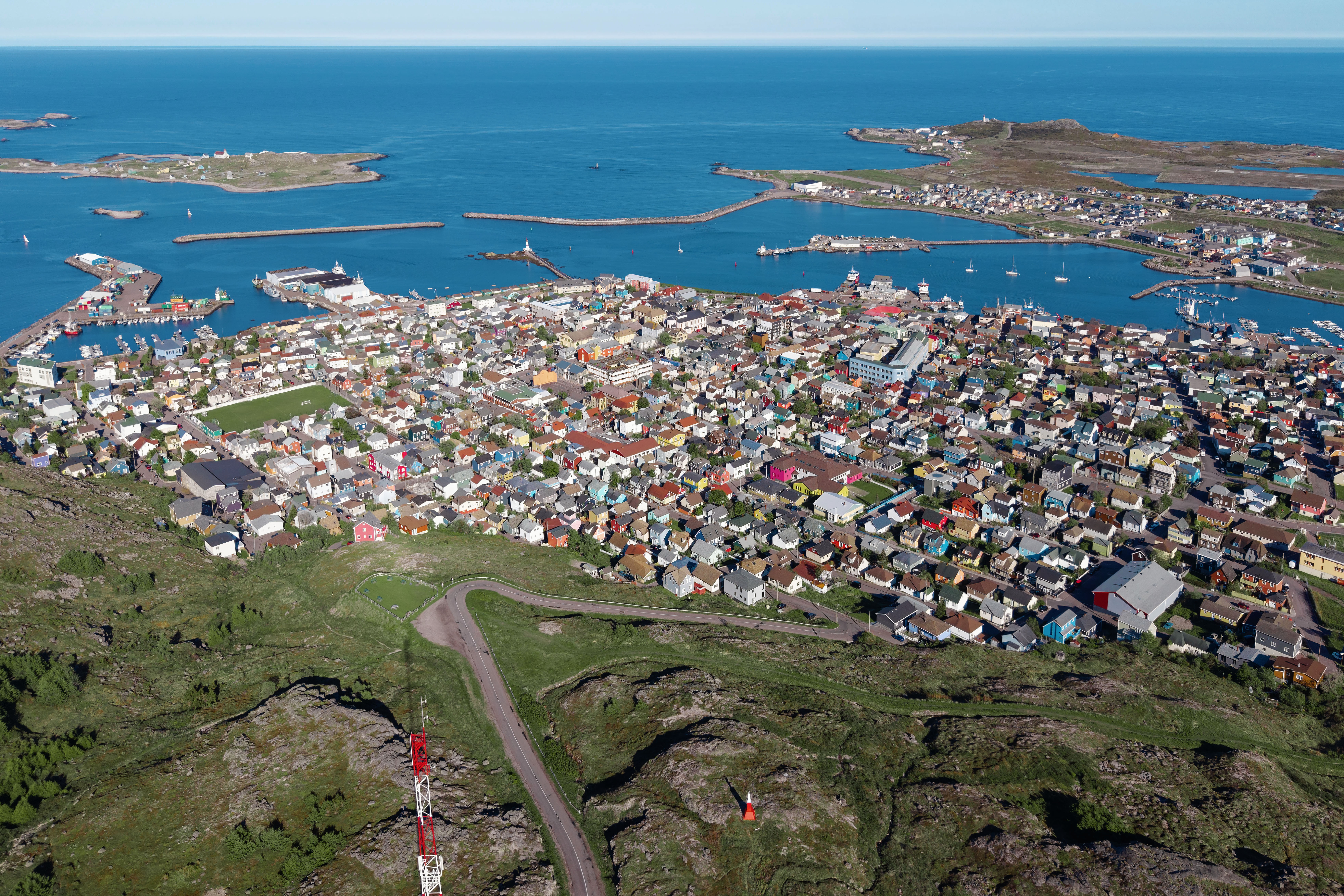 Saint-Pierre
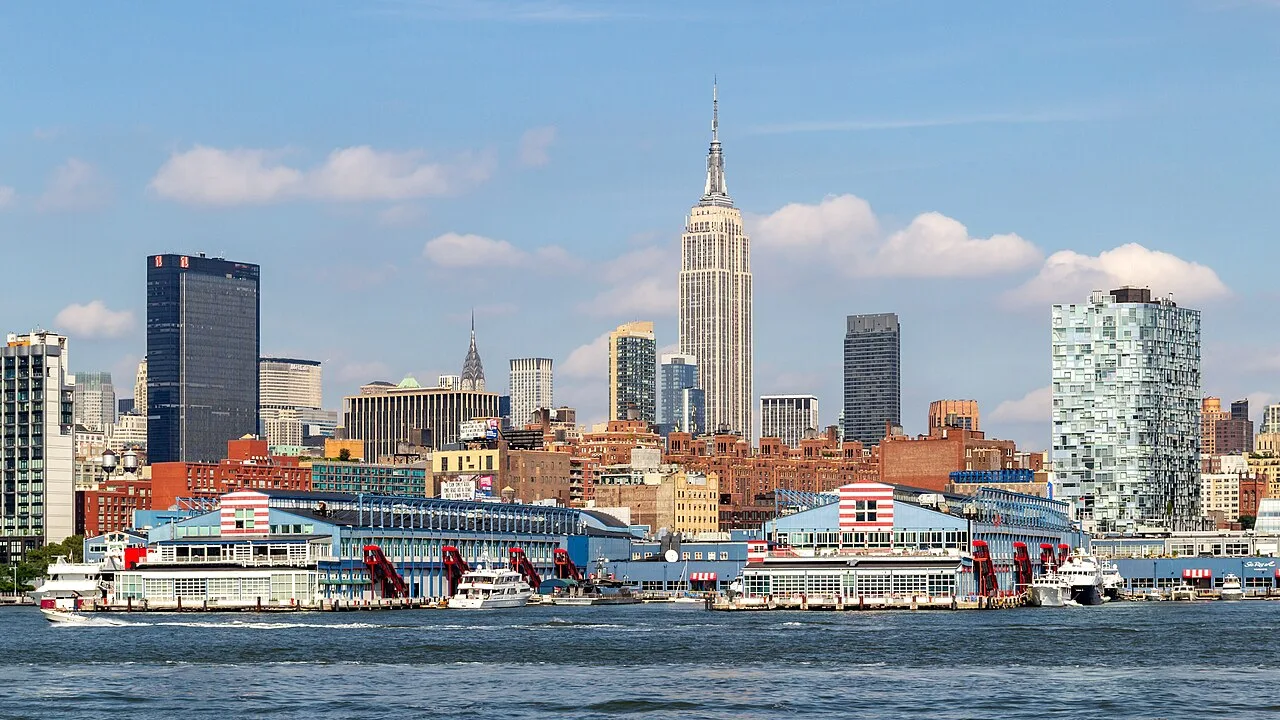 New York
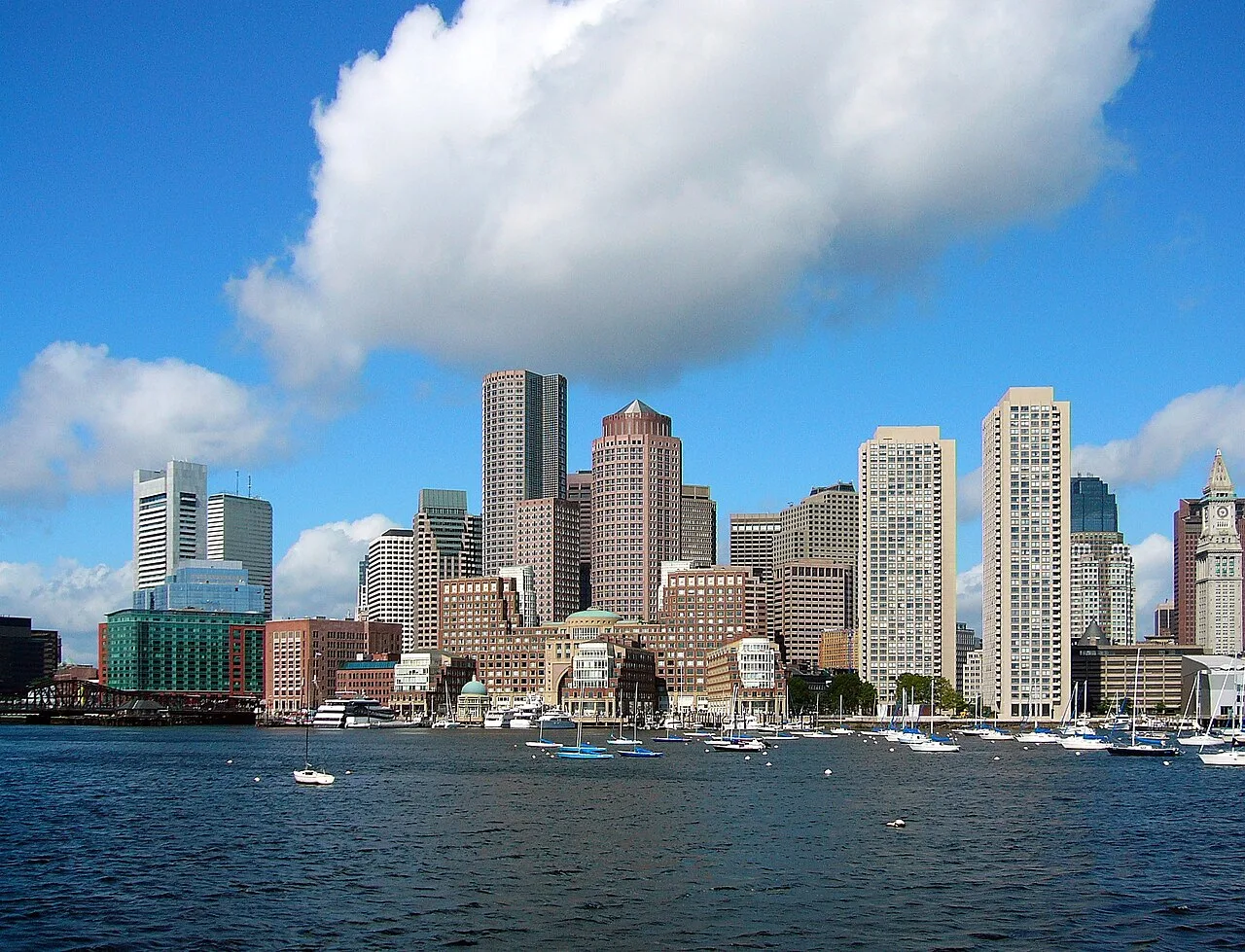 Boston
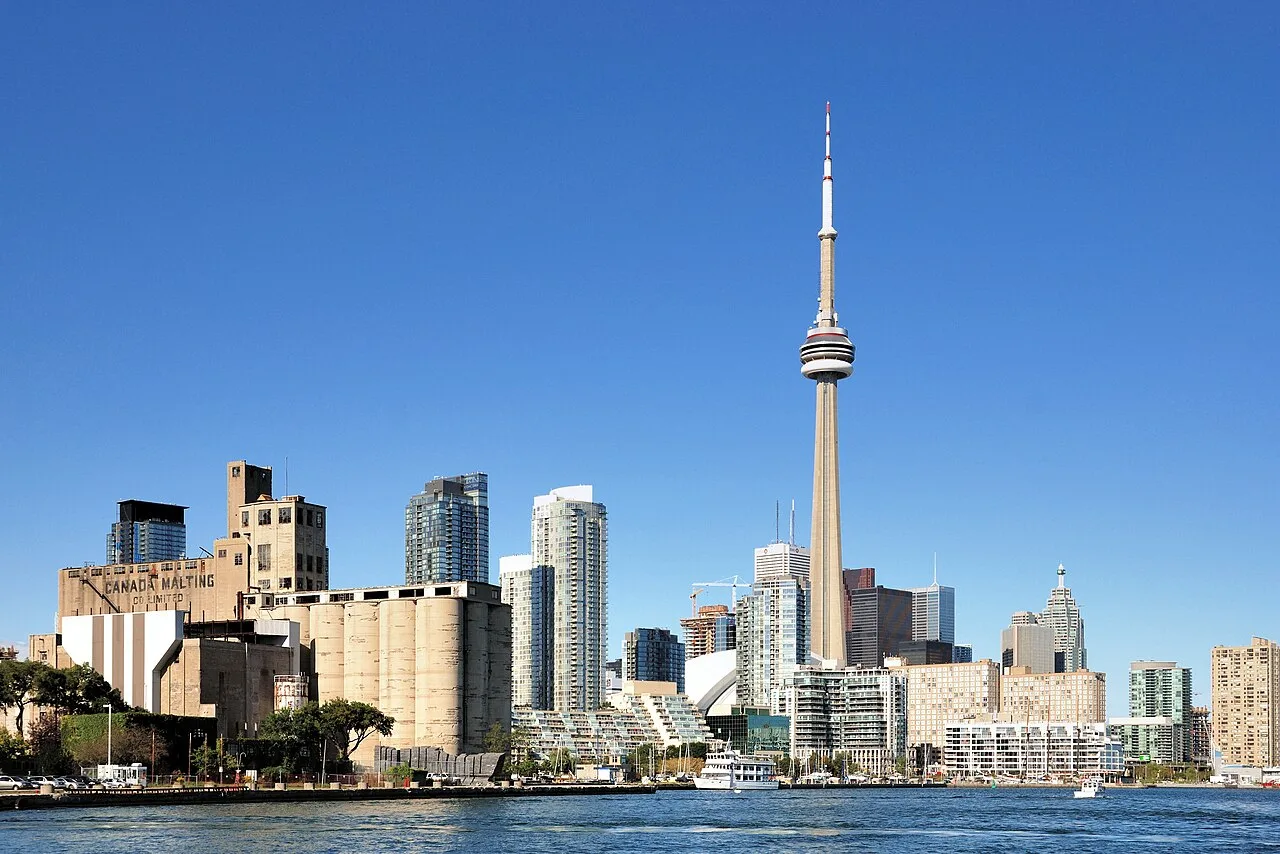 Toronto
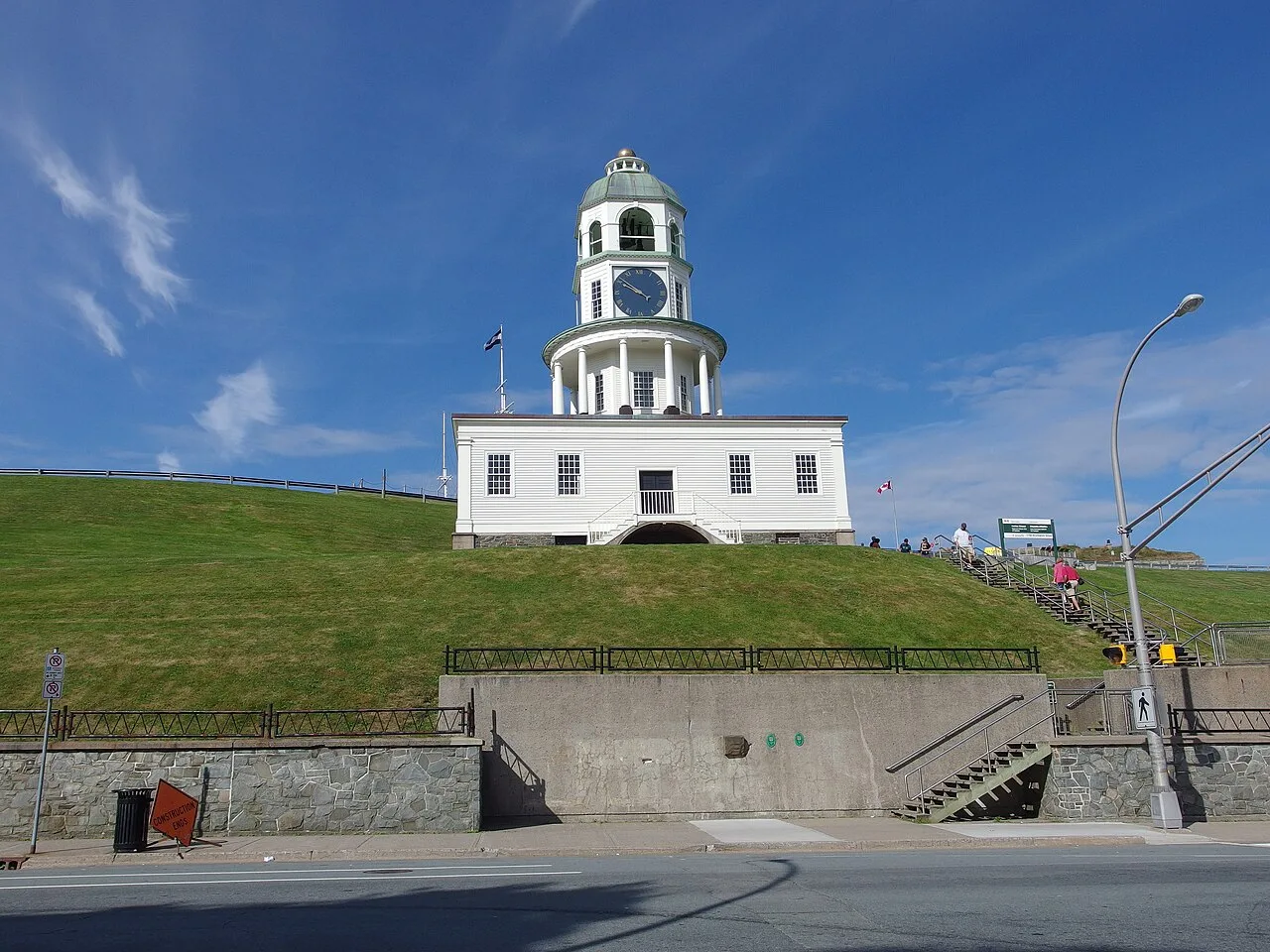 Halifax
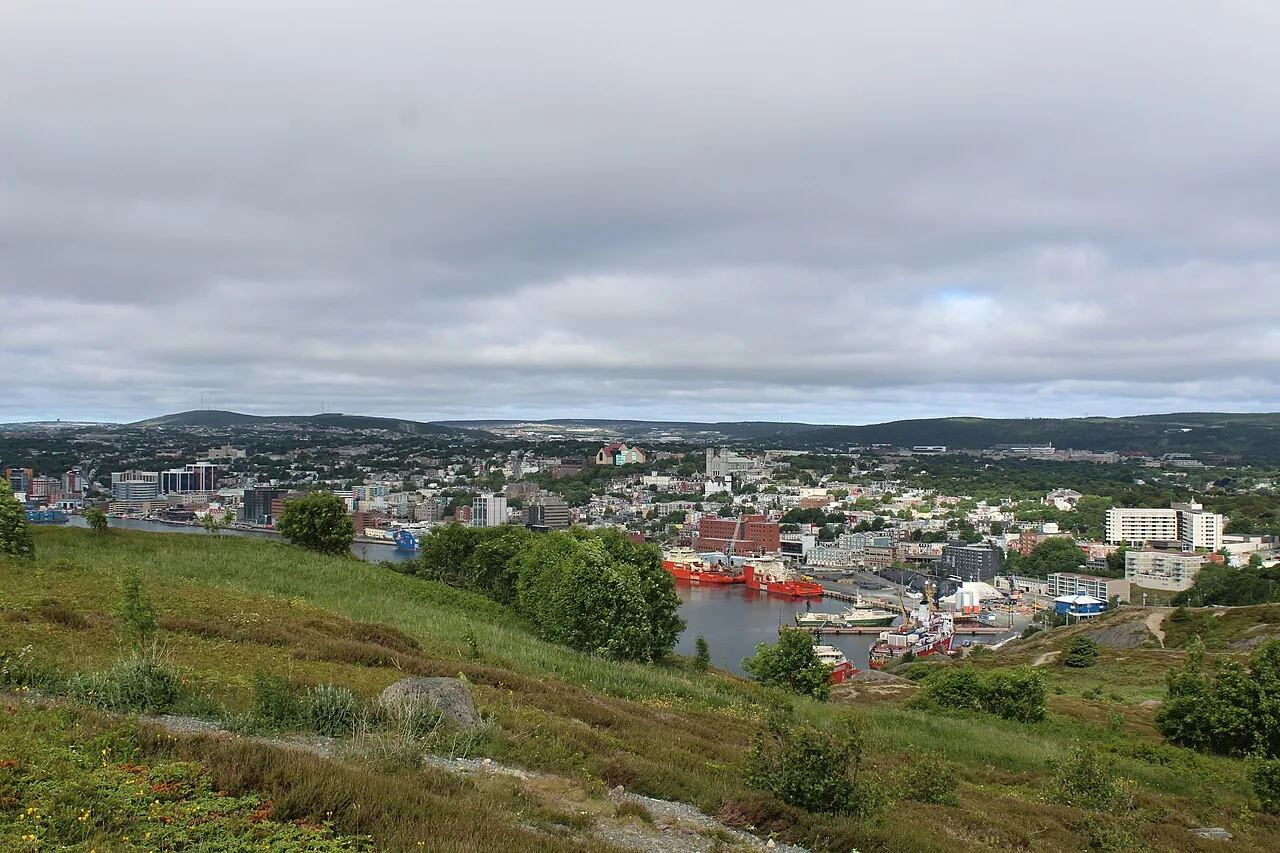 St. John's
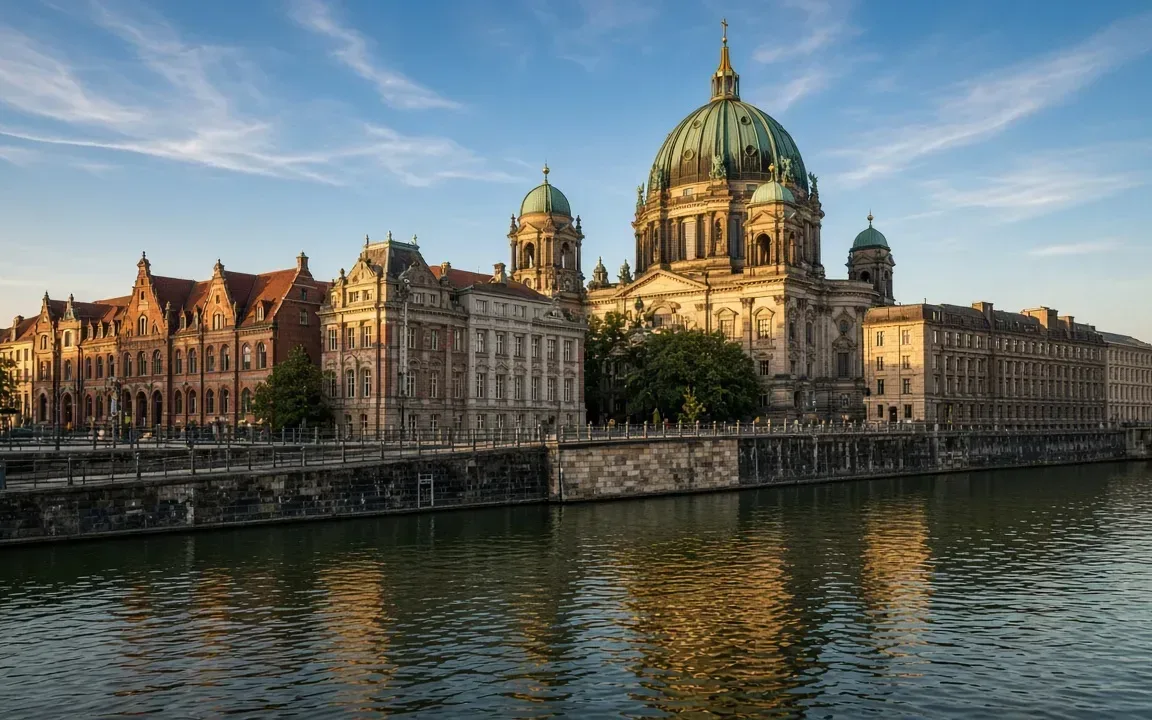 Berlin
 Potsdam
 Wittenberg
 Meissen
 Dresden
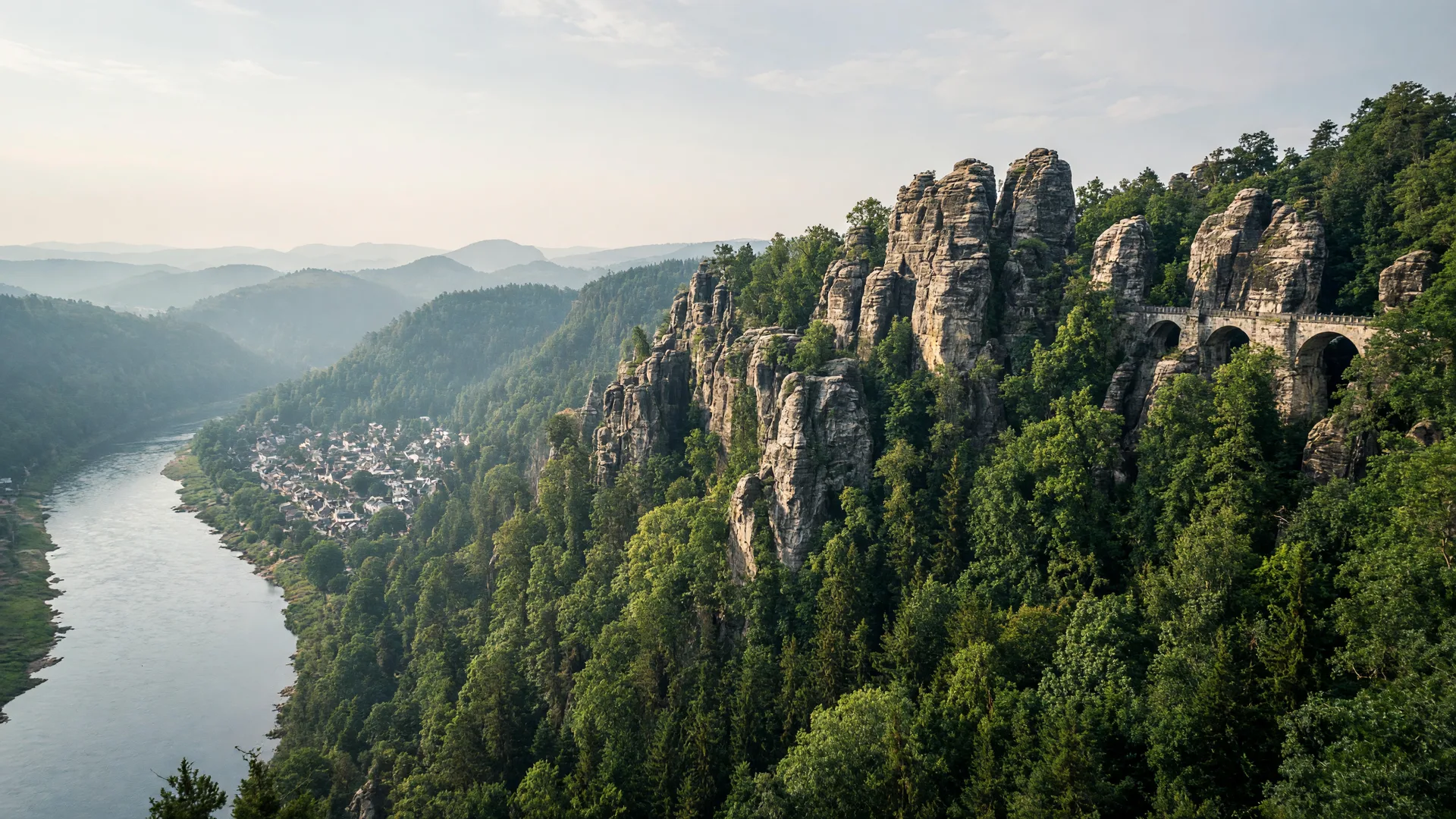 Bad Schandau
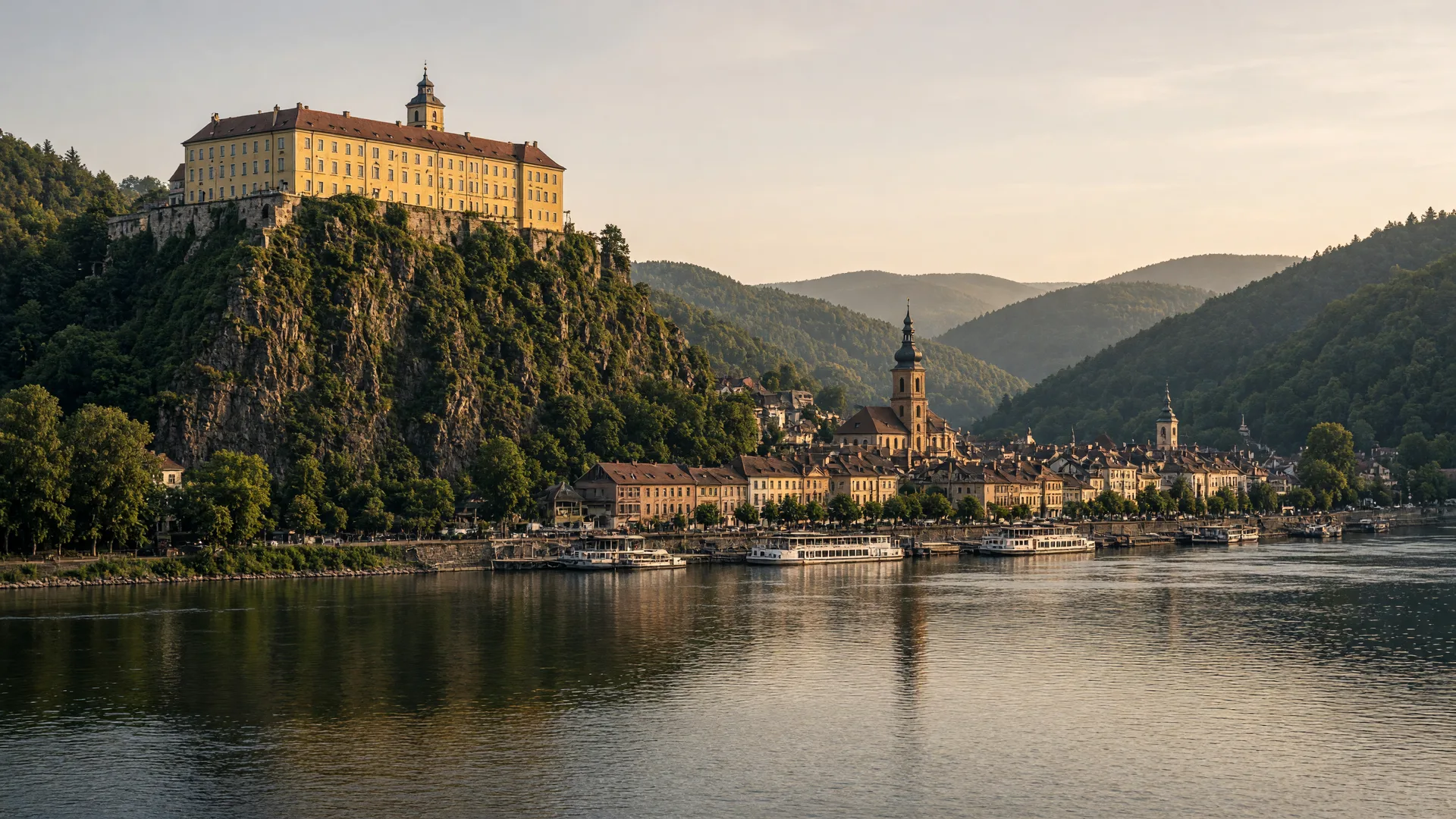 Děčín
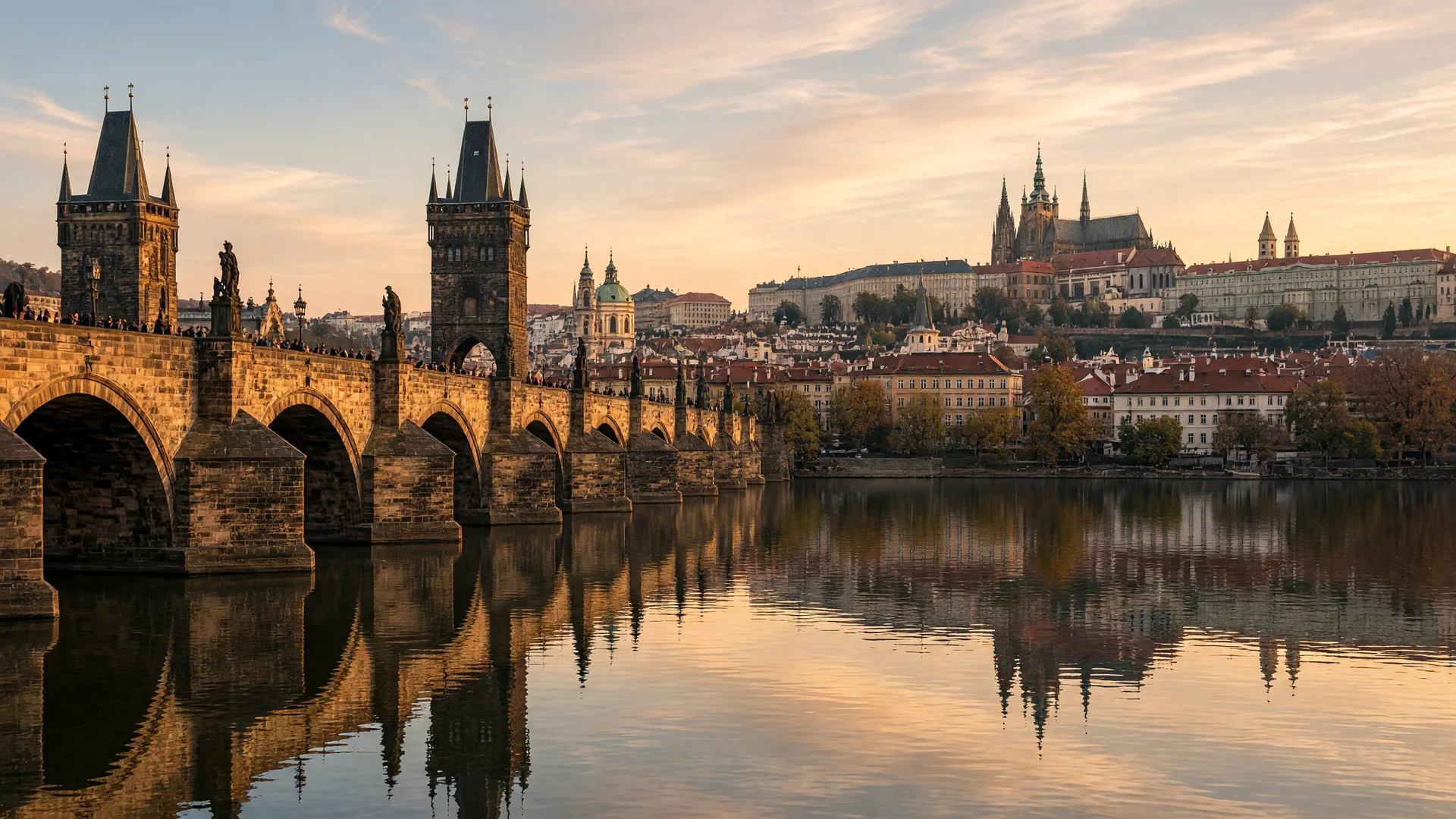 Prague
 Amsterdam
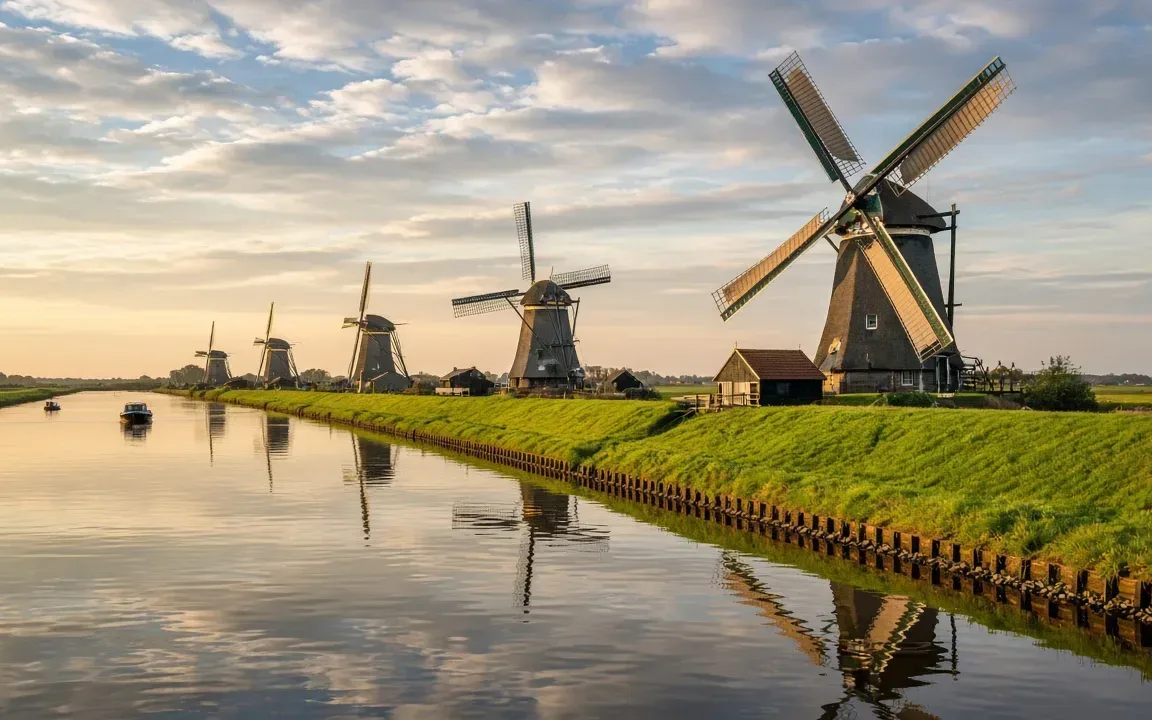 Kinderdijk
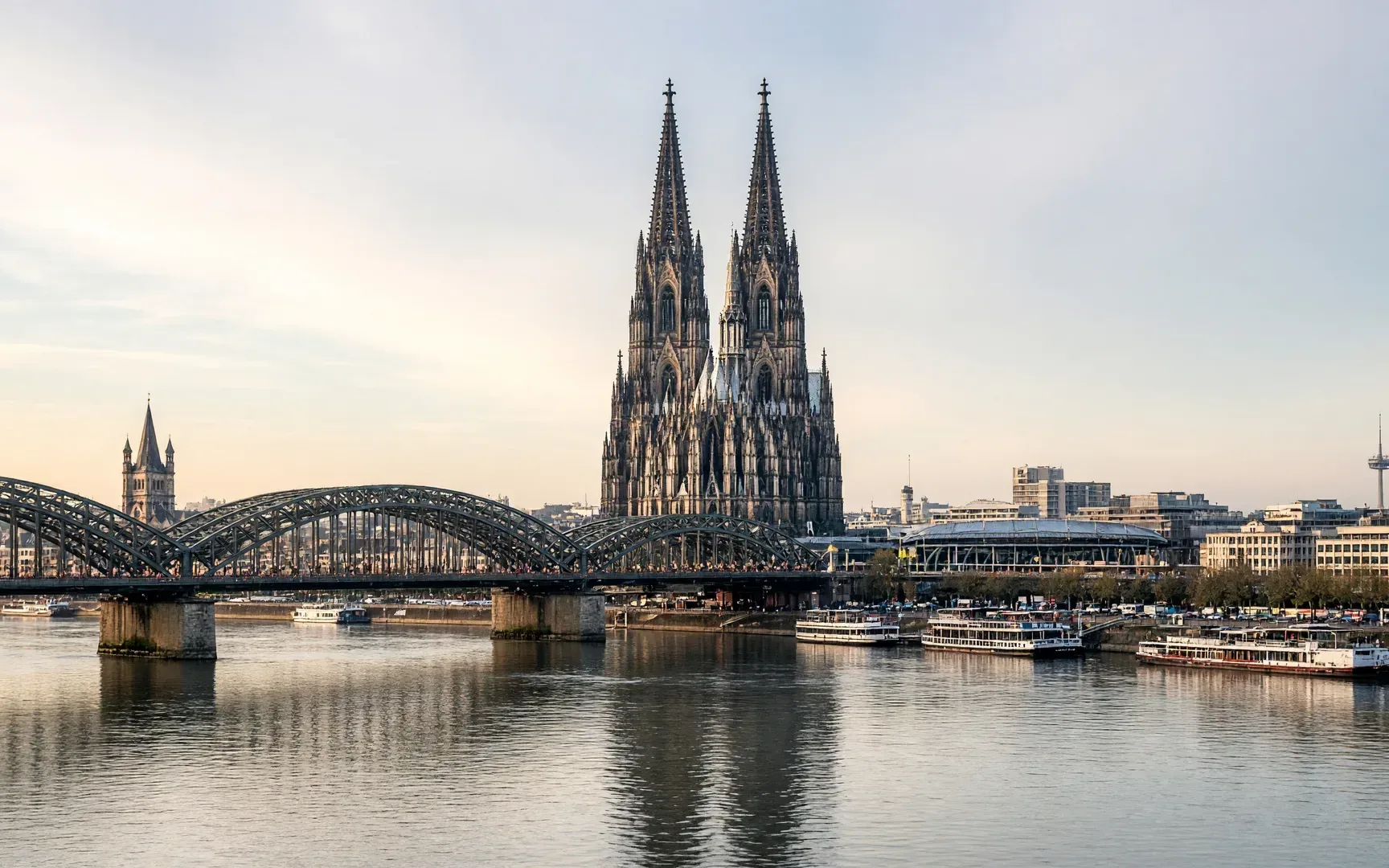 Cologne
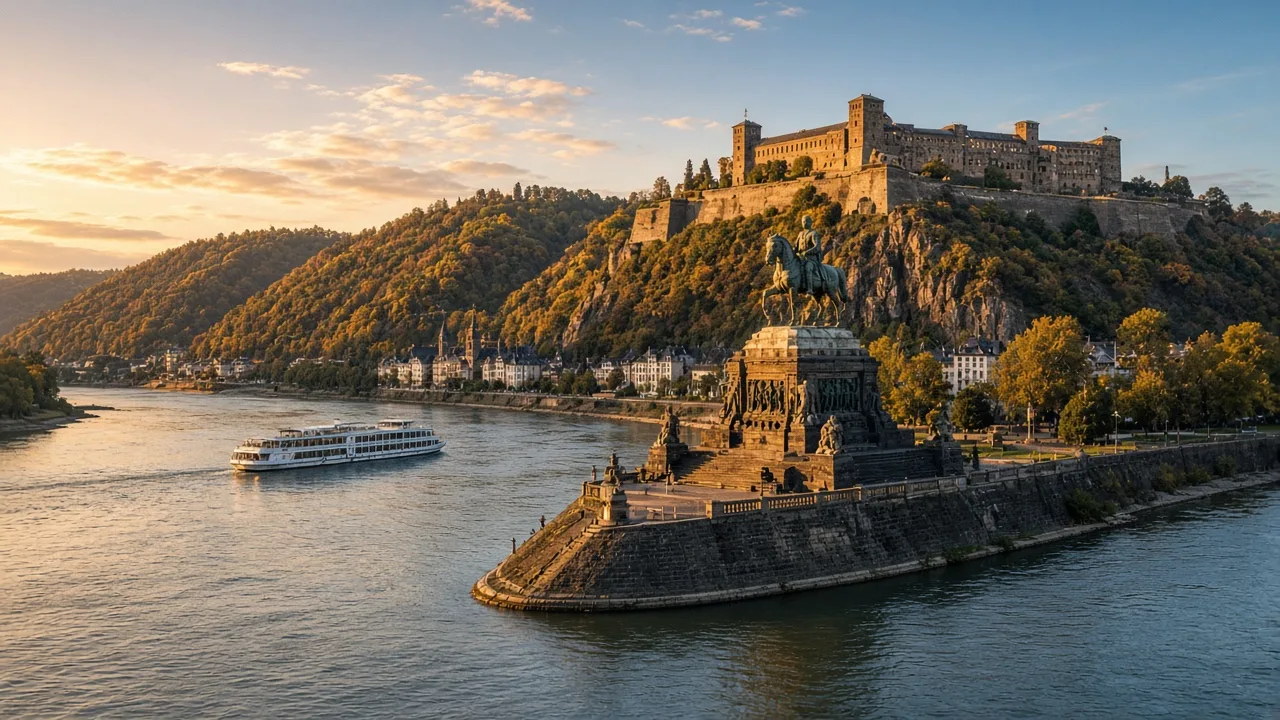 Koblenz
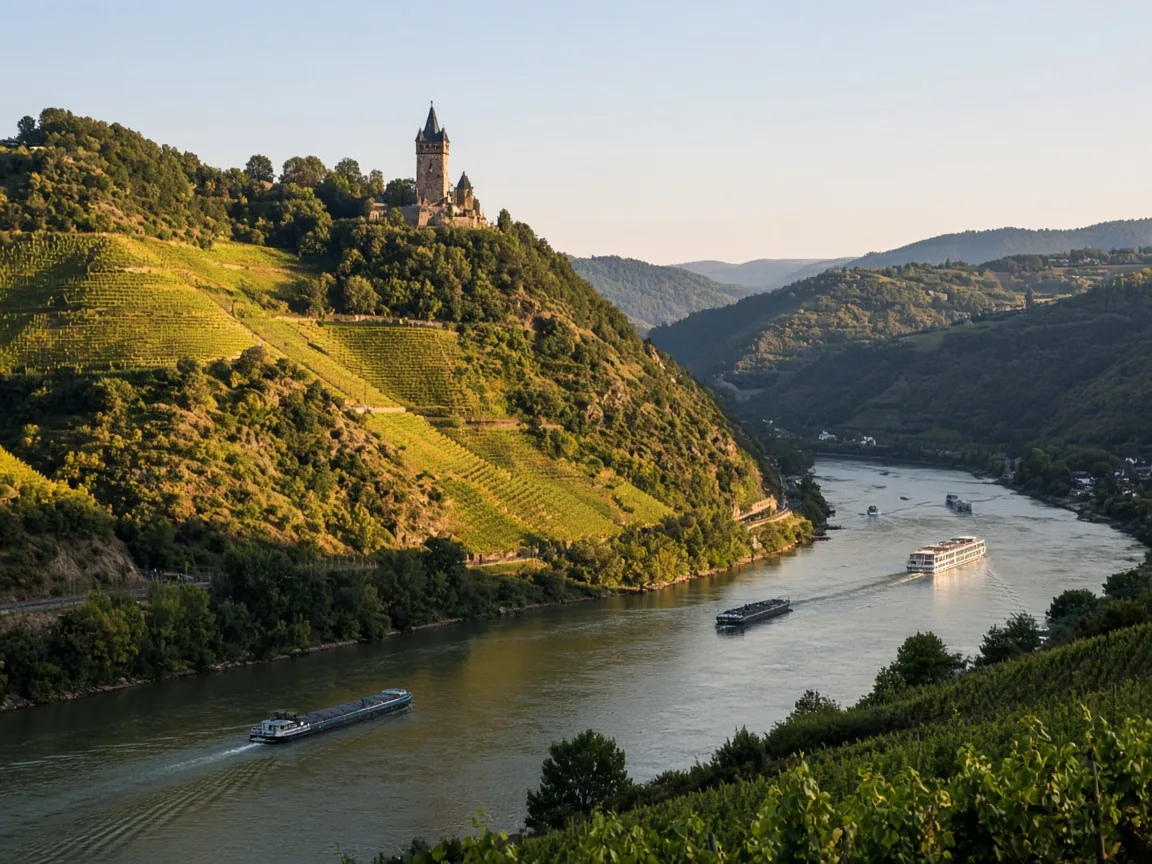 Rüdesheim
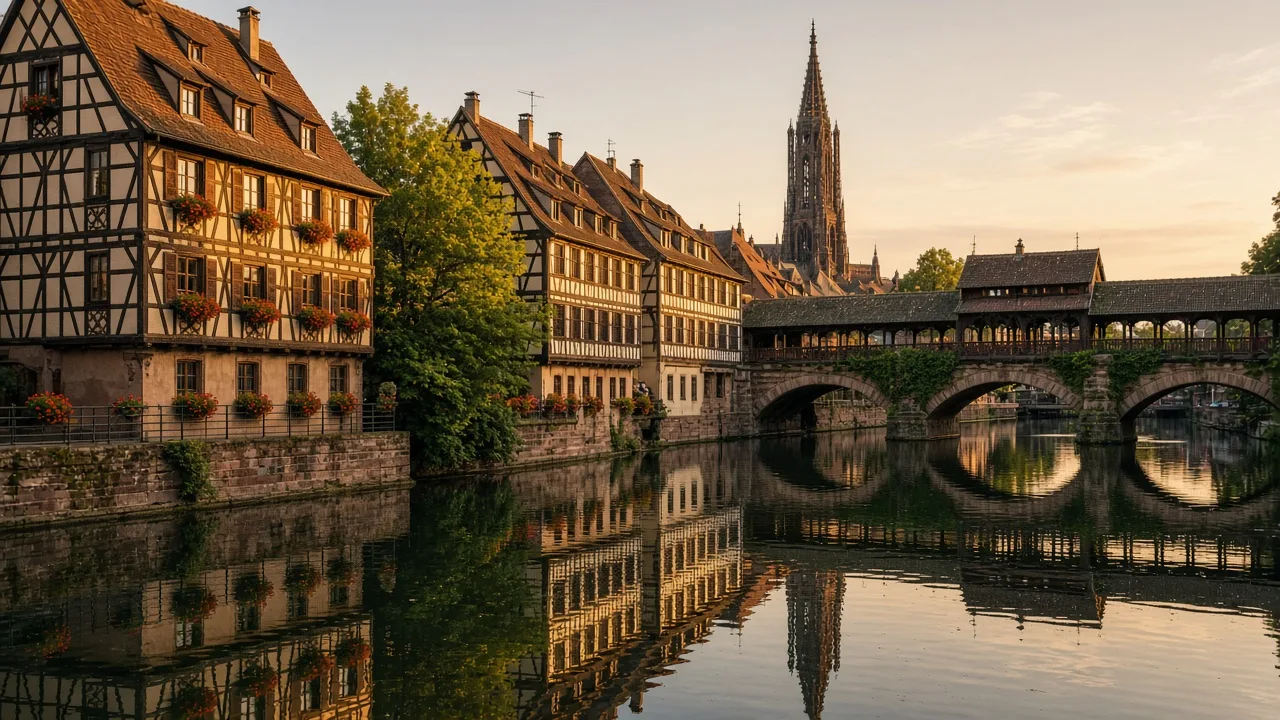 Strasbourg
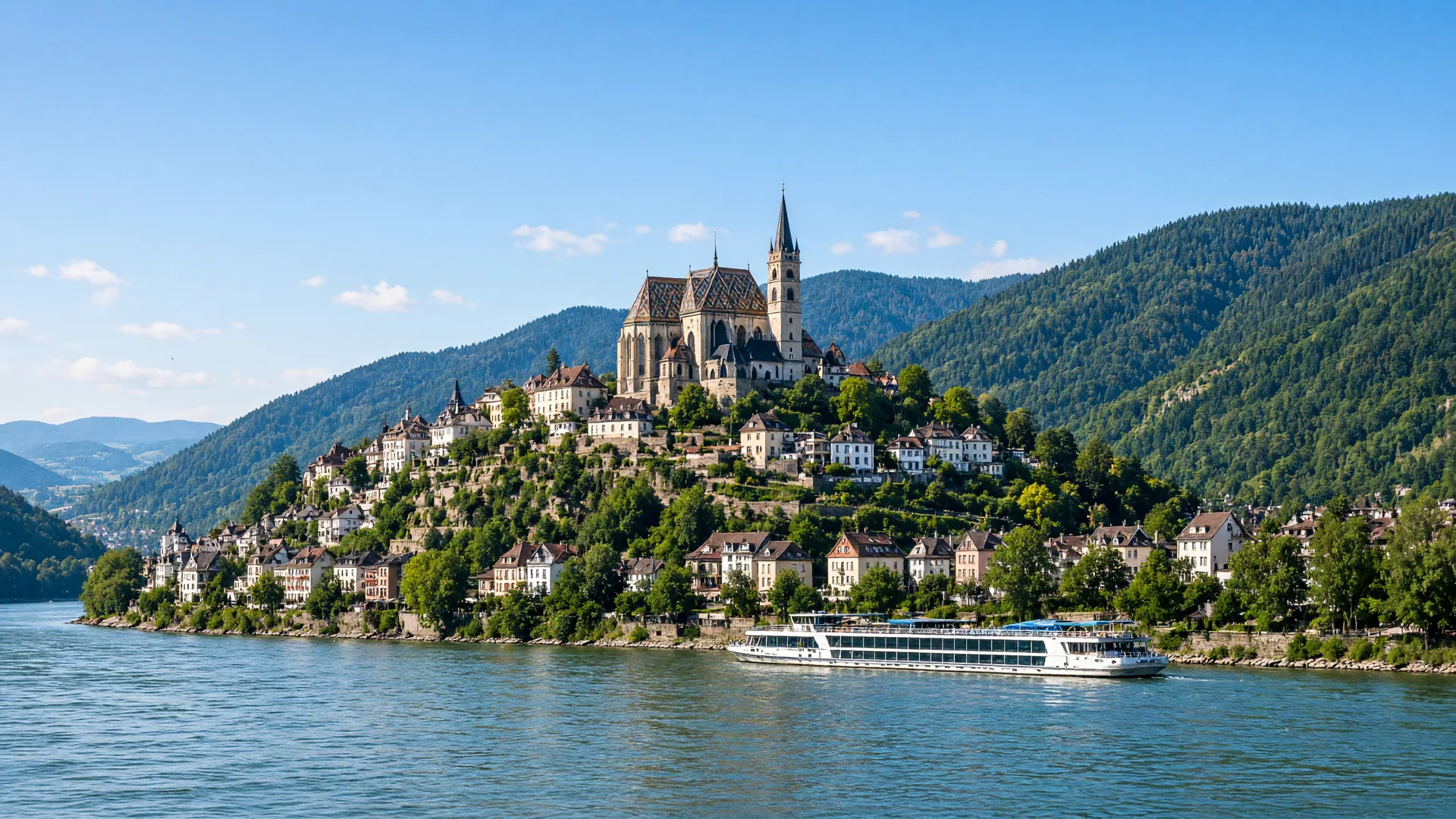 Breisach
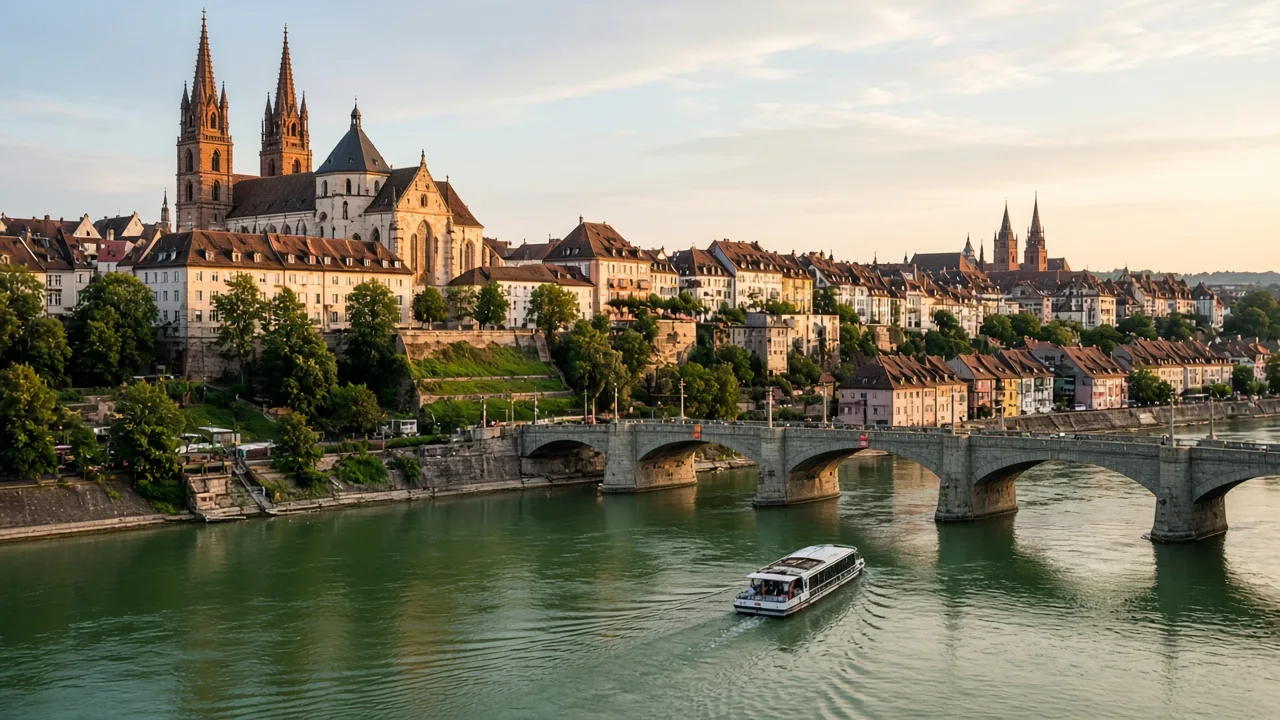 Basel
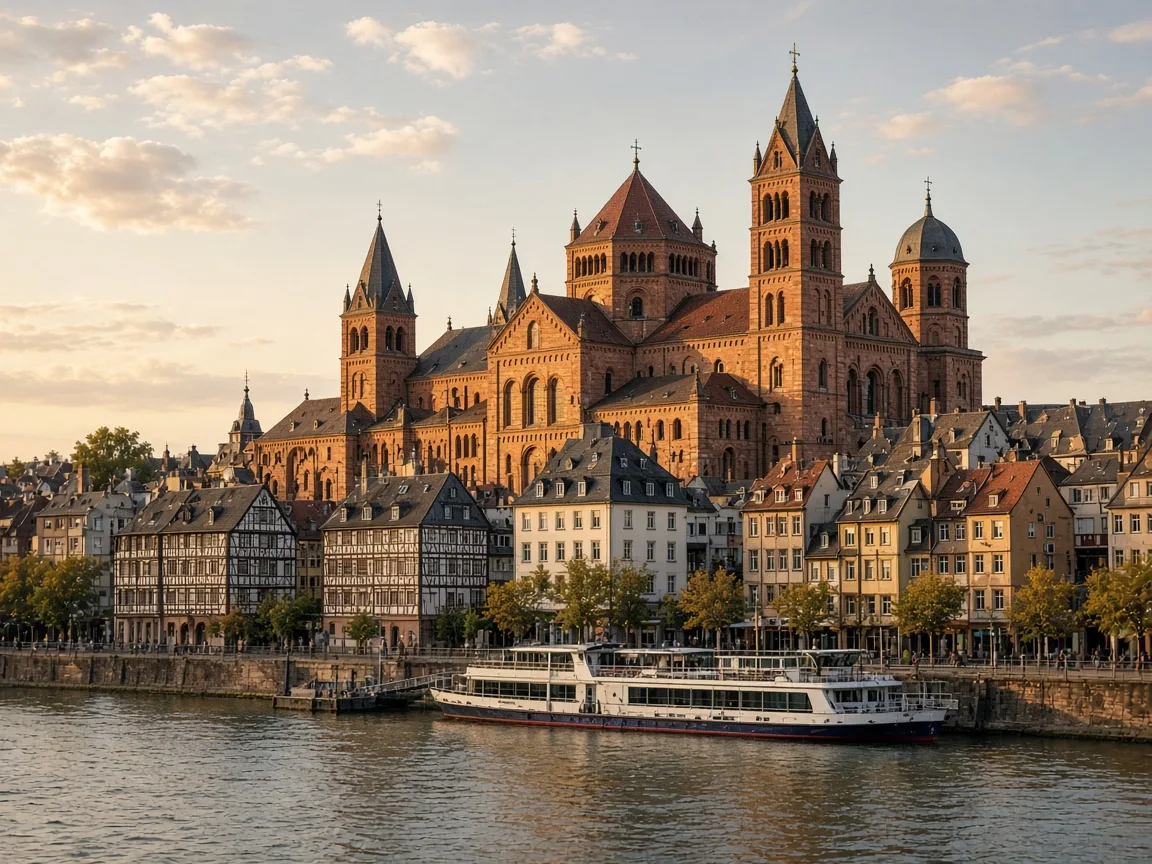 Mainz
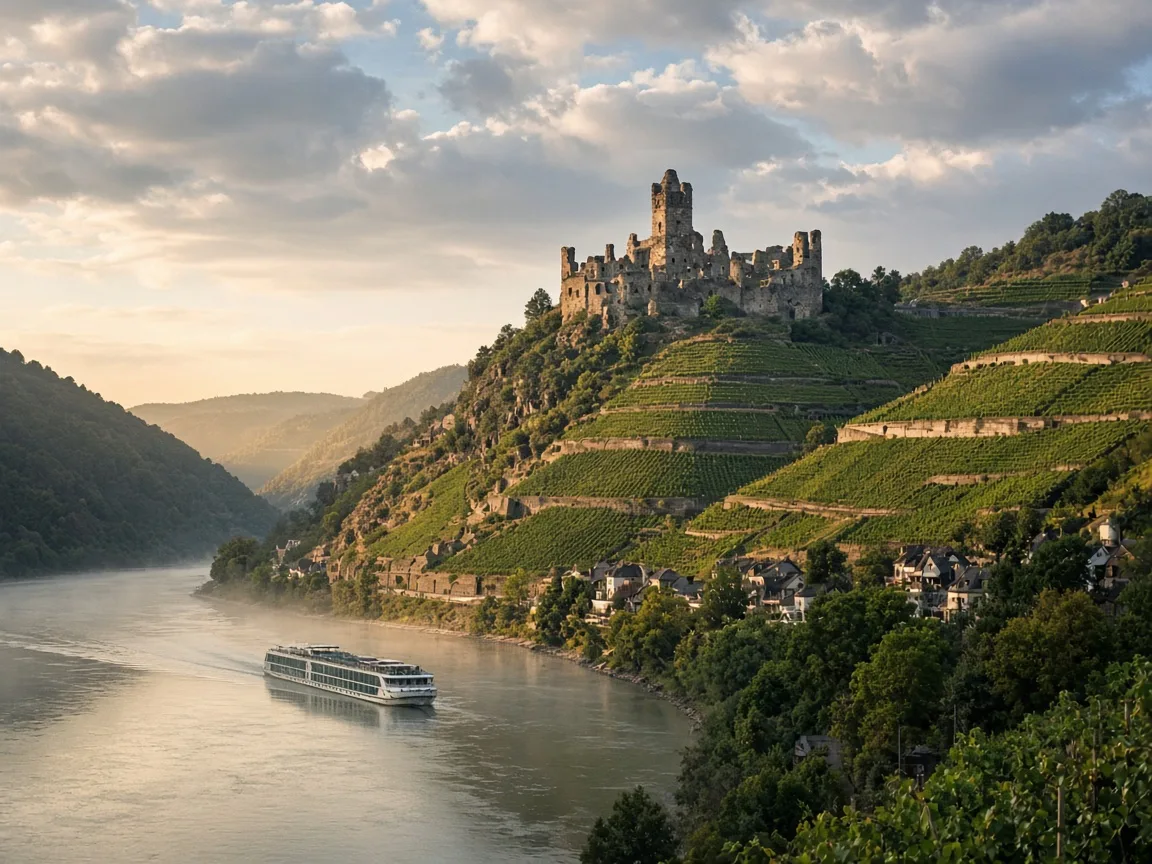 Rhine Gorge
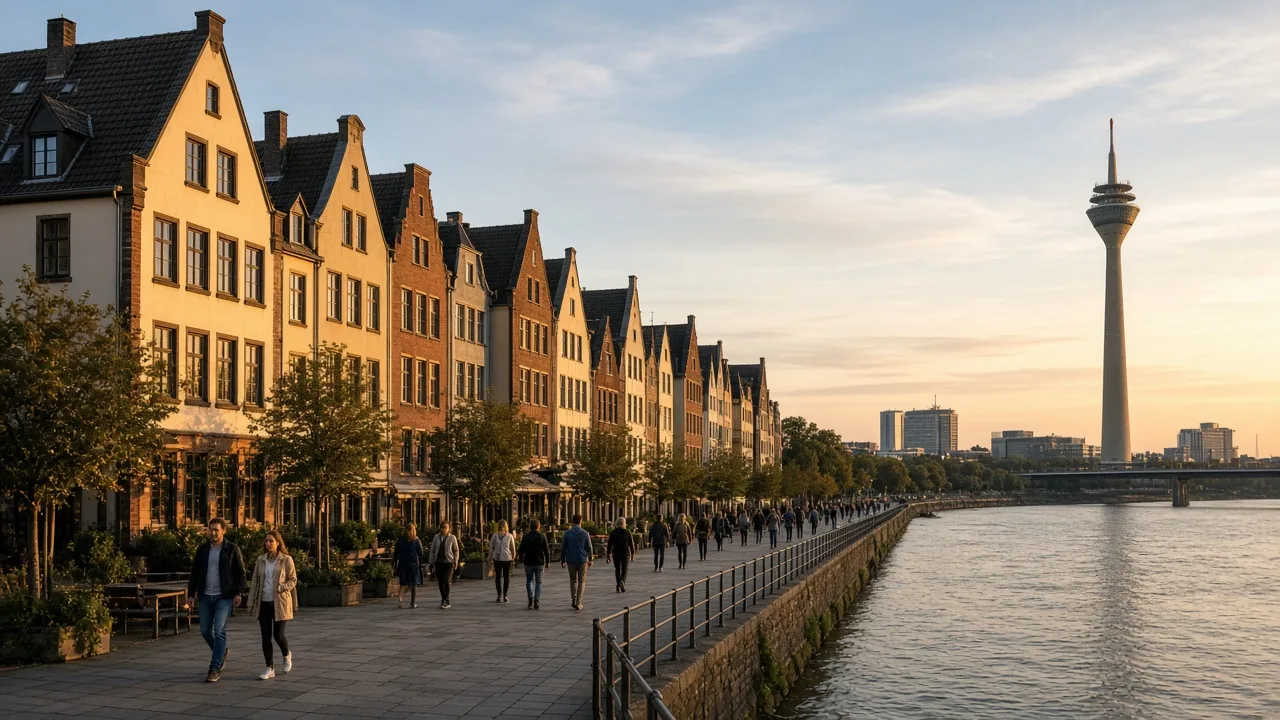 Düsseldorf
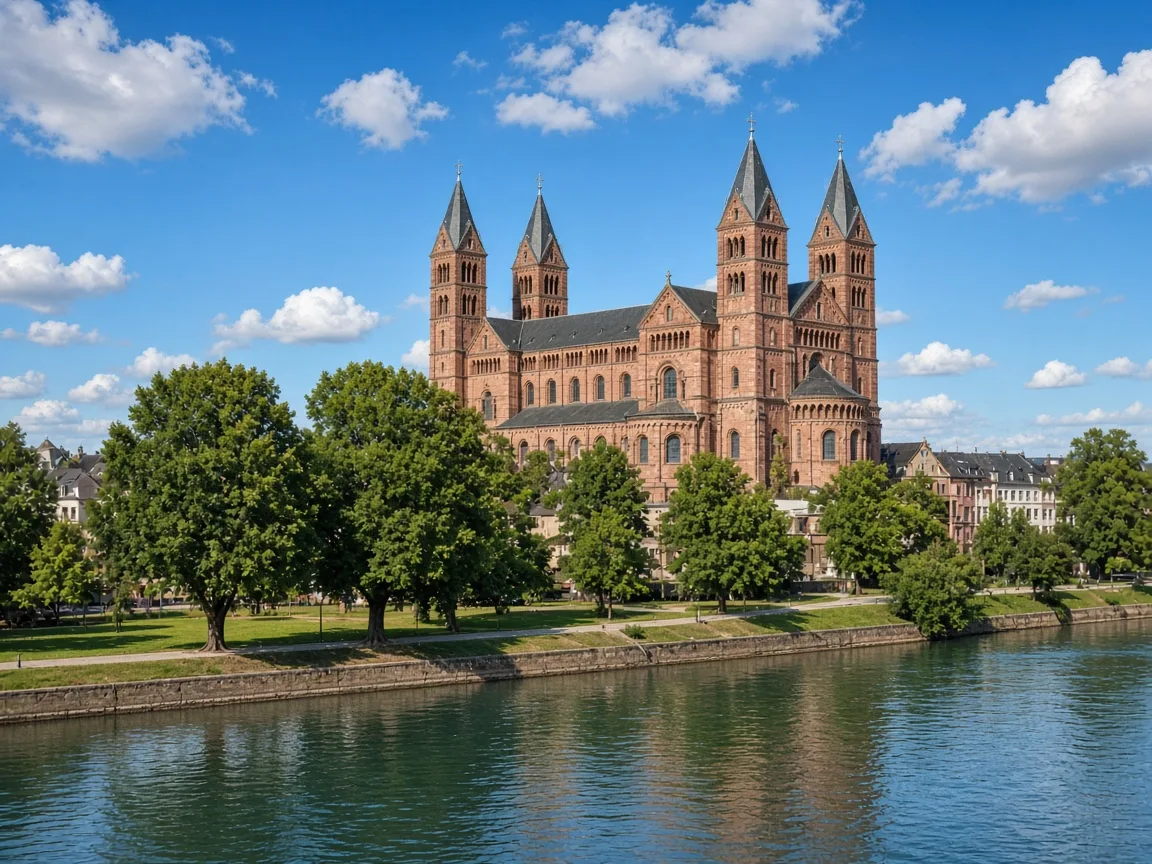 Speyer
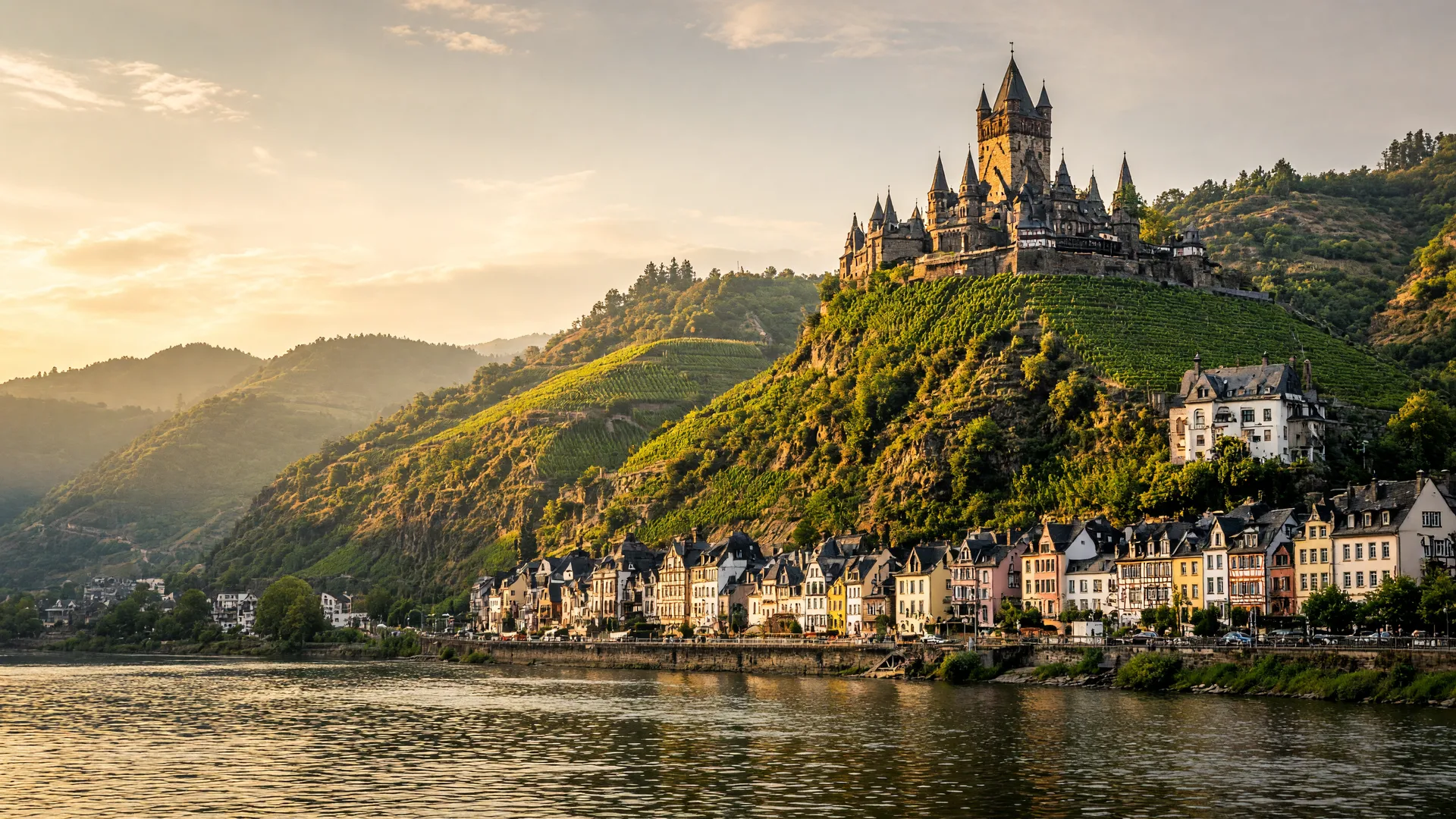 Cochem
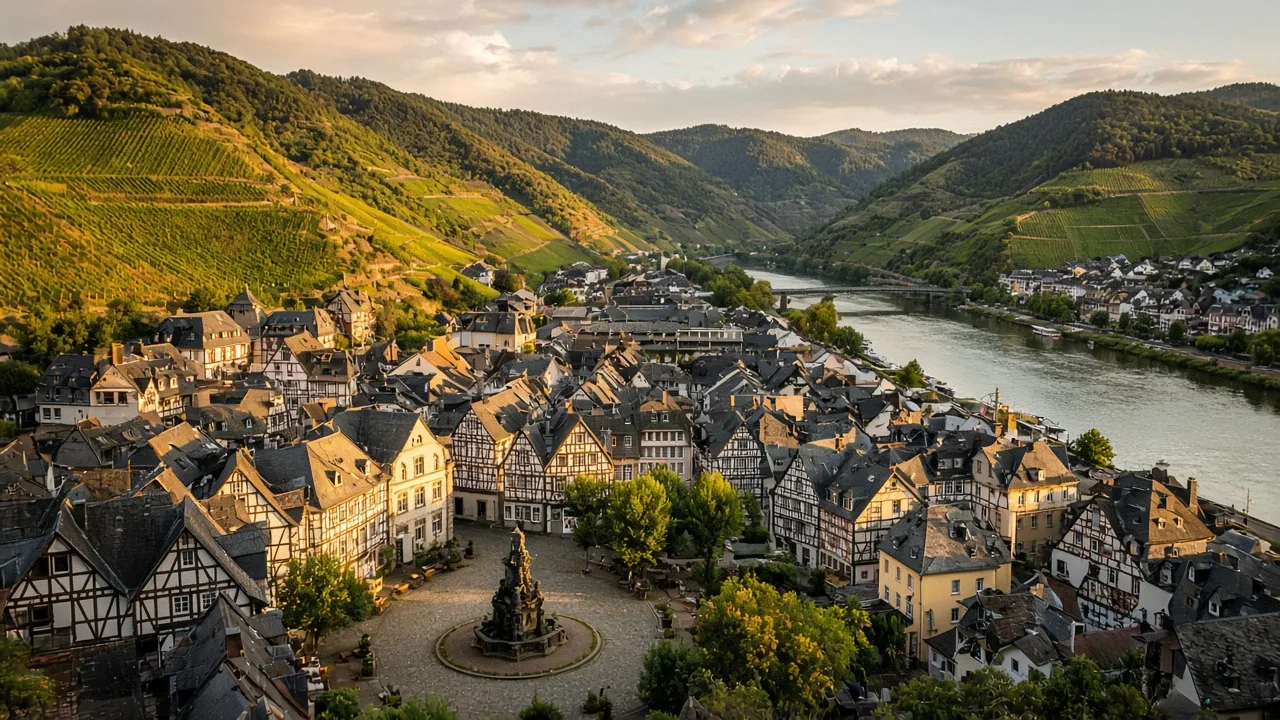 Bernkastel-Kues
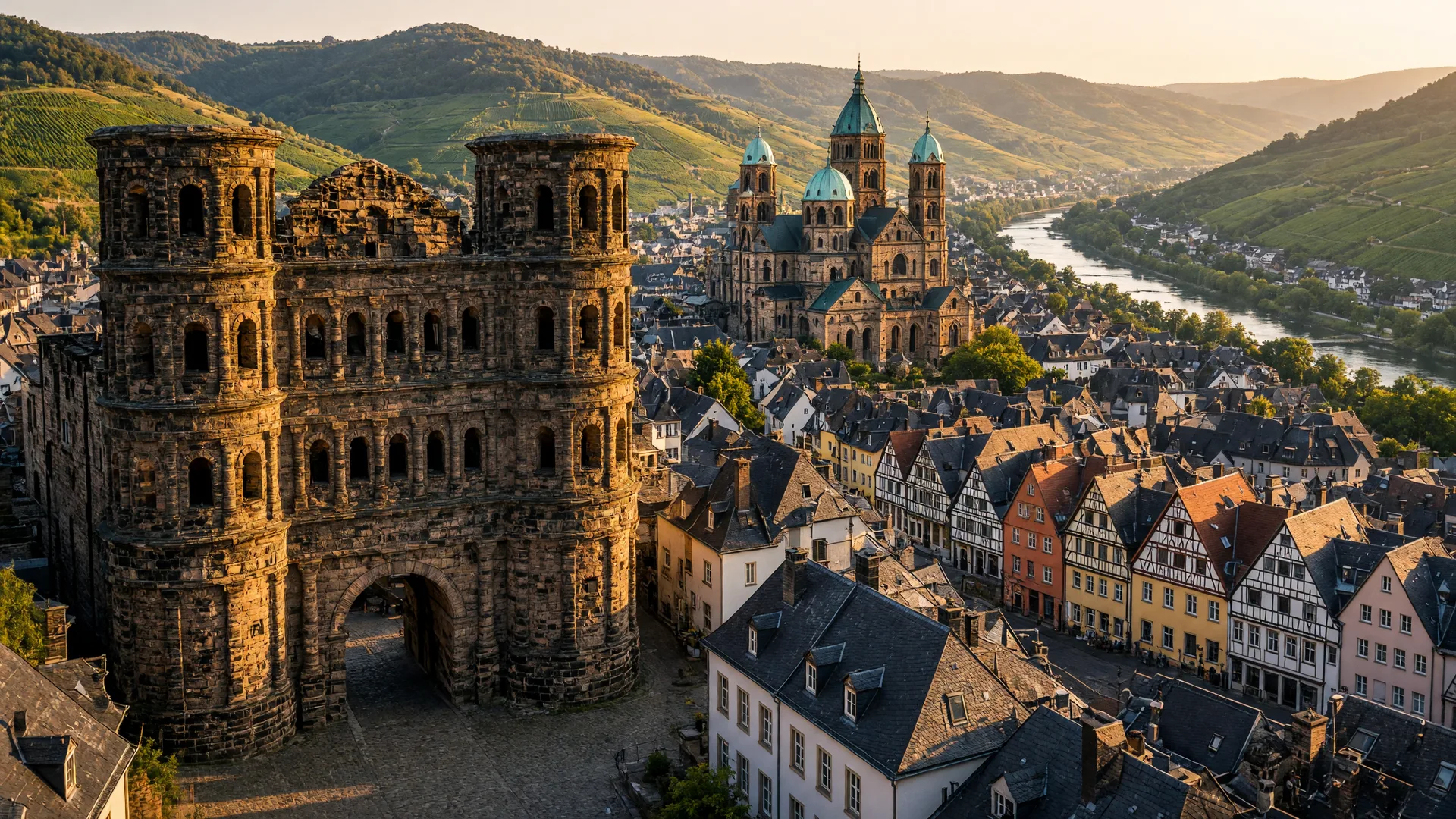 Trier
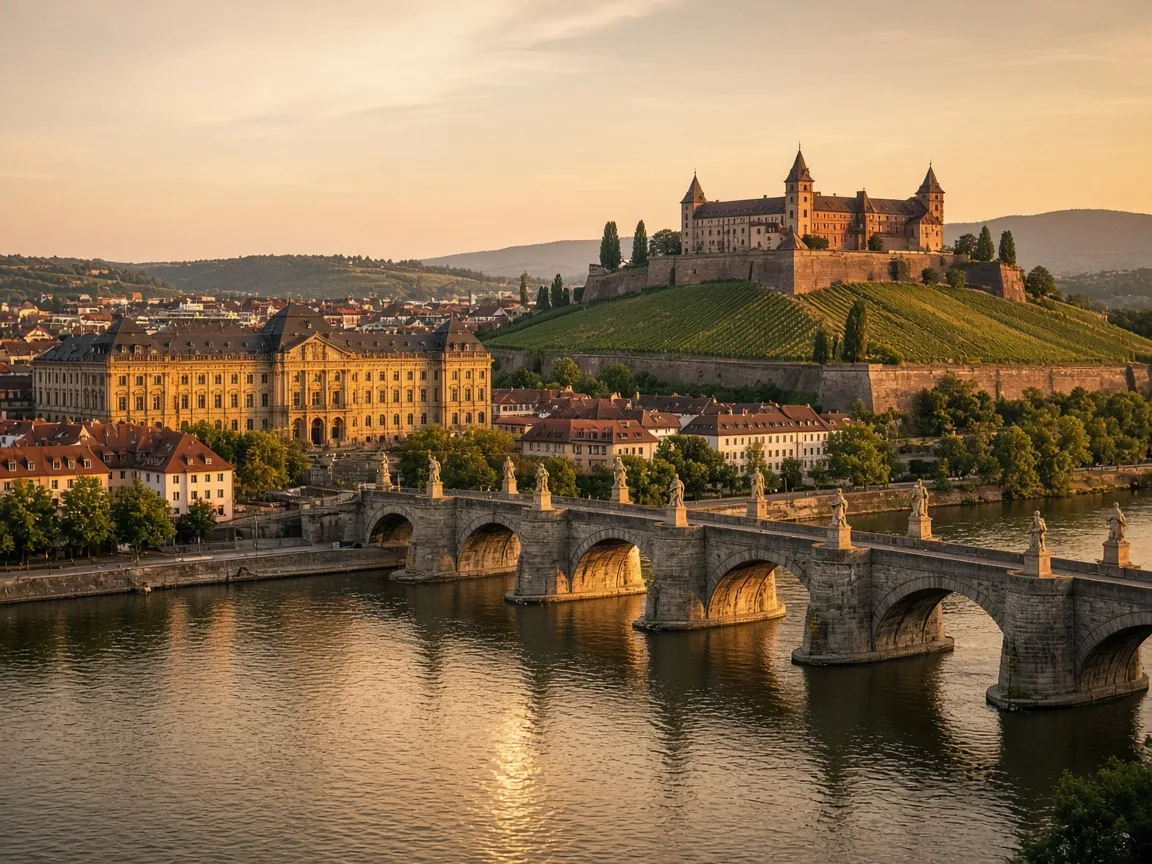 Würzburg
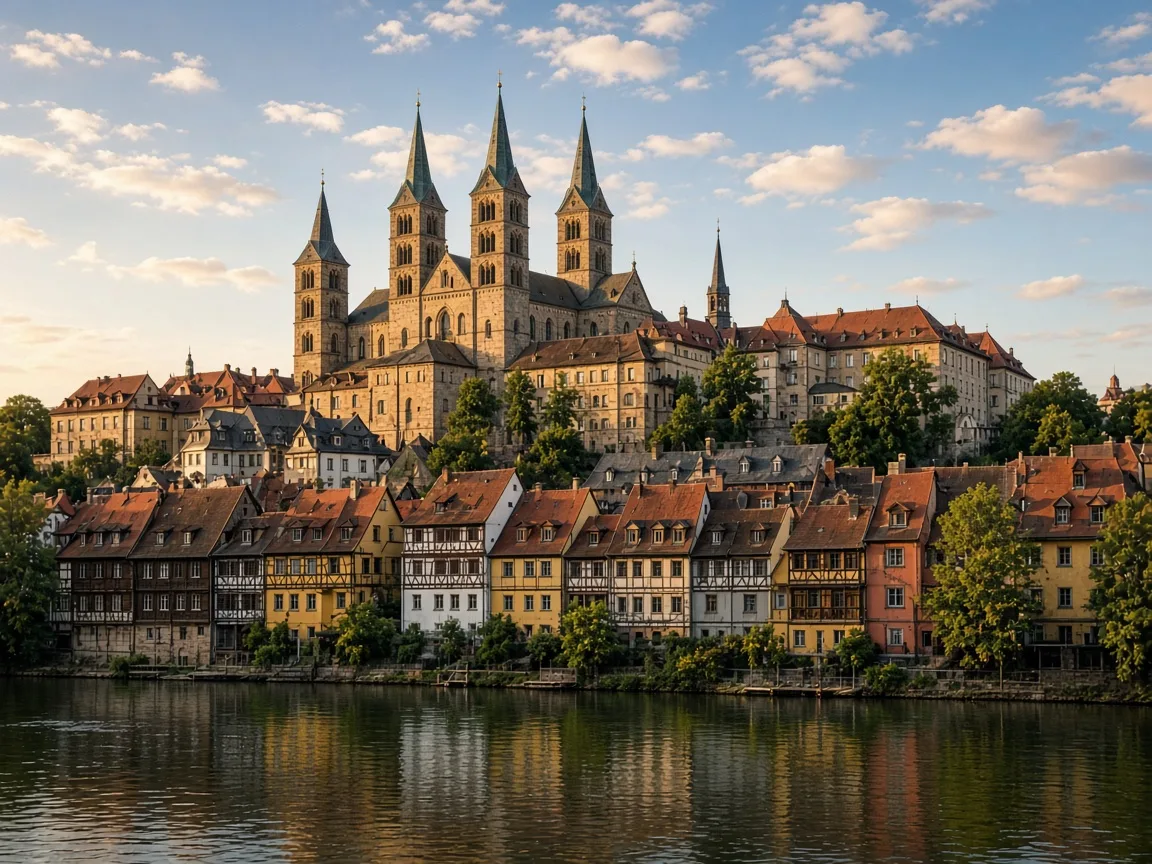 Bamberg
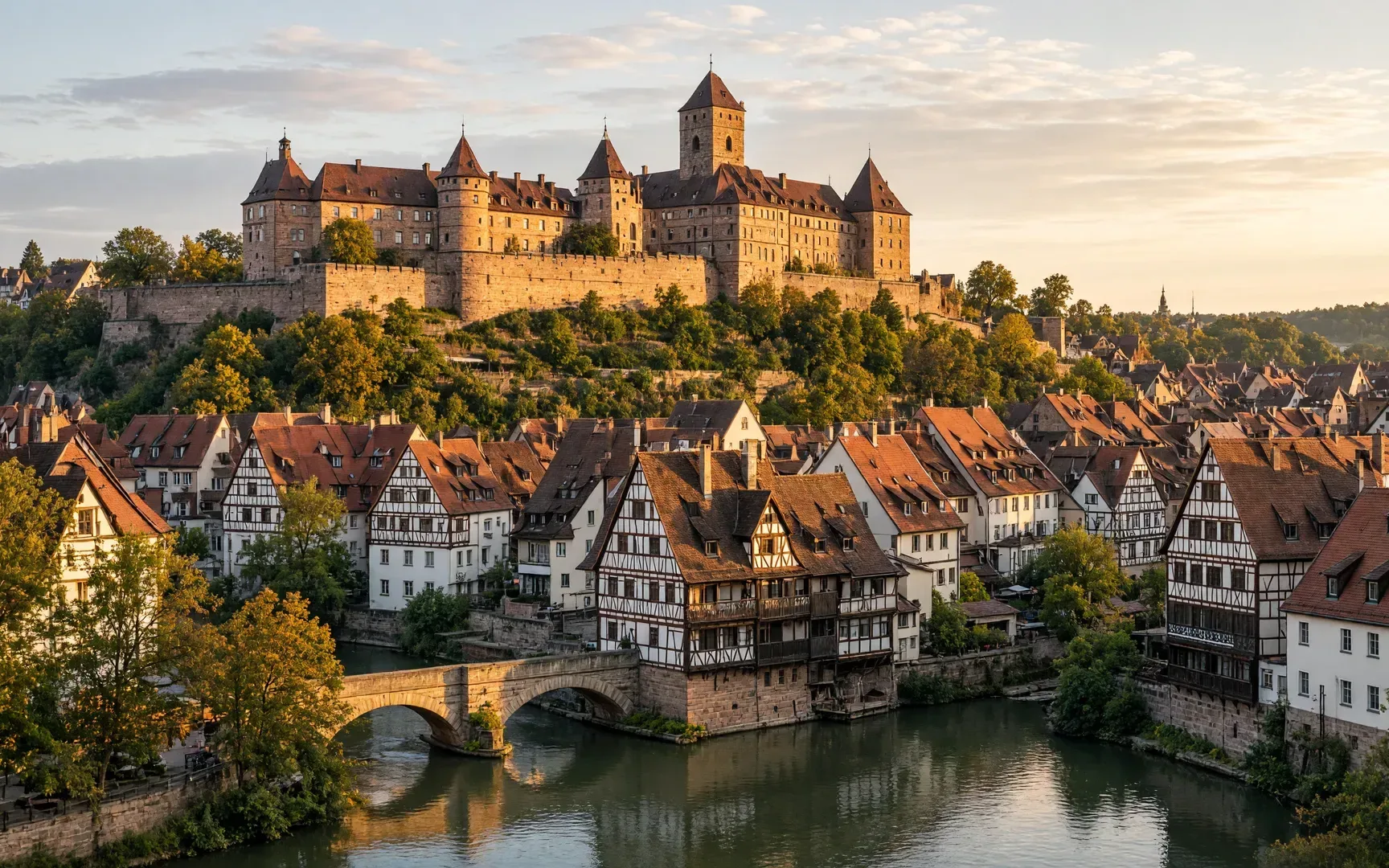 Nuremberg
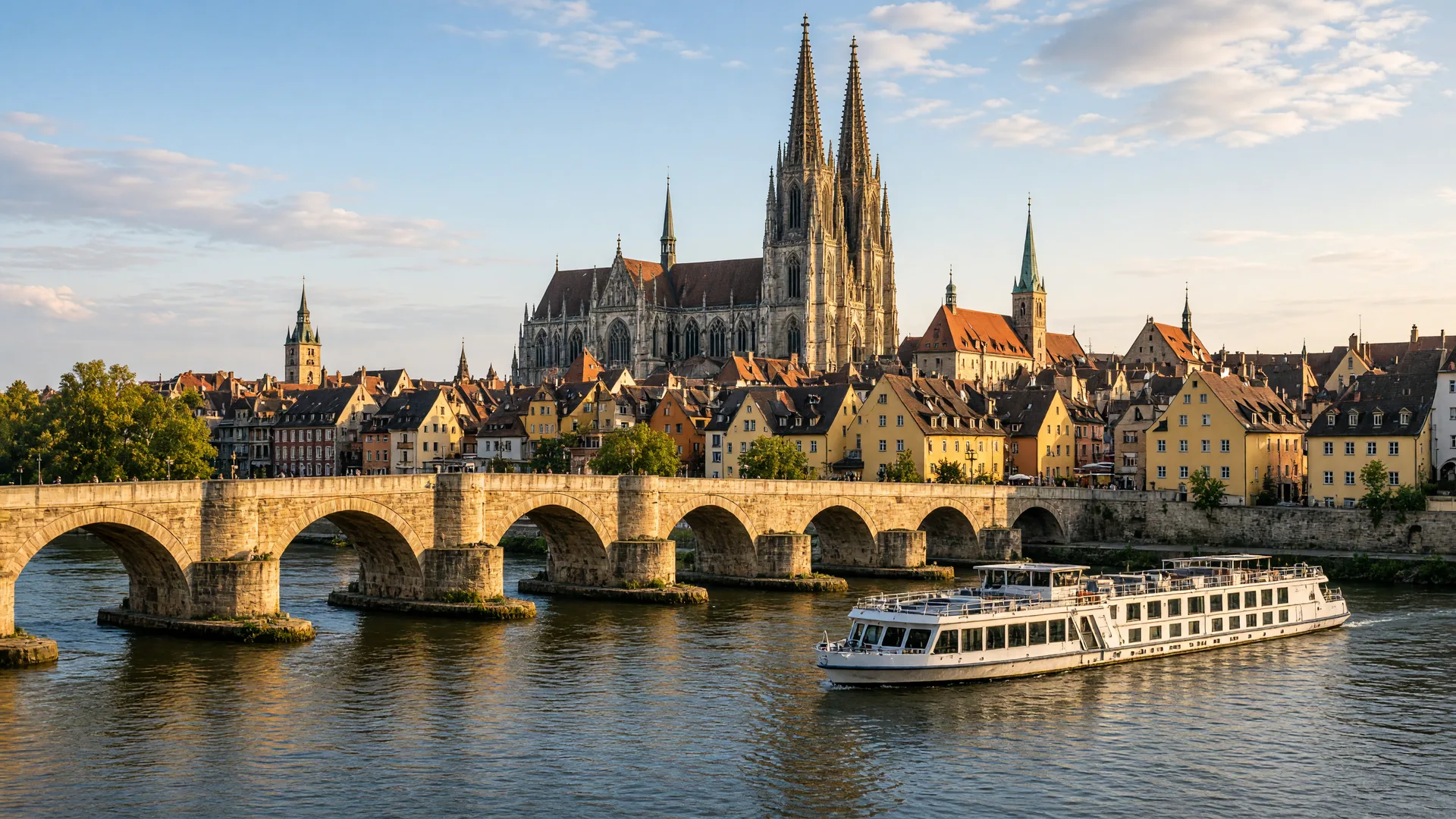 Regensburg
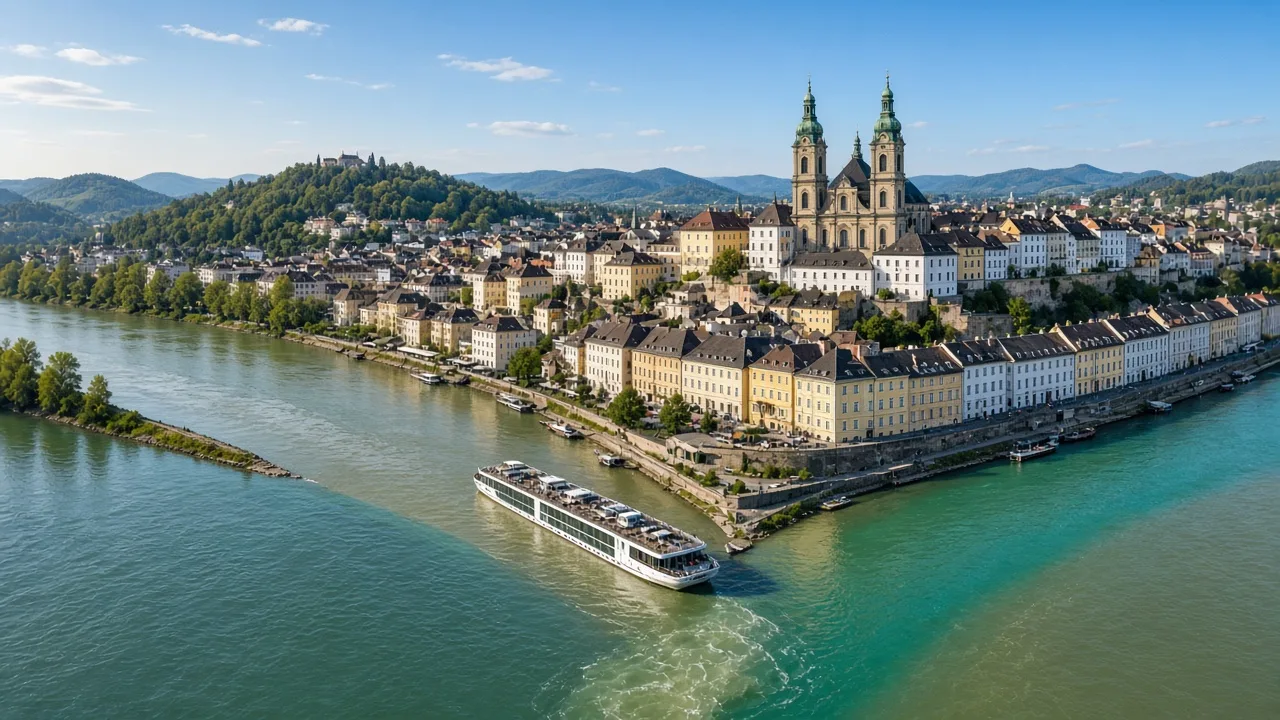 Passau
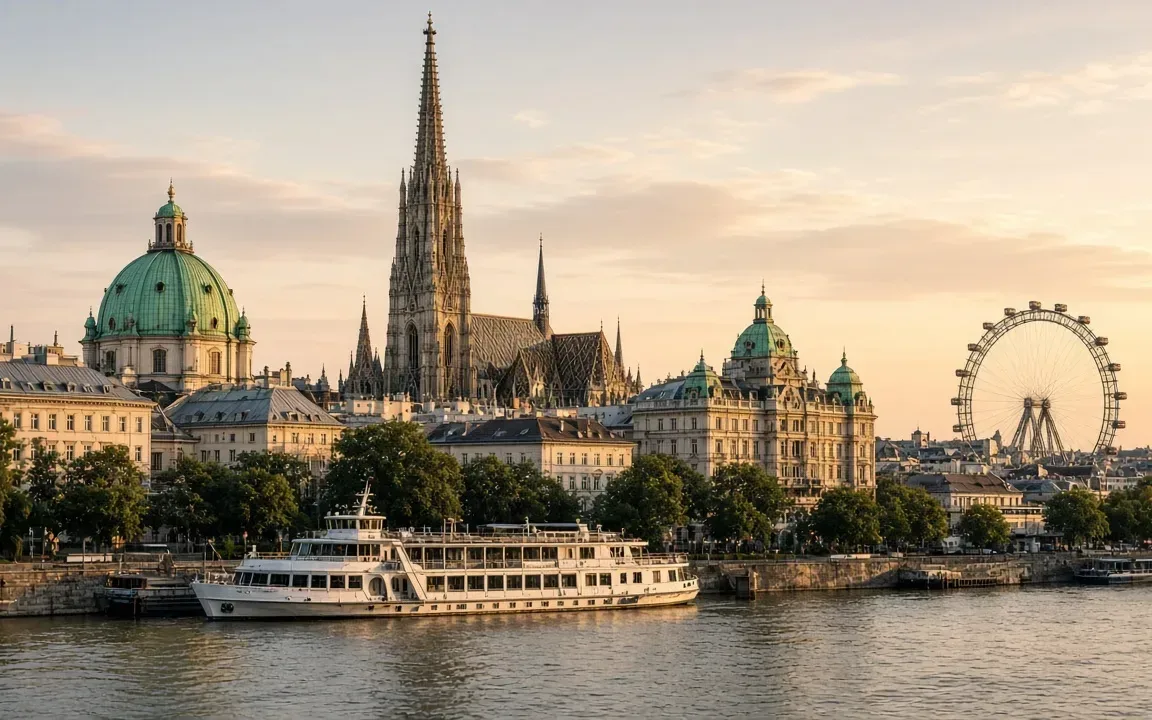 Vienna
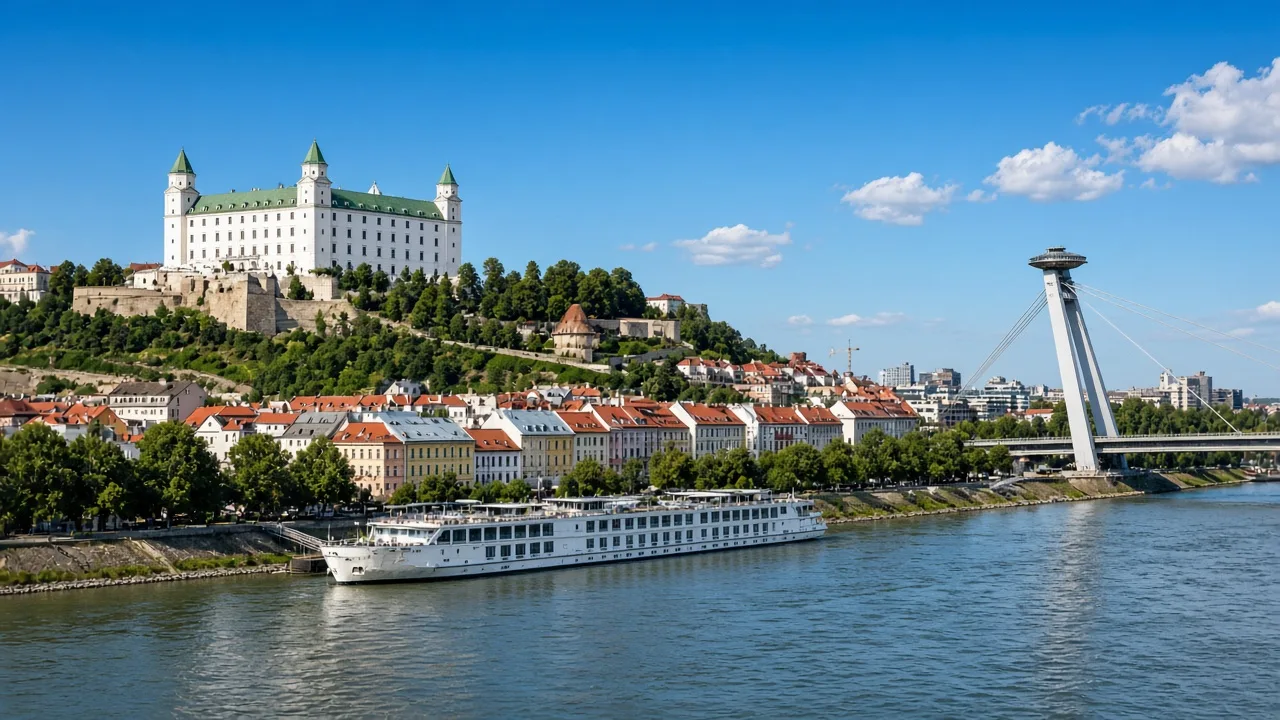 Bratislava
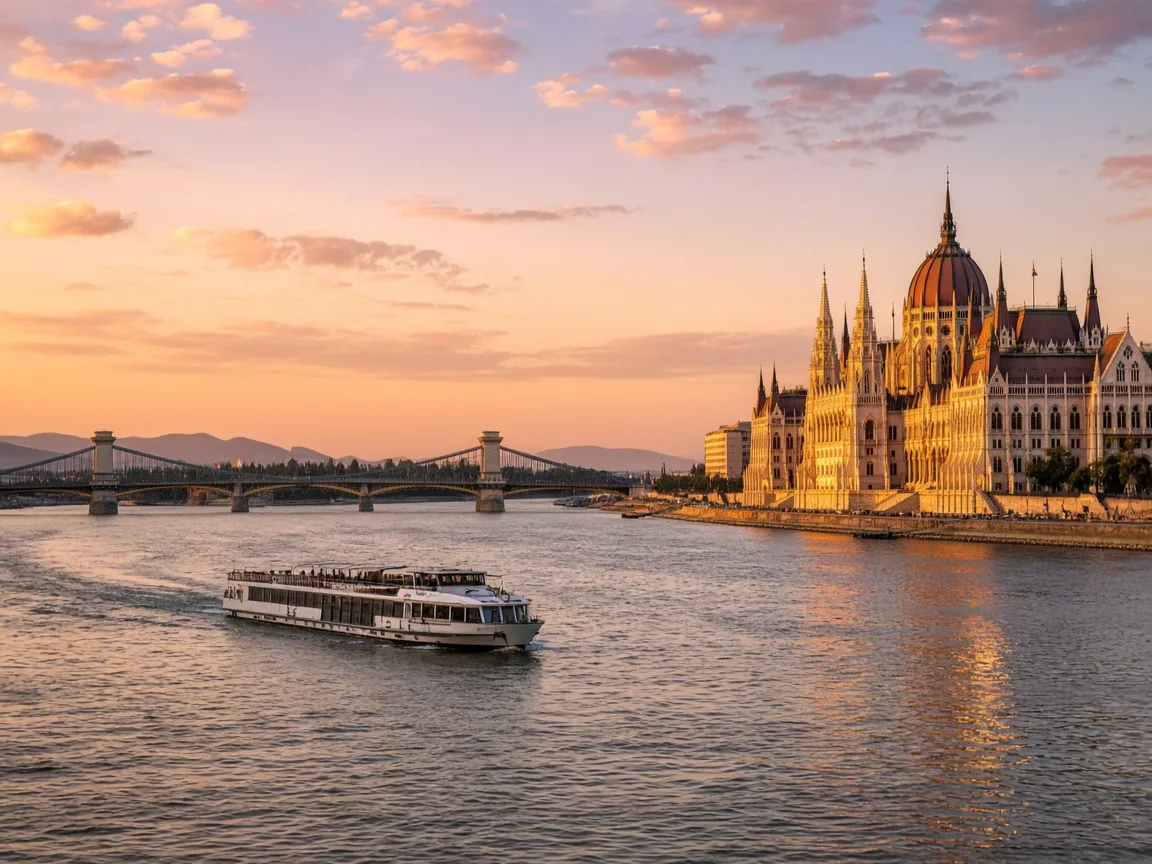 Budapest
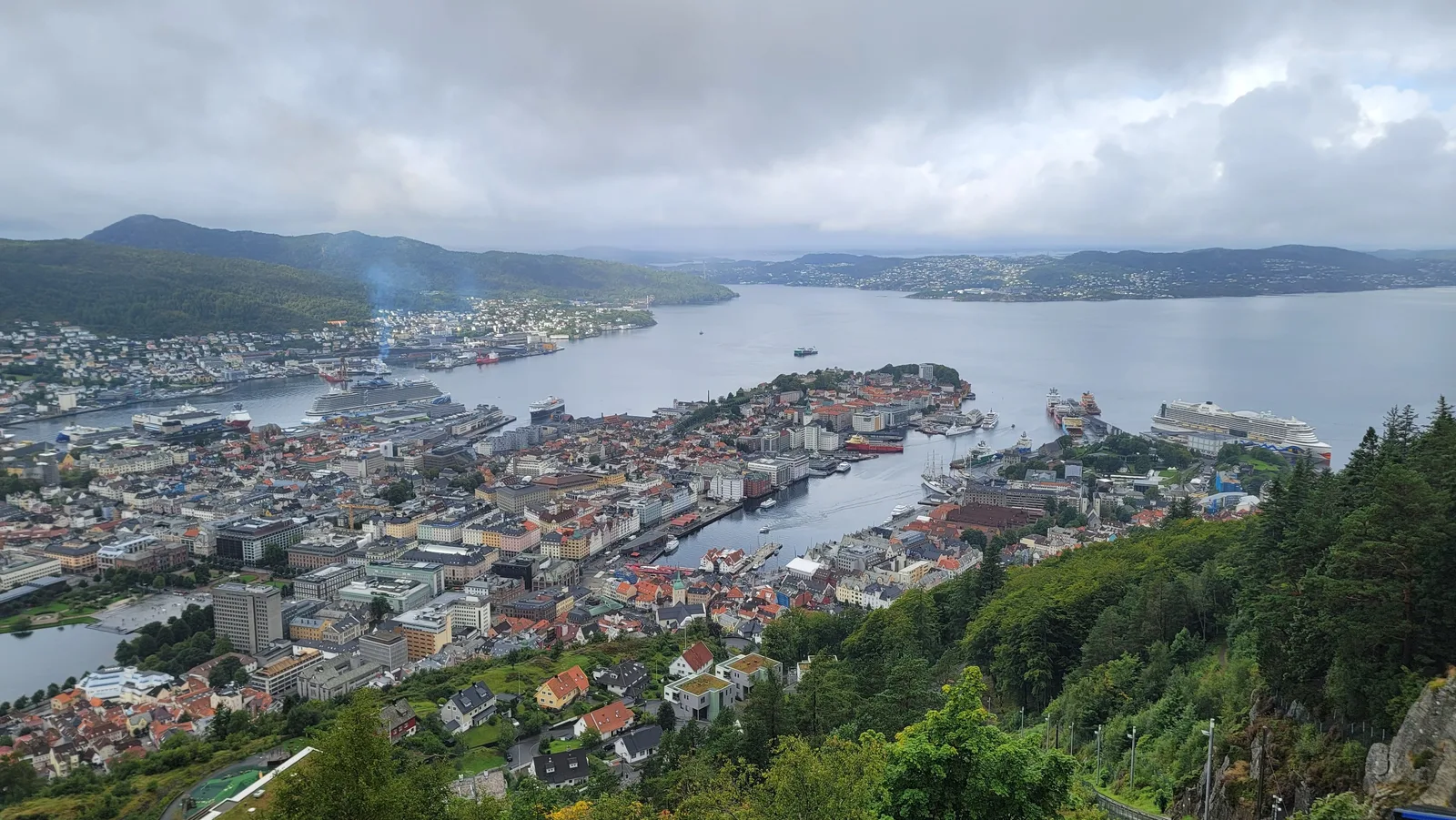
Bergen, Norway
The gateway to the fjords and the traditional start of Norway's coastal route, a Hansa-era port of wooden wharves, fish markets, and seven mountains to climb.
Port highlights
- The UNESCO-listed Bryggen wharf, a row of tall wooden Hanseatic warehouses still leaning over the harbor after seven centuries.
- The Fløibanen funicular up Mount Fløyen, the fastest way from the waterfront to a wide view over the city, its islands, and the fjord.
- The lively fish market on the harbor, where the day's catch arrives straight from the boats.
Interesting facts
- Bryggen was inscribed on the UNESCO World Heritage list in 1979.
- Bergen is surrounded by seven mountains, most of them reachable by footpath, cable car, or funicular.
- The city claims the title of the rainiest city in Europe, so locals treat waterproof layers as standard kit.
Something not everyone knows
Most of Bryggen is a faithful rebuild: fire swept the old Hansa wharf in 1702, and the crooked wooden buildings visitors photograph today were raised on the medieval stone foundations.

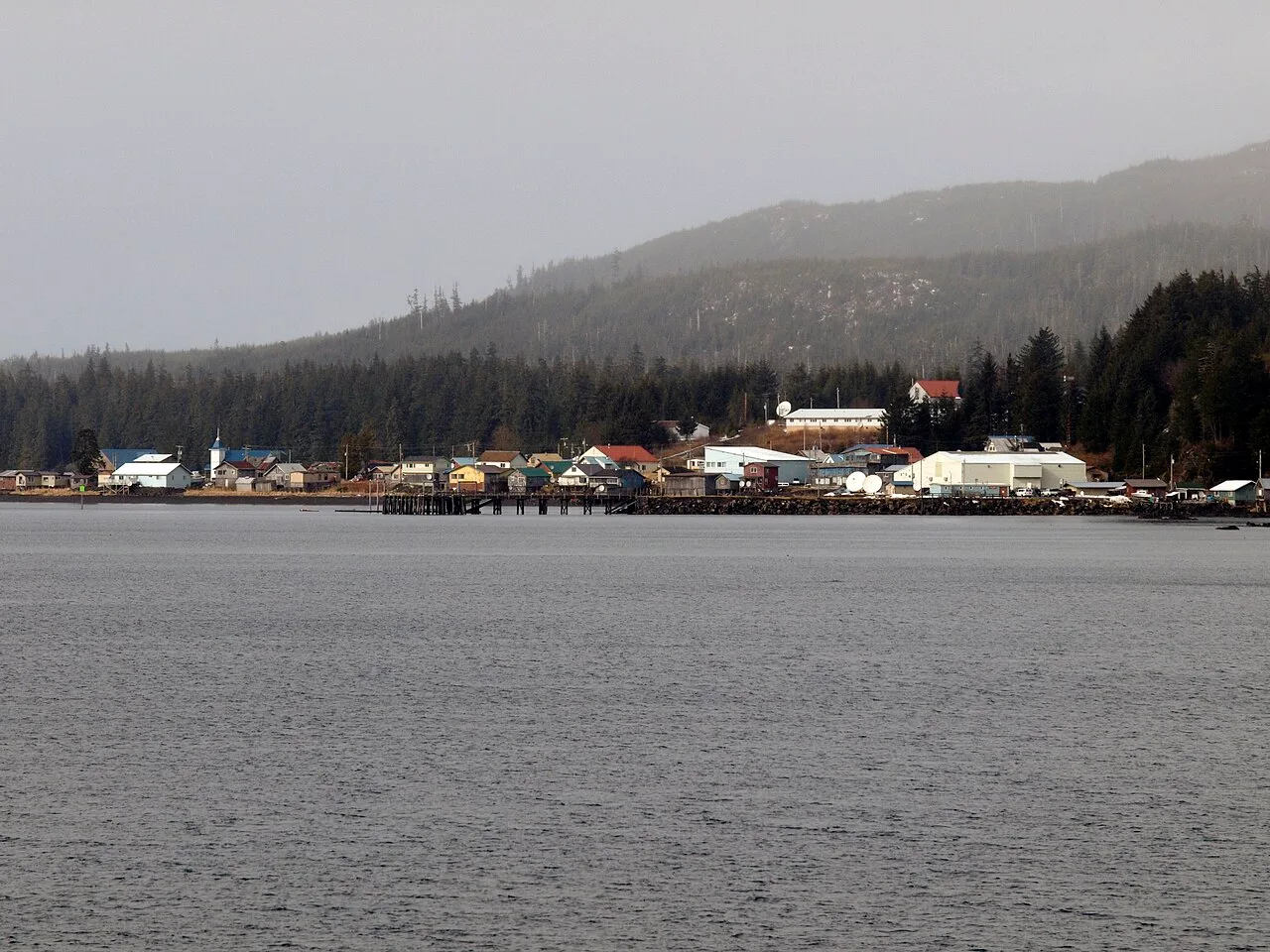
Ålesund, Norway
Norway's Art Nouveau showpiece, a waterfront town of turrets, towers, and ornamented facades rebuilt in a single architectural style after a devastating fire.
Port highlights
- The Jugendstilsenteret, the Art Nouveau center where the story of the 1904 fire and the town's fairy-tale rebuild is told.
- The 418 steps up Mount Aksla to a panoramic view over the islands, the Sound, and the town's spired skyline.
- A stroll through the compact town center, where nearly every building carries the same ornate turn-of-the-century style.
Interesting facts
- A fire in January 1904 destroyed most of the town in a single night; it was rebuilt in just over three years.
- Ålesund is spread across several islands connected by bridges and underwater tunnels.
- The town is a common gateway to the Geirangerfjord and the islands of Sunnmøre.
Something not everyone knows
The rebuild happened so fast because Kaiser Wilhelm of Germany, who vacationed in the area, sent troops to help: the new town went up with Jugendstil flair in barely three years.
Photo credits & license
- Title
- Not published
- Photographer
- Geri and Tim Penner
- Source URL
- Not published
- License
- Not published
- License URL
- Not published
- Modifications
- None - Used as Provided
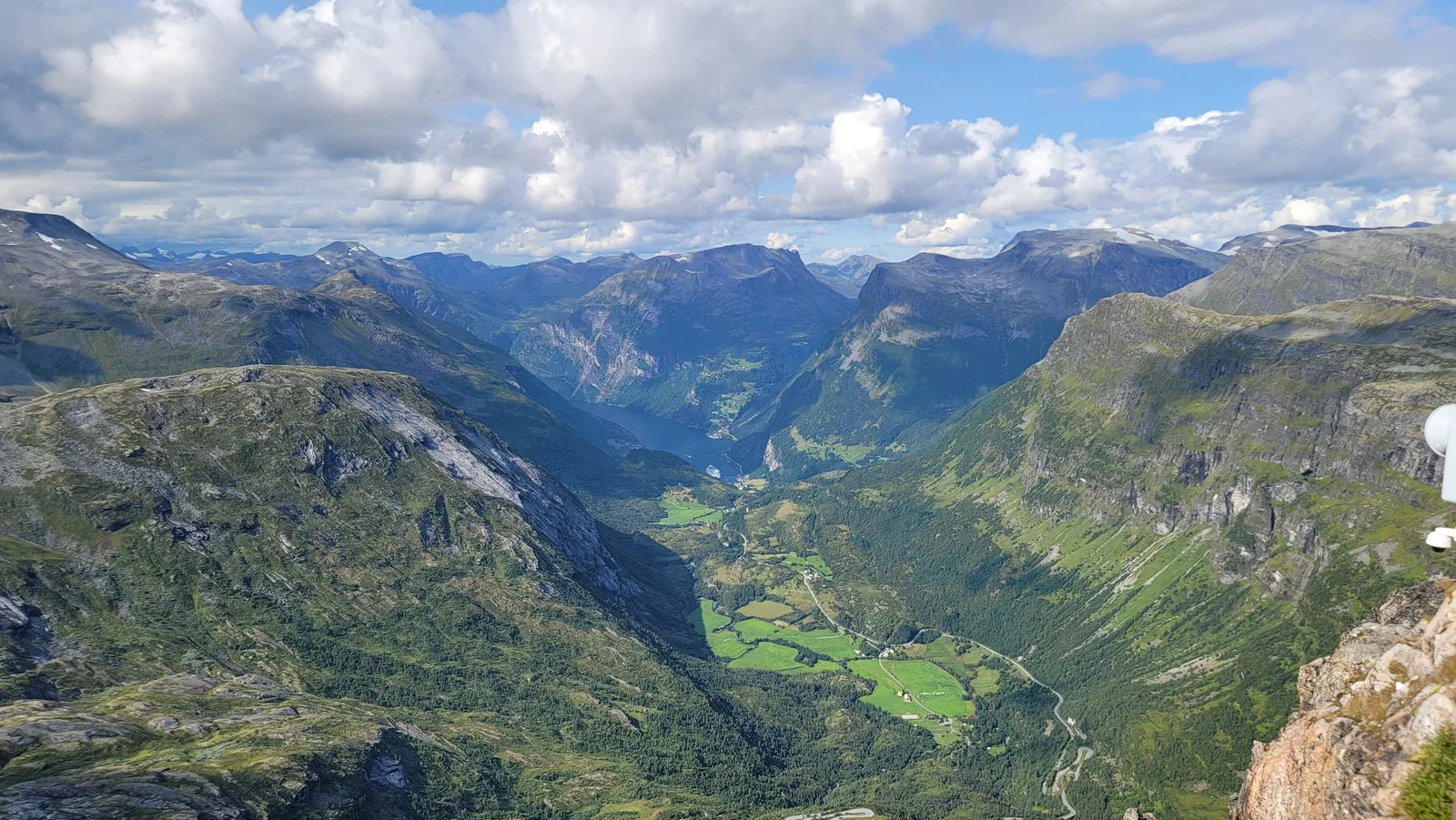
Geirangerfjord, Norway
The postcard fjord: a UNESCO-listed sheet of dark water ringed by cliffs where the Seven Sisters and other waterfalls pour straight down to the ship's rail.
Port highlights
- Cruising the full length of Geirangerfjord, where waterfalls like the Seven Sisters and the Suitor tumble over the cliffs.
- The viewpoints of Dalsnibba and Flydalsjuvet, high above the village, framing the view everyone photographs.
- The tiny village of Geiranger at the fjord's head, with the waterfall-fed valley of Geirangerdalen behind it.
Interesting facts
- Geirangerfjord and its sister Nærøyfjord were inscribed on the UNESCO World Heritage list in 2005.
- The fjord runs about 15 kilometers (9 miles) from the village to the open sea, with depths of around 260 meters.
- Cruise ships visit between about April and October; in winter the road to the village can close.
Something not everyone knows
The 'Suitor' waterfall is so named because legend says it is trying to woo the 'Seven Sisters' on the opposite cliff; locals say the Suitor only ever manages a flirtation.
Flåm, Norway
A fjord village famous for one of the world's steepest railway journeys, the Flåm Railway, which drops from the mountain plateau down to the head of the Aurlandsfjord.
Port highlights
- The Flåm Railway, a 20-kilometer branch line that climbs 866 meters through tunnels, waterfalls, and hairpin turns in under an hour.
- The Kjosfossen waterfall, where the train stops so passengers can step out and feel the spray.
- Kayaking or hiking in the Flåm valley and the surrounding fjord landscape.
Interesting facts
- The Flåm Railway is one of the steepest standard-gauge lines in the world, with a gradient reaching 1 in 18.
- About 80 percent of the line's tunnels were carved by hand between 1923 and 1940.
- Flåm sits at the innermost reach of the Aurlandsfjord, a branch of the great Sognefjord.
Something not everyone knows
The line climbs past a famous photographic spot where the train pauses: the Kjosfossen waterfall, where a dancer in red performs on the rocks in summer to the music of the falls.
Photo credits & license
- Title
- Olden Norway.jpg
- Photographer
- Cbusram
- Source URL
- Original image
- License
- CC BY 4.0
- License URL
- License details
- Modifications
- None - Used as Provided
Olden, Norway
A quiet village at the head of the Nordfjord, the gateway to the Briksdal glacier arm of Jostedalsbreen, mainland Europe's largest ice field.
Port highlights
- The Troll Car road and valley viewpoints on the way up to the Briksdal glacier, with its white-blue ice tumbling into a green lake.
- A cruise on the glassy Nordfjord, ringed by farms that climb the steep valley walls.
- The tiny white church of Olden, one of Norway's oldest timber churches still in use.
Interesting facts
- Briksdal is an arm of Jostedalsbreen, the largest glacier on the European mainland.
- Olden sits at the eastern end of the Nordfjord, about 90 kilometers from the open sea.
- The Olden Church dates from 1759.
Something not everyone knows
The glacier at Briksdal has been retreating in recent decades, and the walk up to it has been rerouted more than once as the ice edge pulls back.
Photo credits & license
- Title
- Stavanger - harbour.JPG
- Photographer
- Mercy
- Source URL
- Original image
- License
- CC BY-SA 3.0
- License URL
- License details
- Modifications
- None - Used as Provided
Stavanger, Norway
Norway's oil capital with a medieval heart: a compact old town of white wooden houses, a Romanesque cathedral, and the gateway to the Lysefjord.
Port highlights
- Gamle Stavanger, a preserved quarter of more than 170 whitewashed wooden houses from the 18th and 19th centuries.
- The Lysefjord and Preikestolen, the famous flat-topped Pulpit Rock that drops 604 meters to the fjord.
- The Norwegian Petroleum Museum, telling the story of the industry that built modern Stavanger.
Interesting facts
- Stavanger Cathedral dates from around 1125 and is Norway's oldest cathedral.
- Preikestolen's cliff face rises 604 meters (about 1,982 feet) straight above the Lysefjord.
- Stavanger grew from a fishing and canning town into Norway's oil capital after the first North Sea discoveries in 1969.
Something not everyone knows
The Pulpit Rock's flat top is a remnant of a glacial crack: the plateau is roughly 25 by 25 meters, and the classic photograph is taken sitting right at the edge.
Photo credits & license
- Title
- Skjolden.jpg
- Photographer
- Jostein Sand Nilsen (Commons uploader: Nisto)
- Source URL
- Original image
- License
- CC BY 2.5
- License URL
- License details
- Modifications
- None - Used as Provided
Skjolden, Norway
The village at the very head of the Sognefjord, the deepest fjord in Norway, and the closest cruise call to the UNESCO-listed Urnes Stave Church.
Port highlights
- The Lustrafjord, the innermost branch of the Sognefjord, where ships turn in a basin ringed by snow-patched peaks.
- The Urnes Stave Church, a 12th-century timber church on the opposite shore, a UNESCO World Heritage site.
- The village's setting where the Jostedalsbreen glacier and Jotunheimen mountains meet the water.
Interesting facts
- The Sognefjord reaches a depth of 1,308 meters, the deepest fjord in Norway.
- Urnes Stave Church dates from around 1130 and is the oldest of Norway's stave churches.
- Skjolden sits where the fjord waters finally end beneath the Jotunheimen massif.
Something not everyone knows
Winston Churchill once came salmon fishing in the rivers around Skjolden, a detail the village still tells visitors with evident pride.
Photo credits & license
- Title
- West front of Nidaros Cathedral Trondheim.jpg
- Photographer
- kallerna
- Source URL
- Original image
- License
- CC BY-SA 4.0
- License URL
- License details
- Modifications
- None - Used as Provided
Trondheim, Norway
Norway's medieval capital, built where the Nid River meets the fjord, with the great Gothic Nidaros Cathedral as its crown.
Port highlights
- Nidaros Cathedral, Scandinavia's largest medieval building and the traditional site of Norway's royal coronations.
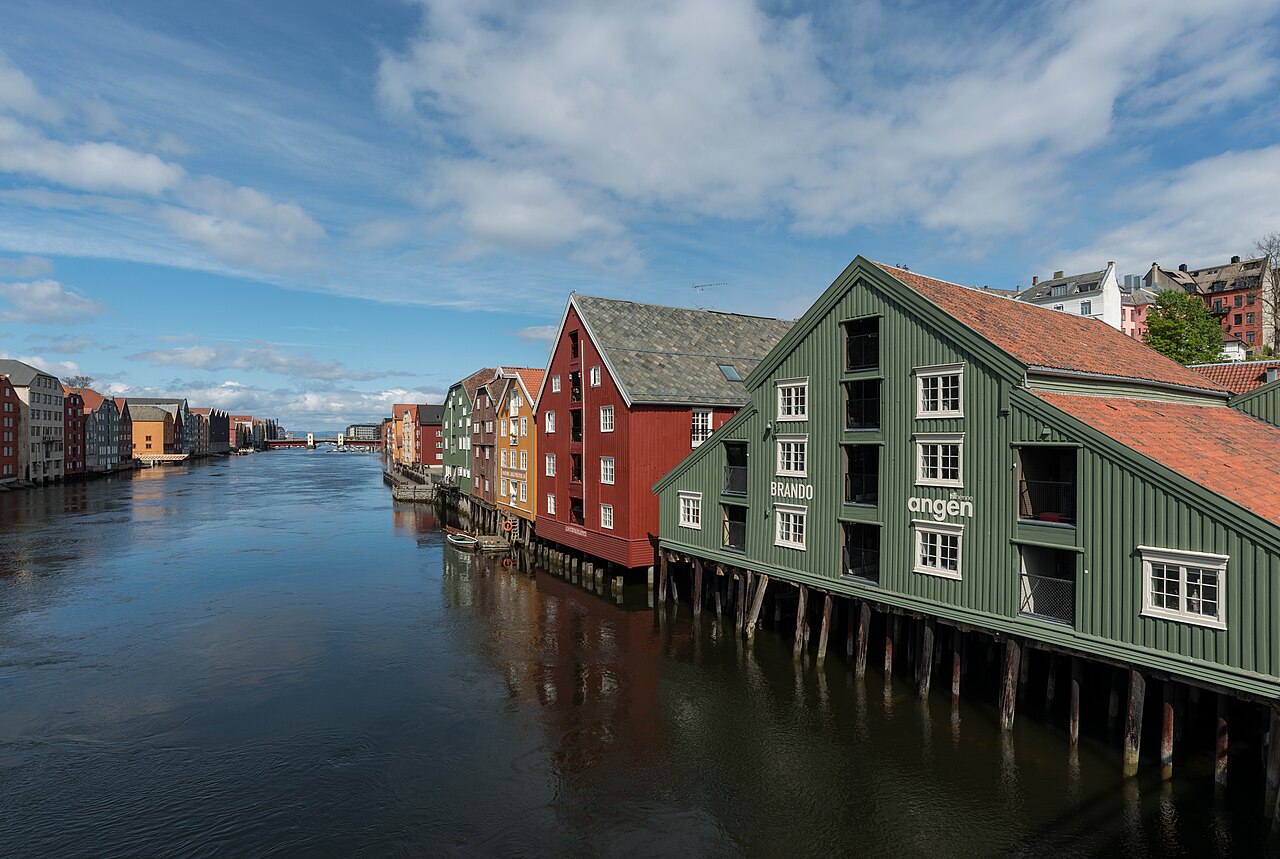
- The old wharves of warehouses along the Nidelva, painted in the warm colors that line the river.
- The Kristiansten Fortress viewpoint and the colorful wood-built streets of the Bakklandet quarter.
Interesting facts
- Nidaros Cathedral was built over the tomb of Saint Olav, who died in 1030.
- Trondheim was founded by Viking king Olav Tryggvason in 997.
- The city's wooden warehouses along the Nidelva are among the best-preserved old harbors in Scandinavia.
Something not everyone knows
Norway's kings have been consecrated at Nidaros Cathedral since the Middle Ages, and the royal regalia are still kept in the city.
Photo credits & license
- Title
- Bodo Hafen lub 2025-07-24 img01.jpg
- Photographer
- Lukas Beck
- Source URL
- Original image
- License
- CC BY 4.0
- License URL
- License details
- Modifications
- None - Used as Provided
Bodø, Norway
The first major town above the Arctic Circle on the coastal route, a modern gateway to the Lofoten islands and the world's strongest maelstrom.
Port highlights
- The Saltstraumen, a narrow strait where some of the world's strongest tidal currents boil through four times a day.
- The Norwegian Aviation Museum and the town's angular, rebuilt postwar center.
- A day trip or ferry hop across Vestfjord to the Lofoten islands.
Interesting facts
- Bodø sits just north of the Arctic Circle, at about 67 degrees north latitude.
- Saltstraumen's current can reach speeds of up to about 40 kilometers per hour (25 mph).
- The town was largely destroyed by German bombing in 1940 and rebuilt after the war.
Something not everyone knows
Bodø's geography made it a strategic target in 1940: the bombing leveled the town in a single raid, and locals still mark the date each May.
Photo credits & license
- Title
- Svolvaer, Lofoten.jpg
- Photographer
- FrankBothe
- Source URL
- Original image
- License
- CC BY-SA 4.0
- License URL
- License details
- Modifications
- None - Used as Provided
Svolvær, Norway
The gateway town of the Lofoten islands, where jagged peaks rise straight out of the sea and red rorbu fishing cabins line the harbor.
Port highlights
- The Lofoten seascape itself: sheer granite peaks like Svolværgeita dropping into sheltered waters.
- The old rorbu cabins, the traditional fishermen's quarters now turned into snug harborside stays.
- A summer-evening view under the midnight sun, which never sets here from late May to mid-July.
Interesting facts
- The Lofoten archipelago lies entirely above the Arctic Circle.
- Svolvær has been a fishing port for at least a thousand years, centered on the winter cod fishery.
- The twin rock pinnacle Svolværgeita, the Goat, is a famous climb with a notorious final jump between its horns.
Something not everyone knows
Despite the Arctic latitude, the warm Gulf Stream keeps Lofoten's winter harbor ice-free, which is why the cod fleet has always worked here through the darkest months.
Photo credits & license
- Title
- Not published
- Photographer
- Diego Delso
- Source URL
- Original image
- License
- Not published
- License URL
- Not published
- Modifications
- None - Used as Provided
Lofoten (Leknes), Norway
The Lofoten island gateway near Leknes, where the archipelago's fang-like peaks, fishing villages, and white beaches sit under the Arctic sky.
Port highlights
- The white-sand beaches of Haukland and Uttakleiv, tropical-looking strands framed by granite peaks.
- The village of Henningsvær, a fishing settlement of red cabins strung along a harbor.
- The peaks of Vestvågøy, the island Leknes sits on, laced with hiking trails.
Interesting facts
- Leknes is the commercial center of Vestvågøy, one of the largest islands of the Lofoten chain.
- The Lofoten Wall, a chain of jagged peaks, forms the archipelago's spine for more than a hundred kilometers.
- The area is a base for winter cod fishing that has drawn fleets from across Norway for centuries.
Something not everyone knows
The midnight sun and the winter darkness here are both extreme: from late May the sun never sets, and in December the islands see barely three hours of twilight a day.
Photo credits & license
- Title
- Maloy, Norway.jpg
- Photographer
- Pabernosmatao
- Source URL
- Original image
- License
- CC0 1.0
- License URL
- License details
- Modifications
- None - Used as Provided
Måløy, Norway
A fishing town on the island of Vågsøy, known for the strange sculpted rock of Kannesteinen and its position at the mouth of the Nordfjord.
Port highlights
- The Kannesteinen, a mushroom-shaped rock carved by the sea at Oppedal, one of Norway's most photographed coastal oddities.
- The working harbor, where one of Norway's largest coastal fishing fleets lands its catch.
- The bridge across the Ulvesund to the mainland, with sweeping views of the fjord mouth.
Interesting facts
- Måløy sits on Vågsøy island at the entrance to the Nordfjord.
- The town was the site of a daring World War II commando raid on a German-held port in December 1941.
- Kannesteinen was shaped by waves over thousands of years into its narrow-stemmed form.
Something not everyone knows
The 1941 raid on Måløy was led by a British commando force that included Norwegian volunteers, and the operation helped inspire the later film about the heavy-water sabotage missions.
Photo credits & license
- Title
- Leirvik, Stord.jpg
- Photographer
- Marius Vassnes
- Source URL
- Original image
- License
- CC BY-SA 4.0
- License URL
- License details
- Modifications
- None - Used as Provided
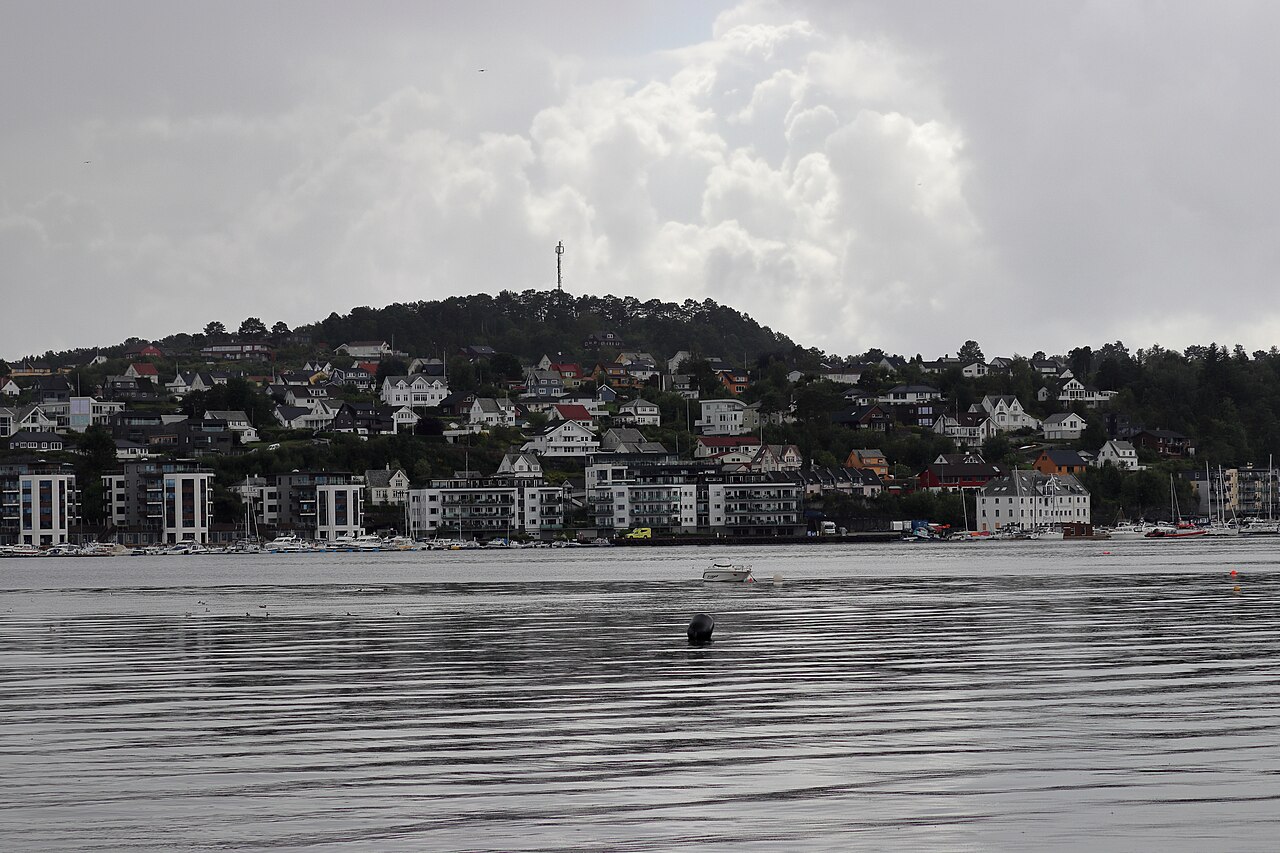
Leirvik (Stord), Norway
The harbor town of Stord island in the Sunnhordland district, a quiet call on fjord itineraries between Bergen and the coastal route.
Port highlights
- The Sunnhordland Museum's open-air collection of historic farm buildings and boats.
- A walk along the shoreline of the Langenuen strait, busy with coastal traffic.
- The 18th-century Leirvik church and the town's compact wooden center.
Interesting facts
- Stord is one of the largest islands in the Sunnhordland region of western Norway.
- Leirvik is the island's administrative center and its main ferry harbor.
- The strait of Langenuen, beside the town, is one of Norway's busiest coastal shipping lanes.
Something not everyone knows
The town's name comes from the Old Norse word for a clay shore, leir, a reminder that the settlement grew where the boats could haul up on a muddy beach.
Photo credits & license
- Title
- Skagen Kattegat Baltic Sea Denmark (2026-08-21).jpg
- Photographer
- Olgierd Rudak
- Source URL
- Original image
- License
- CC BY-SA 4.0
- License URL
- License details
- Modifications
- None - Used as Provided
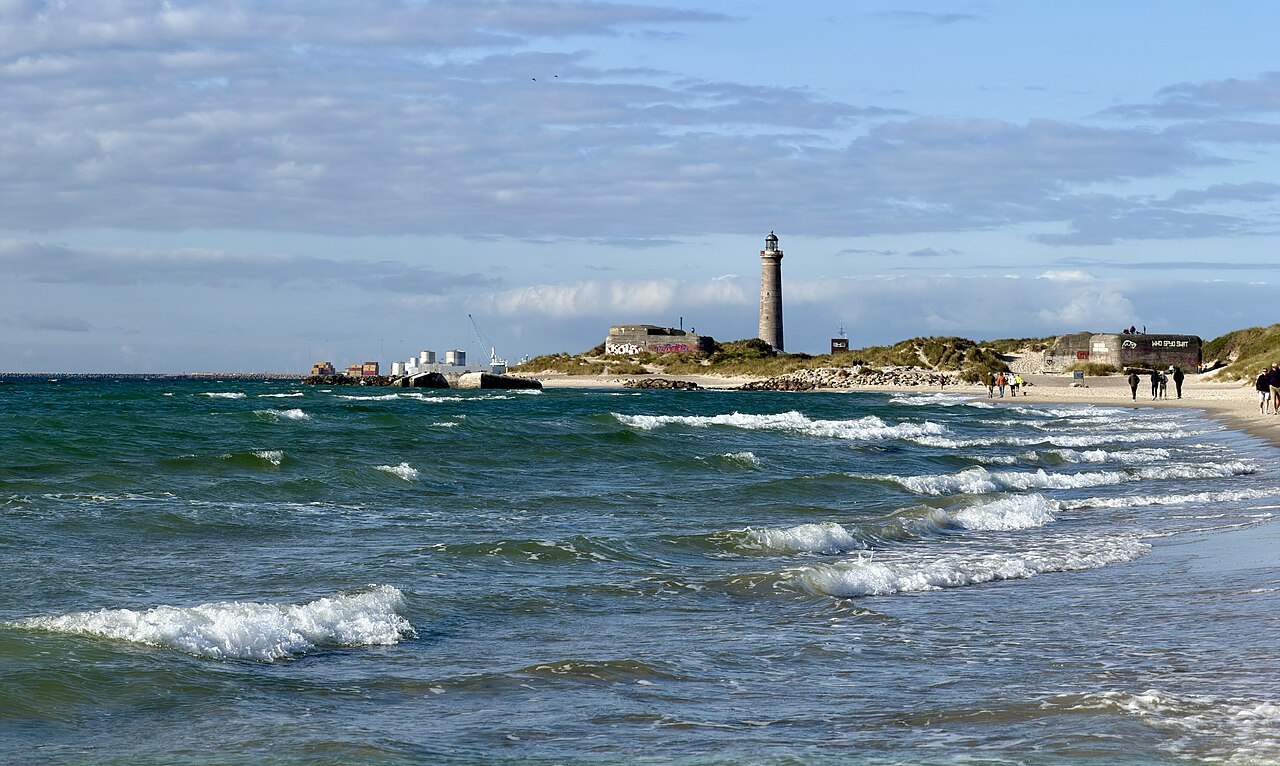
Skagen, Denmark
Denmark's northernmost town, where the Skagerrak and Kattegat seas meet in a rolling line of surf at Grenen, and yellow-painted houses line sandy streets.
Port highlights
- Grenen, the northern tip where two seas meet in a visible line of breaking waves, reached by sand-bus or a 40-minute walk.
- The Skagens Museum, home to the Skagen Painters, the 19th-century artists' colony drawn by the northern light.
- The town's sandy lanes and low yellow houses with white trim, a look protected by local building rules.
Interesting facts
- Skagen is the northernmost town in Denmark.
- At Grenen the Skagerrak and Kattegat currents meet, and the sand spit is still growing northward.
- The Skagen Painters made the town famous in the late 1800s with their luminous beach and dune scenes.
Something not everyone knows
The point at Grenen grows constantly: the sand spit extends into the sea at a rate of several meters a year, reshaping the meeting of the two seas.
Photo credits & license
- Title
- Copenhagen, Nyhavn.jpg
- Photographer
- Gerda Arendt
- Source URL
- Original image
- License
- CC0 1.0
- License URL
- License details
- Modifications
- None - Used as Provided
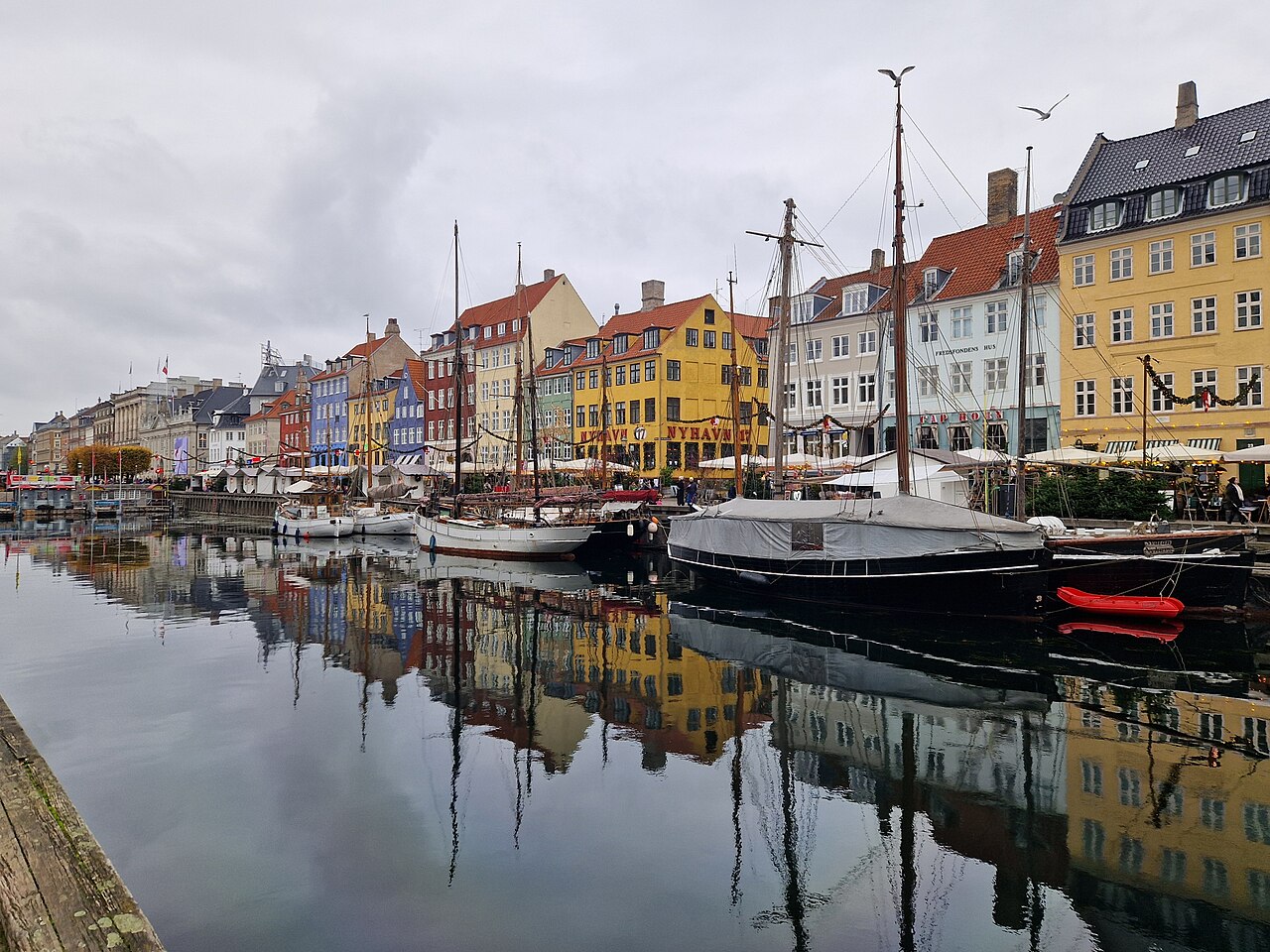
Copenhagen, Denmark
Scandinavia's style capital and a Baltic home port, where the pastel harbor of Nyhavn, Tivoli Gardens, and royal palaces sit within easy walking distance of the quays.
Port highlights
- Nyhavn, the 17th-century canal lined with painted townhouses and the classic spot for a harbor photo.
- Tivoli Gardens, the 1843 amusement garden that inspired Walt Disney, glowing with lights from April through the holidays.
- The Little Mermaid statue on the Langelinie promenade and the nearby Kastellet star fortress.
Interesting facts
- Tivoli Gardens opened in 1843, making it one of the world's oldest operating amusement parks.
- Copenhagen's bridges and canals earned the city a reputation as one of Europe's most bike-friendly capitals.
- The Little Mermaid, unveiled in 1913, is one of the world's most-photographed statues.
Something not everyone knows
The Little Mermaid has been decapitated twice and lost an arm once in protest acts since the 1960s; each time the head was recast from the original mold.
Photo credits & license
- Title
- Oslo harbor.jpg
- Photographer
- Francisco Anzola
- Source URL
- Original image
- License
- CC BY 2.0
- License URL
- License details
- Modifications
- None - Used as Provided
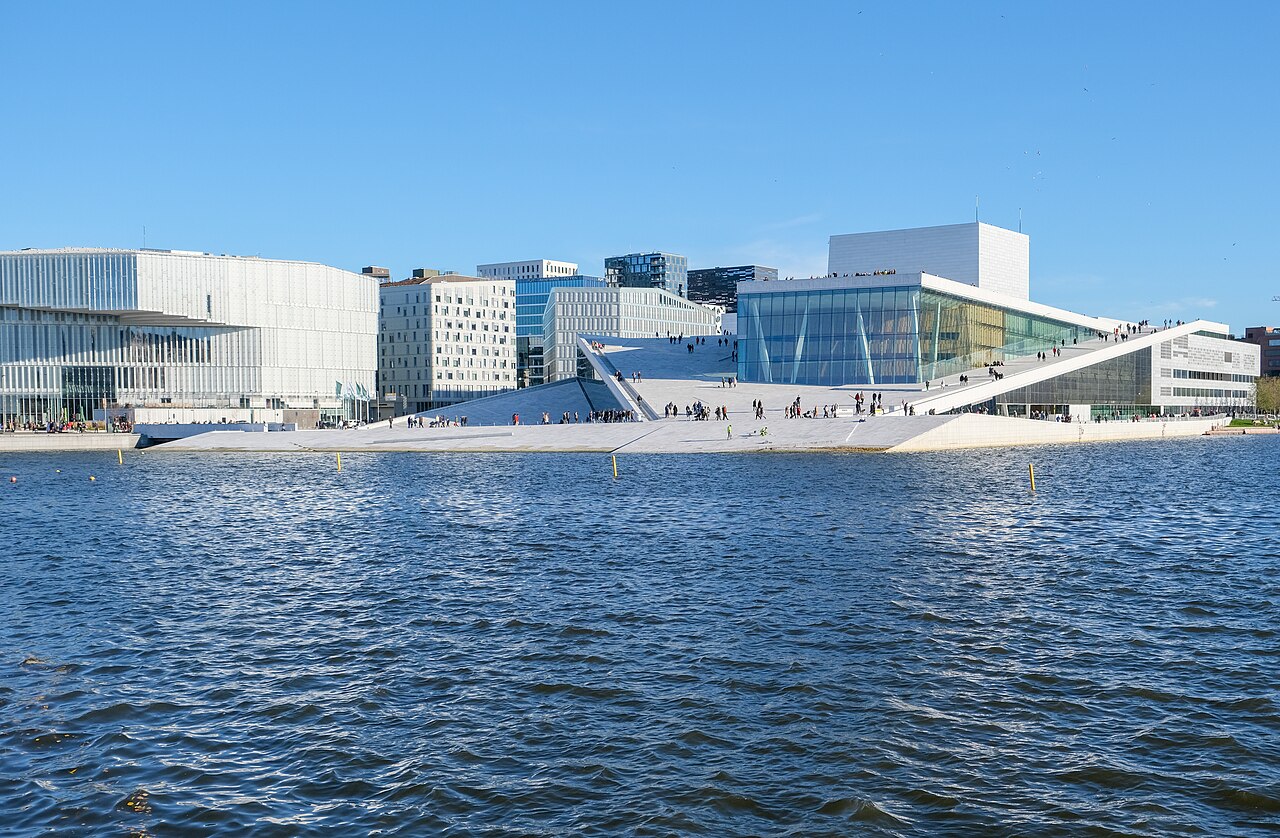
Oslo, Norway
The Norwegian capital at the head of the Oslofjord, a city of water, museums, and green space where the Opera House roof runs straight down to the sea.
Port highlights
- The Opera House, whose sloping white roof is a public walkway with a view across the fjord.
- The Munch Museum on the waterfront, home to the world's best collection of Edvard Munch, including The Scream.
- The Vigeland Sculpture Park, with more than 200 granite and bronze figures in Frogner Park.
Interesting facts
- The Oslo Opera House opened in 2008 and won the European Union's prize for contemporary architecture in 2009.
- Oslo is one of the world's most compact capitals, with forest and fjord within the city limits.
- The Nobel Peace Prize is awarded annually in Oslo's City Hall.
Something not everyone knows
The Opera House roof was designed to be walked on: the marble slopes were built as a public piazza, and the city's residents treat it as a beach in summer and a sledding hill in winter.
Photo credits & license
- Title
- Stockholm Gamla Stan 01.jpg
- Photographer
- Ad Meskens
- Source URL
- Original image
- License
- CC BY-SA 4.0
- License URL
- License details
- Modifications
- None - Used as Provided
Stockholm, Sweden
The Baltic's grandest capital, spread across 14 islands where Gamla Stan's medieval alleys, royal palaces, and the Vasa warship sit on the water's edge.
Port highlights
- Gamla Stan, the old town, with its cobbled lanes, the Royal Palace, and the narrowest street in Stockholm.
- The Vasa Museum, displaying the 17th-century warship that sank on her maiden voyage and was raised almost intact.
- A harbor or archipelago cruise threading the city's islands, bridges, and waterfront palaces.
Interesting facts
- Stockholm is built on 14 islands connected by more than 50 bridges.
- The Vasa sank in 1628, was raised in 1961, and is the world's best-preserved 17th-century ship.
- Gamla Stan dates from the 13th century and is one of Europe's best-preserved medieval city centers.
Something not everyone knows
The Vasa was the most heavily armed ship of her day, carrying 64 cannons on two decks; her top-heaviness sank her barely a kilometer into her maiden voyage.
Photo credits & license
- Title
- View from Helsinki Cathedral over the Senate Square.jpg
- Photographer
- Ypsilon from Finland
- Source URL
- Original image
- License
- CC0 1.0
- License URL
- License details
- Modifications
- None - Used as Provided
Helsinki, Finland
Finland's design-forward capital on the Baltic, a city of sea fortresses, green squares, and world-class saunas within sight of the quay.
Port highlights
- The sea fortress of Suomenlinna, a UNESCO-listed chain of islands and bastions a short ferry ride from the market square.
- The white Helsinki Cathedral and the neighboring Senate Square, the city's classical heart.
- A sauna at the waterfront Löyly or Allas Sea Pool, the proper Finnish way to meet the city.
Interesting facts
- Suomenlinna was inscribed on the UNESCO World Heritage list in 1991.
- Helsinki was named World Design Capital in 2012.
- The city grew as a Baltic trading port under Swedish, then Russian, then Finnish rule.
Something not everyone knows
The city's market square turns into a lively harbor market each morning, and in winter the same square hosts the city's Christmas market with the cathedral glowing behind it.
Photo credits & license
- Title
- Tallinn Landmarks 01.jpg
- Photographer
- Scotch Mist
- Source URL
- Original image
- License
- CC BY-SA 4.0
- License URL
- License details
- Modifications
- None - Used as Provided
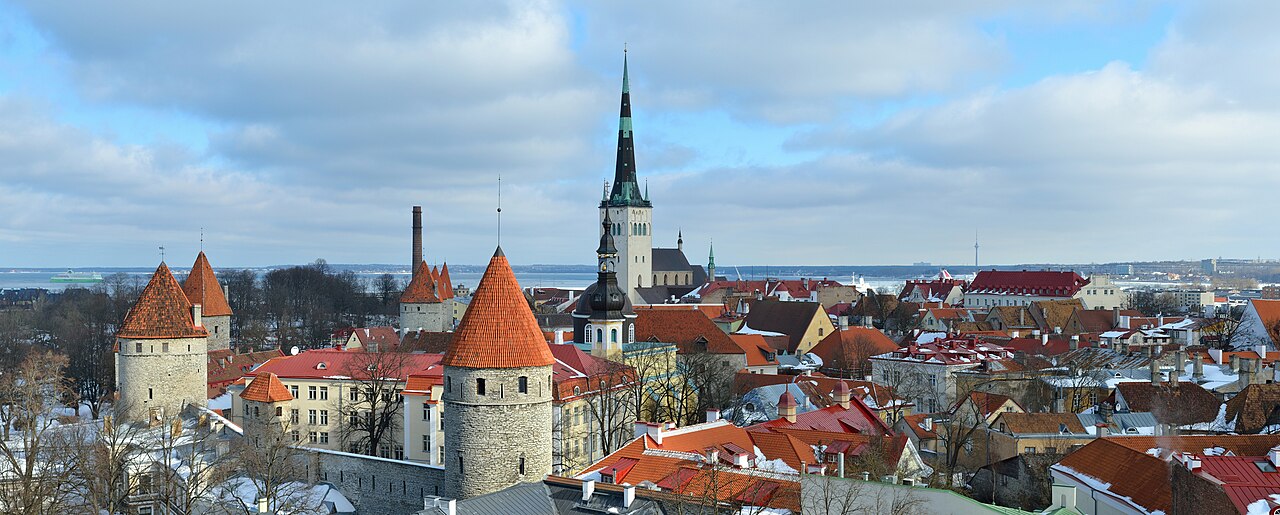
Photo credits & license
- Title
- Not published
- Photographer
- Not published
- Source URL
- Not published
- License
- Not published
- License URL
- Not published
- Modifications
- None - Used as Provided
Tallinn, Estonia
A Baltic medieval marvel: a walled old town of red rooftops, spired churches, and cobbled squares that ranks among Europe's best-preserved Hanseatic cities.
Port highlights
- Toompea Hill, the upper town of palaces and cathedral spires, with wide views over the red rooftops below.
- The medieval town wall with its surviving towers, walkable along preserved stretches.
- Town Hall Square, the old market heart ringed by gabled merchant houses and cafés.
Interesting facts
- Tallinn's old town was inscribed on the UNESCO World Heritage list in 1997.
- The city's fortifications once included more than 40 towers along 2 kilometers of wall.
- Tallinn began as a stronghold of the Danish king Valdemar, and the name echoes the Estonian for 'Danish town.'
Something not everyone knows
The town wall's towers were largely saved from demolition by the 19th-century city council's decision to sell them to private owners, who turned them into homes, studios, and storage.
Photo credits & license
- Title
- House of Blackheads in Riga, Latvia.jpg
- Photographer
- Raul Cortez999
- Source URL
- Original image
- License
- CC BY-SA 4.0
- License URL
- License details
- Modifications
- None - Used as Provided
Riga, Latvia
The Baltic's Art Nouveau capital, where a medieval Hanseatic old town meets one of the world's densest concentrations of Jugendstil facades.
Port highlights
- The Art Nouveau district around Alberta iela, a street of ornate 1900s facades with masks, garlands, and mythical figures.
- The old town's Dome Cathedral, the largest medieval church in the Baltic states.
- The Central Market, five former Zeppelin hangars turned into Europe's biggest market hall complex.
Interesting facts
- Riga's historic center was inscribed on the UNESCO World Heritage list in 1997.
- The city holds more than 800 Art Nouveau buildings, among the highest concentrations in the world.
- Riga was a founding member of the Hanseatic League in the 13th century.
Something not everyone knows
The Central Market's five pavilions were built from German Zeppelin hangars after World War I, and the vaulted steel roofs still carry the smell of the thousands of stalls below.
Photo credits & license
- Title
- Visby domkyrka October 2024 01.jpg
- Photographer
- Arild Vågen (Wikimedia Commons username: ArildV)
- Source URL
- Original image
- License
- CC BY-SA 4.0
- License URL
- License details
- Modifications
- None - Used as Provided
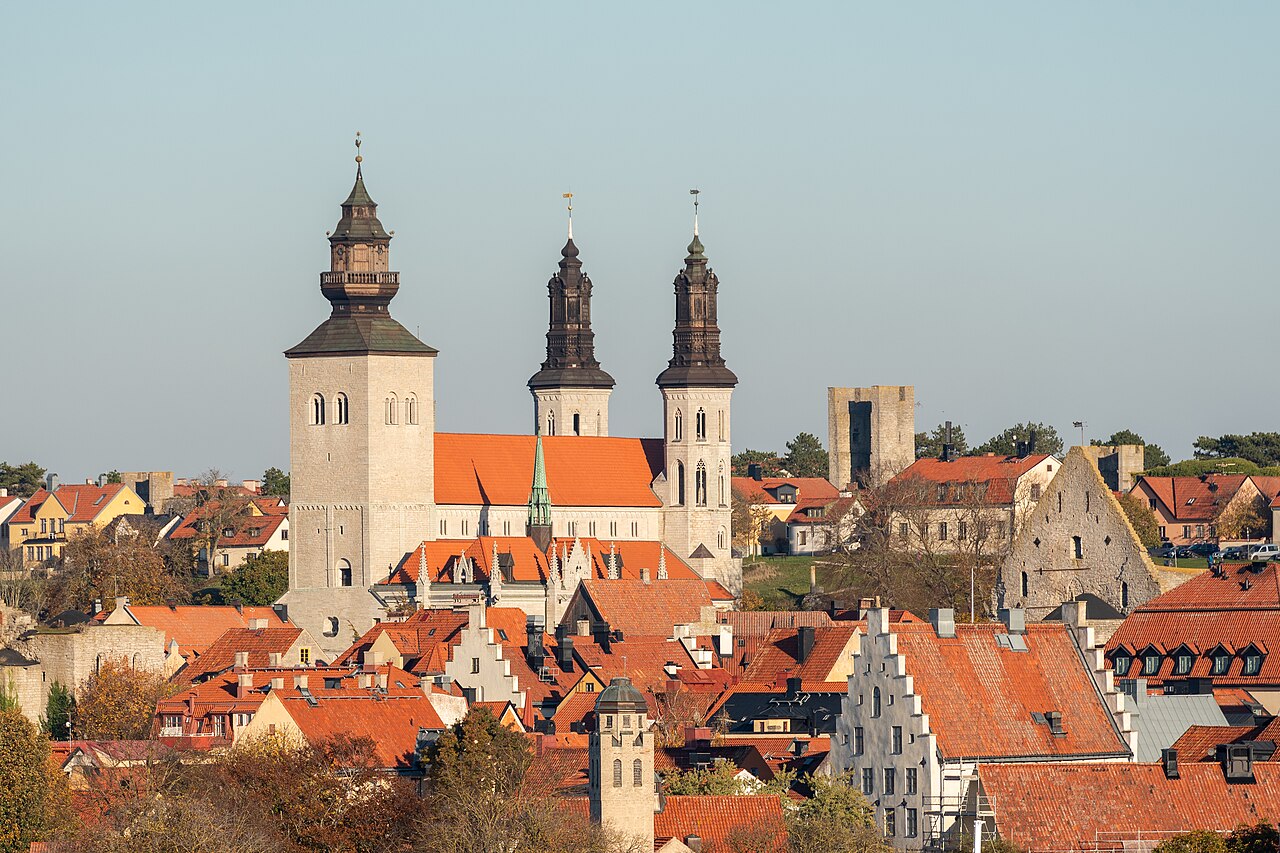
Visby, Sweden
The walled Hanseatic town of Gotland, a Baltic island capital of rose gardens, ruined churches, and a medieval ring wall that still circles the old city.
Port highlights
- The 3.4-kilometer medieval town wall, ringed with towers and gates, encircling the old city.
- The cathedral of St. Mary and the roofless ruins of the old churches, atmospheric leftovers of a rich trading past.
- A walk along the cobbled streets of winding alleys lined with 18th-century wooden houses and roses.
Interesting facts
- Visby's Hanseatic town was inscribed on the UNESCO World Heritage list in 1995.
- The town wall, begun in the 13th century, survives with more than 40 towers.
- Visby was a principal hub of the Hanseatic League in the Baltic during the Middle Ages.
Something not everyone knows
Visby's nickname, 'the city of roses and ruins,' is literal: climbing roses spill over the walls of the roofless medieval churches all summer long.
Photo credits & license
- Title
- Gdansk Motława.jpg
- Photographer
- Paweł 'pbm' Szubert
- Source URL
- Original image
- License
- CC BY-SA 3.0
- License URL
- License details
- Modifications
- None - Used as Provided
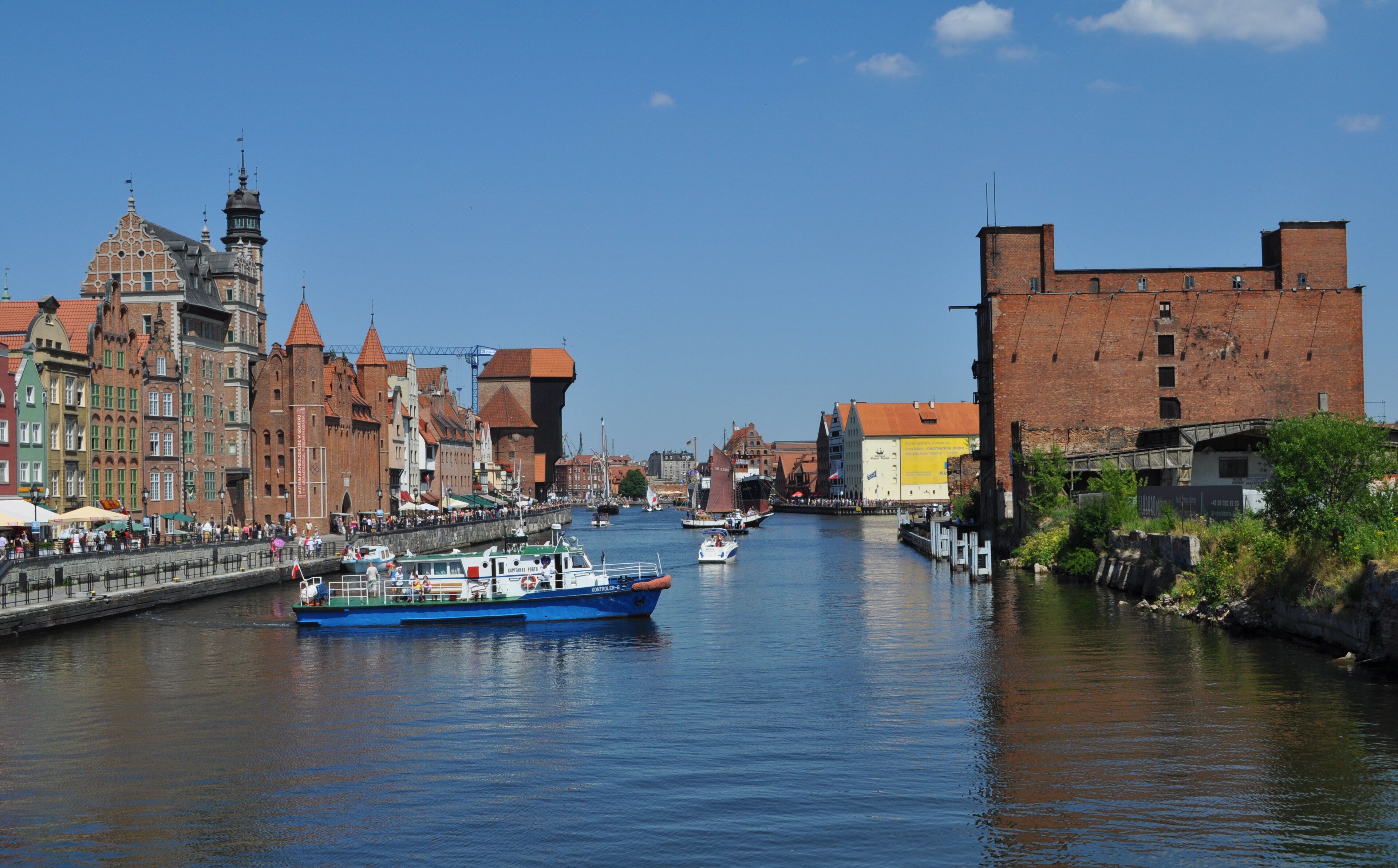
Gdańsk, Poland
Poland's great Baltic port, a rebuilt Hanseatic city of gabled facades, amber shops, and a waterfront crane that has marked the skyline for centuries.
Port highlights
- The Long Market and its ornate townhouses, rebuilt after World War II with vivid painted facades.
- The medieval Crane on the Motława river, one of the largest surviving wooden harbor cranes of its kind.
- The amber shops and workshops of the old town, Gdańsk being the historic heart of Baltic amber trade.
Interesting facts
- Gdańsk's crane dates from the 15th century and could lift loads of up to four tonnes.
- The city was the birthplace of the Solidarity movement, whose strikes began at the shipyard in 1980.
- Gdańsk was a leading member of the Hanseatic League and one of the wealthiest ports of the Baltic.
Something not everyone knows
The old town's colorful facades are largely postwar reconstructions painted from prewar photographs, so the pastel streets visitors photograph today were rebuilt brick by brick.
Photo credits & license
- Title
- Klaipėda in Lithuania.jpg
- Photographer
- simka
- Source URL
- Original image
- License
- CC BY-SA 3.0
- License URL
- License details
- Modifications
- None - Used as Provided
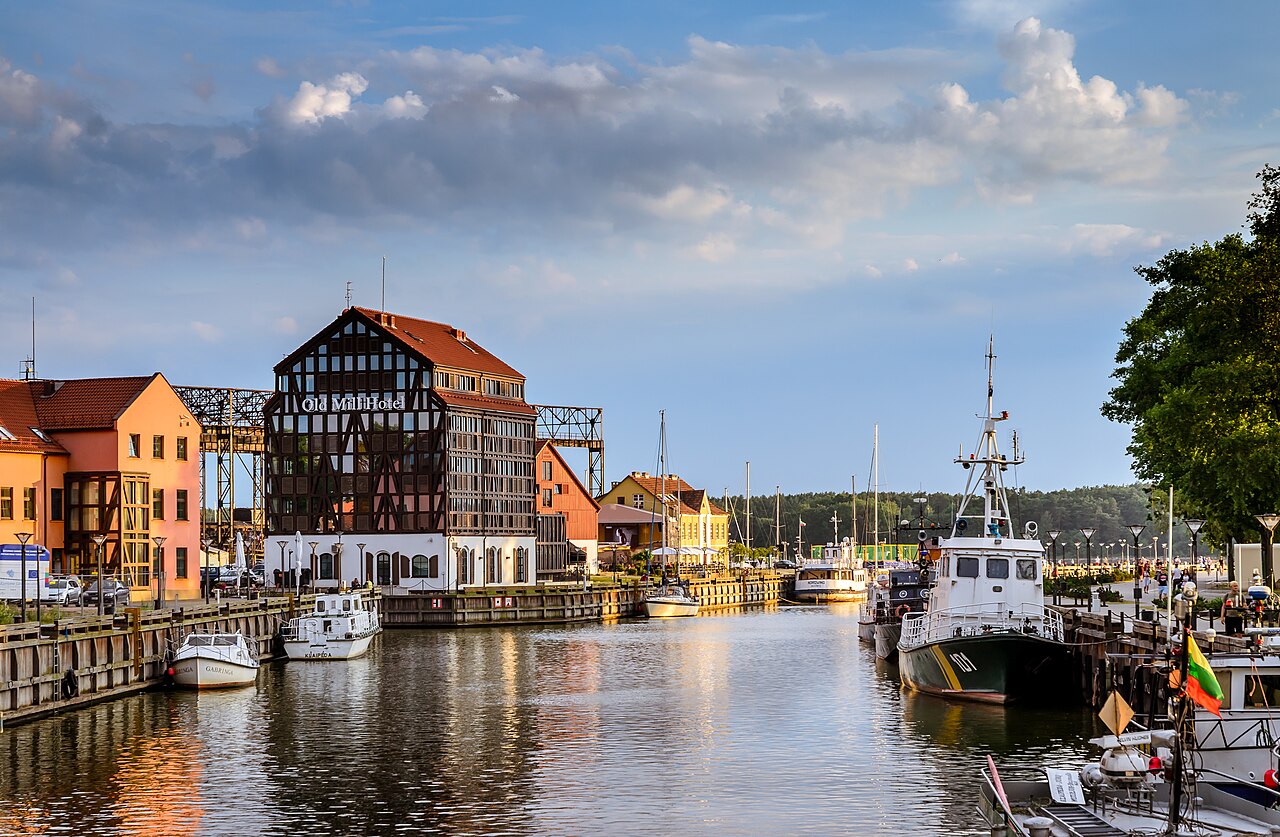
Klaipėda, Lithuania
Lithuania's ice-free Baltic port and the ferry gateway to the Curonian Spit, a UNESCO-listed ribbon of dunes and pine forest.
Port highlights
- The ferry across the lagoon to the Curonian Spit and the great drifting dunes of Nida.
- The old town's fachwerk (half-timbered) buildings, a legacy of the city's German-era rebuild.
- The sculpture park and the lively Dane river embankment in the center.
Interesting facts
- Klaipėda is Lithuania's only seaport and stays ice-free through the winter.
- The Curonian Spit is a UNESCO World Heritage site shared by Lithuania and Russia.
- The city was known as Memel under German rule until 1923.
Something not everyone knows
The old town was rebuilt in the 18th century after a fire, which is why its half-timbered facades look more German than Lithuanian.
Photo credits & license
- Title
- Warnemünde Cruise Center.jpg
- Photographer
- Mark König
- Source URL
- Original image
- License
- CC BY-SA 4.0
- License URL
- License details
- Modifications
- None - Used as Provided
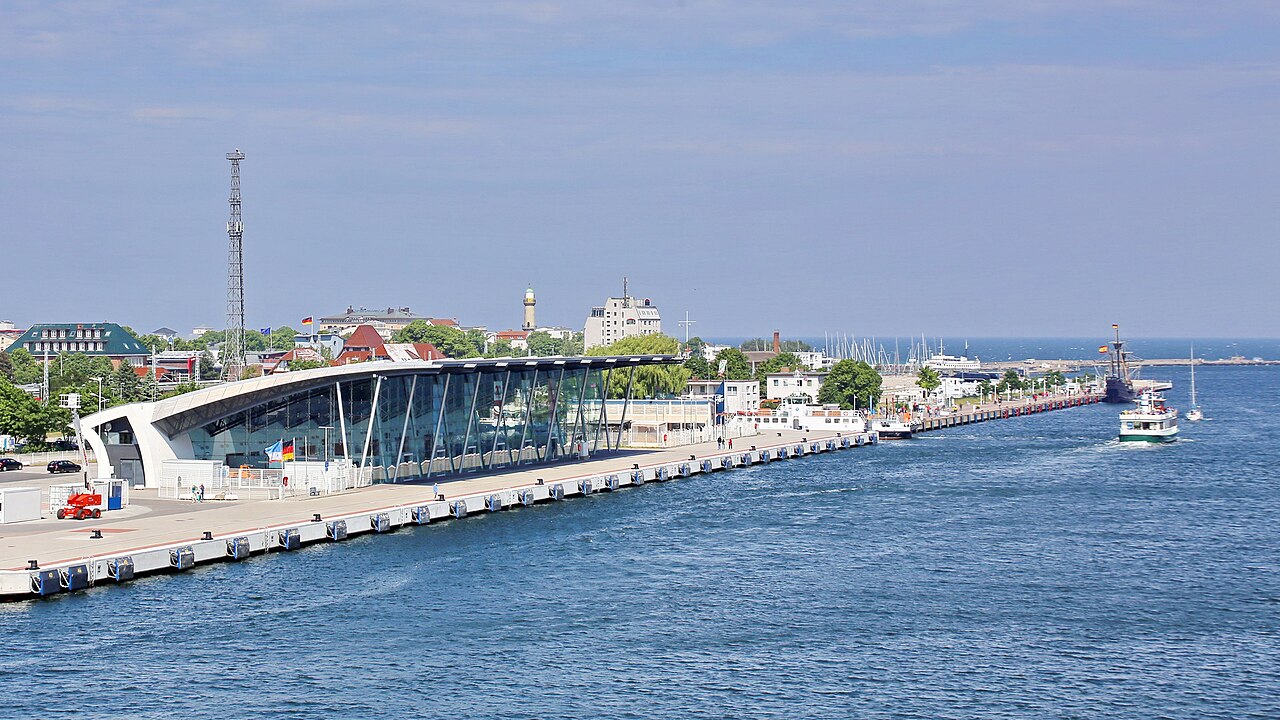
Warnemünde, Germany
The seaside resort port of Rostock and the Baltic gateway to Berlin, a beach town of lighthouses, promenades, and the mouth of the Warnow river.
Port highlights
- The 1898 lighthouse at the harbor mouth, climbable for a view over the Baltic and the beach.
- The long sandy beach and the wooden promenade, lined with cafes and the classic teepott building.
- The train ride inland to Rostock's old town and, farther, to Berlin.
Interesting facts
- Warnemünde became a popular seaside resort in the late 19th century.
- The town's lighthouse dates from 1898 and stands 37 meters tall.
- Warnemünde is the cruise and ferry port for Rostock, about 15 kilometers inland.
Something not everyone knows
Warnemünde's famous teepott, a 1960s concrete roof shaped like a wave, was saved from demolition by local protests and now houses a restaurant with a beach view.
Photo credits & license
- Title
- Nordstaden, Gothenburg, Sweden - panoramio (13).jpg
- Photographer
- Arek N. (Arkadiusz Nanowski)
- Source URL
- Original image
- License
- CC BY-SA 3.0
- License URL
- License details
- Modifications
- None - Used as Provided
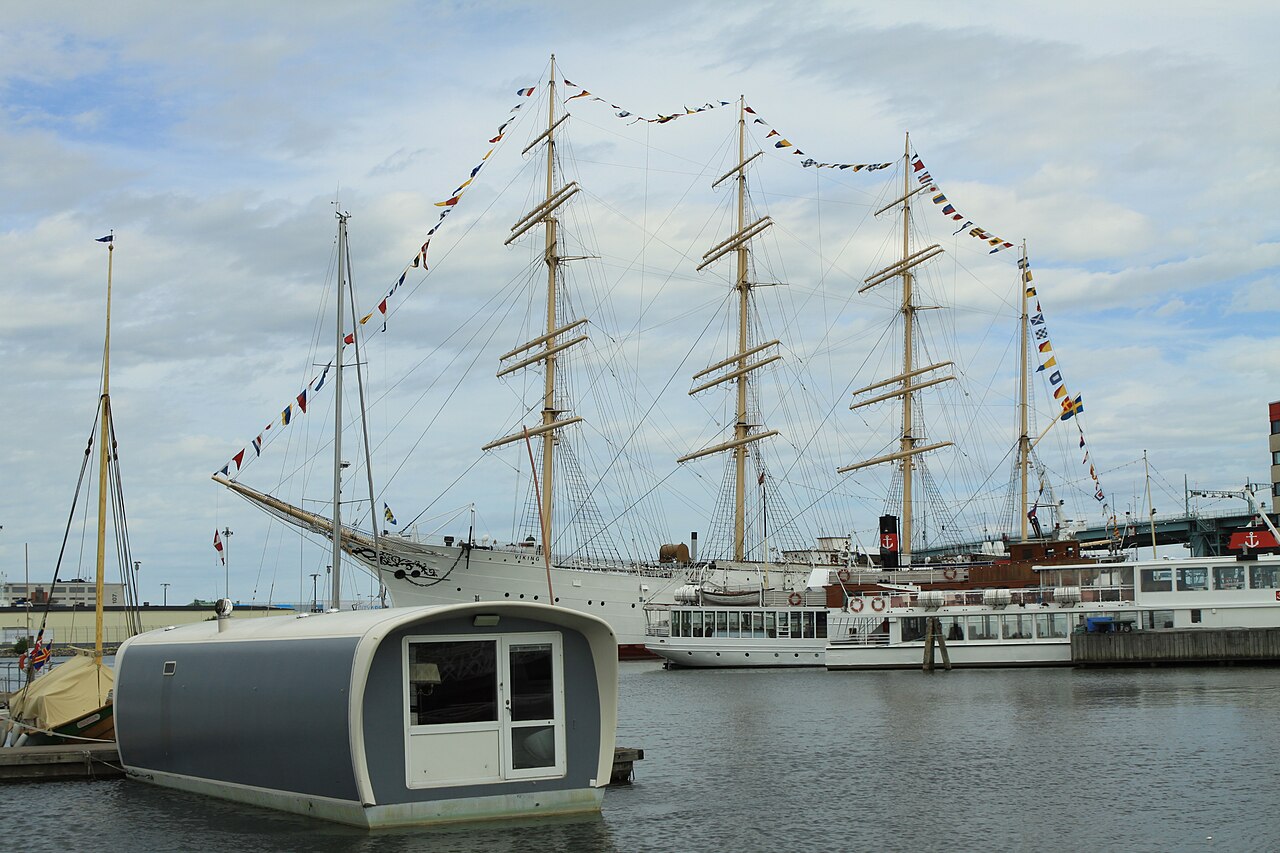
Gothenburg, Sweden
Sweden's west-coast port and canal city, a gateway to the Bohuslän archipelago with a lively harbor quarter and Europe's biggest amusement park.
Port highlights
- Liseberg, one of Europe's largest amusement parks, glowing with rides and lights in the city center.
- The canals and the old harbor of the Haga district, with its cobbled lanes and giant cinnamon buns.
- A boat trip through the southern Bohuslän archipelago's granite islands.
Interesting facts
- Gothenburg was founded in 1621 by King Gustavus Adolphus as Sweden's outlet to the west.
- The Göta Canal and its locks connect the city to the Baltic across southern Sweden.
- Liseberg opened in 1923 and welcomes millions of visitors a year.
Something not everyone knows
The city's Dutch-inspired canals were dug by Dutch engineers in the 1600s, which is why the street plan of the old center follows a neat grid of water and quays.
Photo credits & license
- Title
- Inner harbor - Karlskrona, Sweden - DSC08624.JPG
- Photographer
- Daderot
- Source URL
- Original image
- License
- CC0 1.0
- License URL
- License details
- Modifications
- None - Used as Provided
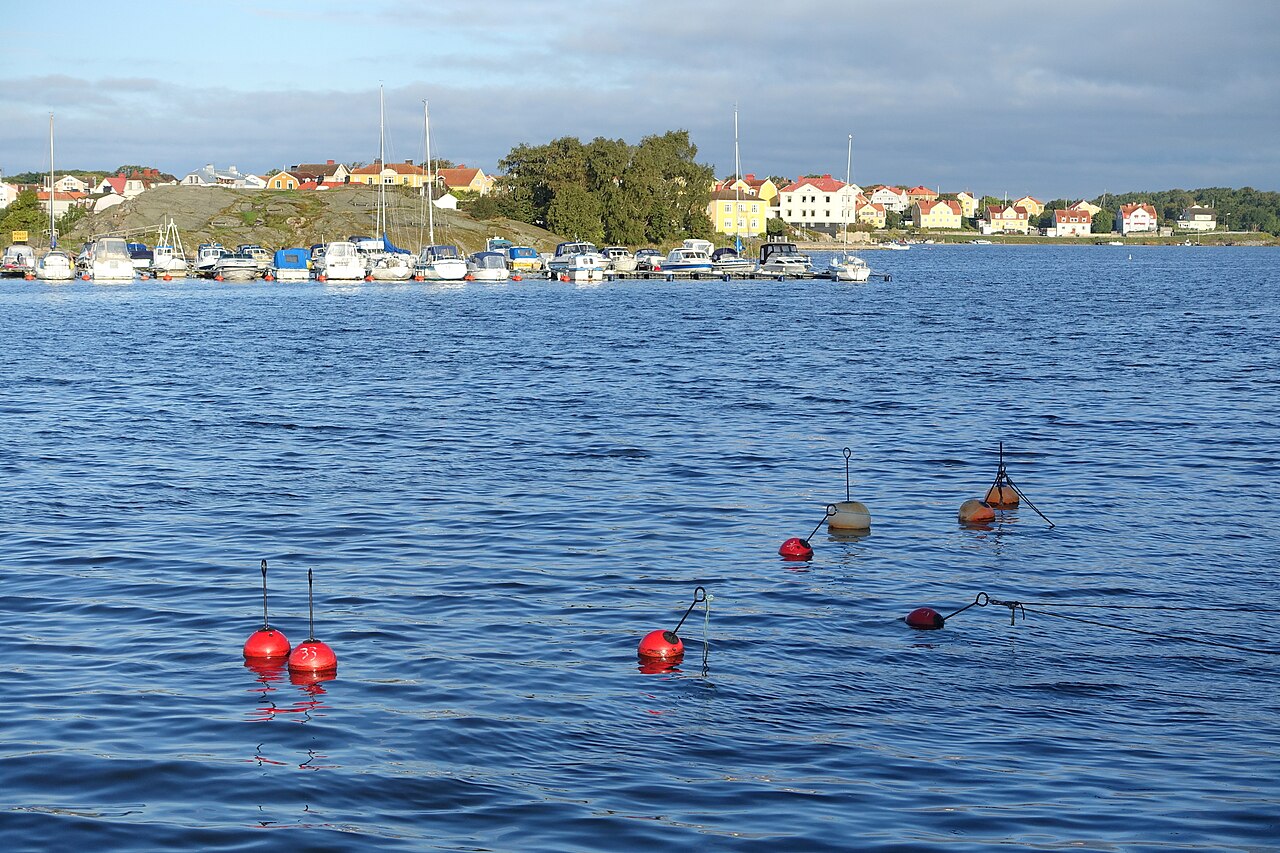
Karlskrona, Sweden
The Baltic's great naval city, laid out on a group of islands in the 1600s and preserved as a UNESCO World Heritage site of forts, docks, and baroque streets.
Port highlights
- The naval harbor with its 17th-century docks, still the home base of the Swedish Navy.
- The Admiralty Church and the Rosenbom figure at its door, a wooden beggar that is the city's beloved mascot.
- A boat tour of the island fortifications of Kungsholmen and Drottningskär.
Interesting facts
- Karlskrona's naval city was inscribed on the UNESCO World Heritage list in 1998.
- The city was founded in 1680 as a base for the Swedish fleet, named for King Karl XI.
- The Admiralty Church, built in 1685, is one of Sweden's largest wooden churches.
Something not everyone knows
The wooden figure of Rosenbom at the Admiralty Church has a movable arm: a hatch lifts so the beggar can accept coins, a tradition more than two centuries old.
Photo credits & license
- Title
- Mariehamn 2021-08-02 image19.jpg
- Photographer
- Håkan Skogsjö
- Source URL
- Original image
- License
- CC BY-SA 4.0
- License URL
- License details
- Modifications
- None - Used as Provided
Åland (Mariehamn), Finland
The capital of the demilitarized Åland Islands, an autonomous archipelago province of Finland where the sea, the sailing heritage, and quiet island lanes set the pace.
Port highlights
- The Åland Maritime Museum, with the four-masted sailing ship Pommern moored beside it, one of the last of her kind.
- A ride on a bicycle along the island's car-free lanes, or a kayak trip through the inner skerries.
- The view from the 30-meter-high St. Göran tower over the town and the surrounding islands.
Interesting facts
- The Åland Islands are an autonomous, Swedish-speaking province of Finland.
- Mariehamn was founded in 1861 and named after Empress Maria Alexandrovna of Russia.
- The islands are demilitarized, a status written into international treaties since 1921.
Something not everyone knows
The four-masted Pommern ended her working life in 1939 and has been moored at Mariehamn ever since, one of the last surviving windjammers of the grain trade.
Photo credits & license
- Title
- Reykjavík from Hallgrímskirkja, Iceland
- Photographer
- Jakub Hałun
- Source URL
- Original image
- License
- CC BY-SA 4.0
- License URL
- License details
- Modifications
- None - Used as Provided
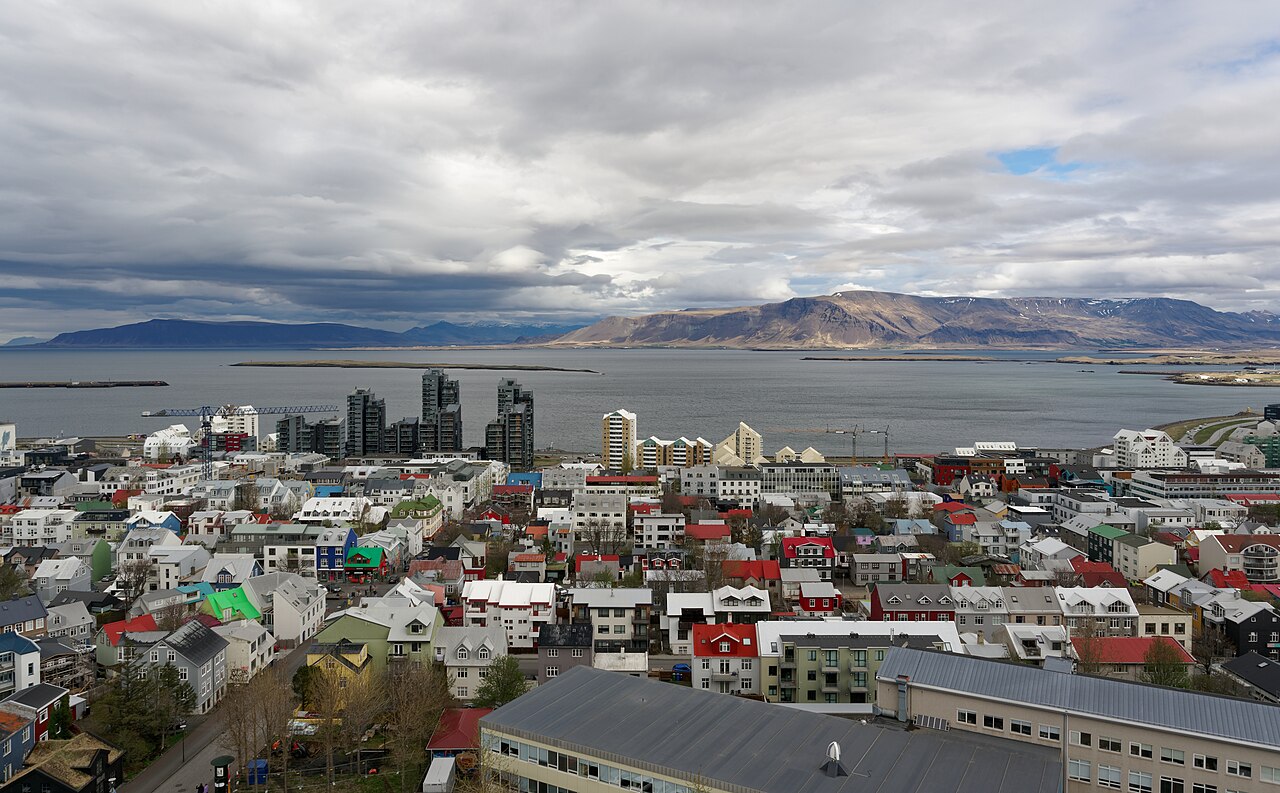
Reykjavík, Iceland
The world's northernmost capital, a low-rise city of painted roofs, geothermal pools, and a harbor that opens onto Iceland's volcanic coast.
Port highlights
- The harborfront Harpa concert hall, whose glass facade shimmers with the northern lights in winter.
- A dip in the hot water of a geothermal pool, the Laugardalslaug or the famous Blue Lagoon outside town.
- The Hallgrímskirkja church and its tower view over the city's colorful rooftops.
Interesting facts
- Reykjavík is the northernmost capital of a sovereign state in the world.
- The city's heat and hot water come almost entirely from geothermal sources.
- The Icelandic word for 'smoky bay,' Reykjavík, comes from the steam of the hot springs early settlers saw.
Something not everyone knows
The city lights barely dim the sky in June, when the sun dips below the horizon for only a few hours and the 'midnight sun' glow lasts through the night.
Photo credits & license
- Title
- Akureyri, Iceland
- Photographer
- Lee Vilenski
- Source URL
- Original image
- License
- CC BY-SA 4.0
- License URL
- License details
- Modifications
- None - Used as Provided
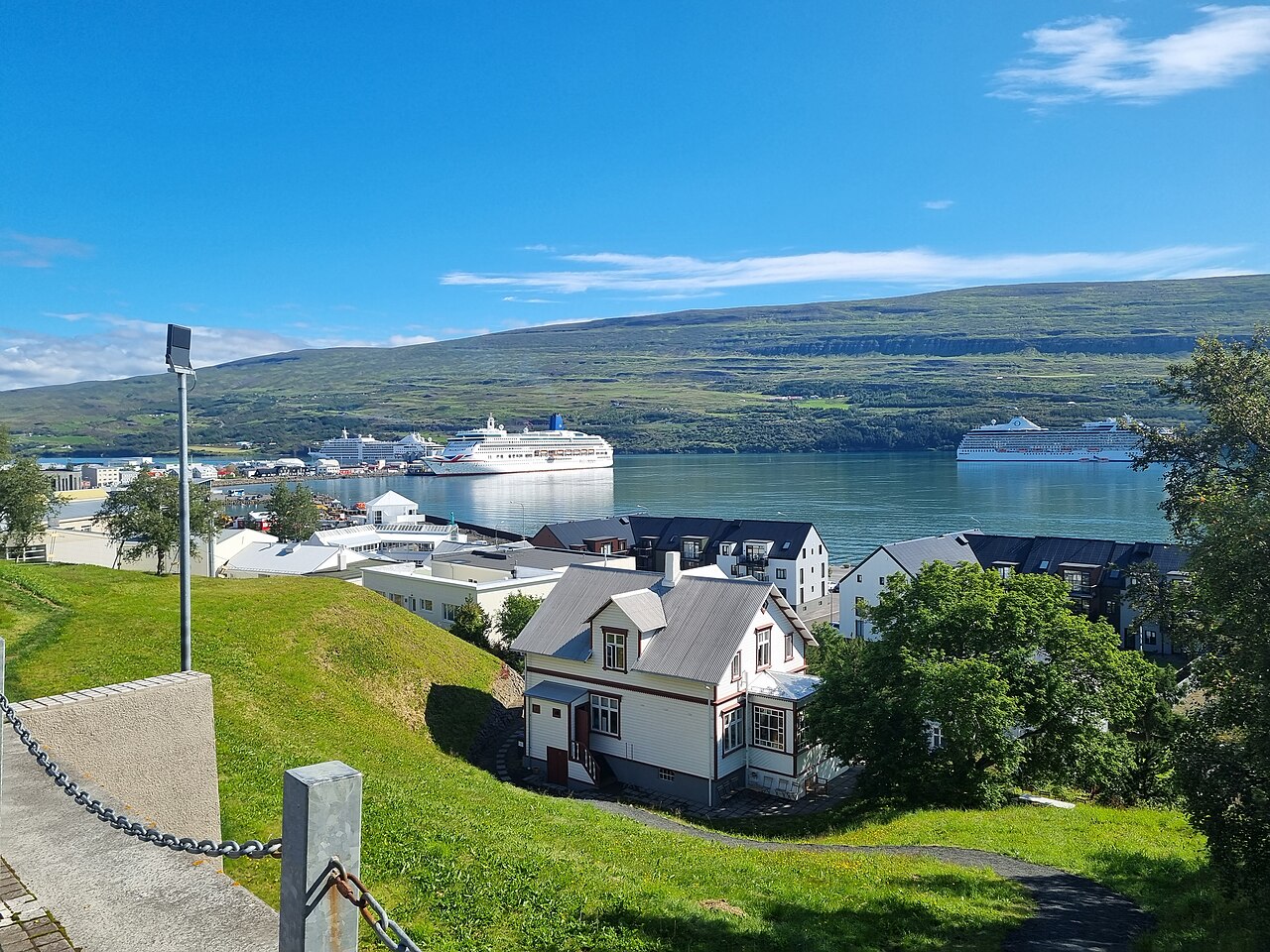
Akureyri, Iceland
The 'capital of the north,' set at the head of the long Eyjafjörður fjord, a lively town of botanical gardens, craft shops, and whale-watching harbors.
Port highlights
- The Eyjafjörður fjord, one of Iceland's best whale-watching waters, with humpbacks and blue whales in summer.
- The botanical garden, where Arctic and exotic plants grow together under the midnight sun.
- The Akureyri church's stained-glass windows and its hilltop view over the fjord.
Interesting facts
- Akureyri is Iceland's second-largest urban area and its main port in the north.
- The town sits at 65.7 degrees north, just south of the Arctic Circle.
- The botanical garden, founded in 1912, is one of the world's northernmost.
Something not everyone knows
Locals often say Akureyri is the only place in Iceland where you can go from a city dinner to a midnight hike above the Arctic Circle in under an hour.
Photo credits & license
- Title
- Ísafjörður, Iceland
- Photographer
- David Stanley
- Source URL
- Original image
- License
- CC BY 3.0
- License URL
- License details
- Modifications
- None - Used as Provided
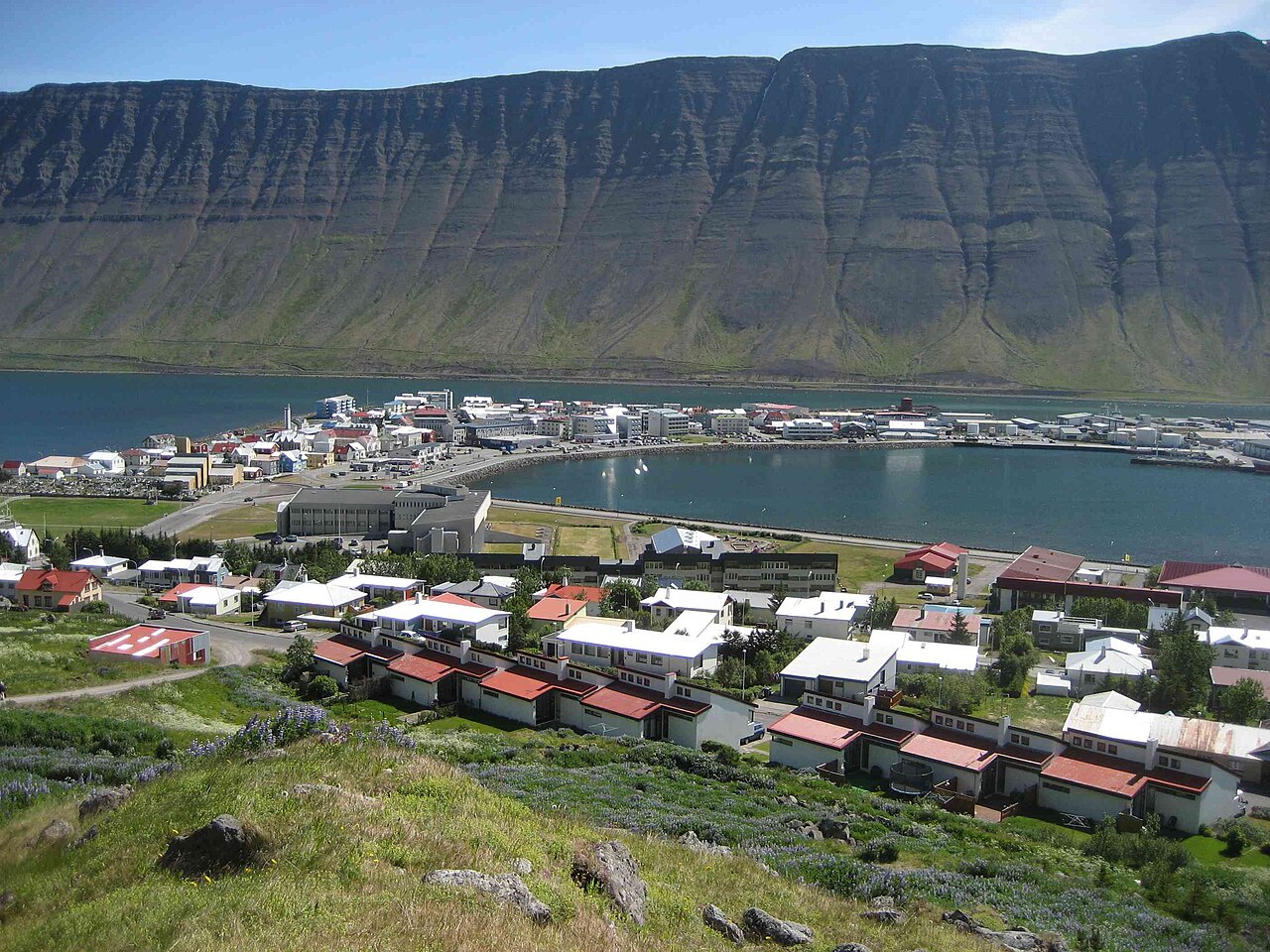
Ísafjörður, Iceland
The largest town of the Westfjords, tucked into a glacial valley at the head of a fjord, a base for puffin cliffs, remote beaches, and dramatic sea cliffs.
Port highlights
- The twin fjords and the narrow isthmus of the town's setting, ringed by steep mountains.
- The seabird cliffs of the Hornstrandir nature reserve, reachable by boat, with puffins and guillemots in summer.
- The town's old timber houses, brought as kits from Norway in the 18th century.
Interesting facts
- Ísafjörður sits on a sand spit in the Westfjords, Iceland's far northwestern peninsula.
- The Westfjords hold some of Europe's largest seabird colonies.
- The town's oldest houses, built of Norwegian timber, date from the 18th century.
Something not everyone knows
The airport runway at Ísafjörður is squeezed between a fjord and a mountain, and landings there are famous for the tight approach over the water.
Photo credits & license
- Title
- Not published
- Photographer
- Alexandre ROSA
- Source URL
- Not published
- License
- Not published
- License URL
- Not published
- Modifications
- None - Used as Provided
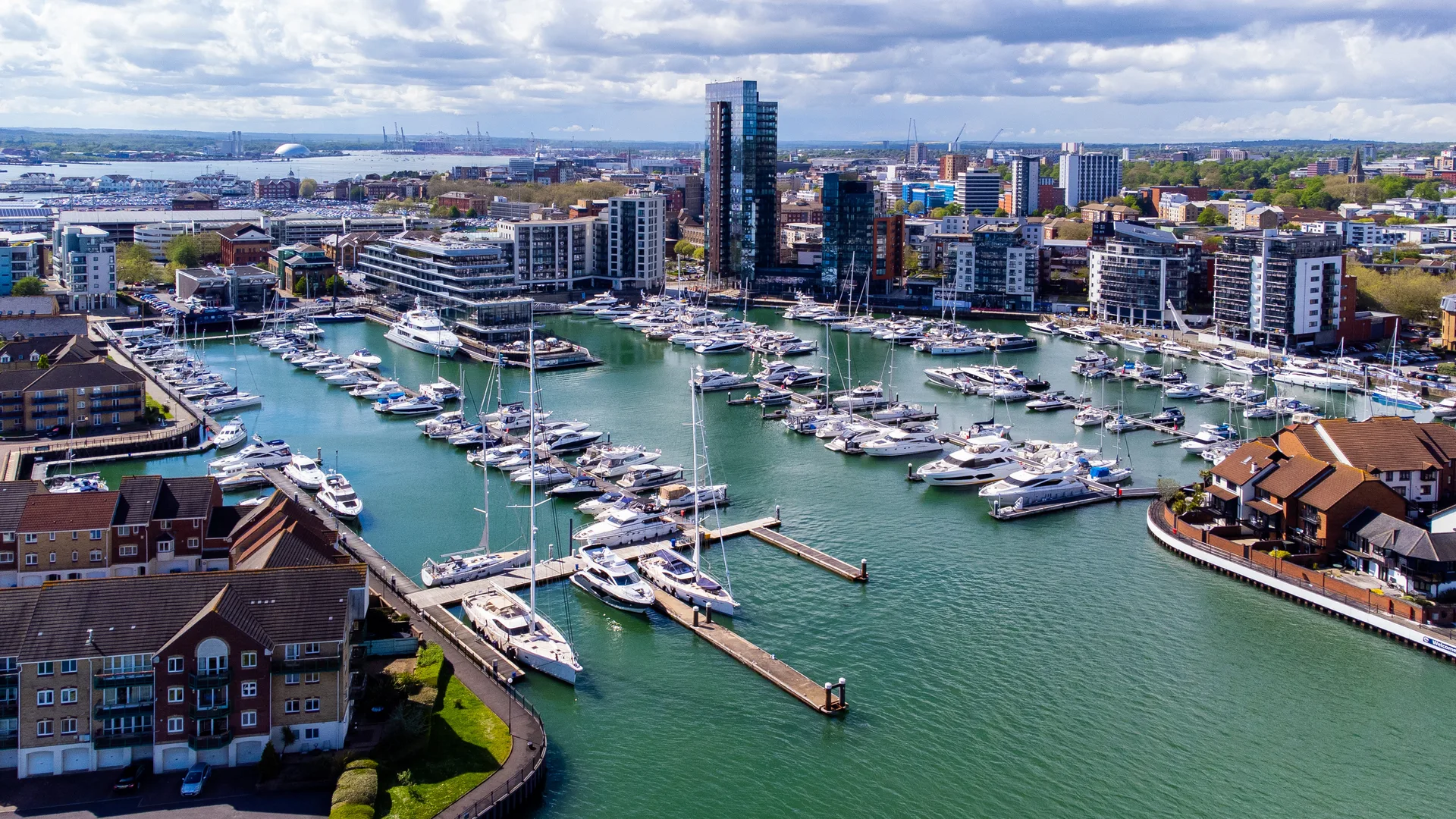
Southampton, England
Britain's great cruise port and the classic home port for Northern Europe sailings, a city of maritime history on the Solent.
Port highlights
- The Ocean Terminal and the City Cruise Terminal, from which ships head to the fjords and the Baltic all summer.
- The old town walls and the medieval Bargate, survivors of a city rebuilt after the Blitz.
- The SeaCity Museum, which tells the city's Titanic story, for the White Star ships sailed from here.
Interesting facts
- Southampton is one of the busiest cruise ports in Europe.
- The Titanic sailed from Southampton on her maiden voyage in 1912, and the city still marks the loss.
- The Mayflower sailed from Southampton in 1620 on the first leg of its crossing.
Something not everyone knows
The city's double high tides, caused by the Isle of Wight's position at the Solent's mouth, mean Southampton's harbor floods twice as often as most ports.
Photo credits & license
- Title
- Tower Bridge on the river Thames front view.jpg
- Photographer
- Sanjay ach
- Source URL
- Original image
- License
- CC BY-SA 4.0
- License URL
- License details
- Modifications
- None - Used as Provided
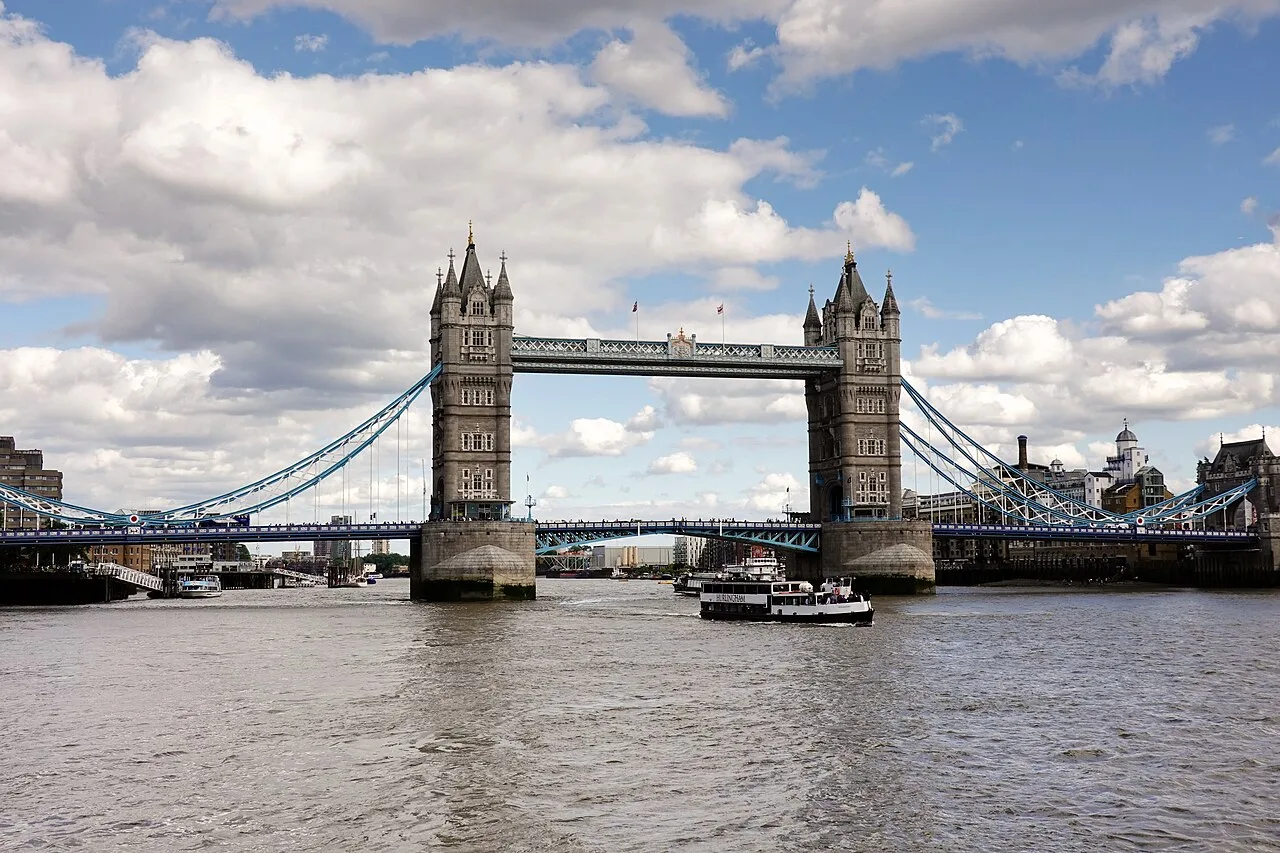
London (Greenwich), England
The cruise gateway to the British capital, where ships tie up at Greenwich or Tilbury beneath the line of the Prime Meridian and the Cutty Sark.
Port highlights
- The Royal Observatory, where the Prime Meridian runs through the courtyard and you can stand with a foot in each hemisphere.
- The Cutty Sark, the last of the great tea clippers, preserved in a dry dock beside the river.
- The Old Royal Naval College and Greenwich Park, with the skyline of Canary Wharf beyond.
Interesting facts
- The Prime Meridian at Greenwich has marked longitude zero since 1884.
- The Cutty Sark was built in 1869 and is the world's sole surviving extreme clipper.
- Greenwich was a royal riverside palace site for centuries, home of the Tudor kings.
Something not everyone knows
Greenwich Mean Time, the world's time standard, takes its name from this riverside district, and the famous red time ball on the observatory still drops at 1:00 pm every day.
Photo credits & license
- Title
- Not published
- Photographer
- Martin
- Source URL
- Not published
- License
- Not published
- License URL
- Not published
- Modifications
- None - Used as Provided
Dover, England
England's white gateway to the Continent, where the chalk cliffs face France across the shortest stretch of the Channel and a castle crowns the heights.
Port highlights
- The White Cliffs, the chalk ramparts that glow in the sun and mark the island's oldest frontier.
- Dover Castle, with its Roman lighthouse, medieval keep, and the secret wartime tunnels beneath.
- The harbor and the view across to the French coast on a clear day.
Interesting facts
- The White Cliffs of Dover rise to about 110 meters (360 feet) at their highest point.
- Dover is the closest English port to France, about 34 kilometers (21 miles) from Cap Gris Nez.
- Dover Castle's wartime tunnels were used as a command center during the Dunkirk evacuation.
Something not everyone knows
The White Cliffs are made of the shells of countless microscopic sea creatures: the chalk began as sediment on the floor of a warm Cretaceous sea.
Photo credits & license
- Title
- Not published
- Photographer
- Steve Samosa
- Source URL
- Not published
- License
- Not published
- License URL
- Not published
- Modifications
- None - Used as Provided
Liverpool, England
The great port of the Mersey and a UNESCO-era waterfront of Victorian docks, now a city of music, football, and the maritime story of the Atlantic.
Port highlights
- The Albert Dock, a sweeping crescent of 1840s brick warehouses now home to the Tate Liverpool and the Beatles Story.
- The Pier Head's Three Graces, the landmark buildings that frame the riverfront skyline.
- The Cavern Quarter, where the Beatles played nearly 300 times before they were famous.
Interesting facts
- Liverpool's waterfront docks were built in the 1840s and were among the world's first enclosed, fireproof dock systems.
- The city was one of the world's busiest ports, the gateway for much of the Atlantic trade.
- The Beatles' last-ever live concert took place on the roof of Apple Corps in London, but the band's story is inseparable from Liverpool's Cavern Club.
Something not everyone knows
The Three Graces are named for the mythological daughters of Zeus, and their silhouettes have guarded the Mersey since the Royal Liver Building's completion in 1911.
Photo credits & license
- Title
- .00 2329 Cityscapes of Edinburgh - Schottland.jpg
- Photographer
- W. Bulach
- Source URL
- Original image
- License
- CC BY-SA 4.0
- License URL
- License details
- Modifications
- None - Used as Provided
Edinburgh (Newhaven), Scotland
The Scottish capital reached through the Firth of Forth, where the castle-crowned old town and the Georgian New Town meet on a volcanic ridge.
Port highlights
- Edinburgh Castle, perched on its ancient volcanic rock above the city's skyline.
- The Royal Mile, running downhill from the castle through the medieval Old Town to Holyrood Palace.
- Arthur's Seat, the extinct volcano in the middle of the city, whose summit gives a full panorama.
Interesting facts
- Edinburgh Castle sits on Castle Rock, the remains of a volcano that erupted about 350 million years ago.
- The city's New Town was laid out in the 18th century and is a UNESCO World Heritage site.
- Cruise ships call at the Forth ports of Newhaven or South Queensferry, with the Forth Bridge close by.
Something not everyone knows
The One o'Clock Gun has fired from the castle ramparts since 1861, originally so ships in the Firth of Forth could set their chronometers.
Photo credits & license
- Title
- Not published
- Photographer
- Pharos
- Source URL
- Not published
- License
- CC BY-SA 3.0
- License URL
- License details
- Modifications
- None - Used as Provided
Aberdeen, Scotland
Scotland's granite city on the North Sea, a harbor of fishing boats and energy vessels at the gateway to the castle country of Royal Deeside.
Port highlights
- The old town's granite buildings, the reason Aberdeen is called the Silver City, polished by sea air.
- Marischal College, one of the largest granite buildings in the world, near the harbor.
- A drive inland toward Balmoral and the castles of Royal Deeside.
Interesting facts
- Aberdeen grew rich on the North Sea oil industry, discovered off its coast in 1969.
- The city's harbor has served fishing and trade fleets for more than 800 years.
- Aberdeen is called the Silver City because of the mica flecks that sparkle in its gray granite.
Something not everyone knows
The sparkle in Aberdeen's granite comes from mica, and the city's best-known nickname celebrates the way the stone glitters after rain or sea mist.
Photo credits & license
- Title
- Adobe Stock File #: 617862357
- Photographer
- petert2
- Source URL
- Not published
- License
- Not published
- License URL
- Not published
- Modifications
- None - Used as Provided
Invergordon (Inverness/Loch Ness), Scotland
A deep-water port on the Cromarty Firth in the Scottish Highlands, the classic gateway for Inverness, the shores of Loch Ness and the castles of the north.
Port highlights
- The short trip south to Inverness, capital of the Highlands, on the banks of the River Ness.
- Loch Ness and the ruins of Urquhart Castle, about an hour from the port.
- The whisky trail of the Highland and Speyside distilleries, an easy day from the harbor.
Interesting facts
- Invergordon sits on the Cromarty Firth, one of the largest deep-water harbors in Europe.
- The port grew from a naval anchorage into a base for oil-rig construction and servicing.
- Inverness lies about half an hour away by road, with Loch Ness just beyond.
Something not everyone knows
Invergordon gave its name to a piece of interwar history: the 1931 Royal Navy pay-cut protest known as the Invergordon Mutiny, staged in the town's anchorage.
Photo credits & license
- Title
- Kirkwall Harbour.jpg
- Photographer
- Stevekeiretsu
- Source URL
- Original image
- License
- CC BY-SA 4.0
- License URL
- License details
- Modifications
- None - Used as Provided
Kirkwall, Scotland
The capital of the Orkney islands, a Viking-founded harbor town of stone streets and one of Europe's finest medieval cathedrals.
Port highlights
- St. Magnus Cathedral, the red-sandstone masterpiece begun in 1137 by the Norse earls of Orkney.
- The Neolithic heart of Orkney, with the village of Skara Brae and the standing stones of the Ring of Brodgar a short drive away.
- The harbor and the narrow stone lanes of the old town, built on the pattern of a Viking settlement.
Interesting facts
- St. Magnus Cathedral was founded in 1137 and is the oldest cathedral in Scotland.
- The Heart of Neolithic Orkney, including Skara Brae, is a UNESCO World Heritage site.
- Kirkwall's name comes from the Old Norse for 'church bay.'
Something not everyone knows
The Ring of Brodgar's circle originally held 60 standing stones, and its layout is aligned with the midwinter sunset in a landscape that was already ancient when the Vikings arrived.
Photo credits & license
- Title
- Lerwick, view from a ferry.jpg
- Photographer
- swifant
- Source URL
- Original image
- License
- CC BY-SA 2.0
- License URL
- License details
- Modifications
- None - Used as Provided
Lerwick, Scotland
The harbor capital of the Shetland islands, Britain's most northerly town, where Norse heritage, seabird cliffs, and a working fishing port meet.
Port highlights
- The old town's narrow lanes and the stone-built lodberries, the old merchants' houses that ran down to the harbor.
- The Shetland Museum, telling the story of the islands' Norse and fishing past.
- The seabird cliffs of Sumburgh Head and the prehistoric settlement of Jarlshof, both on the southern tip of the mainland.
Interesting facts
- Lerwick sits at about 60 degrees north, on the same latitude as the southern tip of Greenland.
- Shetland was ruled by Norway until 1469, and the islands' dialect and place names still carry strong Norse roots.
- The Up Helly Aa fire festival, held each January, burns a Viking galley in the town center.
Something not everyone knows
Shetland's dialect keeps dozens of Norse words in daily use, and locals still use the old Viking word for a narrow lane, 'gord,' for the alleys of Lerwick's old town.
Photo credits & license
- Title
- Not published
- Photographer
- Penner Cruise & Travel
- Source URL
- Not published
- License
- Not published
- License URL
- Not published
- Modifications
- None - Used as Provided
Ullapool, Scotland
A small fishing village on the shores of Loch Broom, the natural deep-water harbor that made it a gateway to the Outer Hebrides and the mountain glens of Wester Ross.
Port highlights
- The historic grid-plan village, laid out in 1788 by the British Fisheries Society as a planned herring port.
- The safe, sheltered deep-water harbor on Loch Broom, with the Ullapool to Stornoway car ferry sailing from its pier.
- A base for exploring the Summer Isles, the Assynt mountains and Corrieshalloch Gorge, with the Ullapool Museum telling the town's story.
Interesting facts
- Ullapool was founded in 1788 as a planned herring port, with its grid of streets designed by engineer Thomas Telford.
- Loch Broom is one of Scotland's best natural deep-water harbors, shaped by Ice Age glaciers.
- The name 'Ullapool' is of Norse origin, from the Old Norse for 'pool' or 'settlement' in the sheltered bay.
Something not everyone knows
In the summer, the wild coastline around Ullapool is a hotbed of live music, with the town's ceilidh culture and its festival drawing artists to the far north of the Highlands.
Photo credits & license
- Title
- Ha' Penny Bridge over the river Lilley.jpg
- Photographer
- Curtiscmb
- Source URL
- Original image
- License
- CC BY-SA 4.0
- License URL
- License details
- Modifications
- None - Used as Provided
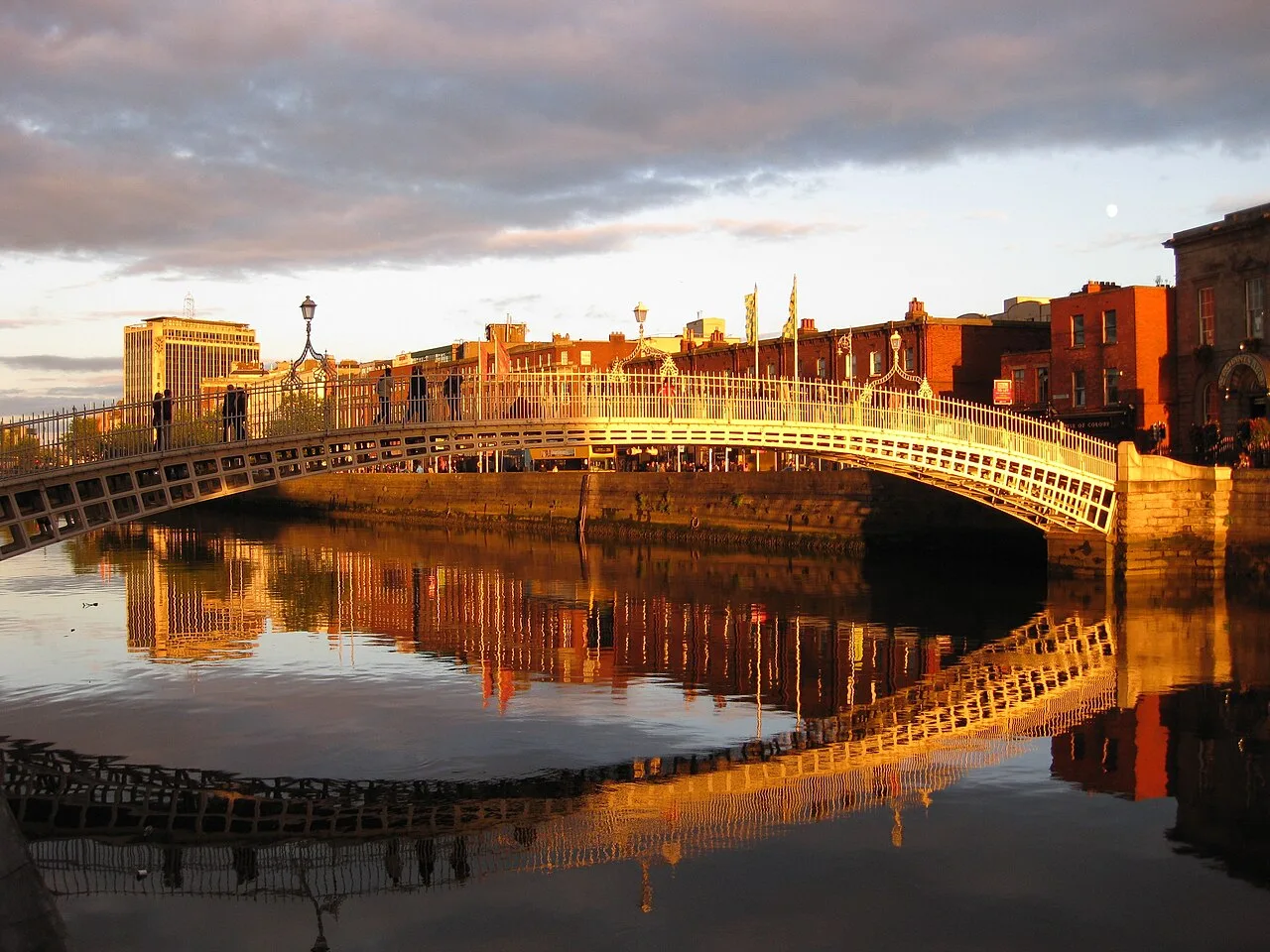
Dublin, Ireland
Ireland's vibrant capital on the Liffey, a city of Georgian squares, literary pubs, and the famous Guinness brewery rising above the harbor district.
Port highlights
- Trinity College and the Book of Kells, the illuminated manuscript at the heart of the old university.
- The Guinness Storehouse, a seven-story pint-shaped experience with a rooftop bar over the city.
- The Georgian streets of Merrion Square and the literary pub crawl through Dublin's writers' haunts.
Interesting facts
- Dublin was founded by Vikings in the 9th century at a ford on the Liffey, 'Dubh Linn,' the black pool.
- Trinity College was founded in 1592 and its Old Library holds the Book of Kells, created around 800.
- The Guinness brewery, opened at St. James's Gate in 1759, signed a legendary 9,000-year lease.
Something not everyone knows
The 9,000-year lease on the Guinness brewery, signed in 1759 for an annual rent of 45 pounds, is one of the most famous real-estate deals in business history.
Photo credits & license
- Title
- Not published
- Photographer
- Tim
- Source URL
- Not published
- License
- Not published
- License URL
- Not published
- Modifications
- None - Used as Provided
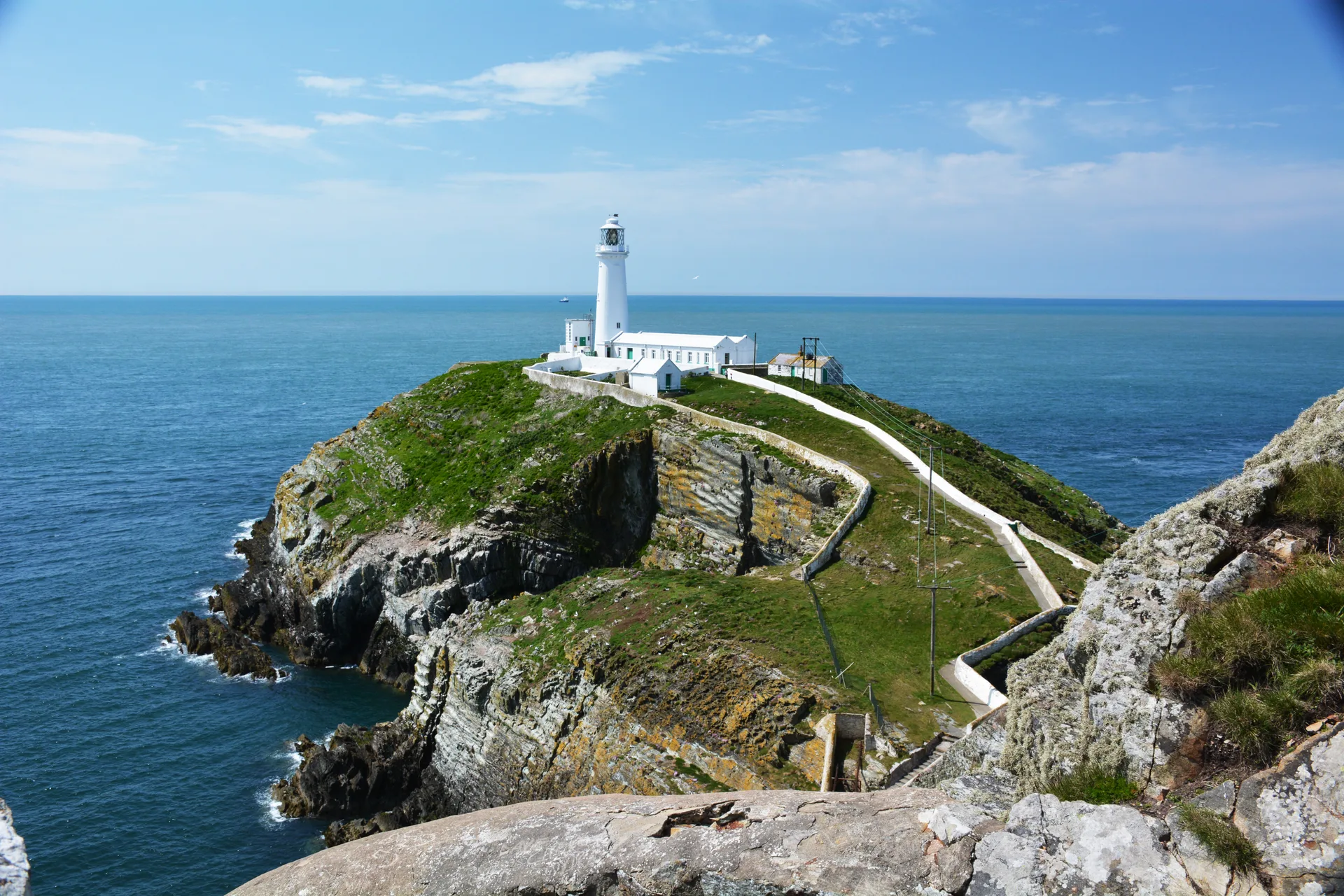
Holyhead, Wales
The Welsh port of Anglesey, a ferry town where a Roman fort, a mountain, and the lighthouse cliffs of South Stack frame the Irish Sea crossing.
Port highlights
- South Stack, the white lighthouse on its own island reached by a 400-step descent and a suspension bridge.
- The 2,000-year-old Caer Gybi, the remains of a Roman fort in the town center.
- The sea cliffs of Holyhead Mountain, home to seabird colonies and panoramic views across to Ireland.
Interesting facts
- Holyhead is the main ferry port for the crossing from Wales to Dublin.
- South Stack lighthouse, built in 1809, stands on a small island reached by bridge and 400 steps.
- The town's Roman fort, Caer Gybi, dates from around the 4th century.
Something not everyone knows
The railway to Holyhead was driven through Anglesey in the 1840s with one of the world's great engineering feats, the Britannia Bridge, so the mail could reach Dublin faster.
Photo credits & license
- Title
- Not published
- Photographer
- Leonid Andronov
- Source URL
- Not published
- License
- Not published
- License URL
- Not published
- Modifications
- None - Used as Provided
Belfast, Northern Ireland
The capital of Northern Ireland, where the Titanic was built, a city of Victorian shipyards, grand Victorian squares, and the gateway to the Giant's Causeway.
Port highlights
- Titanic Belfast, the striking museum on the slipway where the great ship was built and launched in 1911.
- The Victorian magnificence of the City Hall and the red-brick pubs of the Cathedral Quarter.
- The Giant's Causeway, the UNESCO-listed hexagonal basalt columns a day-trip north along the coast.
Interesting facts
- Belfast's Harland and Wolff shipyard built the Titanic, launched in 1911.
- The Giant's Causeway's 40,000 interlocking basalt columns were formed by volcanic activity some 60 million years ago.
- Belfast grew into one of the world's great shipbuilding centers in the Victorian era.
Something not everyone knows
The name 'Belfast' comes from the Irish 'Béal Feirste,' the mouth of the sandbank, a clue to the shallow ford where the city's first settlement stood.
Photo credits & license
- Title
- Cobh Cathedral.jpg
- Photographer
- Pablo F. J.
- Source URL
- Original image
- License
- CC BY 2.0
- License URL
- License details
- Modifications
- None - Used as Provided
Cobh (Cork), Ireland
Ireland's classic cruise harbor on Cork Harbour, one of the largest natural harbors in the world, a hillside town of pastel terraces rising to the great cathedral of St. Colman.
Port highlights
- St. Colman's Cathedral, the soaring Gothic Revival landmark that crowns the hillside above the harbor.
- The Titanic Experience, telling the story of the town that was the liner's last port of call.
- An easy excursion to Blarney Castle and its famous stone, about half an hour from the port.
Interesting facts
- Cobh was the final port of call for the Titanic on its only voyage in 1912.
- Cork Harbour is one of the largest natural harbors in the world.
- Called Cove for centuries, the town was renamed Queenstown after a royal visit in 1849 and took the Irish name Cobh in 1920.
Something not everyone knows
More than two and a half million of the Irish who emigrated to North America between 1848 and 1950 sailed from Cobh, and the town's heritage center still tells their farewell stories.
Photo credits & license
- Title
- Zeebrugge Jachthaven R05.jpg
- Photographer
- Marc Ryckaert
- Source URL
- Original image
- License
- CC BY-SA 4.0
- License URL
- License details
- Modifications
- None - Used as Provided
Zeebrugge, Belgium
The North Sea port of Bruges, the cruise gateway to one of Europe's best-preserved medieval cities, reached by a short train or coach ride inland.
Port highlights
- The medieval center of Bruges, with its canals, belfry, and gabled squares, a UNESCO World Heritage site.
- The Markt and the 83-meter belfry, whose carillon rings over the city.
- The lace shops, chocolate houses, and canal boat rides of the old town.
Interesting facts
- Bruges' historic center was inscribed on the UNESCO World Heritage list in 2000.
- The belfry of Bruges dates from the 13th century and holds a 47-bell carillon.
- Zeebrugge was built as a modern outer port for Bruges, which lost its direct sea access when its river harbor silted up.
Something not everyone knows
Bruges' medieval prosperity was built on the cloth trade, and its canals once carried goods from the sea to the city's warehouses, a waterway system that still shapes the town.
Photo credits & license
- Title
- Nuuk, Greenland skyline.jpg
- Photographer
- Quintin Soloviev
- Source URL
- Original image
- License
- CC BY 4.0
- License URL
- License details
- Modifications
- None - Used as Provided
Nuuk (Godthab), Greenland
Greenland's capital and largest town, a small city of colorful houses on a rocky peninsula where the fjord meets the sea, and the hub for expedition voyages along the west coast.
Port highlights
- The colorful old harbor quarter and the colonial-era houses that ring the waterfront.
- The Greenland National Museum, home of the 15th-century Qilakitsoq mummies.
- A boat trip into the Nuup Kangerlua fjord for whales, icebergs, and the glacier at its head.
Interesting facts
- Nuuk is the world's most sparsely populated capital region, with roughly a fifth of Greenland's people.
- The city sits just south of the Arctic Circle at 64 degrees north.
- The name means 'the cape' in Greenlandic, from the peninsula the town climbs.
Something not everyone knows
Humpback and fin whales feed right in the fjord capitol of Nuuk in summer, so the morning boat to the glacier often meets spouts before the town is even awake.
Photo credits & license
- Title
- Qaqortoq colored houses
- Photographer
- Geri Penner
- Source URL
- Not published
- License
- Public domain
- License URL
- Not published
- Modifications
- None - Used as Provided
Qaqortoq (Julianehåb), Greenland
The largest town of southern Greenland, a settlement of brightly painted houses and stone fountains set among the sheep farms and grassy fjords of the Julianehåb district.
Port highlights
- The town's open-air art collection: carved faces, figures, and animals worked into the rocks around the harbor.
- The stone fountain in the main square, Greenland's oldest public fountain.
- A walk to the hot springs of Uunartoq or the Norse ruins of the fjords beyond the town.
Interesting facts
- Qaqortoq was founded as Julianehåb in 1775 and still carries both names.
- It is the cultural and commercial center of South Greenland.
- The nearby Qaqortukulooq (Saqqaq) and Uunartoq hot springs draw bathers year-round.
Something not everyone knows
Forty artists from the Nordic countries carved the 'Stone and Man' sculpture trail directly into the bedrock around Qaqortoq between 1993 and 1994, so the town itself is the gallery.
Photo credits & license
- Title
- Ilulissat View of the city Greenland Buiobuione 01.jpg
- Photographer
- Buiobuione
- Source URL
- Original image
- License
- CC BY-SA 4.0
- License URL
- License details
- Modifications
- None - Used as Provided
Ilulissat, Greenland
The iceberg capital of Greenland, set at the mouth of the UNESCO-listed Ilulissat Icefjord, where the Sermeq Kujalleq glacier calves a constant parade of giants into the bay.
Port highlights
- The Ilulissat Icefjord, a UNESCO World Heritage site where icebergs pack the water by the thousands.
- The boardwalk trail along the fjord edge, ending at a viewpoint over the frozen river of ice.
- A boat tour among the icebergs, with humpback whales often surfacing between the towers of ice.
Interesting facts
- The Ilulissat Icefjord was inscribed on the UNESCO World Heritage list in 2004.
- Sermeq Kujalleq is one of the fastest and most active glaciers in the world.
- The icebergs calved here drift south and have been tracked thousands of miles, some reaching the North Atlantic shipping lanes.
Something not everyone knows
The ice that calves at Ilulissat fell as snow over Greenland's ice sheet thousands of years ago, so the oldest bergs you photograph may have been frozen since before the pyramids were built.
Photo credits & license
- Title
- Houses in Sisimiut in 2010 (7).JPG
- Photographer
- Chmee2 / Valtameri
- Source URL
- Original image
- License
- CC BY 3.0
- License URL
- License details
- Modifications
- None - Used as Provided
Sisimiut, Greenland
Greenland's second-largest town, a working fishing port on the Davis Strait where modern life and the sled-dog tradition of the Arctic circle meet.
Port highlights
- The busy harbor, where the trawler fleet lands shrimp and cod that feed much of Greenland.
- The Kangerluarsunnguaq (Ukkusissat) ski area, the most northerly ski lift in the world.
- The town museum in the oldest buildings of Sisimiut, telling the story of the old whaling and sealing settlement.
Interesting facts
- Sisimiut is the second-largest town in Greenland, after Nuuk.
- It sits just north of the Arctic Circle in the municipality of Qeqqata.
- Sled dogs are still raised and worked here, and the town is a launch point for winter mushing trips.
Something not everyone knows
The ski mountain above Sisimiut opens from late November, and locals ski under the northern lights on the world's most northerly commercial ski lift.
Photo credits & license
- Title
- Paamiut Walzaehne.jpg
- Photographer
- Clemensfranz
- Source URL
- Original image
- License
- CC BY-SA 3.0
- License URL
- License details
- Modifications
- None - Used as Provided
Paamiut, Greenland
A small west-coast town on the Labrador Sea coast, where the tide drops meters each day and the cliffs around the harbor hold huge seabird colonies.
Port highlights
- The harborfront and its wooden church, one of Greenland's largest and a landmark of the town.
- The seabird cliffs near town, with thousands of guillemots and kittiwakes in summer.
- The local museum's collection of kayaks and hunting gear from the old colonial trading era.
Interesting facts
- Paamiut, founded in 1742 as Frederikshåb, lies in the municipal area of Sermersooq.
- The town experiences some of Greenland's largest tidal ranges on the open coast.
- It is a traditional hunting and fishing settlement with a population of about 1,300.
Something not everyone knows
Paamiut's wooden church was shipped in kit form from Norway in 1909 and is still one of the largest timber churches in Greenland today.
Photo credits & license
- Title
- House and Iceberg in Qeqertarsuaq, Disko Island, Greenland (54066400812).jpg
- Photographer
- Christoph Strässler
- Source URL
- Original image
- License
- CC BY-SA 2.0
- License URL
- License details
- Modifications
- None - Used as Provided
Qeqertarsuaq, Greenland
The harbor town of Disko Island, Greenland's largest island, where black basalt cliffs, hot springs and sled-dog teams frame a settlement older than most on the coast.
Port highlights
- The town's setting beneath the flat-topped basalt plateau of Disko, with waterfalls tumbling from the cliffs.
- The black-sand beach and the glacier tongue that reaches the sea nearby.
- Whale watching in Disko Bay, where humpbacks and minke whales feed through the summer.
Interesting facts
- Qeqertarsuaq means 'the big island' in Greenlandic and sits on Disko Island.
- The island's basalt geology is famous for deposits of native iron found nowhere else on Earth in such quantity.
- The town, founded in 1773 as Godhavn, was once the capital of North Greenland.
Something not everyone knows
Disko Island holds some of the world's largest natural deposits of telluric iron, metal forged by the volcano itself rather than smelted, which local Inuit once hammered into tools.
Photo credits & license
- Title
- Maniitsoq (52675689990).jpg
- Photographer
- David Stanley
- Source URL
- Original image
- License
- CC BY 2.0
- License URL
- License details
- Modifications
- None - Used as Provided
Maniitsoq, Greenland
A west-coast town of islands and skerries where the houses climb a rocky headland and the surrounding skerry-guard of islets holds some of Greenland's oldest rocks.
Port highlights
- The old town center, where the wooden houses of the colonial trading era line the harbor.
- A cruise among the skerries and islets around the town, rich in seabirds and seals.
- The dramatic granite landscape, with some of the oldest rocks on Earth nearby.
Interesting facts
- Maniitsoq, founded in 1755 as Sukkertoppen, lies on an island off the Greenland coast.
- The region around Maniitsoq has yielded some of the oldest known rocks on the planet, around 3.6 to 3.8 billion years old.
- The town is known for fishing, especially halibut and Greenland shark.
Something not everyone knows
The ancient rocks north of Maniitsoq have been dated to more than three billion years old, which means the bedrock beneath the town's harbor predates almost all life on Earth.
Photo credits & license
- Title
- Prince Christian Sound Iceberg Glacier.jpg
- Photographer
- Nolabob
- Source URL
- Original image
- License
- CC0 1.0 Universal
- License URL
- License details
- Modifications
- None - Used as Provided
Prince Christian Sound, Greenland
A 100-kilometer natural channel between the mainland and the islands of South Greenland, a scenic-cruising passage of steep mountains, hanging glaciers, and bergs calved straight into the water.
Port highlights
- The narrow, cliff-lined passage itself, one of the great scenic cruises of the Arctic.
- Glaciers that reach the water from both flanks of the sound, calving into the current.
- The small settlement of Aappilattoq, squeezed between the mountains at the middle of the passage.
Interesting facts
- Prince Christian Sound runs about 100 kilometers between the Greenland mainland and the island chain to its south.
- The sound was named in 1883 after Crown Prince Christian of Denmark.
- It is navigable only when ice conditions allow, usually from late spring through early autumn.
Something not everyone knows
The sound's icebergs drift from the great ice cap, so every berg you pass was carved from snow that fell centuries ago and slowly squeezed into blue, cracked ice by the weight above.
Photo credits & license
- Title
- Eqip Sermia Glacier (26788423086).jpg
- Photographer
- David Stanley
- Source URL
- Original image
- License
- CC BY 2.0
- License URL
- License details
- Modifications
- None - Used as Provided
Eqip Sermia Glacier, Greenland
A tidewater glacier on the coast of the Qeqertarsuup Tunua bay, where a wide wall of blue ice calves into the sea close enough for ships to watch from the water.
Port highlights
- The glacier front itself, up to hundreds of meters wide, calving chunks of ice with a crack like thunder.
- The zodiac cruises that approach the ice wall for close views of the blue-veined face.
- The surrounding bay, home to seals and seabirds that gather at the ice edge.
Interesting facts
- Eqip Sermia is a marine-terminating glacier of Greenland's western ice sheet.
- It sits near the head of the bay west of the town of Ilulissat.
- Tidewater glaciers like this one advance and retreat over decades as the ice sheet responds to climate.
Something not everyone knows
The ice of Eqip Sermia is so compressed that it appears vivid blue: the air bubbles are squeezed out, leaving ice that absorbs all colors except blue light.
Photo credits & license
- Title
- Massive Glacier (52686026262).jpg
- Photographer
- Not published
- Source URL
- Not published
- License
- Not published
- License URL
- Not published
- Modifications
- None - Used as Provided
Evighedsfjord, Greenland
A deep, glacier-cut fjord on the west coast between Maniitsoq and Kangerlussuaq, walled by mountains and feeding the great Sermersuaq ice cap through its side glaciers.
Port highlights
- The fjord's steep valley walls and the white tongues of outlet glaciers spilling toward the water.
- The quiet anchorages where icebergs drift past green slopes and musk oxen graze the shore.
- A zodiac exploration beneath the ice cliffs at the fjord's head.
Interesting facts
- Evighedsfjord, also written Evighedsfjorden, cuts deep into the mountains south of Kangerlussuaq.
- Its name means 'eternity fjord' in Danish, a nod to the timeless landscape.
- The surrounding backcountry is home to musk oxen, Arctic foxes, and dense birdlife.
Something not everyone knows
The name is a translation of the Greenlandic name Eqaluit, meaning 'the place of the trout', for the salmon and Arctic char that still run in its streams.
Photo credits & license
- Title
- 2025-09-05 Uummannaq 13.jpg
- Photographer
- Carina Gsottbauer
- Source URL
- Original image
- License
- CC BY-SA 4.0
- License URL
- License details
- Modifications
- None - Used as Provided
Uummannaq Fjord, Greenland
A vast fjord system north of Disko Bay whose heart is the heart-shaped island of Uummannaq, ringed by the tallest mountains north of the Arctic Circle.
Port highlights
- The heart-shaped Uummannaq mountain rising 1,170 meters straight from the sea behind the town.
- The colorful harbor town of Uummannaq, home of Greenland's most photographed skyline.
- Boat trips to the glacier at the fjord head, where bergs the size of cathedrals drift past Qilakitsoq, site of the famous mummies.
Interesting facts
- Uummannaq Island and its fjord lie at about 70.7 degrees north, deep inside the Arctic Circle.
- The Qilakitsoq mummies, found near the fjord in 1972, date from around 1475.
- The town is a center for sled-dog mushing when the fjord freezes in winter.
Something not everyone knows
Uummannaq's famous heart-shaped peak is actually a nunatak of quartzite, and locals say its shape is clearly visible from the air on the approach flights.
Photo credits & license
- Title
- Tasermiut Fjord Glacier (25606566530).jpg
- Photographer
- David Stanley
- Source URL
- Original image
- License
- CC BY 2.0
- License URL
- License details
- Modifications
- None - Used as Provided
Tasermiut Fjord, Greenland
A wild fjord of southern Greenland beyond Nanortalik, walled by some of the highest granite cliffs in the Arctic, a mecca for climbers and a stunning zodiac-cruising passage.
Port highlights
- The granite walls and towering peaks, including the famous 'Cathedral' route climbed by international expeditions.
- The lake at the fjord head and the glaciers spilling from the ice cap above.
- Seals and seabirds working the water as the ship threads the narrow entrance.
Interesting facts
- Tasermiut Fjord cuts into the mainland near Nanortalik in South Greenland.
- Its granite peaks rise more than 1,500 meters almost directly from the water.
- The fjord has hosted notable climbing expeditions since the 1930s.
Something not everyone knows
A small settlement, Tasiusaq, sits near the fjord's outer shore, and kayakers believe the calm morning water of the inner fjord mirrors the peaks so perfectly it looks like a second world.
Photo credits & license
- Title
- Greenland Kangerlussuaq icesheet.jpg
- Photographer
- L. Chang
- Source URL
- Original image
- License
- CC BY-SA 2.5
- License URL
- License details
- Modifications
- None - Used as Provided
Kangerlussuaq, Greenland
Greenland's main air gateway, a former American air base at the head of a long fjord, and the closest town to the ice cap, which you can drive to from the runway's doorstep.
Port highlights
- The ice cap viewpoint, reached by road from town to the very edge of the Greenland ice sheet.
- The Russell Glacier, a walkable tongue of the ice cap with constantly shifting blue walls.
- Musk oxen grazing the valley slopes, one of the easiest places in Greenland to see them.
Interesting facts
- Kangerlussuaq sits at the head of a 190-kilometer fjord, the longest ice-free stretch of the west coast.
- It was established by the U.S. military during World War II as Bluie West Eight.
- The town enjoys unusually clear, dry air, which makes it one of Greenland's best aurora-viewing spots in winter.
Something not everyone knows
The ice cap edge is barely 25 kilometers from town, so visitors can stand on Greenland's immense ice sheet and be back for dinner, something almost no other town in the world offers.
Photo credits & license
- Title
- Skjoldungen Fjord, Greenland
- Photographer
- Not published
- Source URL
- Not published
- License
- Not published
- License URL
- Not published
- Modifications
- None - Used as Provided
Skjoldungen, Greenland
A remote island and fjord system of Southeast Greenland, a dramatic landscape of sheer walls, hanging glaciers, and bergs that has made it a favorite of expedition cruises.
Port highlights
- The fjord's towering granite walls and the glaciers that calve at their feet.
- The abandoned settlement of Skjoldungen, a ghost village abandoned in the 1960s.
- Wildlife-rich waters where seals, whales, and seabirds gather along the ice edge.
Interesting facts
- Skjoldungen island lies off the southeast coast of Greenland at about 63 degrees north.
- The island's name comes from a legendary Danish king, Skjold, in Norse tradition.
- Its fjords and mountains were never permanently settled after the last families left in the mid-1960s.
Something not everyone knows
The old settlement was evacuated in 1965 when the government consolidated villages, and its empty houses still stand, a perfectly preserved ghost town reached only by sea.
Photo credits & license
- Title
- Quassik Peak and houses at bottom Nanortalik Greenland.jpg
- Photographer
- amanderson2
- Source URL
- Original image
- License
- CC BY 2.0
- License URL
- License details
- Modifications
- None - Used as Provided
Nanortalik, Greenland
The gateway to South Greenland's wildest coast, a colorful town at the foot of the fjords where the mountains rise fast and the Arctic meets the North Atlantic.
Port highlights
- The town's old wooden houses and the small museum of colonial-era life.
- The hiking trails above town, where the fjord panorama opens over iceberg-strewn water.
- Boat trips into Tasermiut and other fjords, home to the region's highest peaks.
Interesting facts
- Nanortalik, founded in 1770, is one of the southernmost towns of Greenland.
- Its name means 'the place of the polar bear' in Greenlandic.
- It sits on an island at the mouth of the Tasermiut fjord system.
Something not everyone knows
Despite the name, polar bears are rare visitors here: the town's real claim is the fjord country behind it, where cliffs rise more than a kilometer in a single wall.
Photo credits & license
- Title
- Qassiarsuk (6141357828).jpg
- Photographer
- Claire Rowland
- Source URL
- Original image
- License
- CC BY 2.0
- License URL
- License details
- Modifications
- None - Used as Provided
Qassiarsuk (Brattahlid), Greenland
The site of Brattahlid, the farm of Erik the Red and the cradle of the Norse settlements of Greenland, now a green sheep-farming valley with a faithful Viking longhouse reconstruction.
Port highlights
- The reconstructed Viking longhouse and church, built to scale on the original Norse farmstead.
- The green pastures and sheep farms of the valley, an unexpected sight this far north.
- The view across the fjord to Qaqortoq from the old Norse church site.
Interesting facts
- Erik the Red established his farm Brattahlid here around 985 AD.
- The valley was the heart of the Eastern Settlement, home to thousands of Norse Greenlanders.
- A replica of the 12th-century church of Thjodhild, Erik's wife, stands near the original site.
Something not everyone knows
Thjodhild, Erik the Red's wife, built the first Christian church in the Americas here, and Norse finds show the settlers lived alongside the ancestors of today's Greenlandic Inuit for generations.
Photo credits & license
- Title
- Hvalsey Church.jpg
- Photographer
- Geri Penner
- Source URL
- Not published
- License
- Not published
- License URL
- Not published
- Modifications
- None - Used as Provided
Hvalsey, Greenland
The best-preserved Norse site in Greenland, a roofless stone church built by Viking settlers around 1300, standing alone in a green fjord valley near Qaqortoq.
Port highlights
- The ruined stone church itself, its walls still standing to full height after 700 years.
- The grassy setting above the fjord, ringed by the same mountains the Norse saw.
- A guided walk through the ruins of the surrounding farmstead and outbuildings.
Interesting facts
- Hvalsey church was built in the early 14th century and is the largest Norse ruin in Greenland.
- The last written record of the Norse Greenlanders, a wedding in 1408, took place at Hvalsey.
- The site was inscribed on Denmark's tentative World Heritage list as part of the Norse heritage of South Greenland.
Something not everyone knows
The wedding recorded at Hvalsey in 1408 is the single latest historical mention of the Norse Greenlanders, and no one knows exactly what became of them after that date.
Photo credits & license
- Title
- Vestmannaeyjar, Iceland
- Photographer
- Andreas Tille
- Source URL
- Original image
- License
- CC BY-SA 4.0
- License URL
- License details
- Modifications
- None - Used as Provided
Vestmannaeyjar (Westman Islands), Iceland
A volcanic archipelago off Iceland's south coast, best known for the 1973 eruption that buried part of the town of Heimaey, and for its teeming seabird cliffs.
Port highlights
- The cliffs and islets of the archipelago, home to the world's largest puffin colony in summer.
- The town of Heimaey, where lava from the 1973 eruption still borders the harbor.
- The Eldheimar museum, built around a house excavated from the lava flow.
Interesting facts
- The 1973 Eldfell eruption buried a third of Heimaey's houses under lava and ash.
- The Westman Islands are made up of about 15 islands and dozens of skerries and stacks.
- The islands' name means 'the islands of the west men', for the Irish slaves taken there by Norse settlers.
Something not everyone knows
The world's largest colony of Atlantic puffins nests on the cliffs of the Westman Islands, and local children have rescued thousands of stranded pufflings each summer for generations.
Photo credits & license
- Title
- Aalborg 2010 - 125 ubt.JPG
- Photographer
- Tomasz Sienicki (Wikimedia username: Tsca)
- Source URL
- Original image
- License
- Not published
- License URL
- Not published
- Modifications
- None - Used as Provided
Ålborg, Denmark
A lively harbor city at the narrowest point of the Limfjord in northern Jutland, built on the herring trade and today famous for its waterfront district and historic streets.
Port highlights
- The old town's half-timbered houses and the 16th-century Ålborghus castle.
- The waterfront district by the Limfjord, Europe's largest urban harborfront ensemble.
- The house of Jens Bang, the richest Renaissance merchant house in northern Europe.
Interesting facts
- Ålborg sits on the Limfjord, the sound that cuts across the top of Jutland.
- It was founded around the year 1000 and was a major herring-trading port in the Middle Ages.
- The city grew wealthy in the 16th century, when its merchants dominated commerce in the North.
Something not everyone knows
Jens Bang's stone house carries an insult carved into its gable aimed at his rival, and after 400 years it still stands: locals say the merchant's ghost refuses to leave until the insult is removed.
Photo credits & license
- Title
- Rønne, Bornholm, Denmark
- Photographer
- Andreas Faessler
- Source URL
- Original image
- License
- CC BY-SA 3.0
- License URL
- License details
- Modifications
- None - Used as Provided
Rønne, Bornholm, Denmark
The main town and harbor of the island of Bornholm in the Baltic Sea, a round island of medieval churches, round towers, and smoked herring where Denmark meets Poland and Sweden.
Port highlights
- The old town's narrow streets and the 17th-century defensive tower of the local museum.
- The island's four round churches, built in the 12th century against piracy.
- A taste of Bornholm's smoked herring and the island's celebrated rye bread and beer.
Interesting facts
- Bornholm sits in the Baltic between Sweden and Poland, about 150 kilometers from Copenhagen.
- The island is famous for its round churches, which doubled as fortresses.
- Rønne was heavily damaged in 1945 and was rebuilt with Swedish help after the war.
Something not everyone knows
Bornholm's round churches have walls up to two meters thick and tiny windows placed high, because they were built as fortified refuges against Baltic pirates rather than simple places of worship.
Photo credits & license
- Title
- Eidfjord.jpg
- Photographer
- Cbliu
- Source URL
- Original image
- License
- CC BY-SA 4.0
- License URL
- License details
- Modifications
- None - Used as Provided
Eidfjord, Norway
A village at the head of the Eidfjord arm of the Hardangerfjord, the gateway to Norway's dramatic fjord interior, waterfalls, and the great Hardangervidda plateau.
Port highlights
- The Vøringsfossen waterfall, which drops 182 meters into a sheer gorge.
- The fjord cruise into the narrow Hardangerfjord arms, ringed by fruit orchards.
- The village's old stone church and the fjord-side walking paths.
Interesting facts
- Eidfjord lies at the eastern end of the Hardangerfjord, Norway's second-longest fjord.
- The Hardangervidda plateau, Europe's largest mountain plateau, looms above the village.
- Fruit orchards (apples, pears, cherries) line the fjord and bloom white in spring.
Something not everyone knows
The village church dates from 1309, and its stone walls have seen nine centuries of fjord farmers row in for Sunday service during the long growing season.
Photo credits & license
- Title
- Blick vom Hafen Richtung Eismeerkathedrale Tromso.jpg
- Photographer
- JoachimKohler-HB
- Source URL
- Original image
- License
- CC BY-SA 4.0
- License URL
- License details
- Modifications
- None - Used as Provided
Tromsø, Norway
The 'Paris of the North,' a lively Arctic city on an island above the 69th parallel, famous for its cathedral, its university, and the aurora borealis that fills its winter skies.
Port highlights
- The Arctic Cathedral, whose triangular glass facade glows above the bridge to the mainland.
- The Polaria arctic center and the Polar Museum, telling the story of the great expeditions.
- A cable car up Storsteinen mountain for a panorama over the city, the fjords, and the islands.
Interesting facts
- Tromsø lies at 69.6 degrees north, well above the Arctic Circle.
- It is the largest city in Northern Norway and a historic hub for Arctic expeditions.
- The midnight sun shines from late May to late July; the polar night runs from late November to mid-January.
Something not everyone knows
Tromsø's nickname dates from the 19th century, when wealthy visitors found cafés, opera and gas lights on a par with continental capitals, a gilded surprise this far north.
Photo credits & license
- Title
- Honningsvag havn.JPG
- Photographer
- Arnstein Ronning
- Source URL
- Original image
- License
- CC BY 3.0
- License URL
- License details
- Modifications
- None - Used as Provided
Honningsvåg, Norway
The world's northernmost town, the port for the North Cape, the sheer cliff at 71 degrees north that draws travelers to the top of Europe.
Port highlights
- The North Cape, a 307-meter cliff where the plateau ends above the Barents Sea.
- The North Cape Hall visitor center with its view over the sea and the midnight sun in summer.
- The fishing harbor and the small shops of this compact Arctic town.
Interesting facts
- Honningsvåg sits at about 71 degrees north on Magerøya island.
- The North Cape is often billed as the northernmost point of mainland Europe's road network.
- The North Cape Hall sits at the cliff edge and hosts the famous 'Children of the Globe' monument.
Something not everyone knows
The midnight sun at Honningsvåg does not set from mid-May to the end of July, so a single summer evening on the plateau lets you watch the sun skim the horizon at 1 a.m.
Photo credits & license
- Title
- Hafen Hammerfest mit Melkoya im Hintergrund (2015).jpg
- Photographer
- JoachimKohler-HB
- Source URL
- Original image
- License
- CC BY-SA 4.0
- License URL
- License details
- Modifications
- None - Used as Provided
Hammerfest, Norway
One of the world's northernmost towns, a historic Arctic trading and fishing port on the island of Kvaløya, rebuilt after war and fire and still a hub for the far north.
Port highlights
- The Meridian Monument, erected to mark the measurement of the Earth's meridian arc here in the 19th century.
- The Royal and Ancient Polar Bear Society museum, a playful keeper of the town's Arctic heritage.
- The fishing harbor, where the quota boats land their Arctic catch and gulls wheel over the quays.
Interesting facts
- Hammerfest was chartered as a town in 1789, making it one of the oldest towns in Northern Norway.
- It was largely destroyed in 1944 and rebuilt in the years after the war.
- The Struve Geodetic Arc, whose measurements started near Hammerfest, is a UNESCO World Heritage site.
Something not everyone knows
The town bills itself as one of the world's northernmost towns, and when the night sky is clear in winter, Hammerfest is one of the best-placed ports in Europe for watching the aurora from the quay.
Photo credits & license
- Title
- Kirkenes Harbour.jpg
- Photographer
- Mathis Heibert
- Source URL
- Original image
- License
- CC BY 2.0
- License URL
- License details
- Modifications
- None - Used as Provided
Kirkenes, Norway
The final port of the Coastal Express, a border town in the far northeast where Norway meets Russia and Finland, and the launch point for winter snow hotels and king crab safaris.
Port highlights
- The town's position at the end of the line, where the fjord opens into the Barents Sea.
- The Snowhotel of Kirkenes, rebuilt each winter from ice and snow.
- A king crab safari on the frozen fjord, with the catch cooked fresh over a beach fire.
Interesting facts
- Kirkenes lies at about 69.7 degrees north, farther east than any other Norwegian town.
- It is the terminus of the Hurtigruten Coastal Express route from Bergen.
- The border with Russia lies only about 10 kilometers from the town center.
Something not everyone knows
In World War II, Kirkenes was bombed more times than almost any other town of its size in Europe, and it was rebuilt completely after the war as the last outpost before the Soviet border.
Photo credits & license
- Title
- Dun Laoghaire harbour - geograph.org.uk - 8045480.jpg
- Photographer
- Gareth James
- Source URL
- Original image
- License
- CC BY-SA 2.0
- License URL
- License details
- Modifications
- None - Used as Provided
Dún Laoghaire (Dublin), Ireland
Dublin's cruise and ferry harbor on Dublin Bay, a Victorian seaside town whose two great granite piers shelter the ships that serve Ireland's capital.
Port highlights
- The East Pier, a mile-long granite walk with views across Dublin Bay to the mountains.
- The National Maritime Museum in the old Mariners' Church.
- The DART train along the coast into Dublin city center in about half an hour.
Interesting facts
- Dún Laoghaire means 'Fort of Laoghaire' in Irish; the town was renamed from Kingstown in 1920.
- Regular car ferries link the harbor with Wales.
- Dublin's center is roughly 30 minutes away by DART train.
Something not everyone knows
The town was called Kingstown after a visit by King George IV in 1821, and its two granite piers, begun in 1817, took decades of the 19th century to complete.
Greenock (Glasgow), Scotland
A historic shipbuilding town on the Firth of Clyde, the traditional sea gateway to Glasgow and the west of Scotland, and a regular call on British Isles itineraries.
Port highlights
- The harborfront with wide views down the Firth of Clyde to the Argyll hills.
- The McLean Museum and Watt Institution, telling the town's engineering story.
- Easy excursions to Glasgow, Loch Lomond and the Trossachs national park.
Interesting facts
- Greenock was the birthplace of engineer James Watt, born here in 1736.
- The town's grand Custom House once handled more shipping than any other in Scotland.
- Glasgow lies about 25 miles inland, linked by frequent trains.
Something not everyone knows
The paddle steamer Comet, launched on the Clyde in 1812, began the world's first regular commercial steamship service, and Greenock's yards and workshops helped the river earn its shipbuilding fame.
Photo credits & license
- Title
- Panorama of Le Havre, September 2019.jpg
- Photographer
- Martin Falbisoner
- Source URL
- Original image
- License
- CC BY-SA 4.0
- License URL
- License details
- Modifications
- None - Used as Provided
Le Havre, France
France's great Channel port at the mouth of the Seine, rebuilt after World War II in bold concrete modernism by Auguste Perret, and the usual call for Paris on Northern Europe itineraries.
Port highlights
- The UNESCO-listed Perret reconstruction, one of the largest concrete ensembles in Europe.
- The MuMa art museum and its superb Impressionist collection.
- The long beach promenade facing the Channel, with the cliffs of Normandy nearby.
Interesting facts
- Le Havre's center was rebuilt by Auguste Perret after 1945 and inscribed as a UNESCO World Heritage site in 2005.
- It is France's largest port on the Channel coast and a hub for transatlantic trade.
- Trains link the port to Paris Saint-Lazare in about two hours.
Something not everyone knows
Claude Monet's 1872 painting 'Impression, Sunrise', which gave Impressionism its name, shows the harbor of Le Havre at dawn.
Photo credits & license
- Title
- Not published
- Photographer
- Not published
- Source URL
- Not published
- License
- Not published
- License URL
- Not published
- Modifications
- None - Used as Provided
Hamburg, Germany
Germany's second city and its great maritime gateway on the Elbe, a Hanseatic port of brick warehouses, canals and the largest warehouse district in the world, plus a busy cruise terminal on the river.
Port highlights
- The Speicherstadt warehouse district, a UNESCO site of brick gables, bridges and canals.
- The Elbphilharmonie concert hall, whose glass crown rises over the old harbor.
- A harbor cruise from the Landungsbrücken past the working docks to the river.
Interesting facts
- The Speicherstadt was inscribed as a UNESCO World Heritage site in 2015 together with the Kontorhaus district.
- Hamburg claims more bridges than any other city in Europe, crossing its canals and the Elbe arms.
- The port is one of Germany's largest cruise home ports, with the terminal at HafenCity.
Something not everyone knows
The Elbphilharmonie's signature crown sits on top of a former cocoa warehouse, so the city's most famous concert hall literally grew out of its harbor history.
Photo credits & license
- Title
- 0 8600 Rotterdam - Oude Haven.jpg
- Photographer
- W. Bulach
- Source URL
- Original image
- License
- CC BY-SA 4.0
- License URL
- License details
- Modifications
- None - Used as Provided
Rotterdam, Netherlands
Europe's largest seaport and the Netherlands' second city, rebuilt around its harbor after World War II into a skyline of daring modern architecture on the banks of the Nieuwe Maas.
Port highlights
- The Erasmus Bridge, the graceful cable-stayed span that is the city's symbol.
- The Markthal food hall and the cube houses beside it, icons of Dutch design.
- A water taxi ride across the Maas and the old harbor of Delfshaven.
Interesting facts
- Rotterdam's port, Europoort, is among the largest in the world by cargo tonnage.
- The city center was almost entirely rebuilt after the bombing of May 1940.
- It is a home port for Holland America Line's European season, with many voyages sailing from the terminal at the Wilhelminapier.
Something not everyone knows
The distinctive cube houses were tilted on their corners so each apartment faces the ground at an angle, and the Markthal beside them is one of the largest food markets in Europe beneath a giant mural.
Photo credits & license
- Title
- Harbor of Húsavík, Iceland
- Photographer
- Pce
- Source URL
- Original image
- License
- Public domain
- License URL
- License details
- Modifications
- None - Used as Provided
Húsavík, Iceland
Iceland's whale-watching capital, a wooden harbor town on the north coast where the whale-rich waters of Skjálfandi Bay begin right at the end of the pier.
Port highlights
- A whale-watching tour from the harbor into Skjálfandi Bay, one of the most reliable whale grounds in Iceland.
- The Húsavík Whale Museum, with full skeletons of the species found offshore.
- The distinctive oak church on the hill, built in memory of the town's first settler.
Interesting facts
- Húsavík lies on Skjálfandi Bay on the north coast of Iceland, just below the Arctic Circle.
- More than 20 species of whales and dolphins have been recorded in the bay.
- The town claims to be the oldest settlement in Iceland, settled by Swedish Viking Garðar Svavarsson in the 9th century.
Something not everyone knows
The star-shaped church's unusual form is a memorial to the town's settler, and its hilltop position means it is the first landmark cruise passengers see from the bay.
Photo credits & license
- Title
- Beerenberg Jan Mayen.JPG
- Photographer
- Dreizung
- Source URL
- Original image
- License
- CC BY-SA 3.0
- License URL
- License details
- Modifications
- None - Used as Provided
Jan Mayen, Norway
A remote Norwegian volcanic island between Greenland and Norway, dominated by the snowy cone of Beerenberg and shared only by a small rotating staff at its weather station.
Port highlights
- Beerenberg, an ice-capped volcano rising more than 2,200 meters from the sea.
- The surrounding waters, rich with seabirds, seals and whales.
- The tiny staff settlement of Olonkinbyen, an outpost of science.
Interesting facts
- Jan Mayen lies about 600 kilometers (370 miles) north of Iceland, roughly halfway to Svalbard.
- Beerenberg is the northernmost active volcano on land above sea level.
- The island has no permanent population; its weather station is staffed by rotating crews.
Something not everyone knows
The island's name comes from a Dutch whaling captain who may never actually have landed, yet his name stuck to one of the loneliest outposts in the North Atlantic.
Photo credits & license
- Title
- Longyearbyen, Svalbard.jpg
- Photographer
- Stian Danenbarger
- Source URL
- Original image
- License
- CC BY 2.0
- License URL
- License details
- Modifications
- None - Used as Provided
Longyearbyen, Svalbard
The northernmost town on Earth with a permanent population, the administrative heart of Arctic Svalbard, where polar bears outnumber people and the sun does not set in summer.
Port highlights
- The Svalbard Museum, telling the story of the archipelago's explorers, miners and wildlife.
- The coal-mining heritage of the surrounding valley and the abandoned mine above town.
- A full Arctic summer day under the midnight sun, with glaciers on every horizon.
Interesting facts
- Longyearbyen sits at 78 degrees north, more than 1,300 kilometers (800 miles) from the North Pole.
- Svalbard is one of the best places on Earth to see polar bears in the wild.
- The Global Seed Vault, dug into the mountain near the airport, protects the world's crop diversity.
Something not everyone knows
The name comes from John Munro Longyear, an American businessman whose Arctic Coal Company founded the settlement in 1906; the town outgrew the mine and became an expedition hub instead.
Photo credits & license
- Title
- Cascada Dynjandi, Vestfirðir, Islandia
- Photographer
- Diego Delso
- License
- Diego Delso, delso.photo, License CC BY-SA
- Modifications
- None - Used as Provided
Dynjandi, Iceland
A spectacular tiered waterfall in the Westfjords of Iceland, where the fjord bay of Dynjandisvogur opens into a natural amphitheater of falling water, now a regular expedition anchorage.
Port highlights
- The 100-meter cascade of Dynjandi, the largest waterfall in the Westfjords.
- The series of smaller falls that step down the cliff below the main curtain.
- The wild scenery of the Arnarfjörður fjord and its glacial valley.
Interesting facts
- Dynjandi tumbles into the bay of Dynjandisvogur, an arm of Arnarfjörður.
- The waterfall is roughly 100 meters tall and around 30 meters wide at its foot.
- Expedition ships now anchor in the bay for a shore visit to the falls.
Something not everyone knows
The name Dynjandi means thundering, and the sound of the falls carries across the bay long before the ship drops anchor.
Photo credits & license
- Title
- Adobe Stock File #: 306692273
- Photographer
- Christian Gebhardt (Bybbisch94)
- Source URL
- Not published
- License
- Not published
- License URL
- Not published
- Modifications
- None - Used as Provided
Portland (Weymouth), England
The cruise berth on the Isle of Portland, a blunt promontory of Jurassic limestone joined to the Dorset coast, facing the sheltered waters of Weymouth Bay.
Port highlights
- Weymouth's Georgian seafront and sandy beach, a classic English seaside resort minutes away.
- The Jurassic Coast world heritage site, whose cliffs record 185 million years of Earth history.
- Portland Bill and its lighthouse at the island's southern tip, with wide views across the Channel.
Interesting facts
- Portland is tied to the mainland by Chesil Beach, a shingle tombolo, so it is not quite an island.
- Portland stone, quarried here since Roman times, has shaped landmarks from London to New York.
- Portland Harbour is one of the largest man-made harbors in the world, sheltered by two long breakwaters.
Something not everyone knows
Chesil Beach runs for nearly 30 kilometers, and by local tradition fishermen could tell where they stood on the shingle by the size of the pebbles underfoot.
Photo credits & license
- Title
- Falmouth Cornwall.jpg
- Photographer
- Eva Kröcher
- Source URL
- Original image
- License
- CC BY-SA 2.5
- License URL
- License details
- Modifications
- None - Used as Provided
Falmouth, England
A harbor town on the south Cornish coast, built around one of the deepest natural harbors in the world, where the sailing fleet of the Fal estuary meets Atlantic-bound voyages.
Port highlights
- The National Maritime Museum Cornwall, on the harbor's edge.
- The castle of Pendennis, guarding the entrance to the Fal since Tudor times.
- A river trip up the Fal past creeks, oyster beds and riverside gardens.
Interesting facts
- Falmouth sits at the mouth of the River Fal on the south coast of Cornwall.
- Its harbor is one of the deepest natural harbors in the world.
- The town grew wealthy as the base of the Falmouth packet ships, which carried world mail.
Something not everyone knows
The Falmouth packets were once the fastest link between Britain and the rest of the world, and the town's maritime museum still holds relics of the age of sail.
Photo credits & license
- Title
- Narsaq-from-Qaaqarsuaq.jpg
- Photographer
- Algkalv
- Source URL
- Original image
- License
- CC BY-SA 3.0
- License URL
- License details
- Modifications
- None - Used as Provided
Narsaq, Greenland
A farming town in South Greenland at the head of the Tunulliarfik fjord, where green meadows, mountains and ice-scoured bays sit on the doorstep of the old Norse settlements.
Port highlights
- The town's small museum, with kayaks, tools and photographs that trace Greenlandic life through the centuries.
- The sheep farms and pastures that gave the surrounding fjord country its Norse name of Eiriksfjord.
- Boat trips across the fjord to Qassiarsuk and the Viking ruins of Brattahlid.
Interesting facts
- Narsaq stands near the head of the Tunulliarfik fjord in South Greenland.
- The town is one of Greenland's farming centers, and sheep farming is a mainstay of the local economy.
- It lies a short boat ride from the Norse settlement site of Brattahlid at Qassiarsuk.
Something not everyone knows
Narsaq means "the plain" in Greenlandic, a name that points to the flat green valley at the head of the fjord, the same pastureland that drew Norse settlers a thousand years ago.
Igaliku (Gardar), Greenland
A tiny farming settlement at the head of the Igaliku fjord in South Greenland, built among the ruins of Gardar, the seat of the Norse bishops and the largest settlement of the medieval Eastern Settlement.
Port highlights
- The ruins of Gardar, the Norse bishop's seat, where the walls of a cathedral dedicated to St. Nicholas and its manor farm still stand in the green valley.
- The sheep farms and pastures that carry on a thousand years of subarctic farming in the UNESCO-listed Kujataa landscape.
- The village's red wooden houses and white church, home to a few dozen residents at the farmstead founded in 1783.
Interesting facts
- Igaliku stands on the site of Gardar, the episcopal seat of the Norse Eastern Settlement, with the see established around 1124.
- The Gardar ruins include a cathedral dedicated to St. Nicholas, the largest Norse building found in Greenland.
- The surrounding Kujataa farming landscape was inscribed on the UNESCO World Heritage list in 2017.
Something not everyone knows
The bishops of Gardar were among the most powerful men in the medieval North Atlantic: they corresponded with Rome over their tithes, and the stone cathedral whose ruins stand at Igaliku outmatched every other Norse building in Greenland.
Photo credits & license
- Title
- Saint-Pierre, Saint Pierre and Miquelon, France.jpg
- Photographer
- Quintin Soloviev
- Source URL
- Original image
- License
- CC BY-SA 4.0
- License URL
- License details
- Modifications
- None - Used as Provided
Saint-Pierre, Saint Pierre and Miquelon
The small capital of France's last North Atlantic territory, a French-flavored harbor town off the coast of Newfoundland with pastel houses, cafés and a lively quayside.
Port highlights
- The colorful harbor front, where fishing boats and yachts tie up beneath French flags.
- The patisseries and cafés that make the island feel like a corner of Normandy set down in the Atlantic.
- The Pointe aux Canons battery and the town museums that trace a fishing and smuggling past.
Interesting facts
- Saint-Pierre is the capital of the French overseas collectivity of Saint Pierre and Miquelon.
- The archipelago lies about 25 kilometers south of the coast of Newfoundland.
- The island was a hub of transatlantic fishing and smuggling well into the 20th century.
Something not everyone knows
During the American Prohibition years, Saint-Pierre became a legendary rum-running depot: warehouses of alcohol sat steps from the harbor while the island boomed supplying bootleggers.
Photo credits & license
- Title
- New York City (New York, USA), Manhattan, Skyline -- 2012 -- 6696.jpg
- Photographer
- Dietmar Rabich
- Source URL
- Original image
- License
- CC BY-SA 4.0
- License URL
- License details
- Modifications
- None - Used as Provided
New York, New York
The great American gateway of the North Atlantic, where cruise ships leave from Manhattan, Brooklyn and Bayonne for Greenland, Iceland and the Canadian Maritimes.
Port highlights
- The skyline of Lower Manhattan and the Statue of Liberty gliding past as the ship clears the harbor.
- The Brooklyn Cruise Terminal in Red Hook and the Manhattan Cruise Terminal on the Hudson.
- Pre- and post-cruise days in a city of world-class museums, theaters and dining.
Interesting facts
- New York is served by three ocean cruise terminals: Manhattan, Brooklyn and Cape Liberty in Bayonne, New Jersey.
- The Brooklyn terminal became the first on the United States East Coast to offer shore power, in 2016.
- The city has been a major transatlantic passenger gateway since the age of the great ocean liners.
Something not everyone knows
Ships bound for Greenland and Iceland often clear the harbor past the Verrazzano-Narrows Bridge and the Statue of Liberty, one of the great departure views in cruising.
Photo credits & license
- Title
- Boston Financial District skyline.jpg
- Photographer
- Nelson48
- Source URL
- Original image
- License
- Public Domain
- License URL
- License details
- Modifications
- None - Used as Provided
Boston, Massachusetts
A historic New England seaport and the summer home port of the Greenland and Canada voyages that launch ships into the North Atlantic from the harbor of the Tea Party.
Port highlights
- The Flynn Cruiseport Boston terminal on the South Boston waterfront.
- The Freedom Trail, walking from Boston Common through the historic streets of the peninsula.
- Fresh seafood and the working waterfront, from the wharves to the Seaport District.
Interesting facts
- Boston's cruise terminal, Flynn Cruiseport Boston, sits in the South Boston waterfront district.
- The city has been a major Atlantic port since its founding in 1630.
- Holland America Line homeports its 2027 Canada, New England and Greenland voyages here.
Something not everyone knows
Boston's harbor entrance passes Fort Independence and the islands of Boston Harbor, a protected park whose forts and lighthouses have watched over arriving ships for three centuries.
Photo credits & license
- Title
- Toronto - ON - Toronto Skyline8.jpg
- Photographer
- Wladyslaw Sojka
- Source URL
- Original image
- License
- FAL
- License URL
- License details
- Modifications
- None - Used as Provided
Toronto, Ontario
Canada's largest city, where expedition ships leave the shore of Lake Ontario and thread the St. Lawrence Seaway on the way north to the Great Lakes and Greenland.
Port highlights
- The skyline of the CN Tower seen from the water as the ship sails from the downtown harbor.
- The Toronto Islands, a short ferry ride from the dockside.
- The waterfront trail and the Distillery District within easy reach of the cruise terminal.
Interesting facts
- Toronto's cruise terminal sits on the downtown Lake Ontario waterfront near the foot of Yonge Street.
- Ships leaving Toronto pass through the St. Lawrence Seaway system east to the Atlantic.
- The city is the starting point of Viking's Canada and Greenland Explorer expedition voyages.
Something not everyone knows
The St. Lawrence Seaway is a full inland canal system: ships from Toronto rise and fall through locks for hundreds of miles before reaching salt water, a journey of islands, rapids and ancient shorelines.
Photo credits & license
- Title
- Town Clock - Pelican.jpg
- Photographer
- Not published
- Source URL
- Original image
- License
- Not published
- License URL
- Not published
- Modifications
- None - Used as Provided
Halifax, Nova Scotia
The capital of Nova Scotia and the classic Canadian Atlantic turnaround port for Greenland voyages, with a deep natural harbor and a waterfront that tells Canada's maritime story.
Port highlights
- The Halifax Seaport cruise pavilion and the waterfront boardwalk along the historic harbor.
- The Citadel Hill fortress overlooking the city from its hilltop.
- Pier 21, the former immigration hall that is now Canada's national museum of immigration.
Interesting facts
- Halifax is home to one of the deepest natural harbors in the world.
- The Halifax Seaport on the waterfront hosts the city's cruise terminal.
- Pier 21 welcomed more than a million immigrants to Canada between 1928 and 1971.
Something not everyone knows
Halifax's harbor has been a naval and convoy hub since the 18th century, and the waterfront still shows the red shoreline warehouses built when Halifax was the British Empire's Atlantic stronghold.
Photo credits & license
- Title
- St. John's Signal hill.jpg
- Photographer
- Qwexcxewq
- Source URL
- Original image
- License
- CC BY 4.0
- License URL
- License details
- Modifications
- None - Used as Provided
St. John's, Newfoundland and Labrador
North America's easternmost city, a salt-sprayed harbor town at the edge of the Atlantic where Greenland and Labrador voyages end their crossings.
Port highlights
- Signal Hill, the hilltop fortress above the harbor and the site of the first transatlantic wireless signal.
- The colorful row houses of downtown along Water Street and the harbor.
- The sea-salted wharves where the ships finish Greenland and Labrador crossings.
Interesting facts
- St. John's is the capital of Newfoundland and Labrador and the easternmost city in North America.
- The town sits at the head of one of the finest natural harbors on the Atlantic coast.
- Guglielmo Marconi received the first transatlantic wireless signal here in 1901.
Something not everyone knows
The oldest city in North America claims a harbor that has welcomed sailors since the 1500s: fishing fleets came from England, France and Portugal before the city was even officially founded.
Sydney, Nova Scotia
The main cruise gateway to Cape Breton Island, a friendly harbor city on the island's east coast where Greenland and Canada voyages tie up at the modern Joan Harriss Cruise Pavilion on the downtown waterfront.
Port highlights
- The Joan Harriss Cruise Pavilion on the Esplanade, steps from downtown shops, cafés and the waterfront boardwalk.
- The Big Fiddle, the giant painted-steel fiddle at the harbor that greets every arriving ship.
- Cape Breton excursions such as the Cabot Trail and the Fortress of Louisbourg, each about an hour from the pier.
Interesting facts
- Sydney is the main cruise gateway to Cape Breton Island and Nova Scotia's second-largest city, after the capital Halifax.
- Cruise ships dock at the Joan Harriss Cruise Pavilion at 60 Esplanade, on the downtown waterfront.
- The port has welcomed more than 100,000 cruise passengers in a single season, including 118,361 in 2017.
Something not everyone knows
Cape Breton's Celtic soul is written on the harbor itself: the 60-foot Big Fiddle at the waterfront celebrates the island's Gaelic music and its coal-and-steel past.
Berlin, Germany
Germany's capital and the classic starting point for an Elbe voyage, where Viking's Elegant Elbe cruisetour begins: a city of grand boulevards, world-class museums, and river-and-canal waterfronts that is as much a museum of modern history as a modern capital.
Port highlights
- Museum Island, a UNESCO-listed ensemble of five world-class museums set between the branches of the Spree.
- The Brandenburg Gate and the glass dome of the Reichstag, two landmarks that frame Berlin's story from kingdom to reunified capital.
- The Berliner Dom and the Nikolaiviertel, the reconstructed medieval heart of the old city on the river.
Interesting facts
- Museum Island was inscribed as a UNESCO World Heritage site in 1999.
- Berlin counts more bridges than Venice, roughly 1,700 crossings over its rivers and canals.
- The Berliner Dom was completed in 1905 on the site of an earlier baroque cathedral.
Something not everyone knows
The River Spree once served as Berlin's industrial highway, and the island that now holds five museums was originally a sandbar that the city drained and built up in the 19th century.
Potsdam, Germany
The Prussian royal city just southwest of Berlin, reached as a classic excursion from the German capital, whose palaces and parklands line the banks of the Havel and make up Germany's largest UNESCO World Heritage site.
Port highlights
- Sanssouci Palace, Frederick the Great's rococo summer residence built above its own terraced vineyard.
- The New Palace and the Chinese House, further showpieces scattered through the sprawling Sanssouci park.
- The Dutch Quarter, more than 130 red-brick houses built in the 1730s for Dutch craftsmen.
Interesting facts
- The Palaces and Parks of Potsdam and Berlin were inscribed as a UNESCO World Heritage site in 1990.
- Sanssouci means 'without a care' in French, the language of the Prussian court.
- The park of Sanssouci covers more than 290 hectares, larger than many old towns.
Something not everyone knows
Frederick the Great is buried at Sanssouci, but not as he originally wished: his request to be interred beside his greyhounds at the palace was only carried out in 1991.
Wittenberg, Germany
The small town on the Elbe where Martin Luther changed the course of European history, home to the church door on which the 95 theses were posted and now a UNESCO-listed Reformation memorial.
Port highlights
- The Schlosskirche, whose bronze doors carry the 95 theses of 1517 and whose altar holds Luther's tomb.
- The Lutherhaus, the reformer's home for more than 35 years and now Europe's largest Reformation museum.
- The Market Square with its statue of Luther and the Renaissance town hall.
Interesting facts
- The Luther Memorials in Eisleben and Wittenberg were inscribed as a UNESCO World Heritage site in 1996.
- The 95 theses were posted on 31 October 1517, the eve of All Saints' Day.
- Luther's Bible translation made the Wittenberg dialect the basis of modern standard German.
Something not everyone knows
The original 95 theses were lost to history, and the bronze doors on the Schlosskirche today carry a Latin transcription that was only added in 1858.
Meissen, Germany
One of Germany's oldest towns, set on the Elbe beneath the Albrechtsburg Castle and Meissen Cathedral, where Europe's first porcelain factory still paints its wares by hand.
Port highlights
- The Albrechtsburg, the castle where Europe's first porcelain was produced from 1710.
- Meissen Cathedral, a Gothic masterpiece begun in the 13th century beside the castle.
- The old town's cobbled lanes and market square below the hilltop, dotted with porcelain shops.
Interesting facts
- Meissen porcelain was invented in 1708, and the first European hard-paste porcelain factory moved into the Albrechtsburg in 1710.
- The famous crossed blue swords mark has been painted on every piece by hand since the early 18th century.
- Meissen was founded around 929 and is considered one of Germany's oldest towns.
Something not everyone knows
The porcelain formula was guarded so fiercely that the factory's alchemists worked under lock and key, and early craftsmen were forbidden from leaving the town.
Dresden, Germany
The baroque capital of Saxony, long nicknamed 'Florence on the Elbe', whose rebuilt old town and the great dome of the Frauenkirche rise directly beside the river.
Port highlights
- The Frauenkirche, the great Protestant church lovingly rebuilt after reunification and reopened in 2005.
- The Zwinger and its Old Masters Picture Gallery, home to Raphael's Sistine Madonna.
- Brühl's Terrace, the 'balcony of Europe', an open promenade raised above the Elbe.
Interesting facts
- Dresden was almost entirely destroyed by bombing in February 1945 and rebuilt over the following decades.
- The Frauenkirche reopened in 2005 after a reconstruction that took 11 years and reused thousands of original stones.
- The Semperoper, Dresden's opera house on the river, is one of the world's most celebrated opera venues.
Something not everyone knows
The dark stones visible in the Frauenkirche's dome are original fragments of the destroyed church, deliberately left in place as a reminder.
Bad Schandau, Germany
The spa town at the gateway to Saxon Switzerland, the Elbe's most dramatic stretch, where sandstone pinnacles and the famous Bastei bridge rise above the river between Dresden and the Czech border.
Port highlights
- The Bastei, a rock formation towering 194 meters above the Elbe and linked by a celebrated stone bridge.
- Saxon Switzerland National Park, a hiker's realm of pinnacles, gorges, and panoramic trails.
- The Kirnitzschtal tram, a heritage electric railway that runs from the town into the national park.
Interesting facts
- The Bastei bridge was first built in 1824 and rebuilt in stone in 1851.
- Saxon Switzerland was Germany's first climbing area and remains one of Europe's great climbing regions.
- The Bastei is part of the Elbe Sandstone Mountains, which span the border with the Czech Republic.
Something not everyone knows
The region owes its name to Swiss painters, who in the 18th century compared the Elbe sandstone landscape to the Swiss Jura, and the name stuck.
Děčín, Czech Republic
The Czech town where the Elbe first crosses into Bohemia, with a hilltop château above the river and the port where Viking's Elegant Elbe sailing ends and the journey continues by road toward Prague.
Port highlights
- Děčín Castle, a baroque château crowning a steep cliff high above the Elbe.
- The riverfront old town with its neo-Gothic church and pastel facades along the Ploučnice and Elbe.
- Bohemian Switzerland national park, a short drive north into the sandstone landscape.
Interesting facts
- Děčín sits at the meeting of the Elbe and Ploučnice rivers in the northern Czech Republic.
- The castle's present baroque form dates mostly from the 17th century.
- The town is the main Czech river port on the Elbe, with barges still plying the waterway to Germany.
Something not everyone knows
The Elbe remains a working commercial waterway at Děčín, and this riverside town is the point where the Elegant Elbe voyage leaves the water for the road to Prague.
Prague, Czech Republic
The Czech capital and the end point of Viking's Elegant Elbe cruisetour, reached by coach after the sailing finishes at Děčín, with its castle, Charles Bridge, and a thousand spires rising above the Vltava.
Port highlights
- Prague Castle, the largest ancient castle complex in the world, crowning the hill above the Vltava.
- Charles Bridge, the 14th-century stone bridge lined with baroque statues.
- Old Town Square, with the Astronomical Clock and the Gothic Týn Church.
Interesting facts
- Prague Castle covers about 70,000 square meters and traces its origins to the 9th century.
- Charles Bridge was completed in 1402 and for centuries was the city's only bridge over the Vltava.
- The Elbe does not flow through Prague: the sailing segment of the Elegant Elbe ends at Děčín, and travelers continue to Prague by coach.
Something not everyone knows
The Astronomical Clock on Old Town Square is the oldest working clock of its kind in the world, first installed in 1410.
Amsterdam, Netherlands
The Dutch capital and the classic starting point for Rhine and Moselle river cruises, where gabled canal houses, museums, and houseboats line waterways that predate the streets.
Port highlights
- A canal cruise through the UNESCO-listed Canal Ring, where 17th-century gabled houses and houseboats line more than a hundred kilometers of waterways.
- The Rijksmuseum and Van Gogh Museum, two of Europe's great art collections, a short tram ride from the central station where river ships tie up.
- The Anne Frank House and the Jordaan's narrow lanes, cafés, and markets, a walkable old town built around the canals.
Interesting facts
- Amsterdam's Canal Ring was inscribed as a UNESCO World Heritage site in 2010.
- The city stands on about 90 islands linked by more than 1,200 bridges.
- Much of central Amsterdam is built on reclaimed land and wooden piles driven deep into the marshy ground.
Something not everyone knows
Amsterdam's canals were never meant to be scenic: the rings of water were dug as defensive moats and drainage works in the 1600s, and the gabled warehouses along them were built for trade, not beauty.
Kinderdijk, Netherlands
A UNESCO-listed polder village of 19 working windmills, one of the Netherlands' most iconic sights and a standard call on Rhine cruises between Rotterdam and the German border.
Port highlights
- The windmill line at Kinderdijk, a row of 19 working windmills built in the 1700s to drain the Alblasserwaard polder.
- A windmill museum tour inside one of the restored mills, with its original living quarters and mechanical works intact.
- A cycling or boat tour along the canals, the classic Dutch way to see the mills and the flat green polder.
Interesting facts
- Kinderdijk's windmills and pumping stations were inscribed on the UNESCO World Heritage list in 1997.
- The name Kinderdijk means 'children's dike,' from a legend of a baby found floating in a cradle after a flood.
- The mills pumped water into a storage basin that was then released into the river, keeping farmland dry.
Something not everyone knows
The 19 windmills work as a single machine: each mill lifts water to the next level until it reaches the river, a centuries-old chain of drainage that still operates in much the same way.
Cologne, Germany
The Rhineland's great cathedral city and the largest city on the Rhine, where the twin spires of the Dom rise over a Roman-founded old town and a lively riverfront of pubs and museums.
Port highlights
- Cologne Cathedral, a Gothic masterpiece begun in 1248 whose twin spires made it the tallest building in the world on completion of the towers in 1880.
- The Hohenzollern Bridge's love-lock display, thousands of padlocks welded to the railway bridge just steps from the cathedral.
- The Altstadt's traditional brewhouses, where Kölsch beer is served in small glasses and the local cuisine includes hearty Rhineland dishes.
Interesting facts
- Cologne Cathedral is a UNESCO World Heritage site and survived some of the heaviest bombing of World War II, largely intact among the ruins.
- The city was founded by the Romans as Colonia in 50 AD, making it one of Germany's oldest cities.
- The Dom's south tower is 157 meters tall; for four years after 1880 it was the tallest structure on Earth.
Something not everyone knows
The cathedral was built to hold the relics of the Three Kings, which arrived from Milan in 1164, and the golden shrine that houses them still draws pilgrims to the high altar.
Koblenz, Germany
The city at the German Corner, where the Moselle joins the Rhine, a 2,000-year-old river crossroads and the gateway to both the Rhine Gorge and the Moselle wine valley.
Port highlights
- The Deutsches Eck, the headland where the Rhine and Moselle meet, marked by a grand equestrian statue of Emperor Wilhelm I.
- Ehrenbreitstein Fortress, one of Europe's largest surviving fortresses, towering over the river from across the water.
- The cable car across the Rhine, which links the old town to the fortress with sweeping views of the confluence.
Interesting facts
- Koblenz was founded as a Roman military camp in 9 BC, on a site settled for more than 2,000 years.
- The name Koblenz comes from the Latin 'Confluentes,' meaning 'the merging ones,' for the rivers that meet here.
- The Deutsches Eck statue was re-erected in 1993, its original destroyed in 1945.
Something not everyone knows
The cable car is not just a tourist ride: it carries around 400,000 passengers a year and was built partly to serve the fortress's grounds on the far bank.
Rüdesheim, Germany
A wine town at the southern end of the Rhine Gorge, where the famous Drosselgasse lane of taverns and terraced vineyards combine for one of the Rhine's most beloved calls.
Port highlights
- The Drosselgasse, a cobbled alley just 144 meters long lined with wine taverns and music, the Rhine's most famous street.
- Rüdesheimer Berg, the steep terraced vineyards that produce the region's celebrated Rieslings, best seen by cable car above the town.
- The Niederwald Monument and its view over the Rhine Gorge, reached by a vintage rack railway.
Interesting facts
- Rüdesheim lies at the mouth of the Rhine Gorge, a UNESCO World Heritage stretch of the river between Koblenz and Bingen.
- Wine has been made on the hills above the town for over a thousand years, with records of viticulture here since the Middle Ages.
- The Drosselgasse is one of the most visited streets in Germany.
Something not everyone knows
The name Drosselgasse may come from the drosseln or 'thrushes' that once sang in the vines, but the town prefers the story of the tavern musicians whose singing fills the lane.
Strasbourg, France
A French city with a German soul on the Rhine border, whose cathedral and half-timbered Petite France quarter make it one of the most photogenic calls on any Rhine itinerary.
Port highlights
- Petite France, the half-timbered quarter of the Grande Île, crisscrossed by canals and topped by the city's famous astronomical clock in the cathedral.
- The Strasbourg Cathedral, whose single 142-meter spire made it the tallest building in the world from 1647 to 1874.
- The European Quarter, home to the European Parliament and the Council of Europe, a short tram ride from the old town.
Interesting facts
- Strasbourg's Grande Île was the first city center inscribed as a UNESCO World Heritage site, in 1988.
- The city is the official seat of the European Parliament and calls itself the capital of Europe.
- Its Christmas market, dating to 1570, is one of the oldest and most famous in Europe.
Something not everyone knows
The cathedral's astronomical clock draws crowds every day at 12:30 when its figures move, but the clock has been running continuously since 1842, making it a working masterpiece of 19th-century mechanics.
Breisach, Germany
A hilltop town on the Rhine where Germany, France, and Switzerland meet, the standard gateway to the Black Forest and one of the Rhine's most striking silhouettes.
Port highlights
- St. Stephen's Cathedral with its colorful mosaic roof, visible for miles across the Rhine valley.
- The Black Forest excursions from Breisach, including the cuckoo-clock workshops and old towns of the Schwarzwald.
- Views from the cathedral hill over the river, the Kaiserstuhl vineyards, and the Vosges mountains.
Interesting facts
- Breisach stands on a basalt hill that has been fortified since Roman times.
- The town was almost entirely destroyed in 1945 and rebuilt, though the cathedral survived the bombardment.
- The Kaiserstuhl hills across the river are one of Germany's warmest wine regions.
Something not everyone knows
Breisach claims the oldest church bells in Europe: the cathedral's 'Hosanna' bell was cast in the 1200s and still rings today.
Basel, Switzerland
Switzerland's cultural capital on the Rhine, where the river makes a sharp bend around the old town and where many Rhine cruises begin or end.
Port highlights
- Basel's old town, with the three-towered Münster cathedral on the hill and the red sandstone Rathaus in the market square.
- The Kunstmuseum, one of the world's great art collections, and the Fondation Beyeler on the city's edge.
- The Middle Bridge and the Rhine ferry crossings, small boats that are pulled across the river by the current.
Interesting facts
- Basel is where the Rhine turns north, and the city is Switzerland's only port on the river.
- It hosts Art Basel, one of the most important contemporary art fairs in the world, each June.
- The city has more museums per person than almost any city in Europe.
Something not everyone knows
Basel's historic Rhine ferries have no engines: four small boats are guided across the river entirely by the current and a cable, a tradition dating back centuries.
Mainz, Germany
The Roman-founded capital of Rhineland-Palatinate where the Main joins the Rhine, a 2,000-year-old city of the red sandstone cathedral, Gutenberg's printing revolution, and riverfront promenades.
Port highlights
- The Gutenberg Museum, home to two original copies of the Gutenberg Bible printed in Mainz around 1455.
- The six-towered, red sandstone Mainz Cathedral, a thousand-year-old Romanesque basilica at the heart of the old town.
- The lively market square and Augustinerstraße, with gabled houses, cafés, and the half-timbered lanes of the old town.
Interesting facts
- Johannes Gutenberg developed movable-type printing in Mainz around 1440, and the museum named for him holds two of the roughly 48 surviving copies of his 42-line Bible.
- Mainz began as the Roman military camp Mogontiacum, founded around 13 BC on the west bank of the Rhine.
- The city's carnival, known as the Mainzer Fastnacht, is one of Germany's three great carnival traditions.
Something not everyone knows
Mainz Cathedral was destroyed by fire on the very day of its consecration in 1009, and the city spent much of the Middle Ages rebuilding it after a series of fires.
The Rhine Gorge, Germany
The scenic heart of the Rhine, a UNESCO-listed stretch of river between Rüdesheim and Koblenz where castle after castle crowns the steep, vineyard-terraced slopes.
Port highlights
- More than forty hilltop castles, fortresses, and ruined watchtowers along the river's steepest, most romantic stretch.
- The Loreley rock, a slate cliff where the river narrows and the legend of the singing siren was born.
- Endless terraced vineyards, many of them planted by hand on slopes too steep for machines.
Interesting facts
- The Upper Middle Rhine Valley was inscribed as a UNESCO World Heritage site in 2002.
- The gorge runs about 65 kilometers between the towns of Bingen and Rüdesheim in the south and Koblenz in the north.
- This is a working commercial waterway: barges and cruise ships share one of Europe's busiest stretches of river.
Something not everyone knows
The Loreley rock is famous for a seven-fold echo, and the legend of the siren who lured boatmen to the rocks was popularized in Clemens Brentano's 1801 ballad.
Düsseldorf, Germany
The capital of North Rhine-Westphalia and one of Germany's richest cities, whose Altstadt, dubbed the 'longest bar in the world', and the modern Medienhafen skyline give Rhine cruisers a stylish big-city stop.
Port highlights
- The Altstadt, packed with breweries that pour the local amber Altbier and earning the nickname the 'longest bar in the world'.
- The Rhine promenade, completed in the 1990s, with views of the river traffic and the old town's gabled facades.
- The Medienhafen, a transformed harbor district with swirling Gehry-designed towers and waterfront restaurants.
Interesting facts
- Dusseldorf's Altstadt covers barely half a square kilometer but holds more than 250 bars, breweries, and restaurants.
- The Rheinturm, one of Germany's tallest structures, rises 240 meters over the Rhine harbor.
- The city has been the capital of North Rhine-Westphalia since 1946.
Something not everyone knows
Altbier, the Altstadt's signature beer, is a top-fermented ale that the city treats as civic pride: it may only be brewed within Dusseldorf's city limits.
Speyer, Germany
One of Germany's oldest cities, whose four-towered Romanesque cathedral is the largest of its kind in the world and the burial place of emperors of the Holy Roman Empire.
Port highlights
- Speyer Cathedral, a UNESCO World Heritage Romanesque basilica begun in 1030 and the largest surviving Romanesque church anywhere.
- The vast crypt beneath the cathedral, which holds the tombs of four emperors, three empresses, and four kings.
- The Altpörtel, one of the tallest surviving medieval town gates in Germany, framing the old town's main street.
Interesting facts
- Speyer Cathedral was inscribed as a UNESCO World Heritage site in 1981.
- The cathedral was the burial church of the Salian emperors, including Conrad II, who launched the building project in 1030.
- The city is remembered as the site of the 1529 Diet of Speyer, where the word Protestant was first used.
Something not everyone knows
When French troops burned Speyer in 1689, the cathedral survived only as a gutted shell; its new west end, added in the 18th century, is still visibly different from the Romanesque original.
Cochem, Germany
A fairy-tale town on the Moselle, crowned by a hilltop castle and wrapped in terraced vineyards, one of the most beloved calls on the winding Moselle.
Port highlights
- Reichsburg Castle, a hilltop fortress overlooking the town, with guided tours of its richly furnished rooms.
- The half-timbered old town, whose gabled houses and market square sit directly on the river.
- Wine tastings in the terraced vineyards of the Moselle, among the steepest in the world.
Interesting facts
- The Moselle is one of the world's oldest wine rivers, with vineyards here dating back to Roman times.
- Cochem's castle was largely destroyed in 1689 and rebuilt in the 19th century in the Gothic Revival style seen today.
- The river makes some of its most dramatic bends through the valley around Cochem.
Something not everyone knows
The steepness of the Moselle vineyards is legendary: some slopes rise at over 65 degrees, and grapes are still harvested largely by hand.
Bernkastel-Kues, Germany
A picture-perfect pair of towns on the Moselle, where the half-timbered market square of Bernkastel faces the wine town of Kues across the river.
Port highlights
- The Renaissance market square of Bernkastel, with its crooked half-timbered houses and the 17th-century Spitzhäuschen.
- The Graacher Himmelreich and Wehlener Sonnenuhr vineyards, among the most famous Riesling slopes in the world.
- The medieval ruins of the Landshut Castle on the hill above the town.
Interesting facts
- Bernkastel-Kues is formed of two towns joined by a bridge across the Moselle.
- The town gives its name to the famous Doctor vineyard, one of the most expensive wine sites in Germany.
- The 15th-century scholar Nikolaus von Kues, the town's namesake, built a hospital here that still operates.
Something not everyone knows
The Doctor vineyard's name comes from a 14th-century legend of a sick archbishop who recovered after drinking its wine, a story the wine's price has never forgotten.
Trier, Germany
Germany's oldest city, on the Moselle, whose Roman ruins earned it the nickname 'Rome of the North' and a UNESCO listing for its monumental survivors.
Port highlights
- The Porta Nigra, a vast blackened Roman city gate from around 180 AD, the best-preserved in the world.
- The Imperial Baths and the Aula Palatina, a Roman audience hall whose brick walls still stand to their full height.
- The old town's market square, cathedral, and the Liebfrauenkirche, one of the earliest Gothic churches in Germany.
Interesting facts
- Trier was founded by the Romans in 16 BC, making it Germany's oldest city.
- Its Roman monuments, cathedral, and church were inscribed as a UNESCO World Heritage site in 1986.
- The Porta Nigra's dark color comes not from age but from the type of sandstone used, which blackens with exposure.
Something not everyone knows
The Porta Nigra was saved from demolition by a Greek hermit who lived in its ruins in the 11th century and persuaded authorities to turn it into a church instead of tearing it down.
Würzburg, Germany
A baroque city of Franconian wine on the Main, where the UNESCO-listed Residence, the Marienberg Fortress, and the statue-lined Old Main Bridge make one of Germany's most beautiful riverfronts.
Port highlights
- The Würzburg Residence, a UNESCO World Heritage baroque palace whose grand staircase carries the world's largest ceiling fresco by Giovanni Battista Tiepolo.
- The Old Main Bridge, lined with twelve baroque stone saints and a favorite place to drink Franconian wine at sunset.
- Marienberg Fortress, the hilltop castle above the city, with views over the river and the surrounding vineyards.
Interesting facts
- The Würzburg Residence and its Court Gardens were inscribed as a UNESCO World Heritage site in 1981.
- Franconian wine is traditionally bottled in the flat round Bocksbeutel flask, a shape protected by EU law.
- Around 90 percent of the old town was destroyed in a bombing raid in March 1945 and rebuilt over the following decades.
Something not everyone knows
Tiepolo painted the Residence's 600-square-meter staircase ceiling in the 1750s, and it remains one of the largest continuous frescoes in the world.
Bamberg, Germany
A UNESCO old town built across seven hills and the rivers Regnitz and Main-Danube Canal, famous for the four-towered cathedral, smoked beer, and the Little Venice quarter of old fishermen's houses.
Port highlights
- The four-towered Romanesque cathedral, which holds the Bamberg Rider, one of the most famous equestrian statues of the Middle Ages.
- Little Venice, the row of colorful half-timbered fishermen's houses that lines the river Regnitz.
- The Old Town Hall, perched on an artificial island in the river and painted with trompe-l'oeil murals.
Interesting facts
- The Old Town of Bamberg was inscribed as a UNESCO World Heritage site in 1993.
- Bamberg is famous for smoked beer, a Rauchbier style still brewed the traditional way in the town's historic breweries.
- The cathedral holds the tomb of Emperor Henry II and his wife Cunigunde, who founded the bishopric of Bamberg in 1007.
Something not everyone knows
Bamberg's Old Town Hall sits on an artificial island because the prince-bishop was forbidden to build in the citizens' part of town, so the city raised a bridge-house instead.
Nuremberg, Germany
A great imperial city on the Pegnitz, linked to the Danube by the Main-Danube Canal, where a hilltop castle watches over one of Germany's richest medieval old towns.
Port highlights
- The Imperial Castle, the great fortress that once hosted Holy Roman Emperors, with views over the whole city.
- The old town's half-timbered houses along the Pegnitz and the famous Christmas market in the main square.
- The Nazi Party Rally Grounds documentation center and the Nuremberg Trials courtroom, powerful history of the 20th century.
Interesting facts
- Nuremberg was one of the most important cities of the Holy Roman Empire and is called the city of imperial diets.
- The Main-Danube Canal links the city to river-cruise routes between the Rhine, Main, and Danube.
- Its Christkindlesmarkt, one of Germany's oldest Christmas markets, dates to the mid-1500s.
Something not everyone knows
The city's famous gingerbread, Nürnberger Lebkuchen, has been made here since the Middle Ages and is protected by EU law as a regional specialty.
Regensburg, Germany
One of Germany's best-preserved medieval cities, on the Danube at the mouth of the Regen river, whose stone bridge and ancient center are a UNESCO World Heritage site.
Port highlights
- The Stone Bridge, built in the 1100s and long the only crossing of the Danube here, with views of the cathedral behind it.
- The old town's towers and patrician houses, including the medieval city hall where the Holy Roman Empire's Imperial Diet once met.
- St. Peter's Cathedral, a Gothic masterpiece with some of Germany's finest stained glass.
Interesting facts
- Regensburg's medieval center was inscribed as a UNESCO World Heritage site in 2006.
- The Stone Bridge, completed around 1146, stood as Europe's only Danube crossing for centuries.
- The town's skyline is still dotted with more than a dozen medieval towers built by wealthy merchant families.
Something not everyone knows
Legend says the bridge's builder made a pact with the devil, who demanded the first three souls to cross; the clever builder sent a rooster, a hen, and a dog instead.
Passau, Germany
The 'City of Three Rivers,' where the Danube, Inn, and Ilz meet, a baroque old town that is the classic starting or ending point for Danube cruises.
Port highlights
- St. Stephen's Cathedral, whose baroque interior holds one of the largest pipe organs in the world, with more than 17,000 pipes.
- The confluence viewpoint where the blue Danube, green Inn, and dark Ilz waters meet below the Veste Oberhaus fortress.
- The baroque old town of narrow lanes and arcaded courtyards, rebuilt after the great fire of 1662.
Interesting facts
- The Inn's emerald-green water stays visibly separate from the Danube's blue for some distance after the two rivers meet.
- Passau's name comes from the Latin 'Batavis,' for the Roman fort that guarded the crossing.
- The 1662 fire destroyed most of the town, which is why its architecture is so uniformly baroque.
Something not everyone knows
The organ in St. Stephen's has about 17,774 pipes and is played in daily concerts, making Passau one of the few cities where you can hear one of the world's great organs on any given day.
Vienna, Austria
The imperial capital of the Habsburgs and the grandest city on the Danube, where river ships dock within walking distance of palaces, coffee houses, and concert halls.
Port highlights
- Schönbrunn Palace and its gardens, the summer residence of the Habsburgs and a UNESCO World Heritage site.
- St. Stephen's Cathedral and the Ringstrasse's grand boulevard of opera house, museums, and the Hofburg palace complex.
- Viennese coffee-house culture, a UNESCO-recognized intangible heritage, with tortes and coffees served in marble-tabled cafés.
Interesting facts
- Vienna has been ranked among the world's most livable cities for decades and is often named the most musical.
- The Danube has been channeled and redirected around the city over the centuries, so the modern river runs through engineered channels.
- The city's Prater park is home to one of the world's oldest Ferris wheels, built in 1897.
Something not everyone knows
The Danube that flows past modern Vienna is not the river the Romans knew: the city redirected and regulated the river from the 1870s to control floods, leaving the old river as the Danube Canal through the city center.
Bratislava, Slovakia
The Slovak capital, a compact old town on the Danube between Vienna and Budapest, with a hilltop castle and a laid-back café life on the river.
Port highlights
- Bratislava Castle, the white four-towered fortress above the city, with panoramic views over the Danube and into Austria.
- The old town's narrow lanes, the medieval St. Martin's Cathedral, and the statues of whimsical characters along the streets.
- The UFO bridge observation deck, a modern landmark spanning the Danube with a restaurant at the top.
Interesting facts
- Bratislava is the only national capital in the world that borders two other countries, Austria and Hungary.
- It was the capital of the Kingdom of Hungary for about 250 years until 1848.
- St. Martin's Cathedral saw the coronation of 19 kings and queens.
Something not everyone knows
Because the city sits so close to Austria, on a clear day you can see Vienna's hills from Bratislava Castle, and the two capitals are only about 60 kilometers apart.
Budapest, Hungary
Hungary's magnificent capital on the Danube, where the river divides hilly Buda from flat Pest and the city's parliament, bridges, and thermal baths make it the grand finale of most Danube cruises.
Port highlights
- The Hungarian Parliament Building on the Pest bank, one of the largest and most ornate parliament buildings in the world.
- The Buda Castle district and Fisherman's Bastion, with sweeping views over the Danube and the Chain Bridge.
- The thermal baths, from the vast neo-baroque Széchenyi baths to the Turkish-era Rudas baths.
Interesting facts
- Budapest was formed in 1873 by the union of the towns of Buda, Pest, and Óbuda.
- The city sits on more than 100 thermal springs and has been called the spa capital of the world.
- The Danube banks and the Buda Castle Quarter are a UNESCO World Heritage site.
Something not everyone knows
The Parliament building is designed to be exactly symmetric, with the great central hall and dome mirrored by identical wings, yet it is so huge that it contains 691 rooms and over 20 kilometers of stairs.
Source: Hurtigruten Coastal Express route, Bergen to Kirkenes (hurtigruten.com)
Source: Norwegian Cruise Line, Norwegian Star 2026 Northern Europe itineraries (ncl.com)
Source: Norwegian Cruise Line, Norwegian Sun 2026 Baltic itineraries (ncl.com)
Source: Viking Ocean Cruises, Into the Midnight Sun, Bergen to London (Greenwich) with Iceland, 2027 (vikingcruises.com)
Source: Viking Ocean Cruises, Scandinavia & Baltic Capitals itinerary (vikingcruises.com)
15 nights · One-way from London to Bergen
1 sea day
- 4 English Channel
Source: Viking Ocean Cruises, British Isles Explorer itinerary (vikingcruises.com)
Source: Celebrity Cruises, Celebrity Apex 2026 Northern Europe itineraries (celebritycruises.com)
Source: Celebrity Cruises, Celebrity Apex 2026 Best of Scandinavia itinerary (celebritycruises.com)
Source: Princess Cruises, Majestic Princess 2026 Norwegian Fjords & Scandinavia itinerary (princess.com)
Source: Princess Cruises, Majestic Princess 2027 British Isles with France & Belfast itinerary (princess.com)
Source: Princess Cruises, Majestic Princess 2027 Irish Counties & Scottish Shores itinerary (princess.com)
Source: Viking River Cruises, Elegant Elbe cruisetour itinerary (vikingrivercruises.com)
Source: Viking River Cruises, Rhine Getaway itinerary (vikingrivercruises.com)
Source: AmaWaterways, Enchanting Rhine itinerary (amawaterways.com)
Source: Avalon Waterways, Rhine & Moselle itinerary (avalonwaterways.com)
Source: Emerald Cruises, Legendary Rhine & Moselle itinerary (emeraldcruises.com)
Source: Scenic Luxury Cruises and Tours, Rhine Highlights itinerary (scenic.cruises)
Source: Celebrity Cruises, The Rhine: Basel to Amsterdam New Year's itinerary (celebritycruises.com)
Source: Viking River Cruises, Rhine, Main & Danube Odyssey itinerary (vikingrivercruises.com)
Source: HX (Hurtigruten Expeditions), Arctic Island Odyssey, Svalbard, Greenland and Iceland, 2027 (travelhx.com)
Source: HX (Hurtigruten Expeditions), Discovering Greenland, Reykjavik to Nuuk via New York, 2026-27 (travelhx.com)
Source: HX (Hurtigruten Expeditions), Serene Greenland, 2026-27 (travelhx.com)
Source: HX (Hurtigruten Expeditions), Grand Greenland, Mythical Lands of the North, July 2026 (travelhx.com)
Source: HX (Hurtigruten Expeditions), Arctic Canada and Greenland Expedition, Circumnavigating Baffin Bay, 2027 (travelhx.com)
Source: Viking Ocean Cruises, Greenland, Iceland, Norway & Beyond, Bergen to New York City (vikingcruises.com)
Source: Viking Ocean Cruises, Iconic Iceland, Greenland & Canada, Reykjavik to New York City (vikingcruises.com)
Source: Holland America Line, ms Volendam Legendary Voyage of the Vikings, 2027 (hollandamerica.com)
Source: Holland America Line, ms Zuiderdam 21-Day Cultural Crossing with Icelandic Fjords and Greenland, 2027 (hollandamerica.com)
Source: Holland America Line, ms Volendam 28-Day Legendary Canada, Greenland and Iceland, 2026 (hollandamerica.com)
Source: Explora Journeys, EXPLORA IV Greenland and Iceland voyage, 2027 (explorajourneys.com)
Source: HX (Hurtigruten Expeditions), Greenland, Labrador and Newfoundland: Encounters at the Edge, 2027 (travelhx.com)
Source: Viking, Canada and Greenland Explorer expedition voyage, 2027-2029 (vikingcruises.com)
Source: Viking, Canada and Greenland Explorer expedition voyage, reverse direction (vikingcruises.com)
Source: Swan Hellenic, SH Vega Cruise from Canada to Iceland Along the Viking Routes (swanhellenic.com)
Source: Swan Hellenic, SH Vega Cruise from Iceland to Svalbard (swanhellenic.com)
Source: Swan Hellenic, SH Diana Norwegian Fjords Expedition Cruise (swanhellenic.com)
Source: Swan Hellenic, SH Diana Cruise the North: Iceland, Faroe Islands and British Isles (swanhellenic.com)
Source: Swan Hellenic, Discover Svalbard and the Norwegian Arctic (swanhellenic.com)
Source: Silversea, Silver Wind, Nuuk (Godthab) to Halifax, voyage WI270917014 (silversea.com)
Source: Royal Caribbean International, Brilliance of the Seas Iceland and Greenland itinerary (royalcaribbean.com)
Source: Viking Ocean Cruises, Viking Homelands, Stockholm to Bergen (vikingcruises.com)
Source: Viking Ocean Cruises, Viking Homelands, Bergen to Stockholm (vikingcruises.com)
Source: Norwegian Cruise Line, Norwegian Star 2026 Northern Europe itineraries (ncl.com)
Source: Viking River Cruises, Rhine Getaway itinerary, reverse direction (vikingrivercruises.com)
Source: Viking River Cruises, Elegant Elbe cruisetour itinerary, reverse direction (vikingrivercruises.com)
Source: Scenic Luxury Cruises and Tours, Rhine Highlights alternating departures (scenic.cruises)
Source: Silversea, Silver Wind, Reykjavik to Nuuk (Godthab), voyage WI260618013 (silversea.com)
Source: Silversea, Silver Wind, Nuuk to Reykjavik, voyage WI270709010 (silversea.com)
Source: Seabourn, Seabourn Venture, Southeast Greenland And Iceland, 2027 (seabourn.com)
Source: Seabourn, Seabourn Venture, Northwest Passage & Baffin Island Expedition, 2027 (seabourn.com)
HUR = Hurtigruten · HX = HX Expeditions · NCL = Norwegian · VIK = Viking · SSL = Silversea · SBN = Seabourn · CEL = Celebrity · PCL = Princess · AMA = AmaWaterways · AVL = Avalon Waterways · EMR = Emerald Waterways · SCE = Scenic Luxury Cruises and Tours · CRV = Celebrity River Cruises · HAL = Holland America Line · RCCL = Royal Caribbean International · EX = Explora Journeys · SH = Swan Hellenic
The itineraries are subject to change at the discretion of the Cruise Company.
The lists of ships and itineraries are not complete and are only illustrative. Reach out to us for a personal no-charge consultation.
Cruise inquiry
Let's plan your next cruise.
Tell us the cruise line or ship you have in mind, when you would like to sail, and anything else we should know. A travel advisor will follow up with a personal, no-charge consultation.
No charge and no obligation. A travel advisor will follow up to plan your sailing.
Ports of call
More than a hundred ports, from fjord villages to the Greenland coast.
Every port in the Northern Europe guide, from the headline capitals to the smallest fjord harbors and river towns, each with its own port card and a quick one-line shore note.
Norwegian Fjords & the Coast
29 portsThe heart of Northern Europe cruising: the UNESCO fjords of Geiranger and Nærøy, the Hanseatic port of Bergen, the Arctic outposts of Tromsø and Honningsvåg, and the coastal towns that make the Norwegian coastline one of the world's great sailings.
The Baltic Capitals
26 portsThe Baltic's grandest ports, from Copenhagen's canals and Stockholm's archipelago to the medieval walls of Tallinn, the Art Nouveau of Riga, and the island capital of Visby, with Gdańsk, Klaipėda, Warnemünde, and Gothenburg along the way.
Iceland
10 portsThe North Atlantic island of fire and ice: Reykjavík's geothermal capital, the whale-watching fjord at Akureyri, the Westfjords harbor of Ísafjörður, and the Westman Islands off the south coast, with black-sand beaches and glaciers behind every port.
Greenland
24 portsThe expedition frontier of the North Atlantic: Nuuk's capital harbor, the iceberg fjord at Ilulissat, the Norse ruins at Qassiarsuk and Hvalsey, the glacier-carved sounds of the south, and the remote anchorages of west Greenland that HX, Viking, Silversea and Seabourn now reach in 2026-2027.
The British Isles & North Sea
26 portsThe historic home ports and island harbors of the British Isles: Southampton and London's Greenwich, Edinburgh, Dublin, and Belfast, the Viking harbors of Orkney and Shetland, and the North Sea gateways of Dover, Liverpool, Aberdeen, Holyhead, and Zeebrugge.
The Elbe
8 portsGermany's northeastern river, sailed by Viking's Elegant Elbe cruisetour: from Berlin and Potsdam past Wittenberg, Meissen, and Dresden to the sandstone towers of Saxon Switzerland, with hotel nights in Prague at the end.
The Rhine
13 portsEurope's busiest river-cruise waterway, from Amsterdam's canals through the cathedral cities of Cologne and Strasbourg to the wine terraces and castles of the Middle Rhine Gorge and the gateway port of Basel.
The Moselle
3 portsA slower, greener branch of the river network, winding through some of Germany's steepest vineyards and fairy-tale towns: Cochem's castle, the wine village of Bernkastel-Kues, and Roman Trier.
The Main & Danube Corridor
10 portsThe Franconian river that links the Rhine to the Danube, with the Main's wine towns of Eltmann and Miltenberg, the baroque city of Würzburg, and the grand corridor onward through Nuremberg, Regensburg, Vienna, and Budapest on the Rhine-Main-Danube waterway.
North American Home Ports
5 portsThe United States and Canadian home ports of the Greenland from North America sailings in this guide: New York and Boston on the East Coast, Toronto on Lake Ontario, and the Atlantic Canadian ports of Halifax and St. John's, where these 2027 voyages begin and end.
Planning advice
Costs, cabins, and packing for the north.
Northern Europe fares run highest in July and August, when the midnight sun and the fjords draw the biggest crowds. May, June, and September offer long light, cooler days, and quieter ports.
Pack for layers and rain: the fjords can move from sun to squall in an hour, and even midsummer evenings on deck are cool. A waterproof shell, a warm mid-layer, and comfortable walking shoes are the essentials.
A balcony cabin rewards the classic moments: sailing into Geirangerfjord, threading Stockholm's archipelago, or watching the sun dip but never set. Interior and oceanview cabins keep the same itinerary for less.
Many Northern Europe sailings are open-jaw, starting in one city and ending in another, which pairs naturally with a few extra nights in London, Copenhagen, or Reykjavík before or after the cruise.
The aurora season runs from late September into early spring, so autumn sailings to Norway and Iceland offer the rare chance to see the northern lights from a ship's deck.
Because Northern Europe days are spent ashore or on deck watching scenery, shore excursions and land extensions often shape the budget as much as the fare. Your Destination Engineer can plan the right mix of guided tours, fjord cruises, and rail days, and pair your voyage with hotel nights in the embarkation city.
Related articles
Go deeper with our travel guides.
Featured offers
Current deals, checked for you.
Northern Europe promotions change with the season. Our team tracks the offers that matter and can match them to your dates.
Personal travel planning
Plan a Trip.
This guide gives you the ideas; the best vacation starts with a conversation. Tell us who is traveling, when you would like to go, and how you prefer to travel, and we will shape every detail around you.
- No obligation and no planning fees. A travel advisor will follow up with you to plan a personalized vacation.
- A dedicated travel advisor, not a call center.
- Itineraries, lines, hotels, and excursions chosen and booked for you.
Tell us about the trip you have in mind
Ready to sail north?
Tell us which fjords, capitals, and rivers call to you, and a Destination Engineer will match you to the right route, line, and cabin, at no cost and with no obligation to book.
Request a personalized quote