
Scenic Crystal
Home port: Amsterdam
- Guests
- Not published
- Staterooms
- Not published
- Length
- Not published
- Year built
- Not published
European river cruise line guide
Butler-served Space-Ships with every excursion and virtually everything else included.
Scenic Luxury Cruises and Tours built its European river fleet around a simple promise: one price covers your suite, butler service, all dining and beverages, and all your excursions. Its trademarked Space-Ships are among the roomiest on Europe's rivers, sailing the Danube and the Rhine, the Seine and the Rhône and Saône in France, the Douro in Portugal, and the Garonne and Dordogne around Bordeaux.
The fleet
Every ship is verified against the line's own published programs and the European river map. Figures appear only when verified; unverified stats show as 'Not published'.
Home ports: Amsterdam, Passau, Lyon, Paris, Avignon, Porto.
Home port: Amsterdam
Home port: Passau
Home port: Lyon
Home port: Paris
Home port: Avignon
Home port: Amsterdam
Home port: Amsterdam
Home port: Porto
Routes
Here are the port calls in order for each itinerary, home port first, with the nights, the official source, and a route map framed to that itinerary's ports.
7 nights · Paris
Route in order
Port calls in sailing order, home port first.
Ships on this route: Scenic Gem
Route map
Route map on real cartography, framed to this itinerary's ports, with the ports numbered in sailing order and direction arrowheads.
One-way from Paris to Honfleur
Source: Scenic Luxury Cruises and Tours, Seine itinerary (scenic.cruises)
7 nights · Lyon
Route in order
Port calls in sailing order, home port first.
Ships on this route: Scenic Diamond
Route map
Route map on real cartography, framed to this itinerary's ports, with the ports numbered in sailing order and direction arrowheads.
One-way from Lyon to Arles
Source: Scenic Luxury Cruises and Tours, Rhône itinerary (scenic.cruises)
8 nights · Amsterdam
Route in order
Port calls in sailing order, home port first.
Ships on this route: Scenic Opal
Route map
Route map on real cartography, framed to this itinerary's ports, with the ports numbered in sailing order and direction arrowheads.
One-way from Amsterdam to Basel
Source: Scenic Luxury Cruises and Tours, Rhine Highlights itinerary (scenic.cruises)
8 nights · Basel
Route in order
Port calls in sailing order, home port first.
Ships on this route: Scenic Opal
Route map
Route map on real cartography, framed to this itinerary's ports, with the ports numbered in sailing order and direction arrowheads.
One-way from Basel to Amsterdam
Source: Scenic Luxury Cruises and Tours, Rhine Highlights itinerary (scenic.cruises)
8 nights · Budapest
Route in order
Port calls in sailing order, home port first.
Route map
Route map on real cartography, framed to this itinerary's ports, with the ports numbered in sailing order and direction arrowheads.
One-way from Budapest to Nuremberg
Source: Scenic Luxury Cruises and Tours, Gems of the Danube itinerary (scenic.cruises)
8 nights · Nuremberg
Route in order
Port calls in sailing order, home port first.
Route map
Route map on real cartography, framed to this itinerary's ports, with the ports numbered in sailing order and direction arrowheads.
One-way from Nuremberg to Budapest
Source: Scenic Luxury Cruises and Tours, Gems of the Danube itinerary (scenic.cruises)
15 nights · Amsterdam
Route in order
Port calls in sailing order, home port first.
Ships on this route: Scenic Jasper
Route map
Route map on real cartography, framed to this itinerary's ports, with the ports numbered in sailing order and direction arrowheads.
One-way from Amsterdam to Budapest
Source: Scenic Luxury Cruises and Tours, Jewels of Europe itinerary (scenic.cruises)
11 nights · Porto
Route in order
Port calls in sailing order, home port first.
Ships on this route: Scenic Azure
Route map
Route map on real cartography, framed to this itinerary's ports, with the ports numbered in sailing order and direction arrowheads.
Round-trip from Porto
Source: Scenic Luxury Cruises and Tours, Unforgettable Douro itinerary (scenic.cruises)
16 nights · Lisbon
Route in order
Port calls in sailing order, home port first.
Ships on this route: Scenic Azure
Route map
Route map on real cartography, framed to this itinerary's ports, with the ports numbered in sailing order and direction arrowheads.
One-way from Lisbon to Madrid, with a 4-day land extension in Madrid (voyage LDOM)
Source: Scenic Luxury Cruises and Tours, Unforgettable Douro with Lisbon & Madrid itinerary (scenic.cruises)
8 nights · Porto
Route in order
Port calls in sailing order, home port first.
Ships on this route: Scenic Azure
Route map
Route map on real cartography, framed to this itinerary's ports, with the ports numbered in sailing order and direction arrowheads.
Round-trip from Porto
Source: Scenic Luxury Cruises and Tours, Delightful Douro itinerary (scenic.cruises)
8 nights · Bordeaux
Route in order
Port calls in sailing order, home port first.
Route map
Route map on real cartography, framed to this itinerary's ports, with the ports numbered in sailing order and direction arrowheads.
Round-trip from Bordeaux
Source: Scenic Luxury Cruises and Tours, Beautiful Bordeaux itinerary (scenic.cruises)
10 nights · Paris
Route in order
Port calls in sailing order, home port first.
Ships on this route: Scenic Gem
Route map
Route map on real cartography, framed to this itinerary's ports, with the ports numbered in sailing order and direction arrowheads.
Round-trip from Paris
Source: Scenic Luxury Cruises and Tours, Gems of the Seine itinerary (scenic.cruises)
7 nights · Lyon
Route in order
Port calls in sailing order, home port first.
Ships on this route: Scenic Sapphire
Route map
Route map on real cartography, framed to this itinerary's ports, with the ports numbered in sailing order and direction arrowheads.
One-way from Lyon to Arles
Source: Scenic Luxury Cruises and Tours, Idyllic Rhône itinerary (scenic.cruises)
7 nights · Arles
Route in order
Port calls in sailing order, home port first.
Ships on this route: Scenic Sapphire
Route map
Route map on real cartography, framed to this itinerary's ports, with the ports numbered in sailing order and direction arrowheads.
One-way from Arles to Lyon
Source: Scenic Luxury Cruises and Tours, Idyllic Rhône itinerary (scenic.cruises)
21 nights · Bordeaux
Route in order
Port calls in sailing order, home port first.
Ships on this route: Scenic Diamond, Scenic Azure
Route map
Route map on real cartography, framed to this itinerary's ports, with the ports numbered in sailing order and direction arrowheads.
One-way from Bordeaux to Porto
Source: Scenic Luxury Cruises and Tours, Beautiful Bordeaux & Unforgettable Douro itinerary (scenic.cruises)
The itineraries are subject to change at the discretion of the Cruise Company.
The lists of ships and itineraries are not complete and are only illustrative. Reach out to us for a personal no-charge consultation.
Personal travel planning
This guide gives you the ideas; the best vacation starts with a conversation. Tell us who is traveling, when you would like to go, and how you prefer to travel, and we will shape every detail around you.
Tell us who is traveling, when you would like to sail, and which river or ship appeals most. A Destination Engineer will compare routes, ships and cabins with you, at no cost and with no obligation to book.
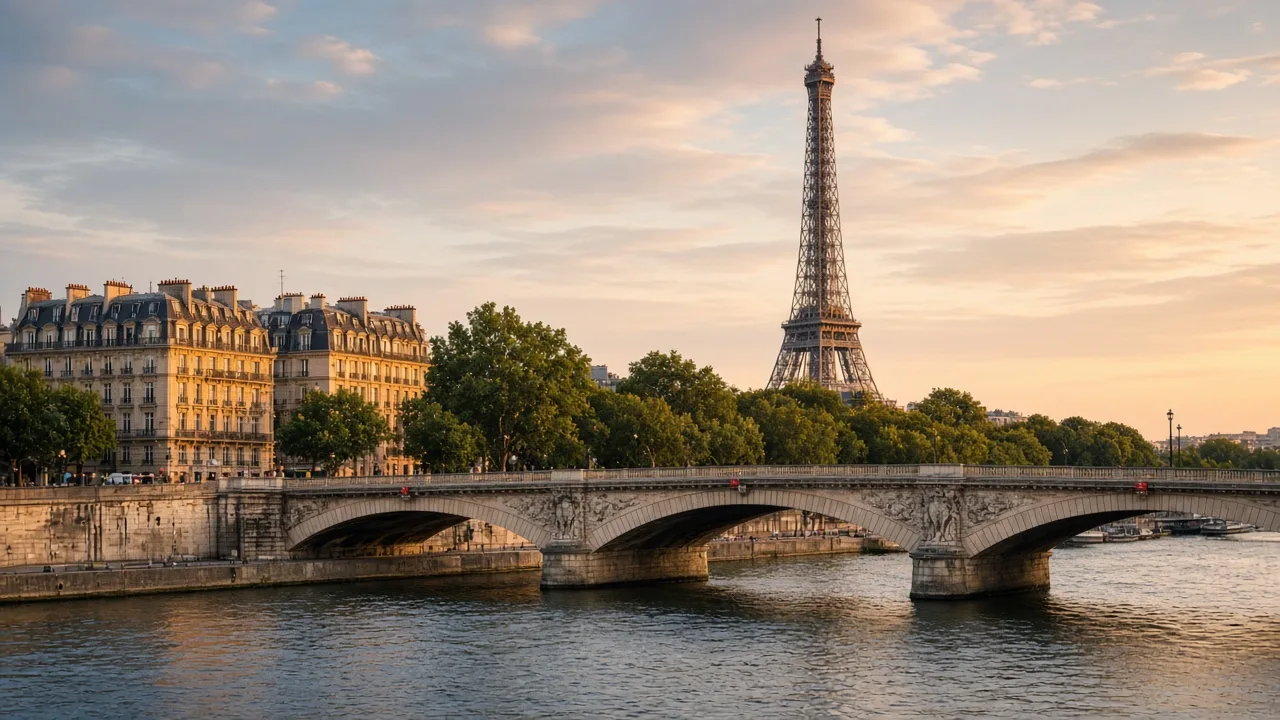
The City of Light, where Seine river cruises begin at the heart of the city and glide past the Eiffel Tower, Notre-Dame, and the Louvre before heading for Normandy.
The Eiffel Tower was meant to stand for only 20 years after the 1889 World's Fair and was nearly demolished, saved because its height made it a useful radio antenna.
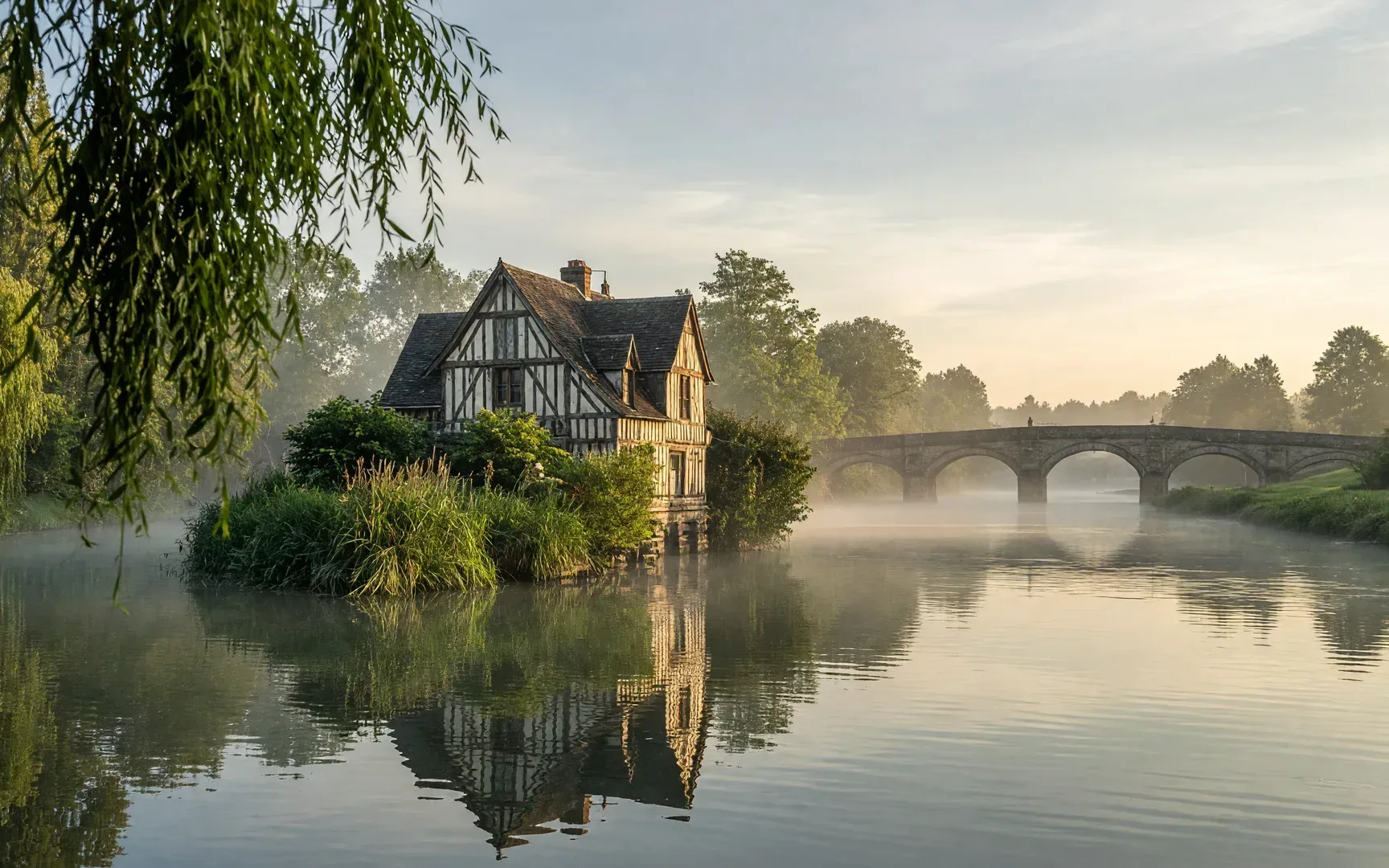
The Seine town that serves as the gateway to Giverny, where Claude Monet's gardens and water-lily pond draw thousands of visitors on every Paris-to-Normandy river cruise.
Monet was legally barred from changing the local river to create his pond, so he dug the basin and diverted the stream by other means, and the gardens remain laid out exactly as he left them.
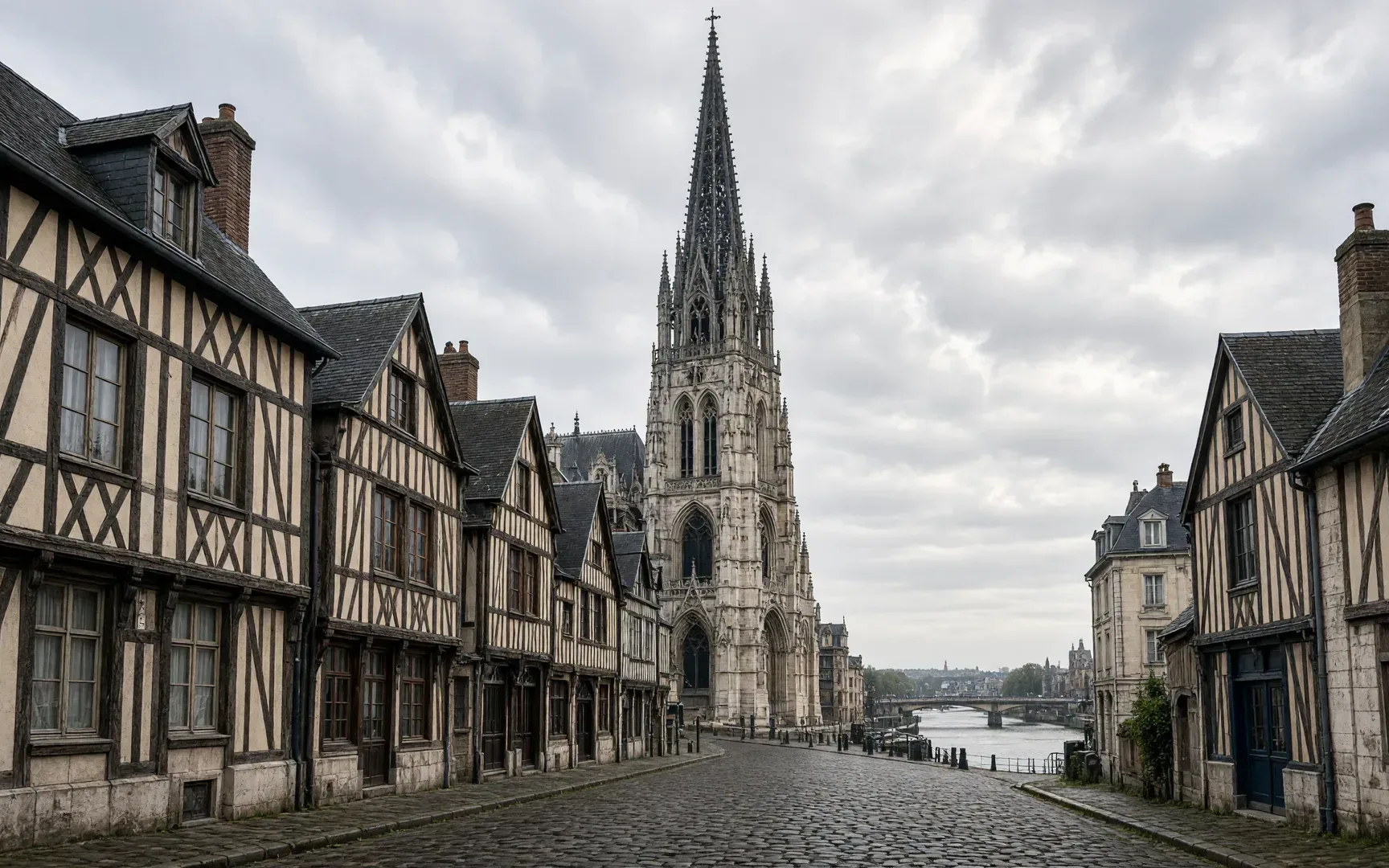
The historic capital of Normandy, on the Seine, whose soaring Gothic cathedral and half-timbered streets make it the centerpiece of Seine cruises between Paris and the coast.
The cathedral was a favorite of Claude Monet, who rented a room across the square and painted its facade more than 30 times, capturing how the light transformed the stone hour by hour.
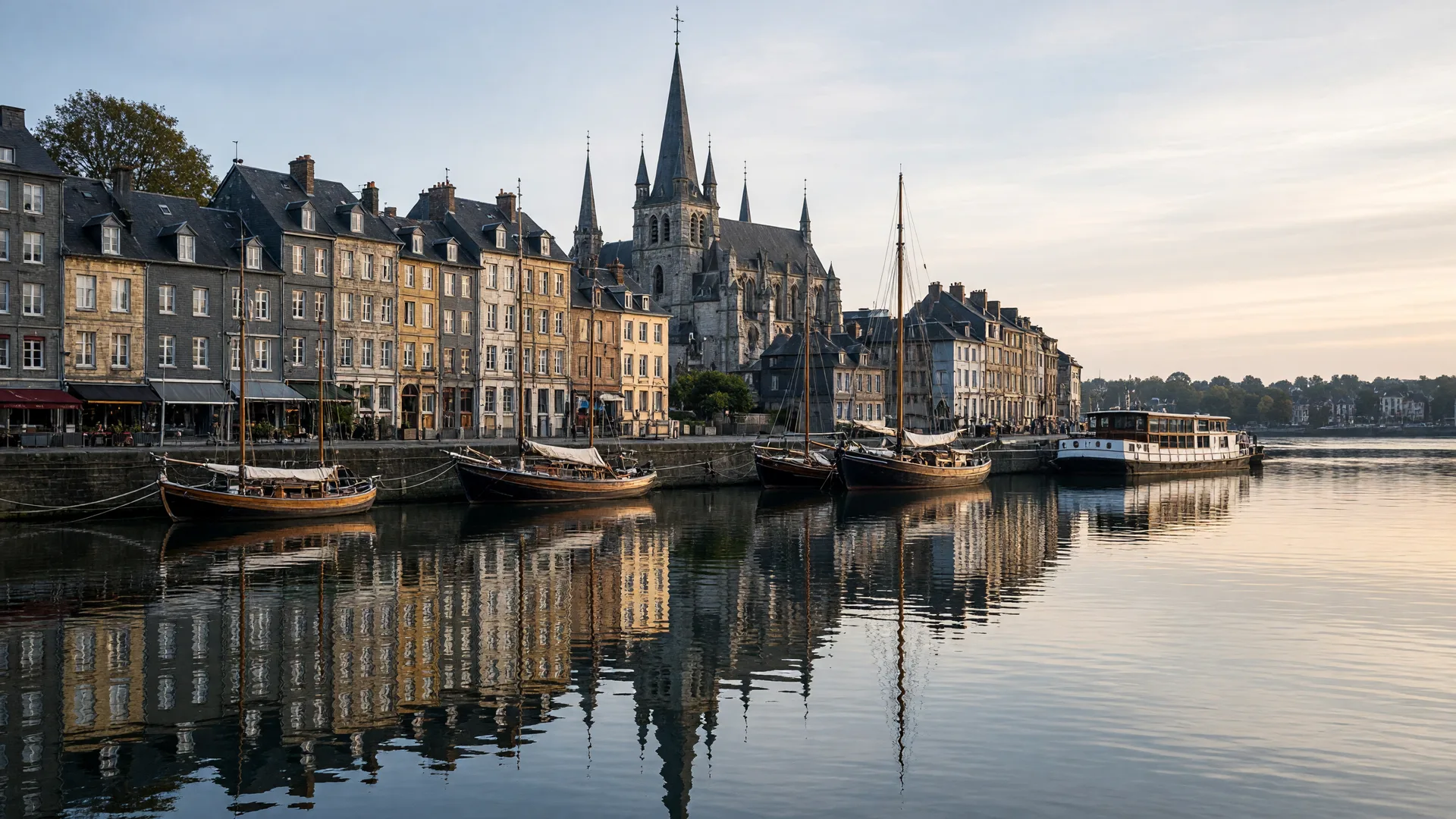
A picture-postcard harbor town on the Seine estuary, whose tall slate houses and old basin have made it a favorite of painters and the final call on many Normandy cruises.
Honfleur's wooden church was built in the 1400s by shipwrights who made the roof look like an upside-down ship's hull, a practical trick that also made it one of France's most unusual churches.
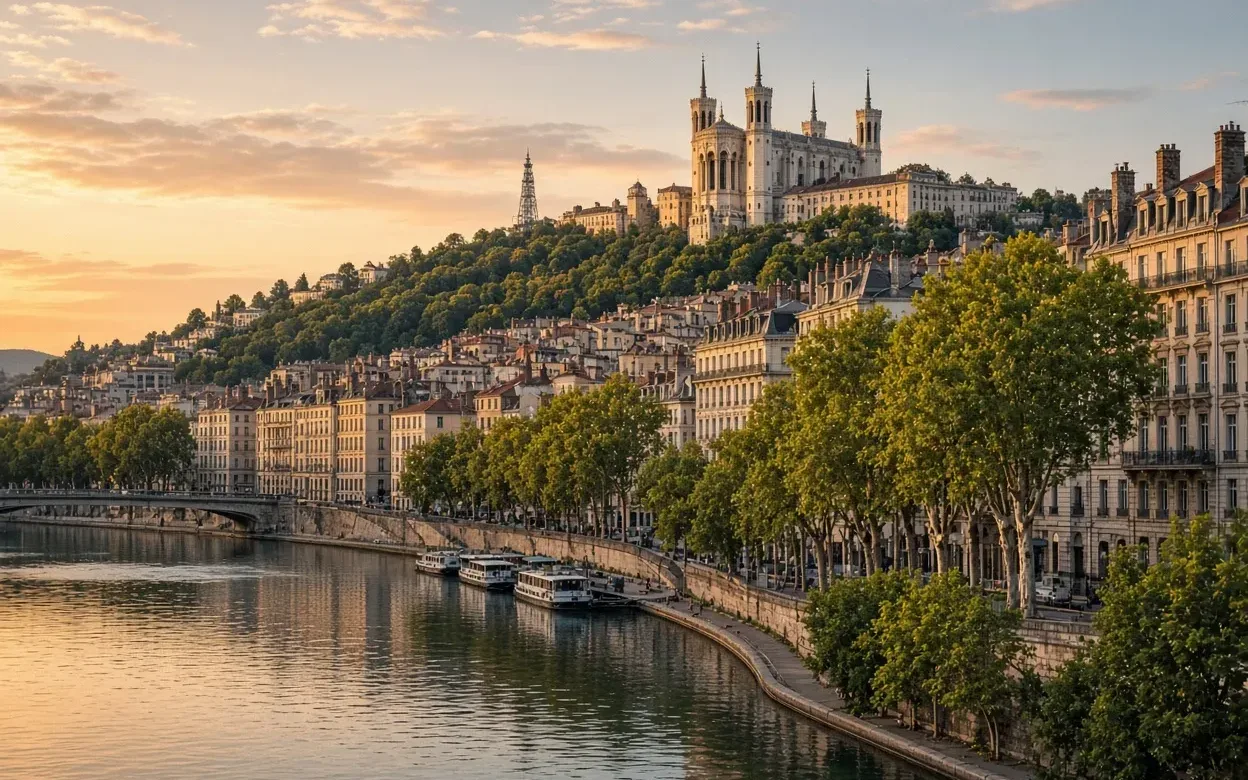
France's gastronomic capital, at the meeting of the Rhône and Saône rivers, where a UNESCO-listed old town of Renaissance passageways anchors the southern stretch of French river cruising.
The traboules of Vieux Lyon were built so silk merchants could move goods between workshops without getting them wet in the rain, and residents still use them as shortcuts today.
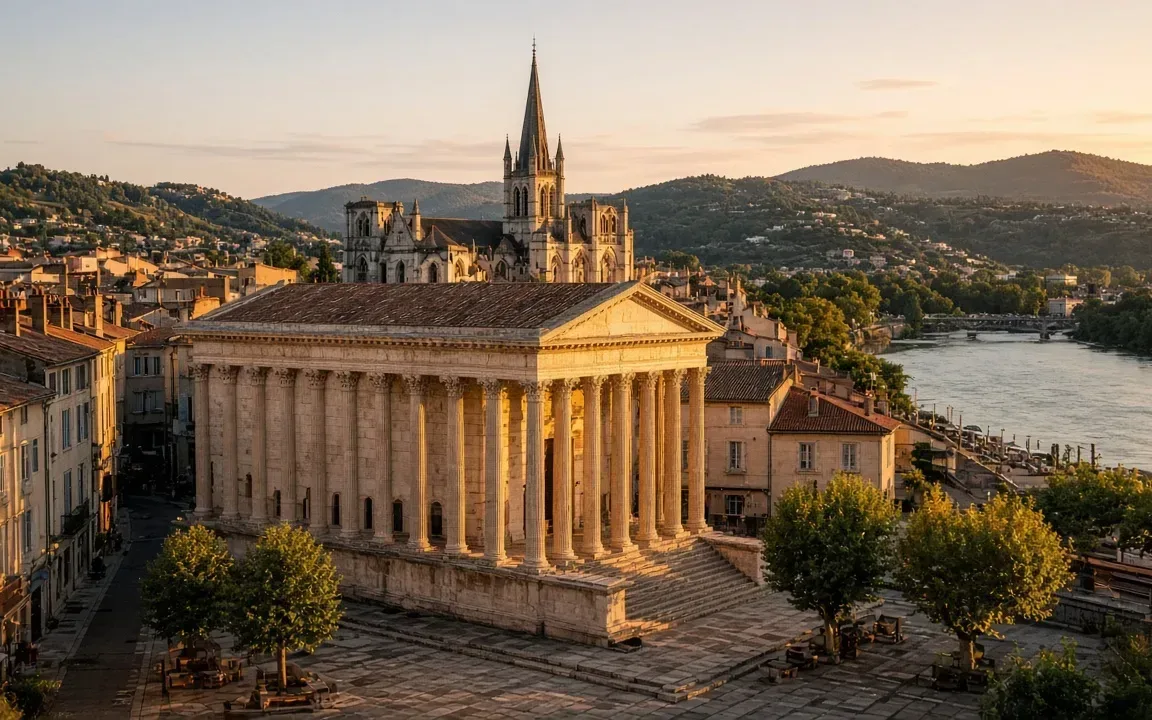
An ancient Roman city on the Rhône south of Lyon, whose temples, theater, and medieval lanes make it a cultural gem on French river itineraries.
The Temple of Augustus and Livia survived because it was converted into a church in the Middle Ages, and it is so well preserved that it is often called one of the finest Roman temples outside Italy.
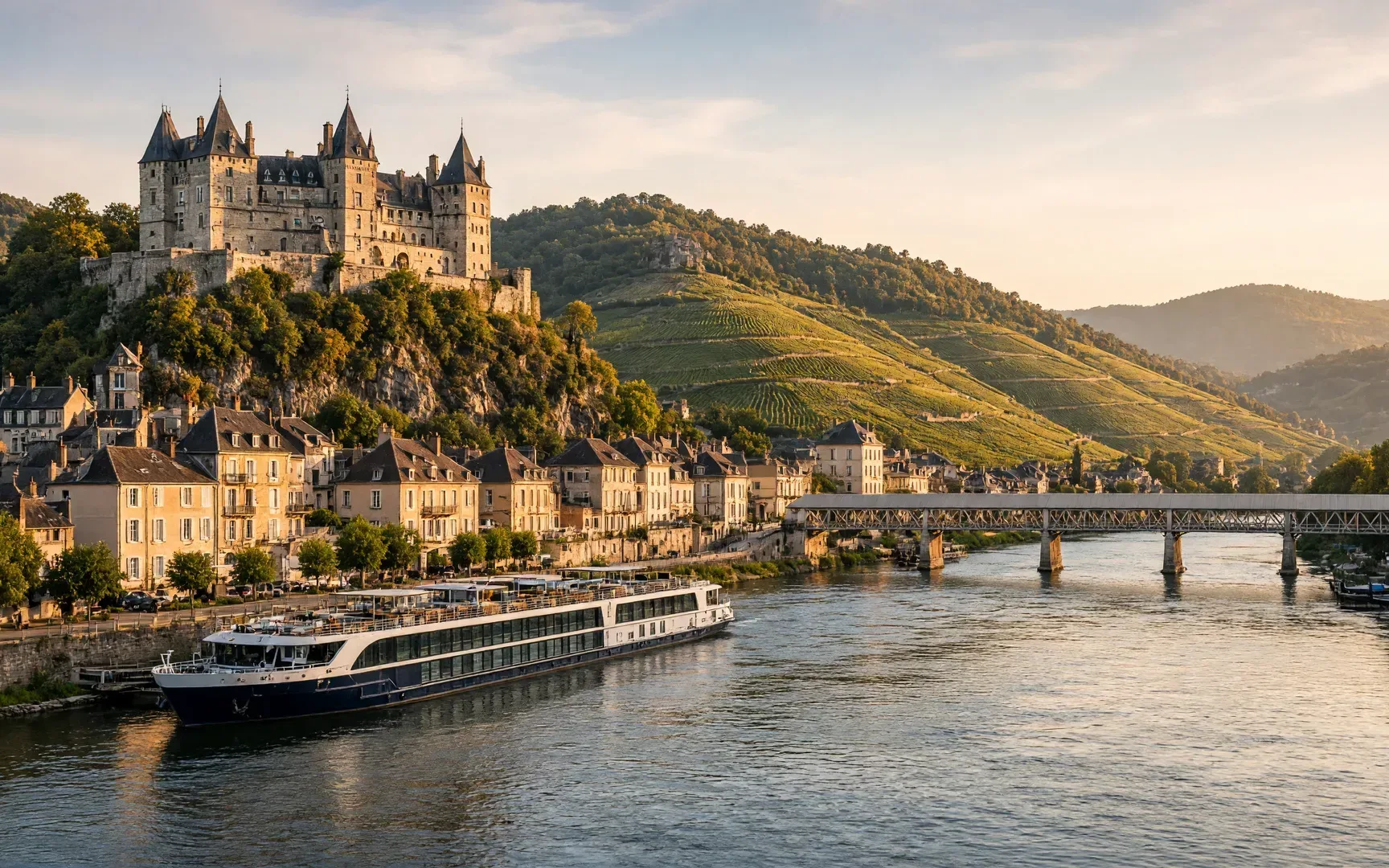
A riverside town on the Rhône facing the vineyards of Tain-l'Hermitage across a covered footbridge, a classic stop on Rhône cruises for wine and castle views.
The name Hermitage comes from a medieval knight who returned from the Crusades and lived as a hermit on the hill, planting the first vines that made the slope famous.
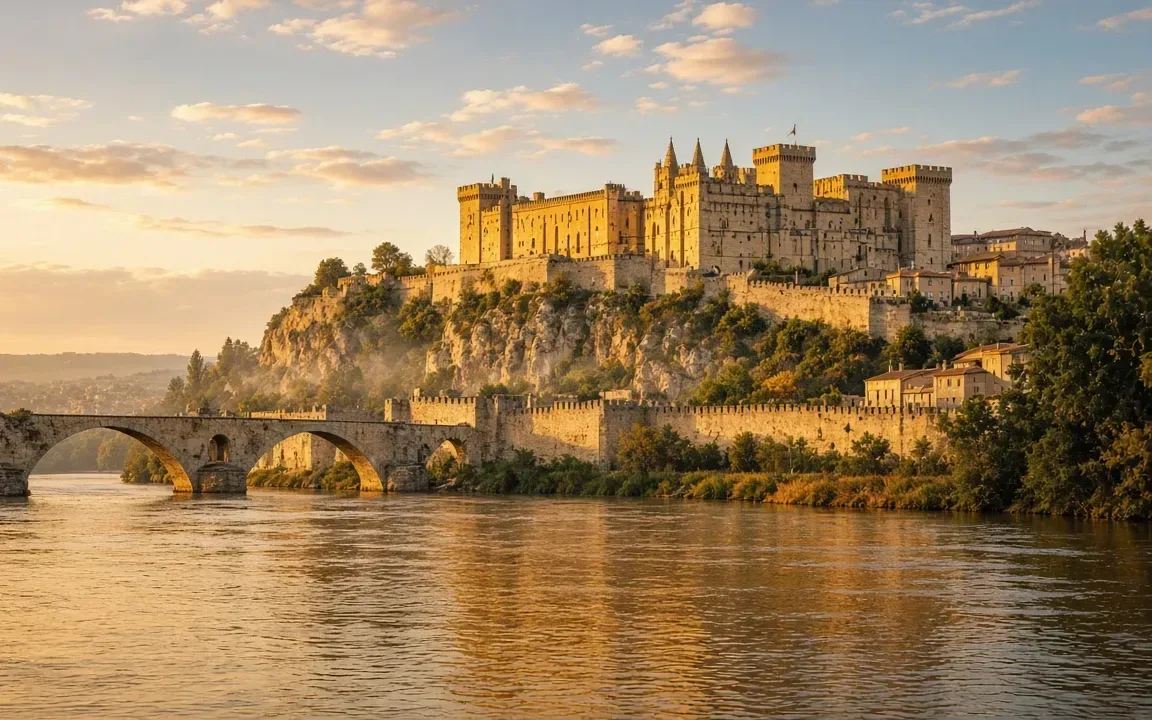
The walled city on the Rhône where the popes once ruled, whose immense Palais des Papes and broken bridge make it the dramatic high point of Rhône cruises.
The famous song 'Sur le pont d'Avignon' is a bit of a myth: people danced under the bridge on the riverbank, not on it, because the span was too narrow and broken for dancing.
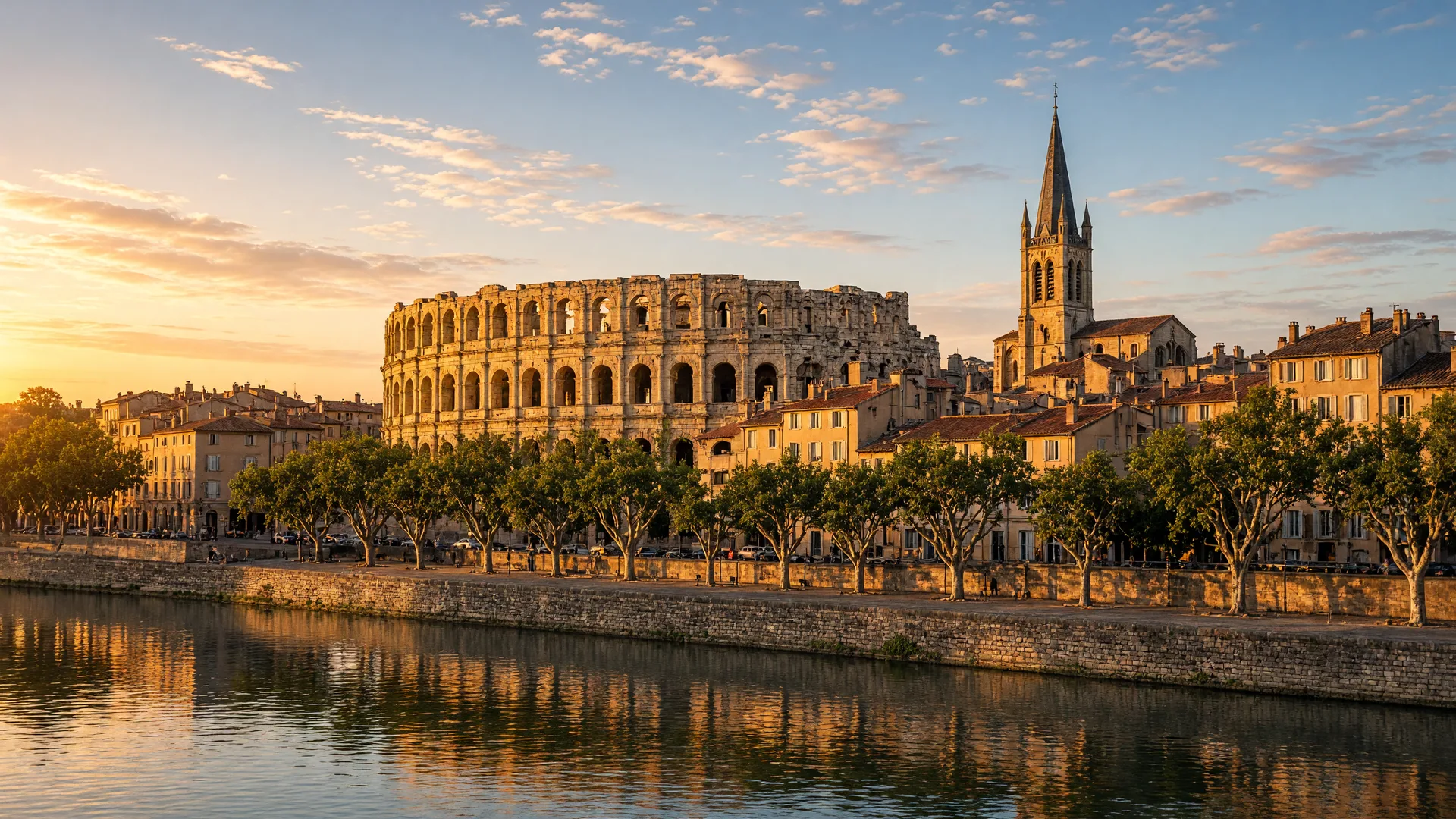
The Roman city on the Rhône where Vincent van Gogh painted some of his most famous works, a UNESCO-listed town of ancient arenas and Provençal light.
The café terrace Van Gogh painted in 1888 still stands, and the town has repainted its walls to match the golden tones of his paintings.

The Dutch capital and the classic starting point for Rhine and Moselle river cruises, where gabled canal houses, museums, and houseboats line waterways that predate the streets.
Amsterdam's canals were never meant to be scenic: the rings of water were dug as defensive moats and drainage works in the 1600s, and the gabled warehouses along them were built for trade, not beauty.
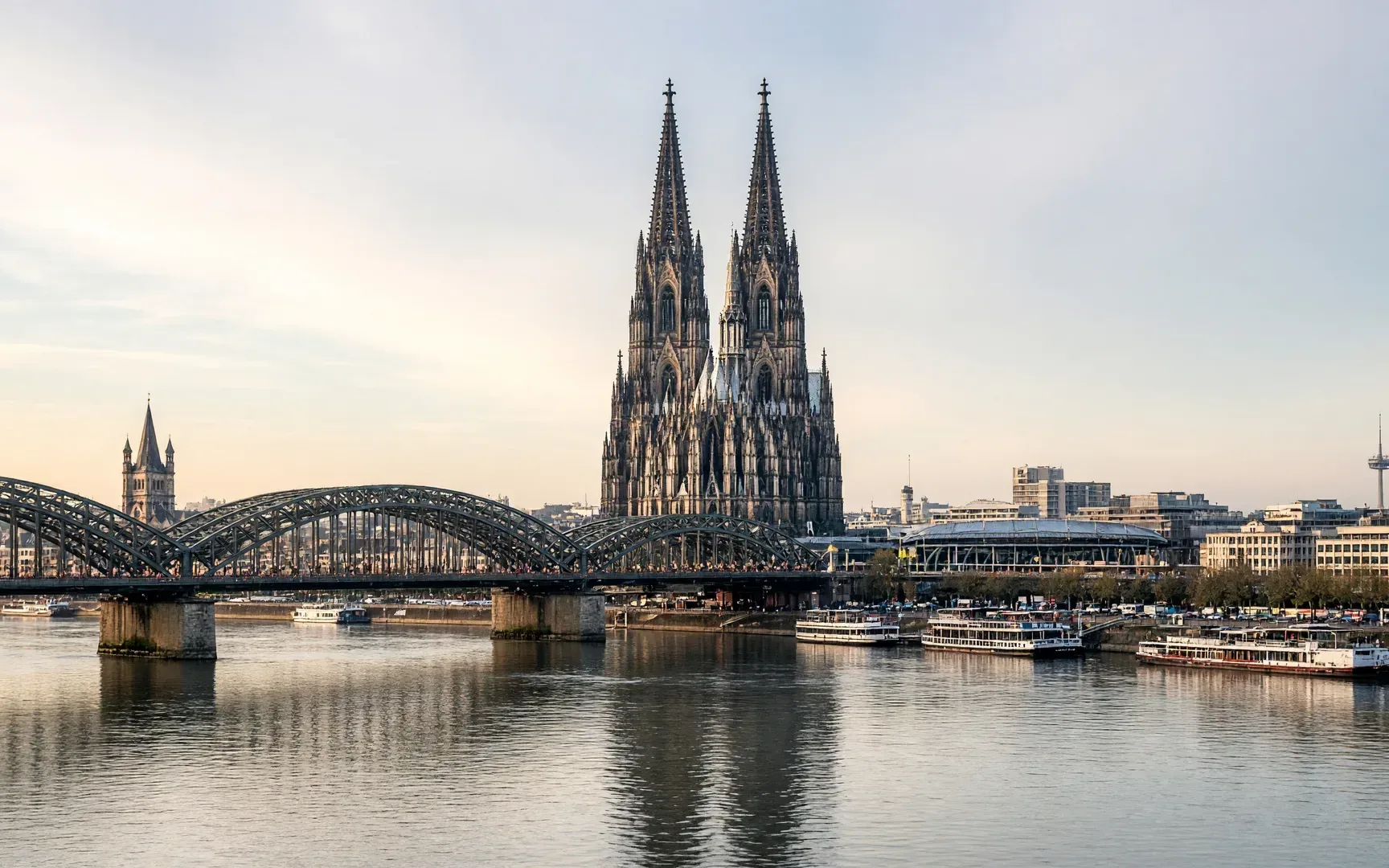
The Rhineland's great cathedral city and the largest city on the Rhine, where the twin spires of the Dom rise over a Roman-founded old town and a lively riverfront of pubs and museums.
The cathedral was built to hold the relics of the Three Kings, which arrived from Milan in 1164, and the golden shrine that houses them still draws pilgrims to the high altar.
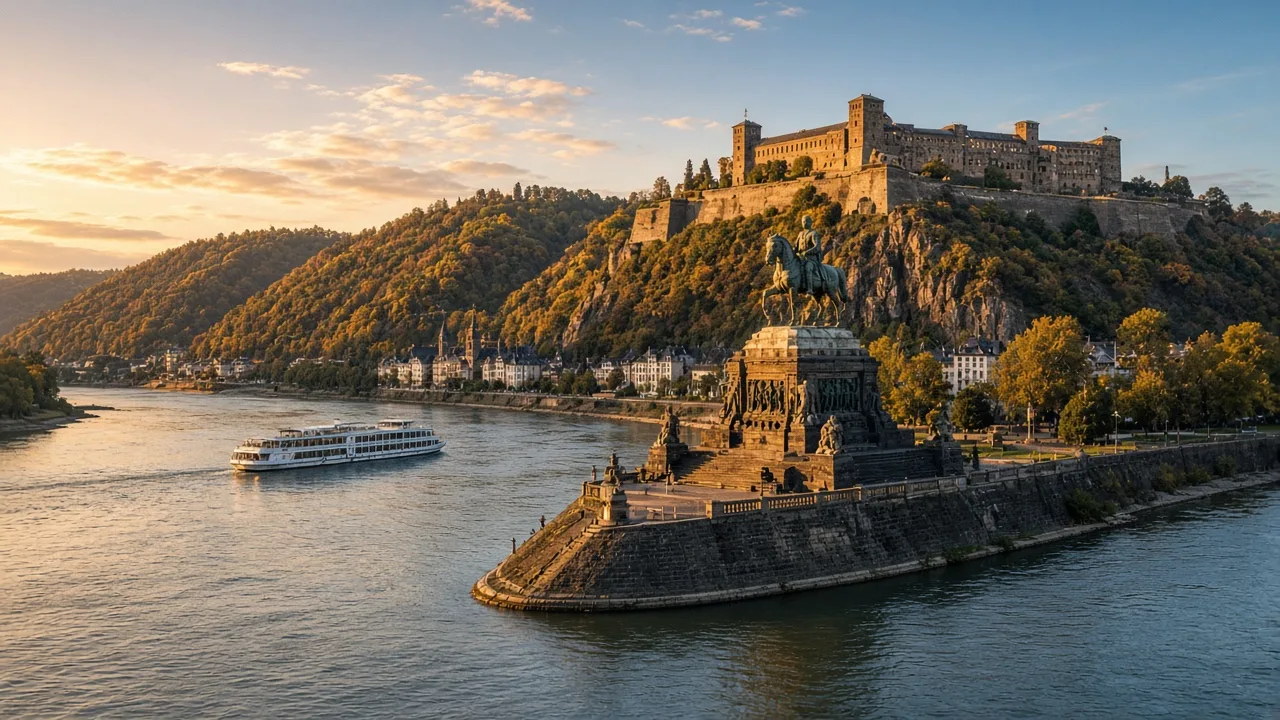
The city at the German Corner, where the Moselle joins the Rhine, a 2,000-year-old river crossroads and the gateway to both the Rhine Gorge and the Moselle wine valley.
The cable car is not just a tourist ride: it carries around 400,000 passengers a year and was built partly to serve the fortress's grounds on the far bank.
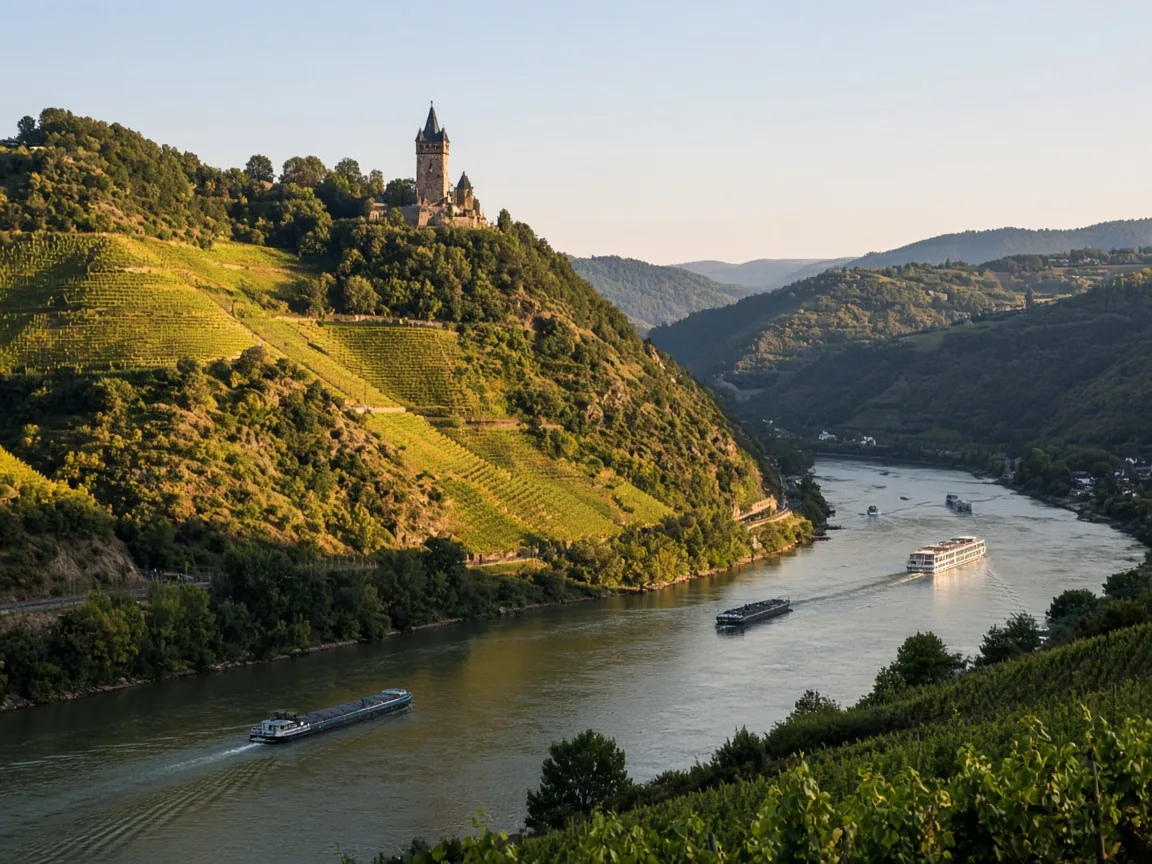
A wine town at the southern end of the Rhine Gorge, where the famous Drosselgasse lane of taverns and terraced vineyards combine for one of the Rhine's most beloved calls.
The name Drosselgasse may come from the drosseln or 'thrushes' that once sang in the vines, but the town prefers the story of the tavern musicians whose singing fills the lane.
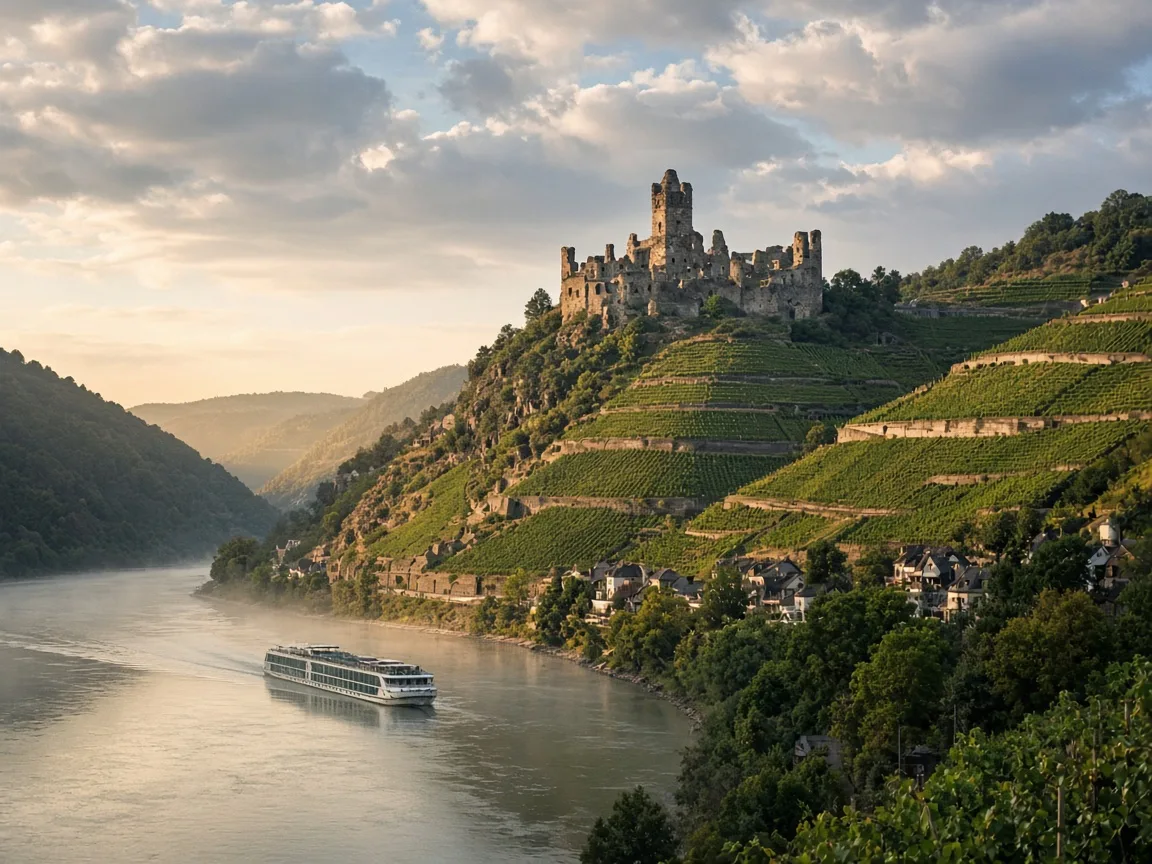
The scenic heart of the Rhine, a UNESCO-listed stretch of river between Rüdesheim and Koblenz where castle after castle crowns the steep, vineyard-terraced slopes.
The Loreley rock is famous for a seven-fold echo, and the legend of the siren who lured boatmen to the rocks was popularized in Clemens Brentano's 1801 ballad.
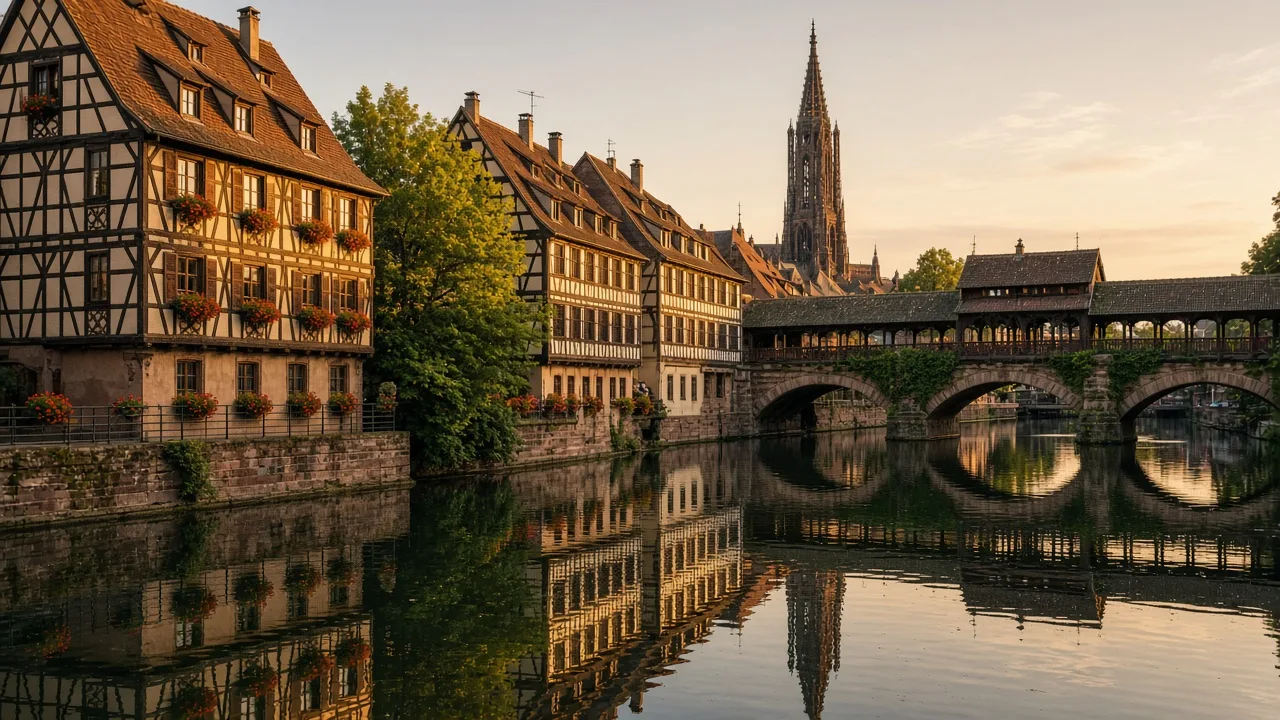
A French city with a German soul on the Rhine border, whose cathedral and half-timbered Petite France quarter make it one of the most photogenic calls on any Rhine itinerary.
The cathedral's astronomical clock draws crowds every day at 12:30 when its figures move, but the clock has been running continuously since 1842, making it a working masterpiece of 19th-century mechanics.
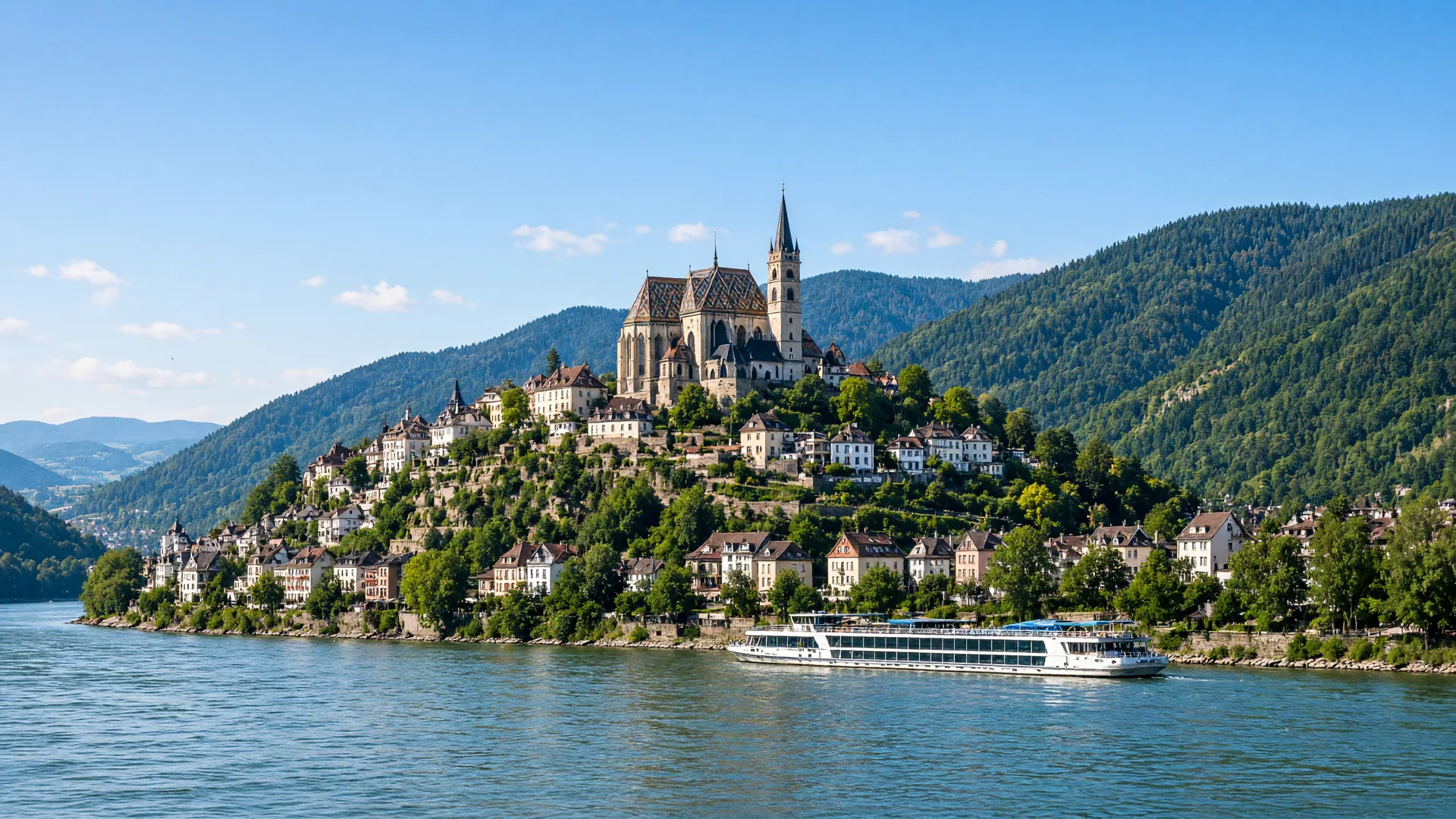
A hilltop town on the Rhine where Germany, France, and Switzerland meet, the standard gateway to the Black Forest and one of the Rhine's most striking silhouettes.
Breisach claims the oldest church bells in Europe: the cathedral's 'Hosanna' bell was cast in the 1200s and still rings today.
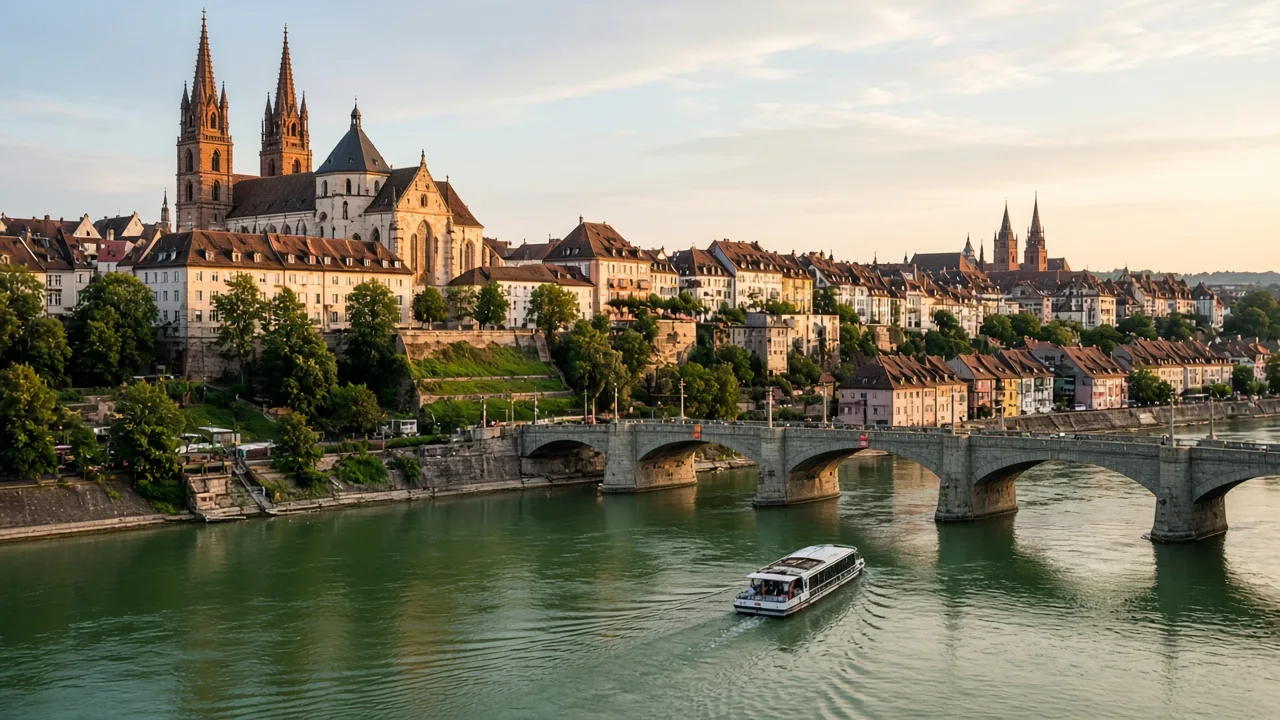
Switzerland's cultural capital on the Rhine, where the river makes a sharp bend around the old town and where many Rhine cruises begin or end.
Basel's historic Rhine ferries have no engines: four small boats are guided across the river entirely by the current and a cable, a tradition dating back centuries.
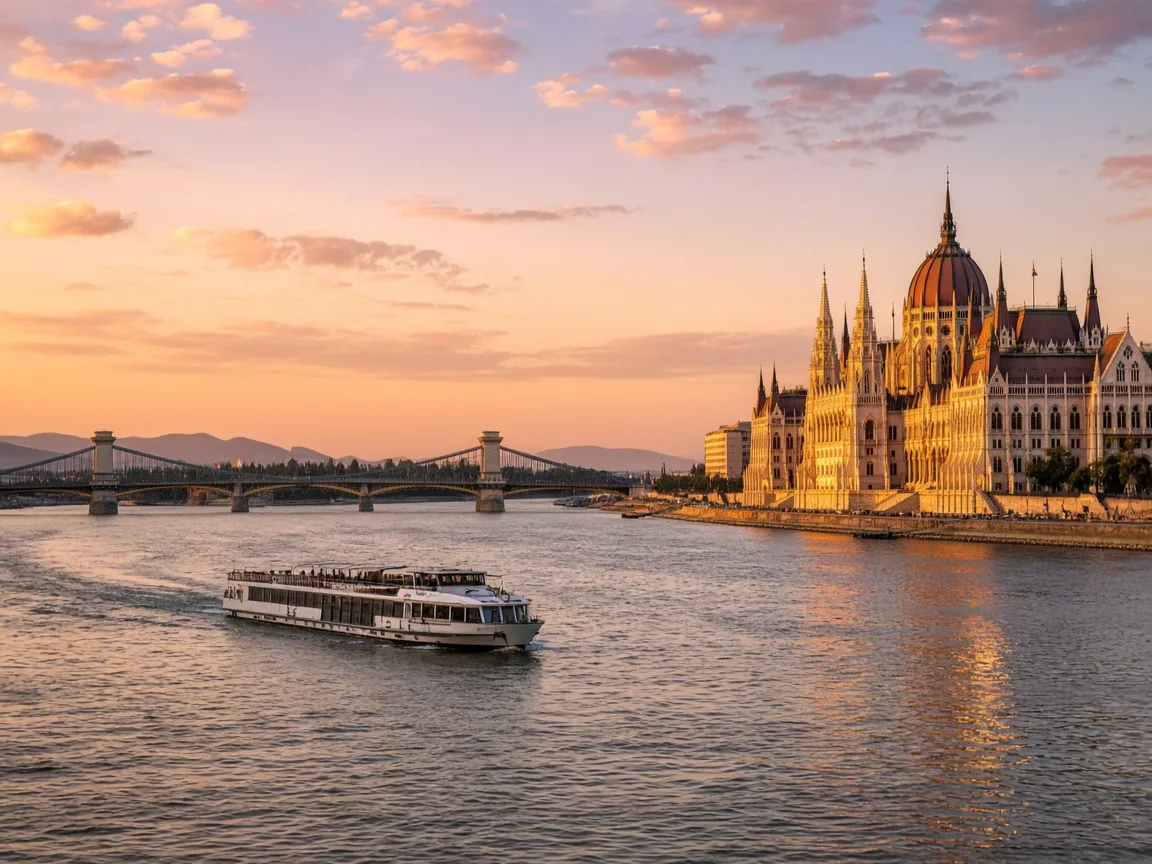
Hungary's magnificent capital on the Danube, where the river divides hilly Buda from flat Pest and the city's parliament, bridges, and thermal baths make it the grand finale of most Danube cruises.
The Parliament building is designed to be exactly symmetric, with the great central hall and dome mirrored by identical wings, yet it is so huge that it contains 691 rooms and over 20 kilometers of stairs.
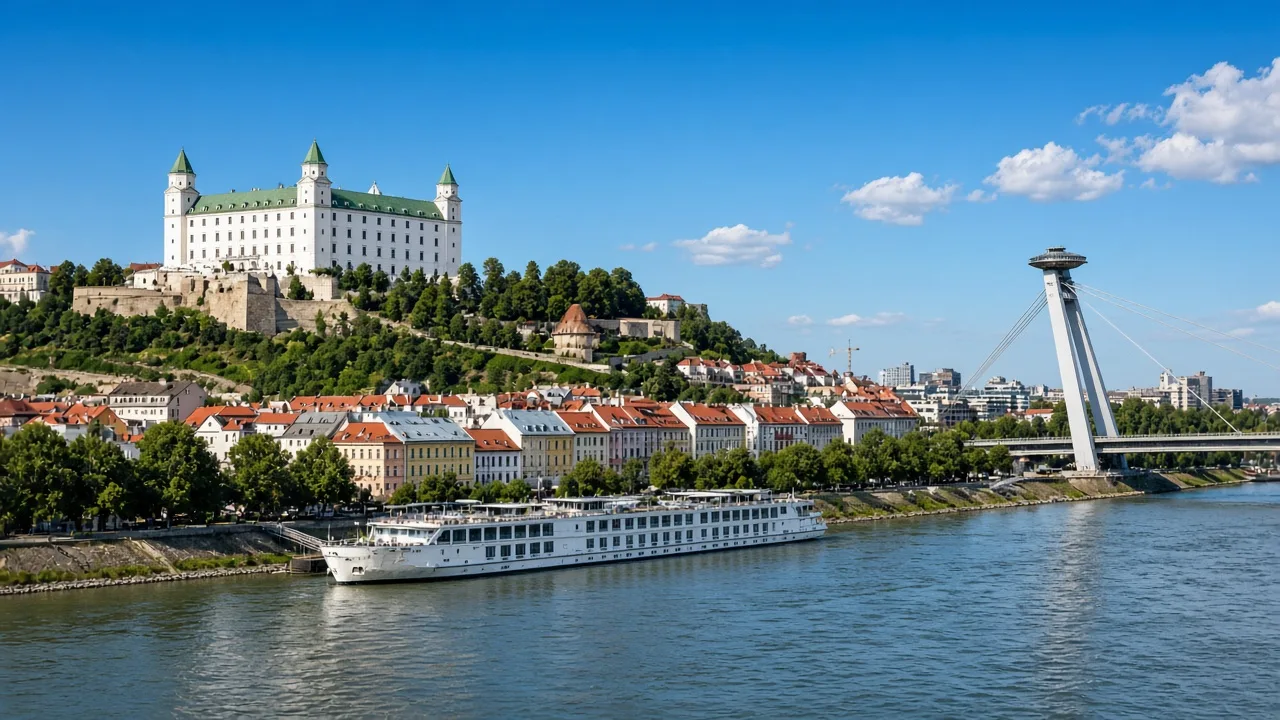
The Slovak capital, a compact old town on the Danube between Vienna and Budapest, with a hilltop castle and a laid-back café life on the river.
Because the city sits so close to Austria, on a clear day you can see Vienna's hills from Bratislava Castle, and the two capitals are only about 60 kilometers apart.
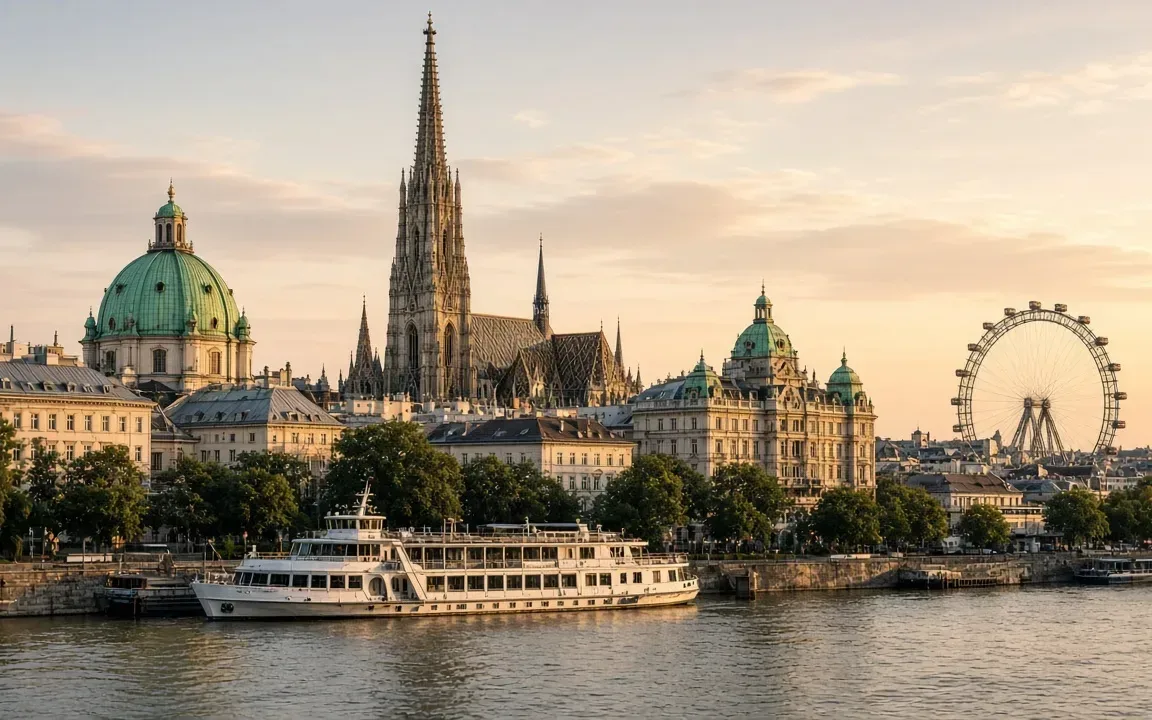
The imperial capital of the Habsburgs and the grandest city on the Danube, where river ships dock within walking distance of palaces, coffee houses, and concert halls.
The Danube that flows past modern Vienna is not the river the Romans knew: the city redirected and regulated the river from the 1870s to control floods, leaving the old river as the Danube Canal through the city center.
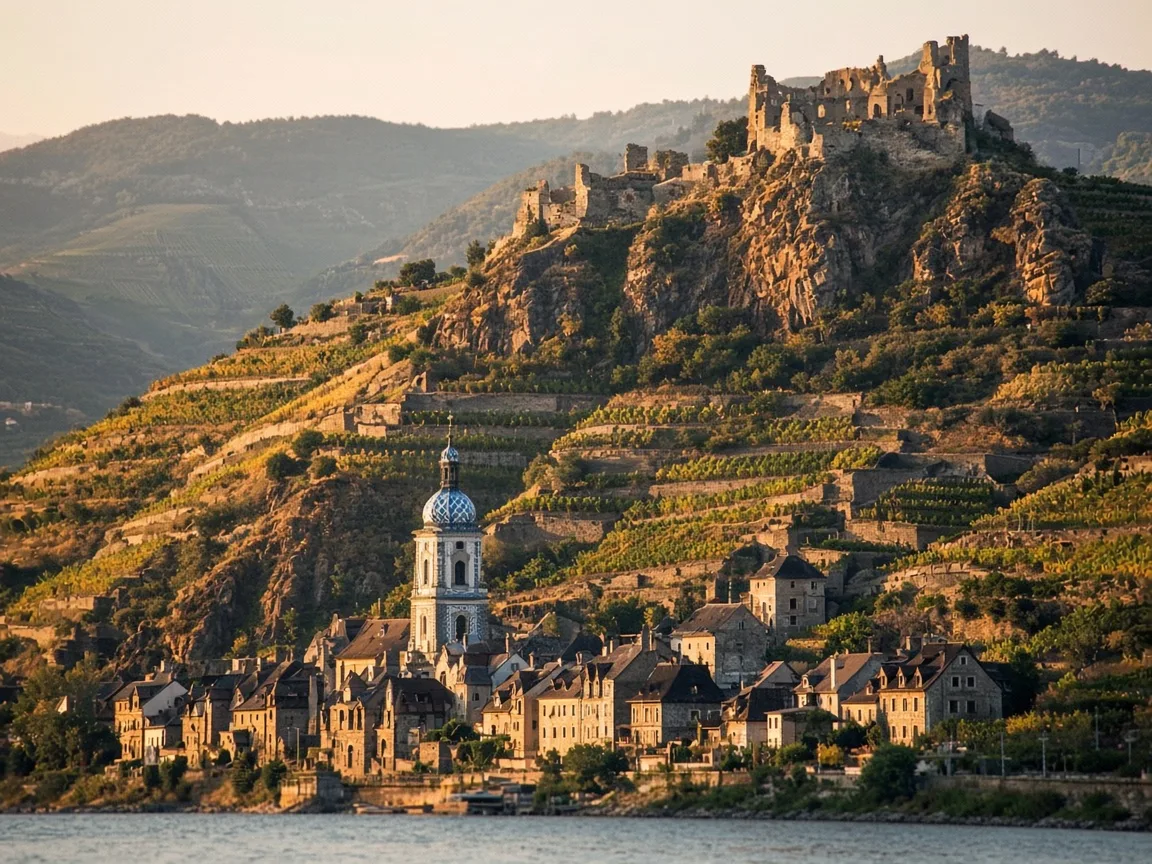
The picture-postcard village of the Wachau Valley, famous for its blue-and-white abbey tower and for the castle ruins where Richard the Lionheart was held prisoner.
According to legend, Richard the Lionheart was found at Dürnstein when his loyal minstrel Blondel sang beneath the castle and heard the king's reply, a story the village still tells today.
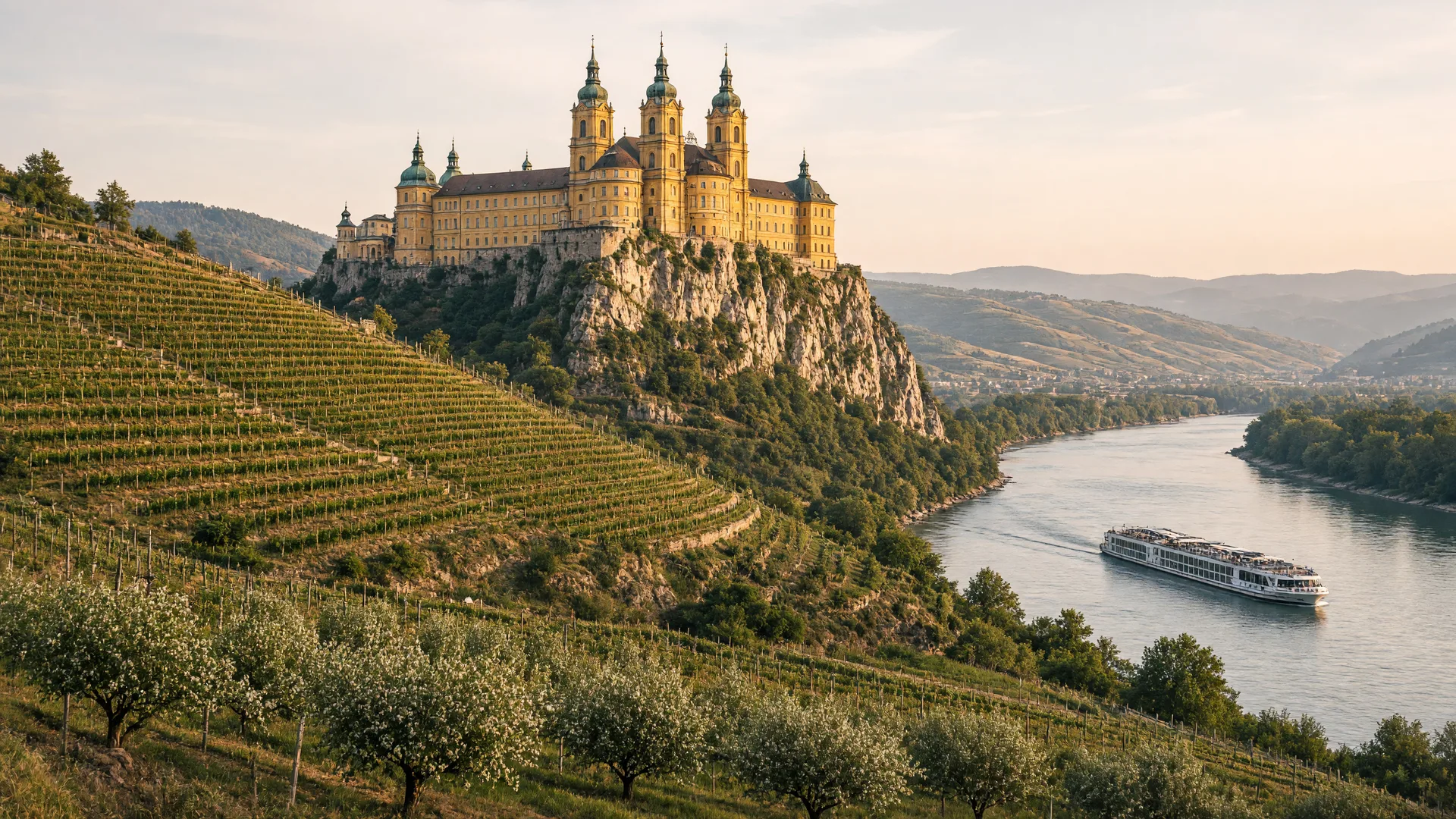
A small town in the Wachau Valley whose colossal golden abbey crowns a bluff above the Danube, the most photographed stop on the classic Vienna-to-Passau route.
The abbey's golden color is not gold at all: the yellow ocher paint was chosen to make the building glow against the green hills, and it is so effective the abbey seems to shimmer in the sun.
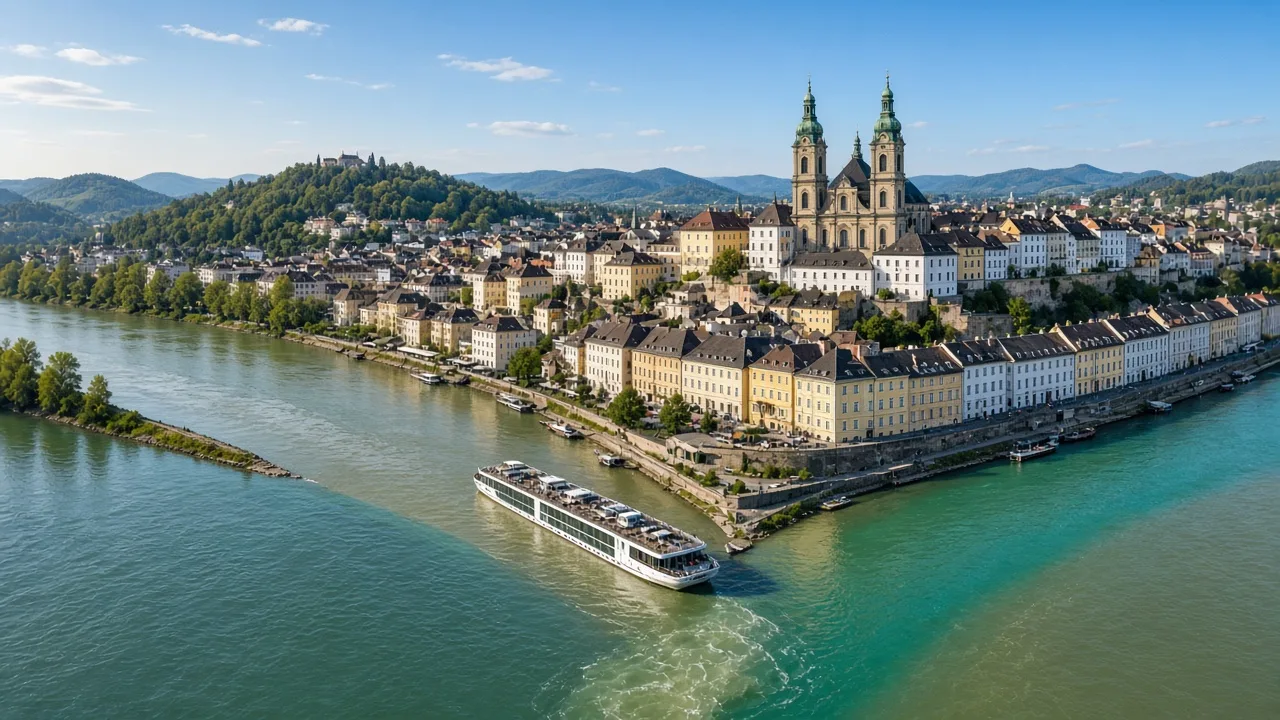
The 'City of Three Rivers,' where the Danube, Inn, and Ilz meet, a baroque old town that is the classic starting or ending point for Danube cruises.
The organ in St. Stephen's has about 17,774 pipes and is played in daily concerts, making Passau one of the few cities where you can hear one of the world's great organs on any given day.
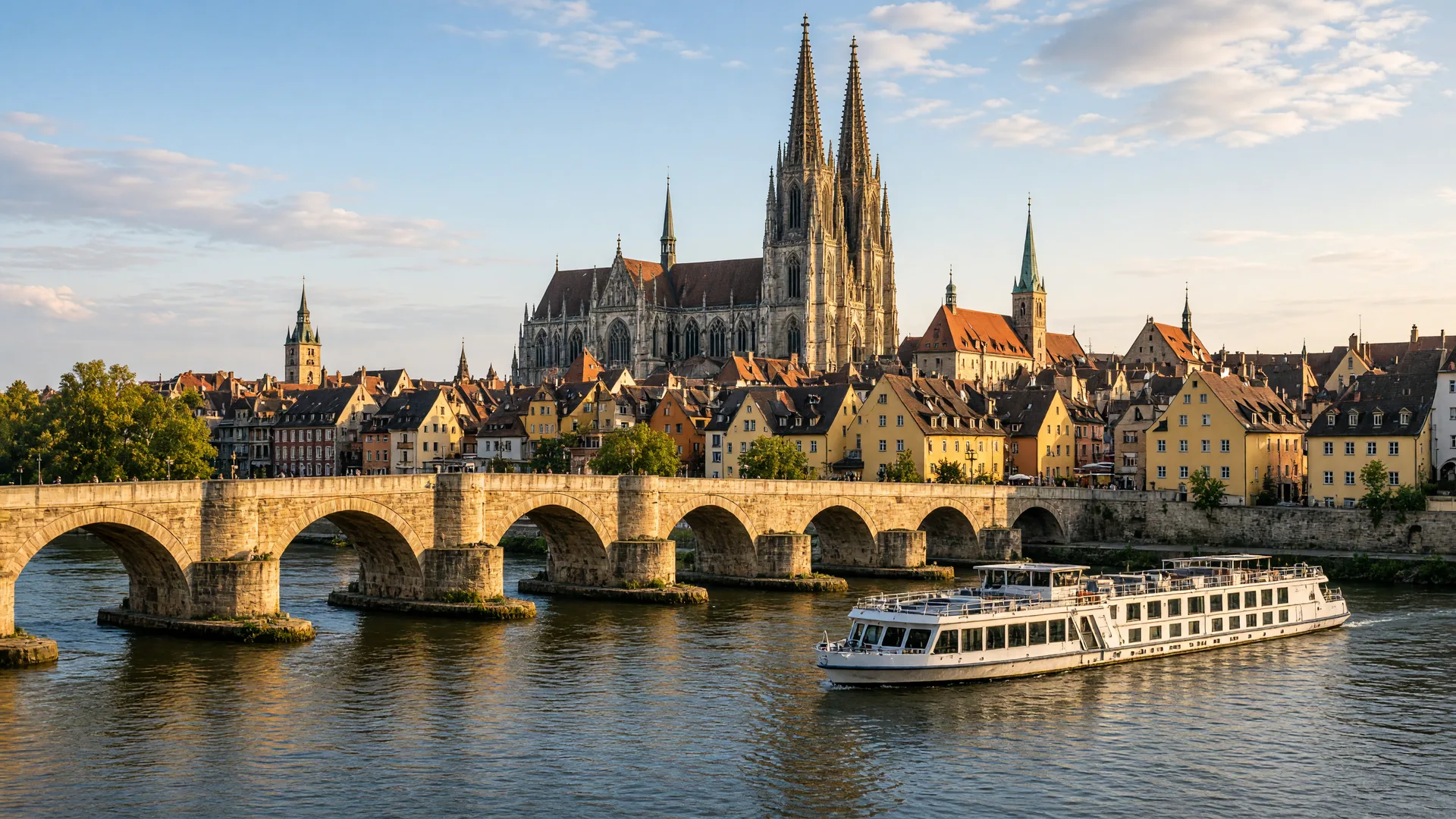
One of Germany's best-preserved medieval cities, on the Danube at the mouth of the Regen river, whose stone bridge and ancient center are a UNESCO World Heritage site.
Legend says the bridge's builder made a pact with the devil, who demanded the first three souls to cross; the clever builder sent a rooster, a hen, and a dog instead.
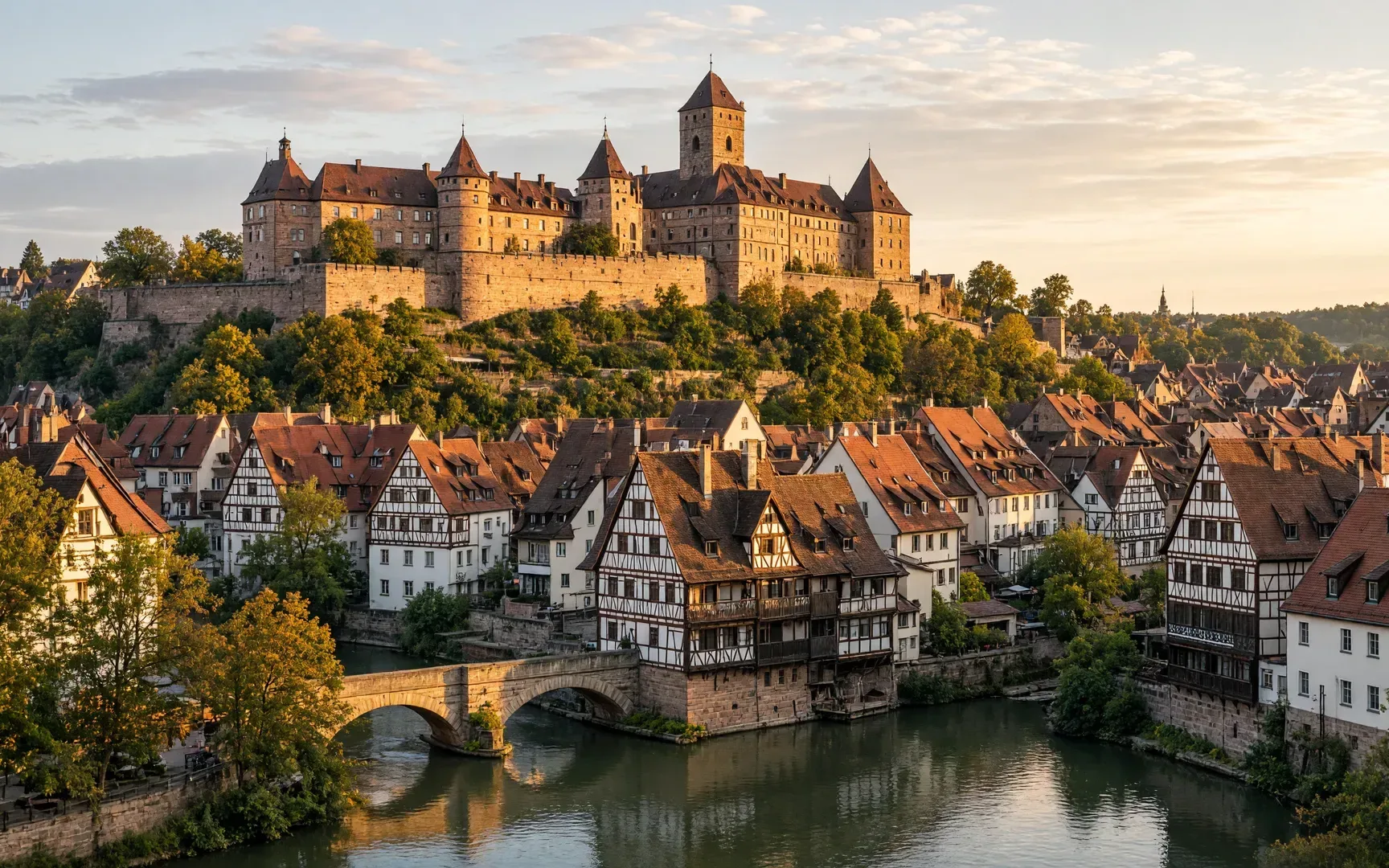
A great imperial city on the Pegnitz, linked to the Danube by the Main-Danube Canal, where a hilltop castle watches over one of Germany's richest medieval old towns.
The city's famous gingerbread, Nürnberger Lebkuchen, has been made here since the Middle Ages and is protected by EU law as a regional specialty.
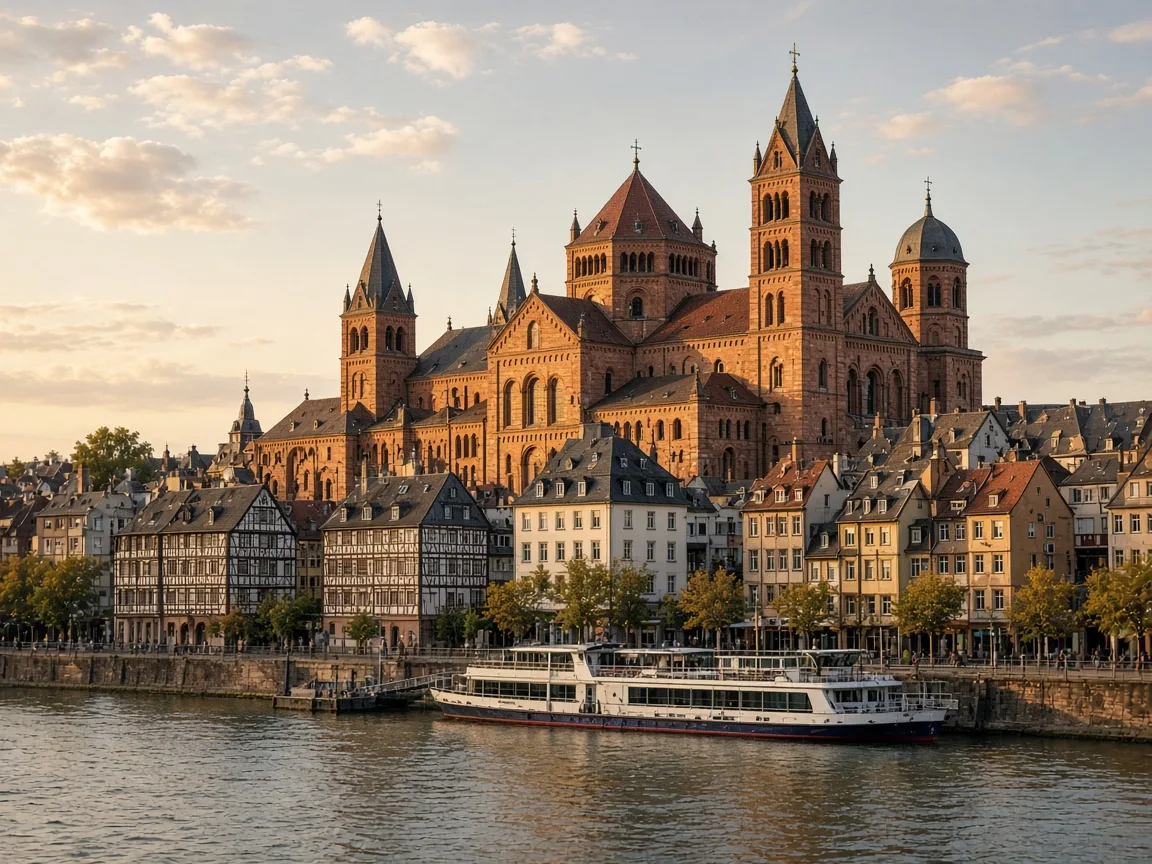
The Roman-founded capital of Rhineland-Palatinate where the Main joins the Rhine, a 2,000-year-old city of the red sandstone cathedral, Gutenberg's printing revolution, and riverfront promenades.
Mainz Cathedral was destroyed by fire on the very day of its consecration in 1009, and the city spent much of the Middle Ages rebuilding it after a series of fires.
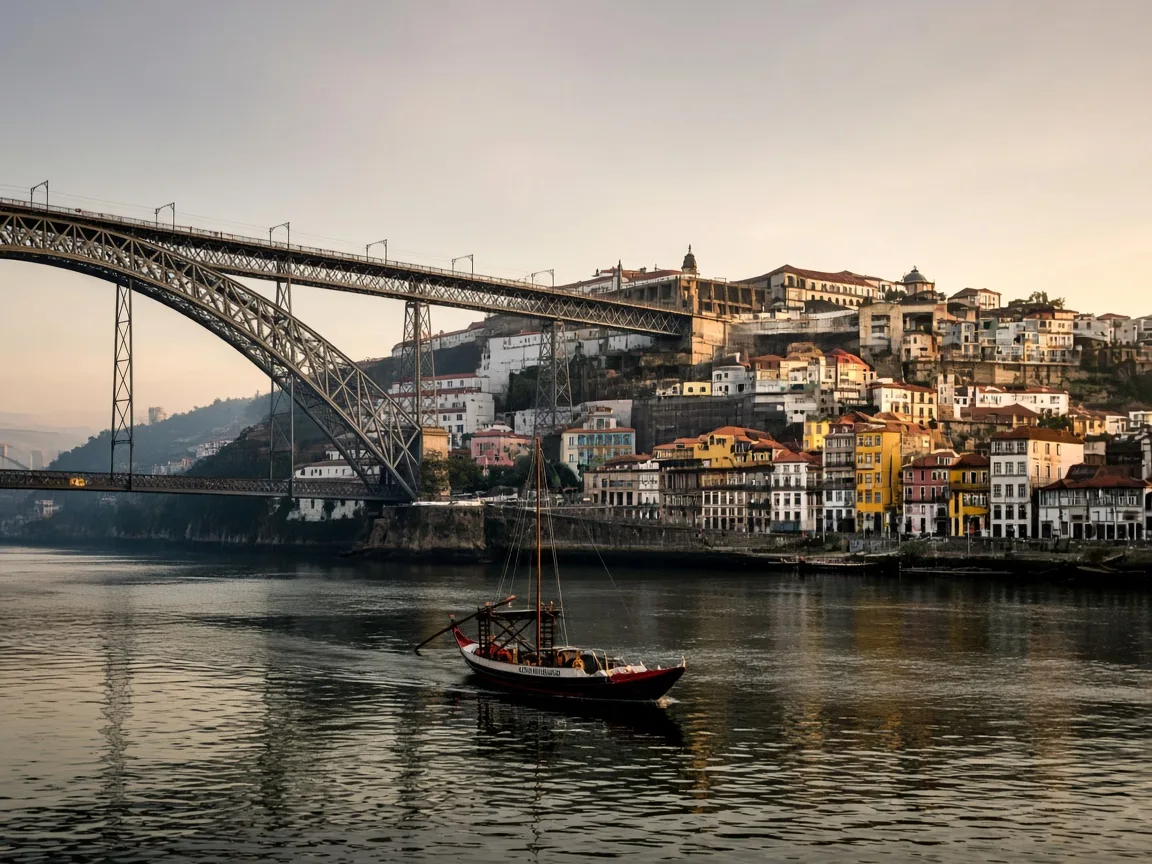
Portugal's second city and the home port of the Douro, where the river runs beneath the iron arches of the Dom Luís I bridge past terraced tile-roofed hillsides, and where most Douro river cruises begin.
The Dom Luís I bridge is often credited to Gustave Eiffel, but it was actually designed by his partner Théophile Seyrig, who had worked with Eiffel on the famous Maria Pia bridge upstream.
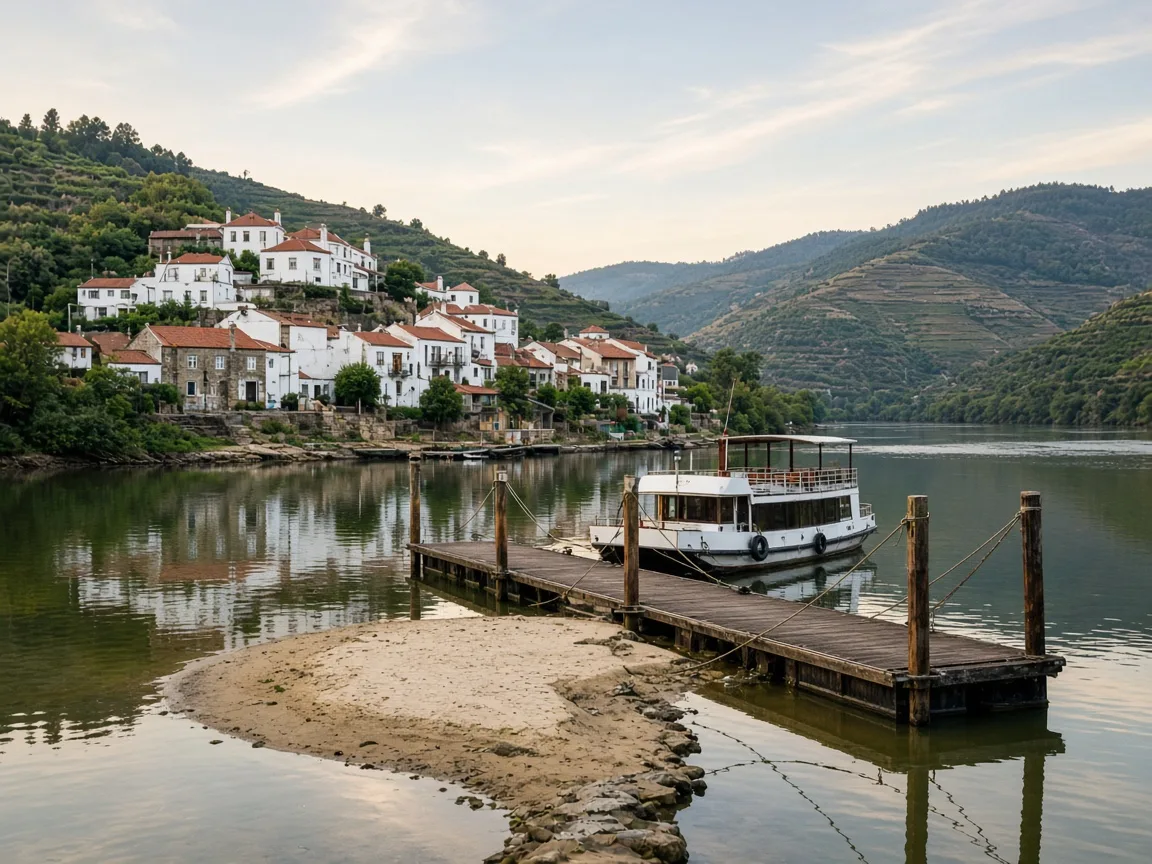
A village where the Tâmega river flows into the Douro, the first upstream call on many Douro cruises and a gateway to the terraced wine country that begins just beyond.
The Tâmega's water stays visibly greener than the Douro's for a stretch after the two rivers meet, the same trick the Inn plays on the Danube at Passau.
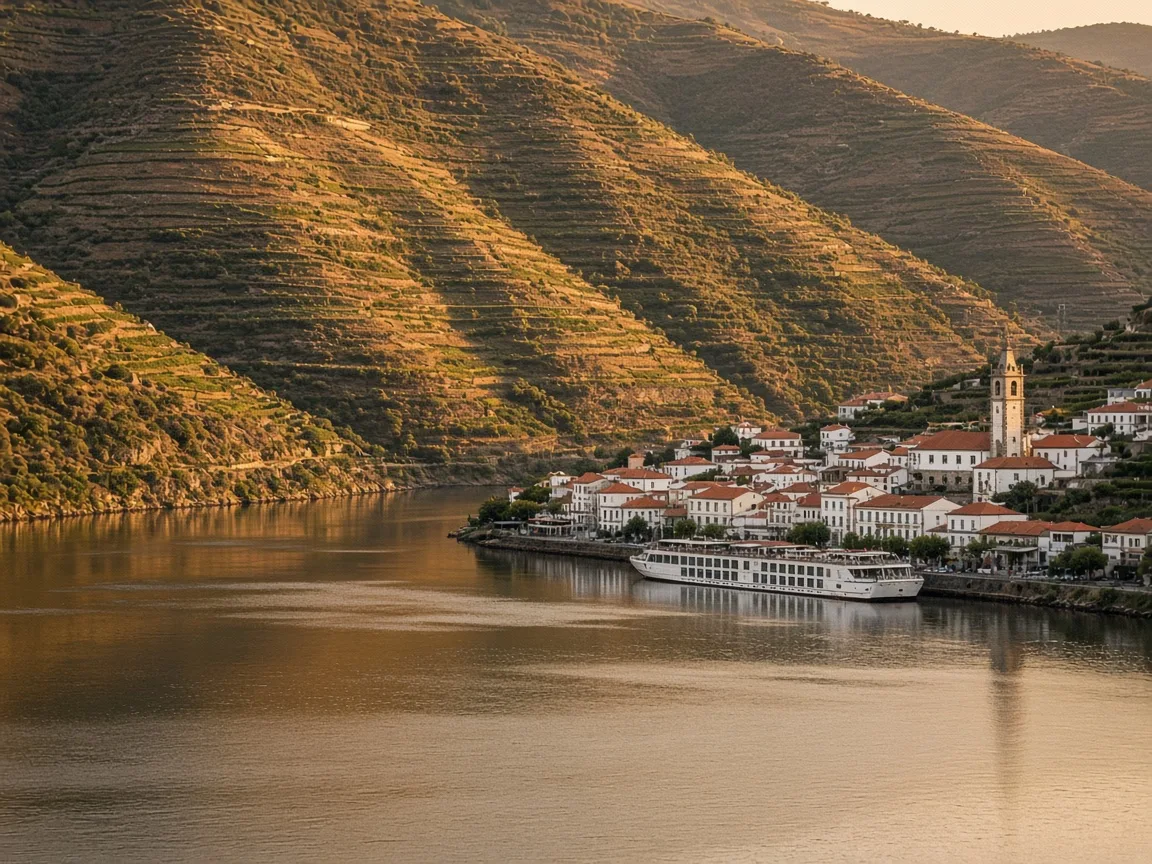
The historic wine capital of the Douro Valley, a river town at the heart of the port wine region whose terraced hillsides produce the fortified wine aged downstream at Gaia.
The region's stone terraces are so steep and tightly packed that much of the harvest is still carried down by hand, and some slopes rise at more than 60 degrees.
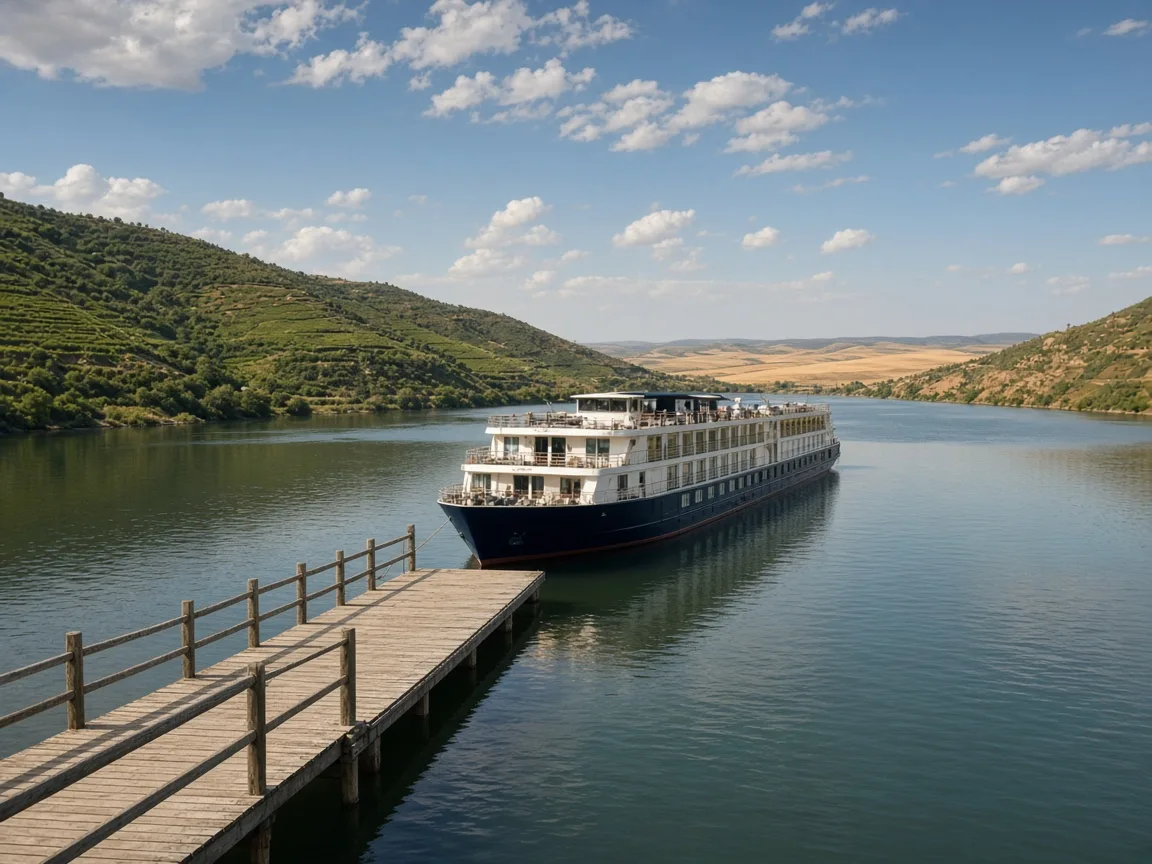
The Spanish port of the Douro, just across the border from Barca d'Alva, where river cruise ships tie up for the excursion to Salamanca and where the river becomes the Duero on Spanish maps.
The river is navigable here only because of a series of dams and locks built in the 20th century, making this remote Spanish stretch passable for cruise ships.
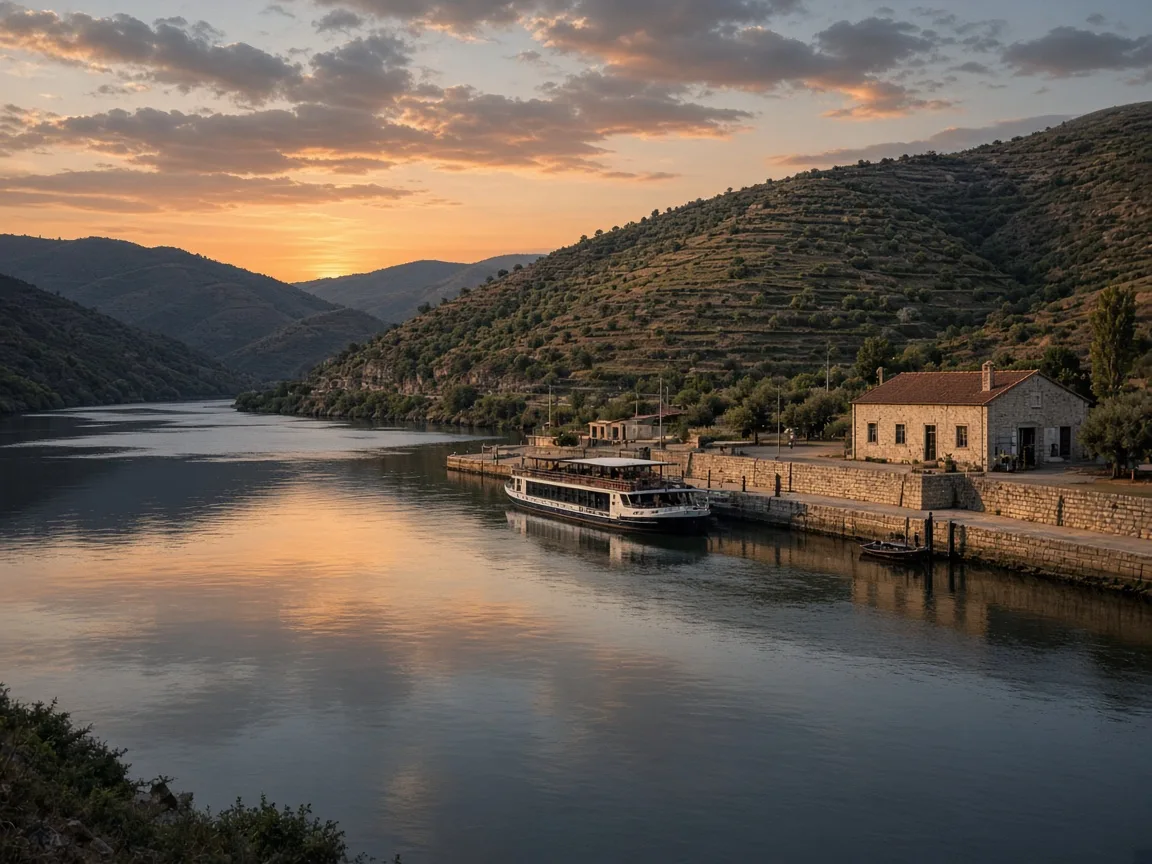
A small village at the end of the navigable Douro, known as the gateway to the Côa Valley's prehistoric rock art, a UNESCO World Heritage site, and a turning point on several Douro itineraries.
The Côa engravings were only rediscovered in the late 1980s during the building of a dam, and the fight to save them from flooding made the valley famous across Portugal.
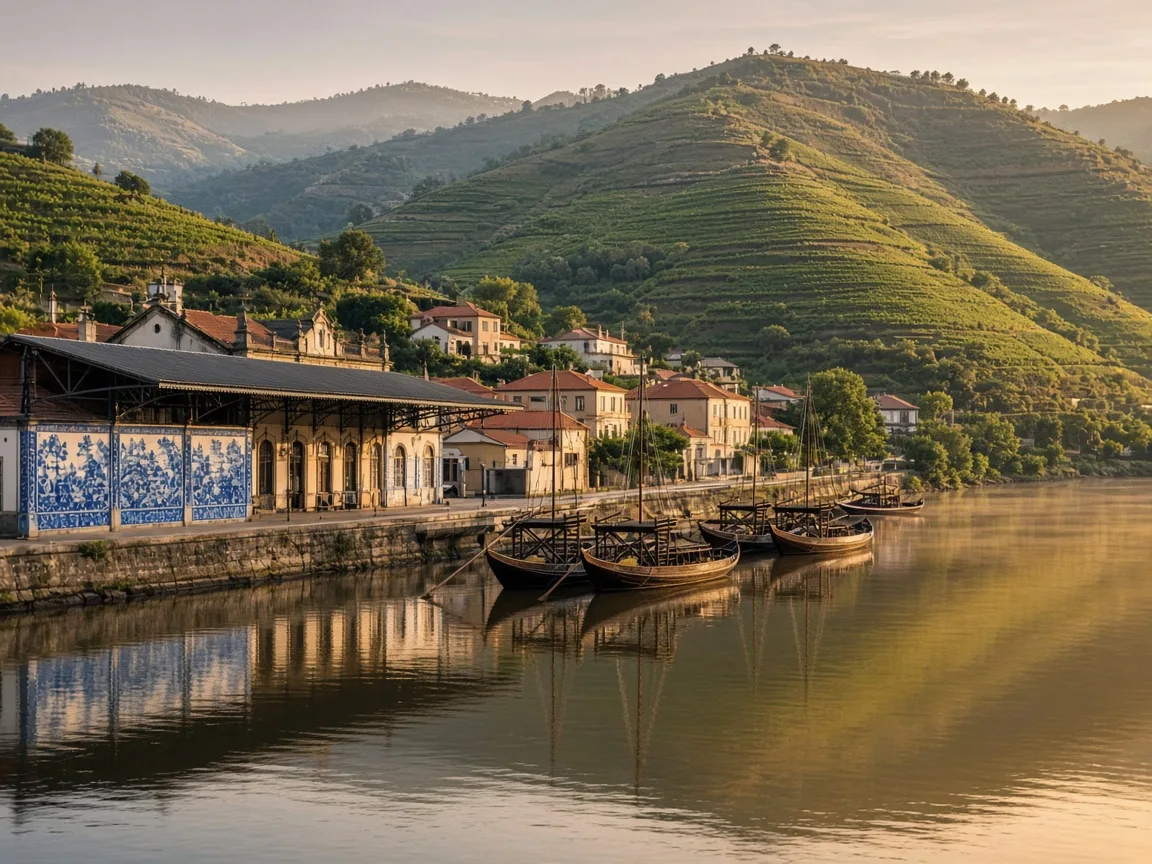
A tiny port town in the heart of the Douro Valley, famous for its azulejo-tiled railway station and for being the gateway to some of the most celebrated port wine quintas in the world.
Rabelo boats, the flat-bottomed craft that once carried port barrels downriver to Porto, still line the quay, kept alive in tribute to the trade that built the valley.
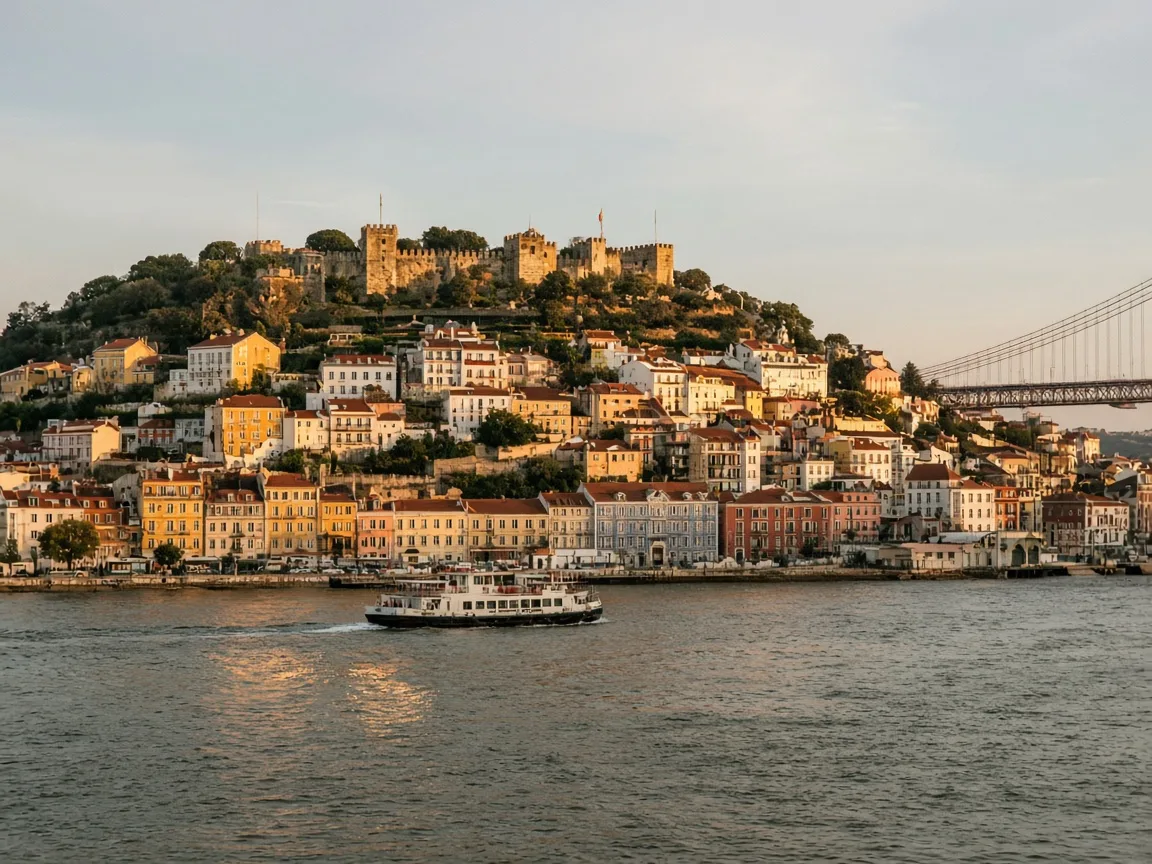
Portugal's hilly capital on the Tagus, the starting point for many Douro cruises that pair the river voyage with a few days in the city of trams, tiled facades, and fado.
The pastel de nata was created by monks of the Jerónimos Monastery in the 1800s, and the original recipe is still guarded by the Pastéis de Belém bakery.
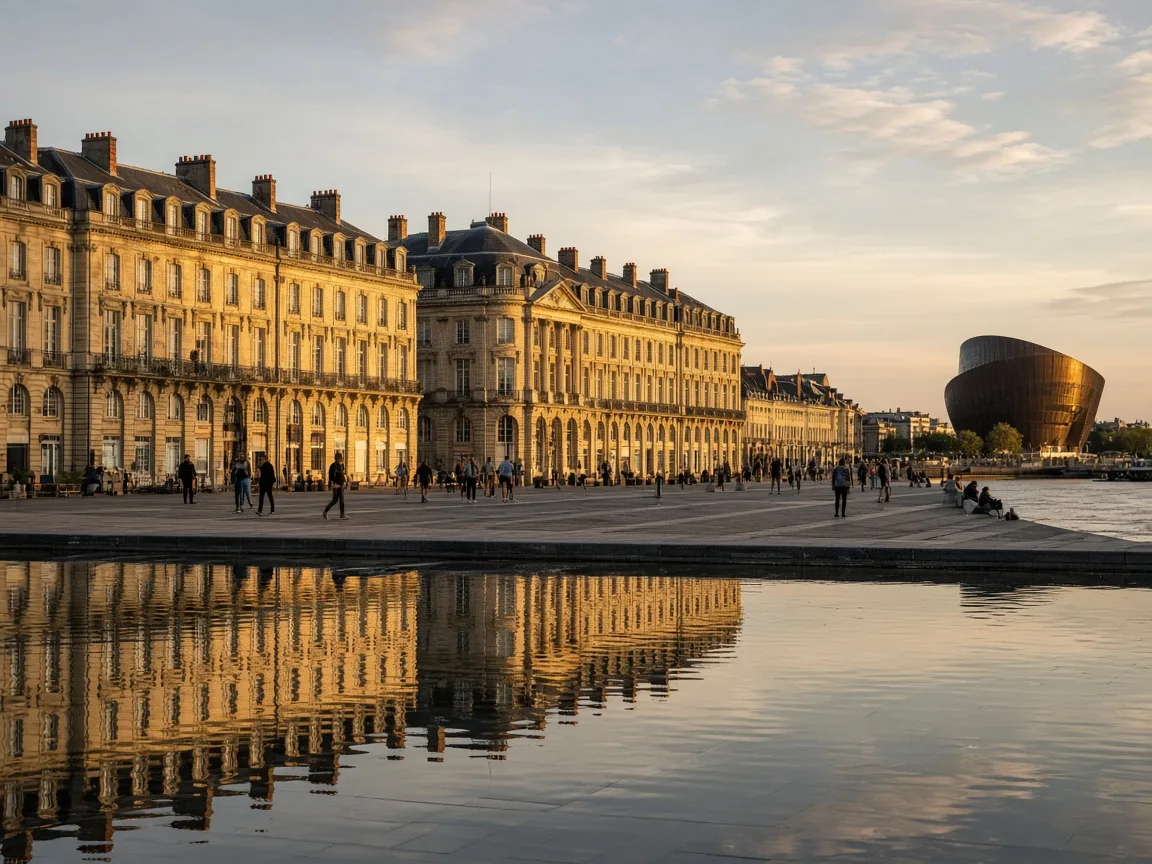
The elegant wine capital of southwest France on the Garonne, whose 18th-century stone quays, vast wine culture, and UNESCO-listed center make it the home port of Bordeaux and Gironde river cruises.
The city was nicknamed 'la Belle Endormie' (the sleeping beauty) after centuries of neglect before a major restoration, and its 18th-century facades were cleaned to reveal the pale golden stone beneath the grime.
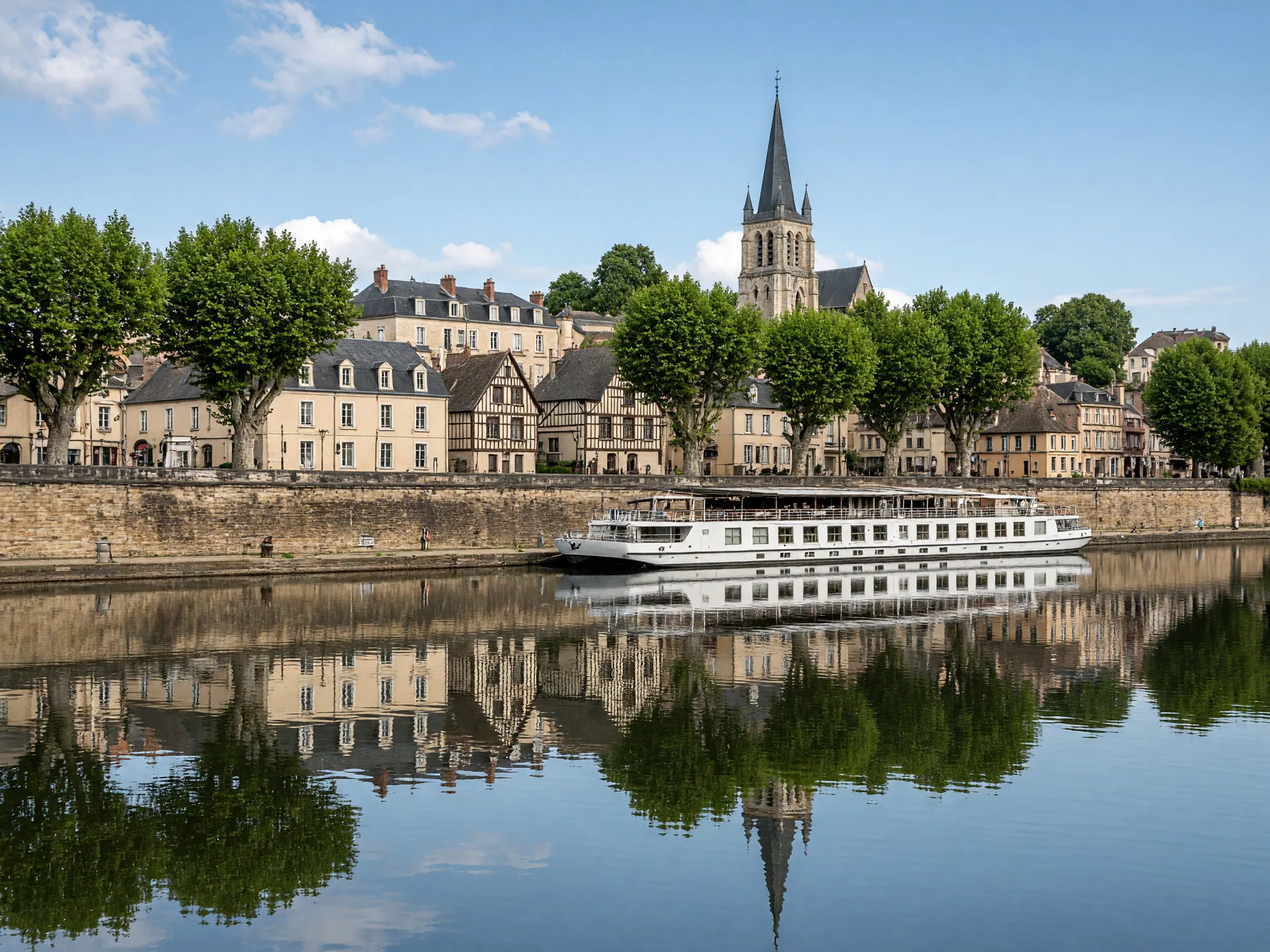
A riverside market town on the Dordogne and the usual gateway to Saint-Émilion, with a medieval center and a broad stone quay where Bordeaux cruise ships moor.
The wines of Saint-Émilion and Pomerol were traditionally shipped from Libourne's quays, and the town's fortunes have been tied to the wine trade since the Middle Ages.
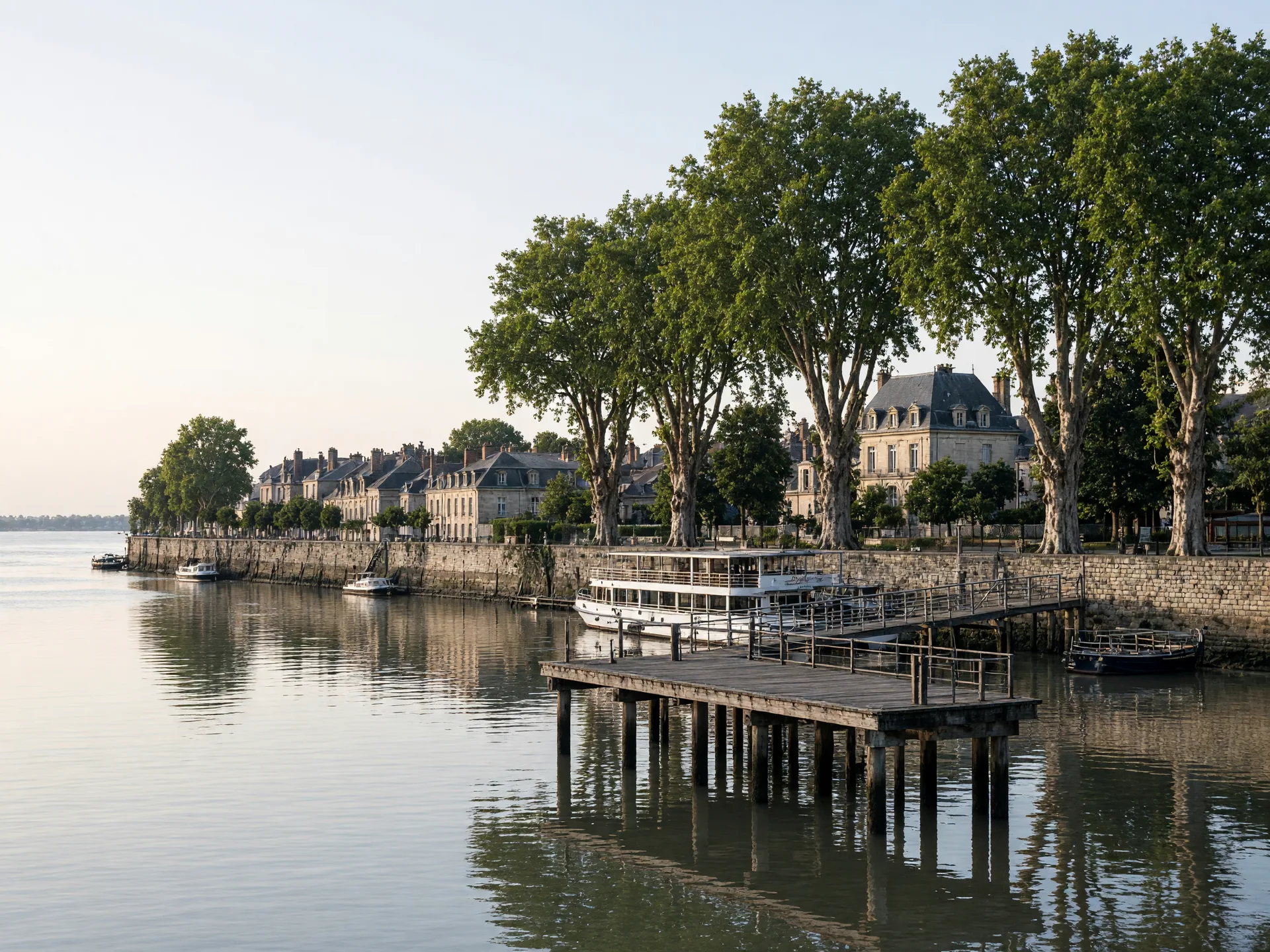
A port town on the Gironde estuary in the heart of the Médoc wine region, where some of the world's most famous classified-growth châteaux line the river road.
Three of the five 'first growth' châteaux of the 1855 classification are based in or around Pauillac, giving this small town an outsized place in wine history.
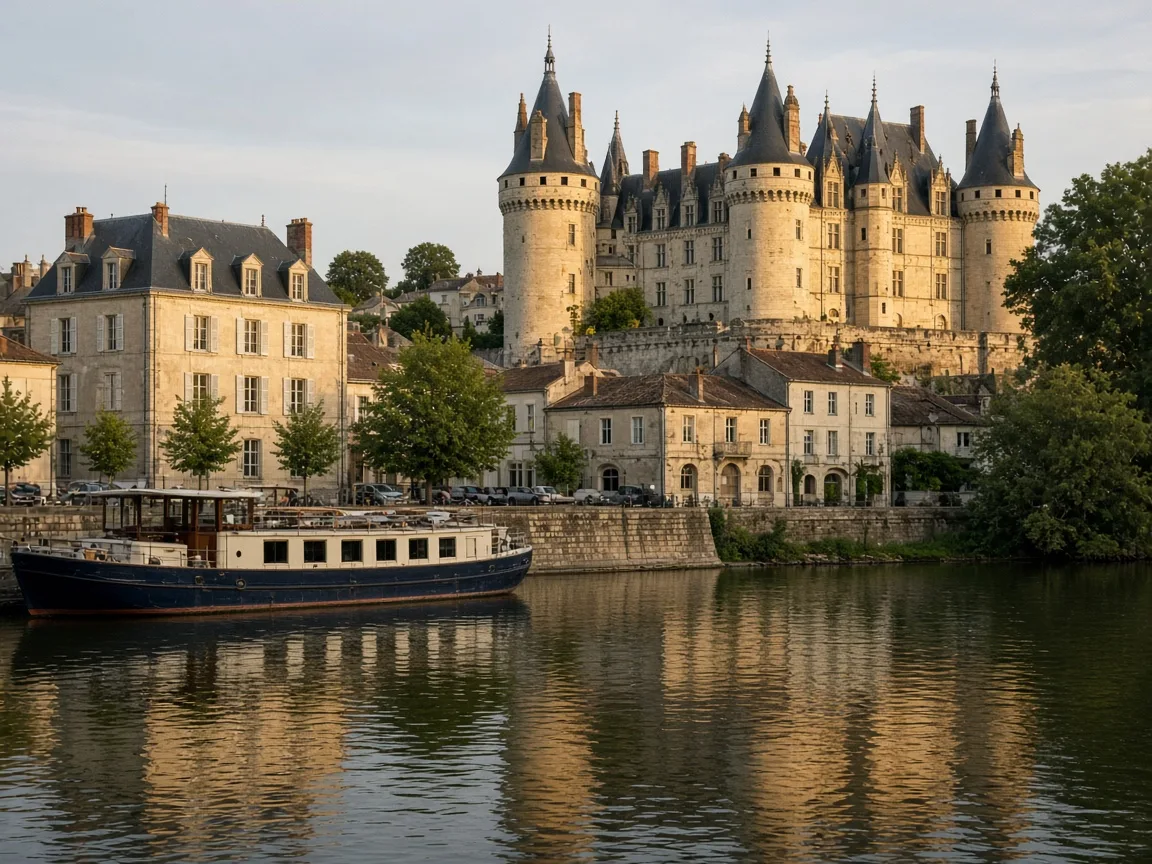
A small town on the Garonne south of Bordeaux whose riverside skyline is crowned by a turreted Renaissance château, the Château des Ducs d'Épernon.
The American car brand Cadillac was named for the same French explorer who founded Detroit, and the town and the car share only a name, not a connection to the vineyards.
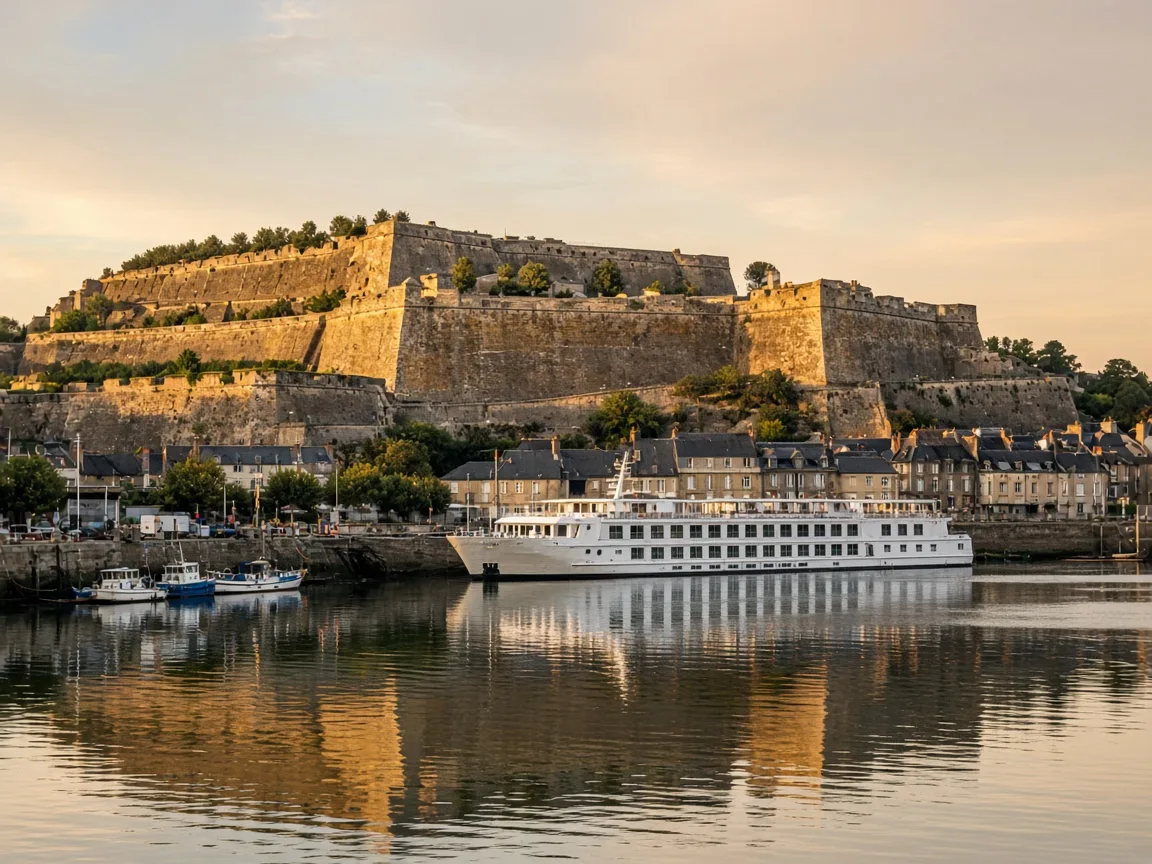
A fortified town on the Gironde estuary crowned by one of Vauban's greatest citadels, a UNESCO-listed star fortress that looks across the water to the Médoc.
Within the citadel walls lie the ruins of a medieval castle and the resting place associated with the legendary Frankish queen of the 6th century, making this a fortress layered with centuries of history.
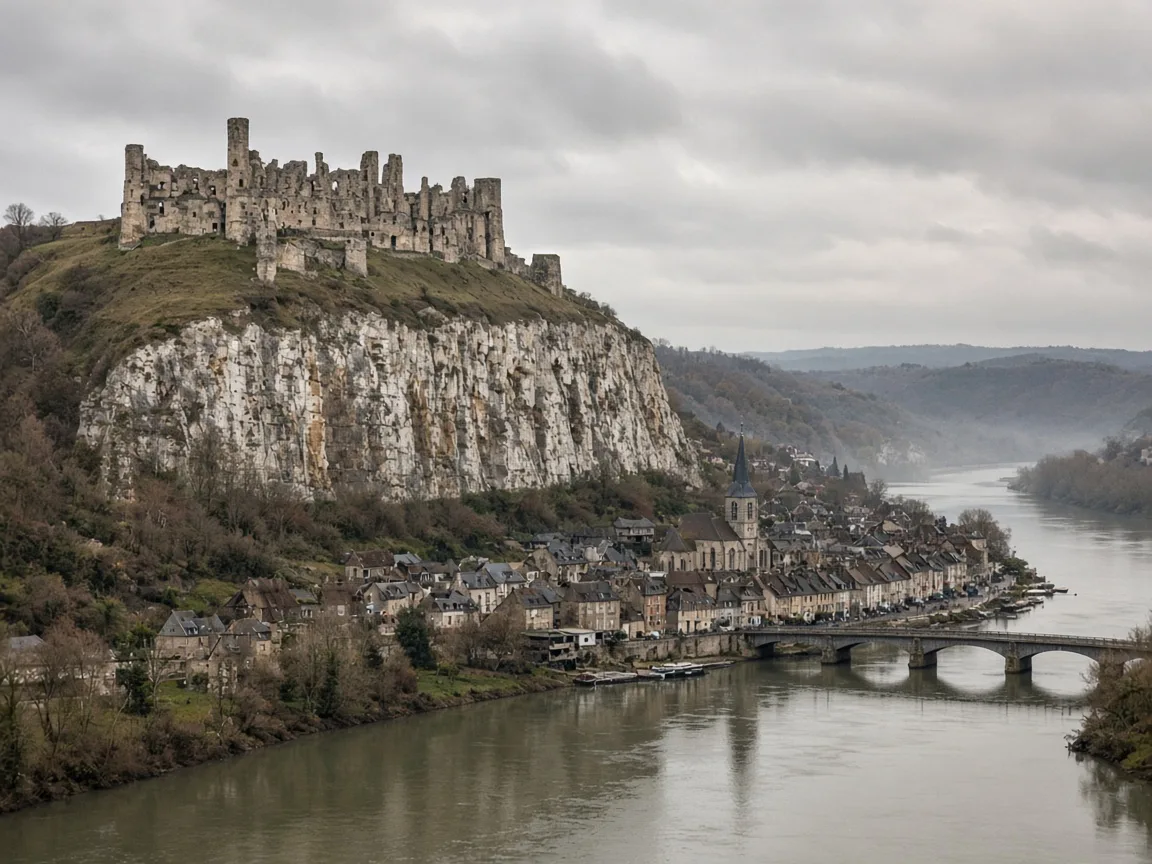
Two medieval towns fused into one on a great bend of the Seine, watched over by the ruins of Château Gaillard, the cliff-top fortress Richard the Lionheart built in just two years.
Legend says Richard the Lionheart boasted he could hold Château Gaillard even if its walls were made of butter; the castle's concentric design made it one of the most advanced fortresses of its age.
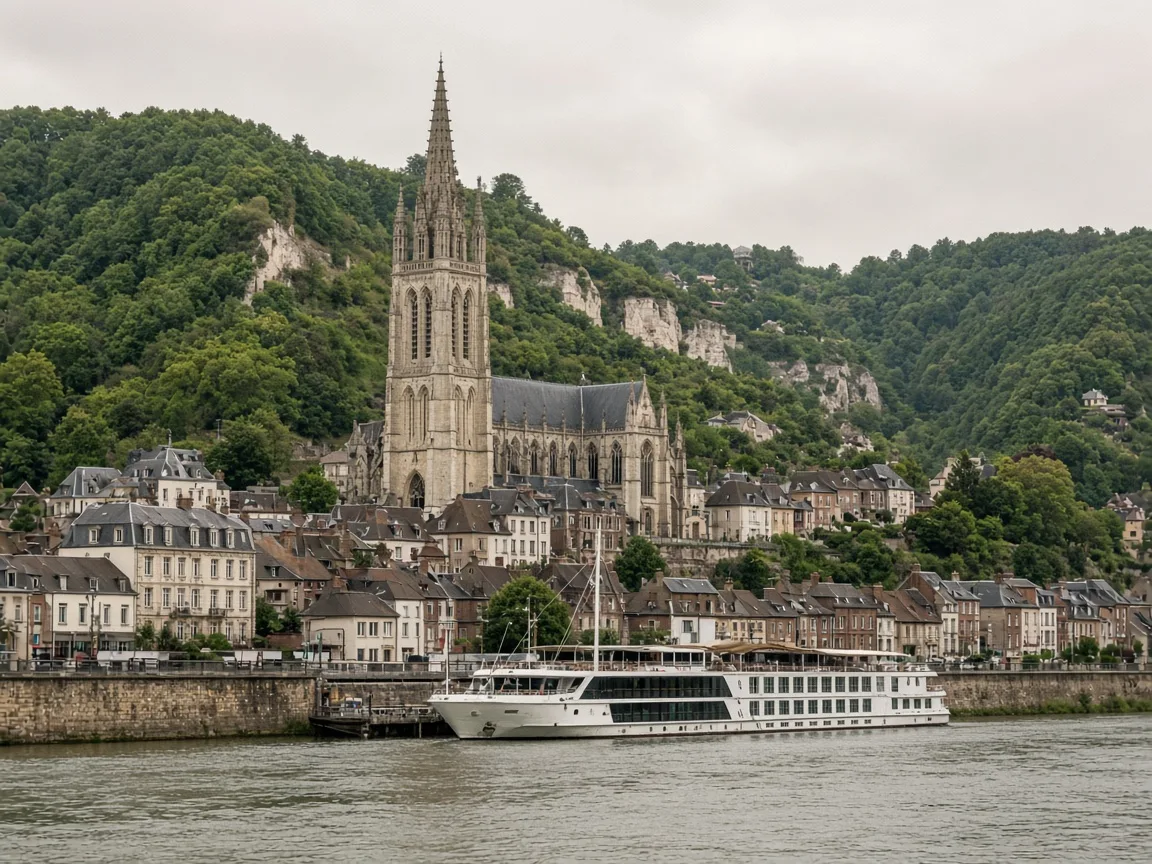
A historic town on the lower Seine in Normandy, where the river is wide and tidal, and where Seine cruises stop for the beaches of Normandy and the region's apple country.
The church's enormous flamboyant tower was once crowned by a famous gilded crown that was later lost, and the church remains one of the finest examples of flamboyant Gothic in France.
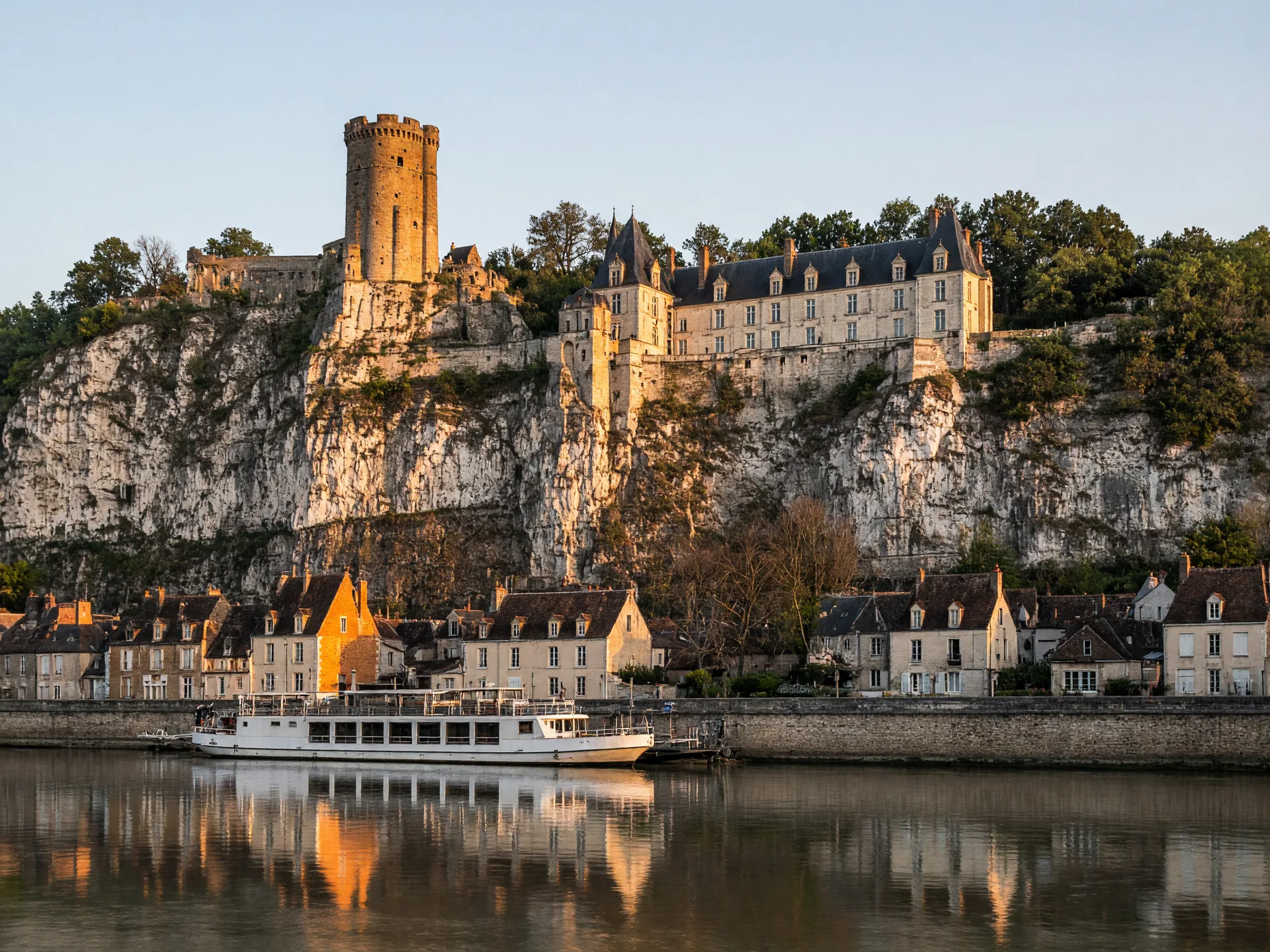
A dramatic village on the Seine beneath a chalk cliff, crowned by a medieval château whose keep is carved into the rock, a picturesque stop between Paris and Normandy.
The village's château was home to the Duke of La Rochefoucauld, whose family still owns it, and the property was once used as a headquarters during World War II.
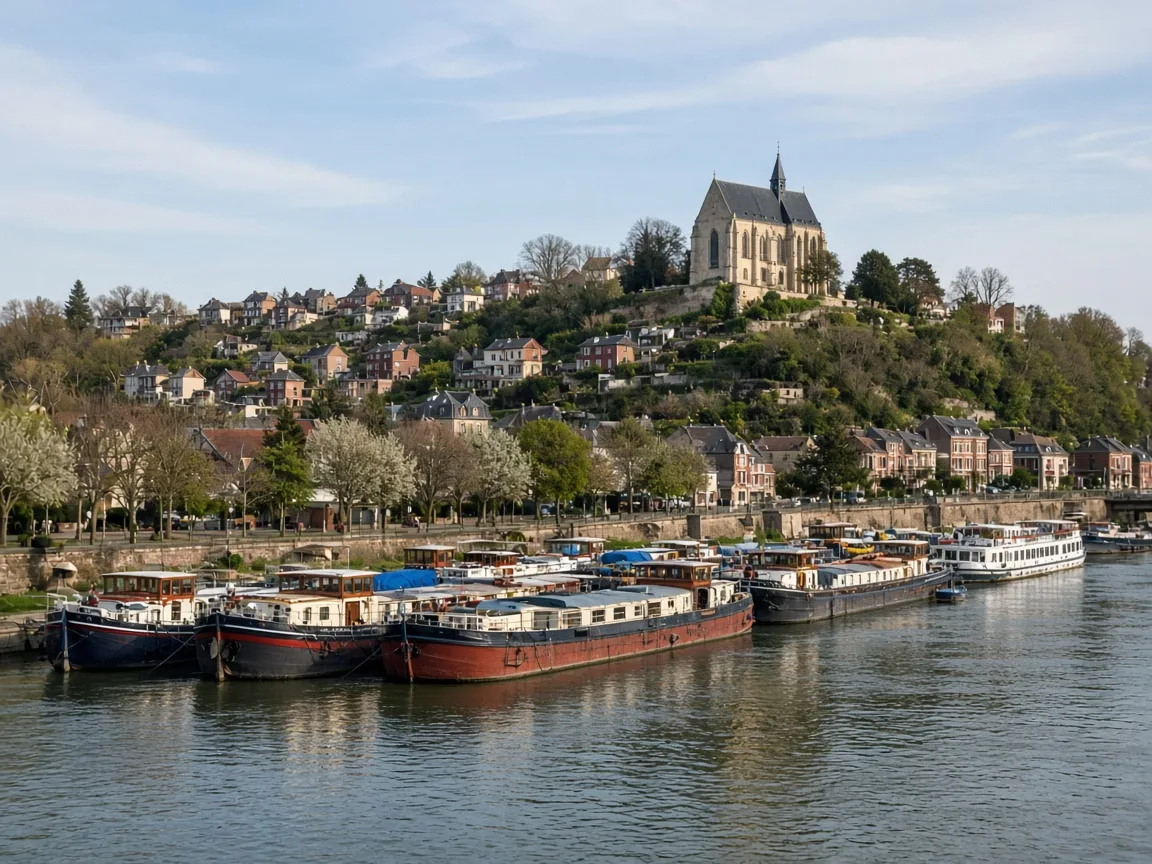
A town at the confluence of the Seine and the Oise, known as the capital of French inland navigation, where barges and river cruises share the quays and the water.
The town's hilltop chapel, the Chapelle de Saint-Honorine, overlooks the confluence and has long served as a landmark for the bargemen navigating the two rivers.
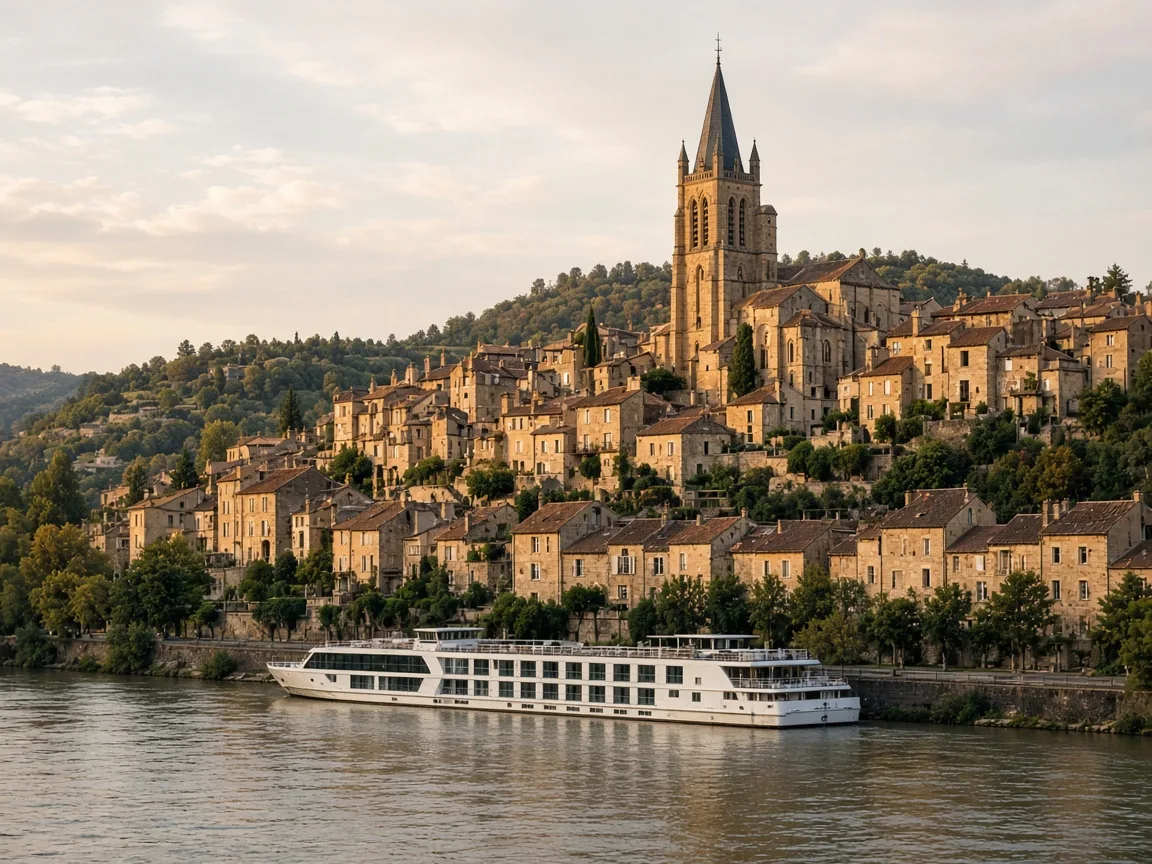
A medieval bishop's town climbing a limestone hill above the Rhône, where narrow lanes of Gothic townhouses lead up to a cathedral that has watched the river for centuries.
Viviers holds the Plus Beaux Détours de France label, a French association that honors off-the-beaten-path towns with genuine heritage, and the old town has kept its medieval street plan almost intact.
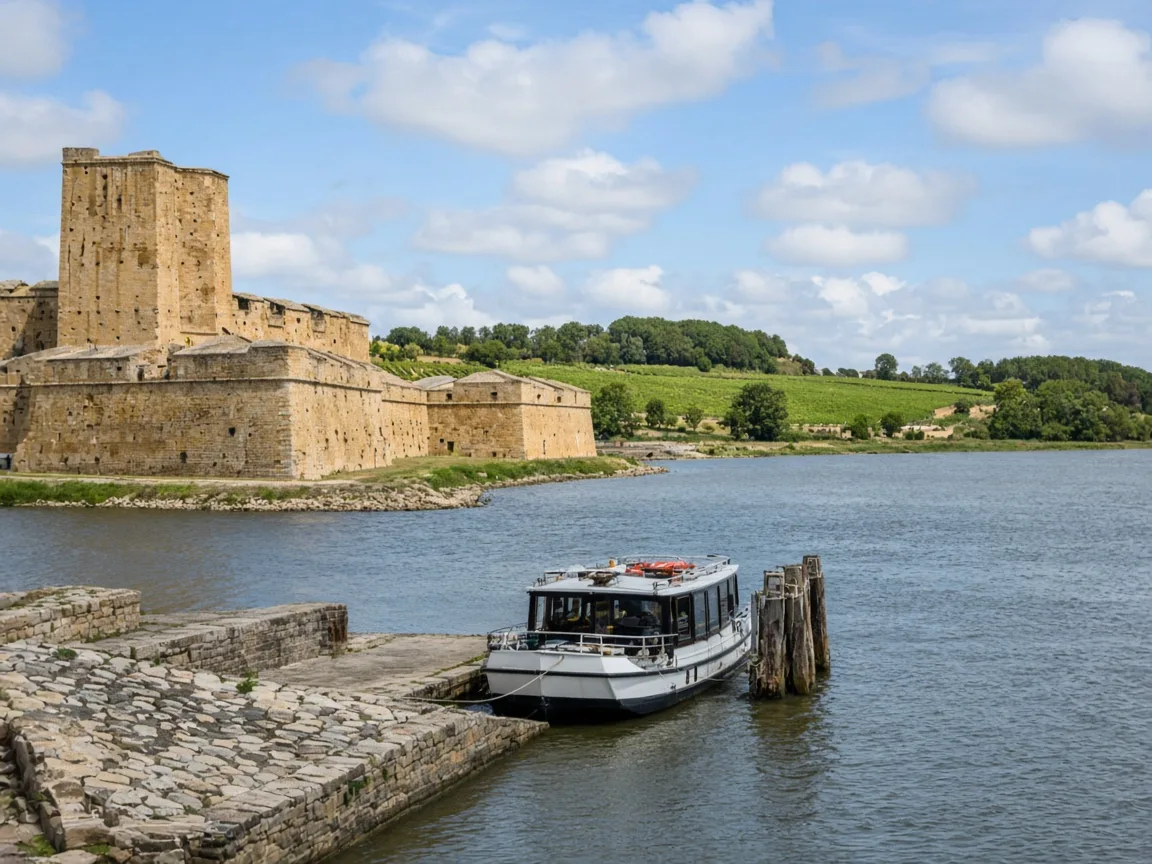
A 17th-century Vauban fortress on the Garonne at Cussac-Fort-Médoc, built to guard the river approach to Bordeaux and today a quiet riverside stop on Gironde cruises.
The fort was part of a trio of fortifications that controlled the river: Fort Médoc, the citadel of Blaye, and Fort Paté on an island in the estuary, arranged so that no ship could pass unremarked.
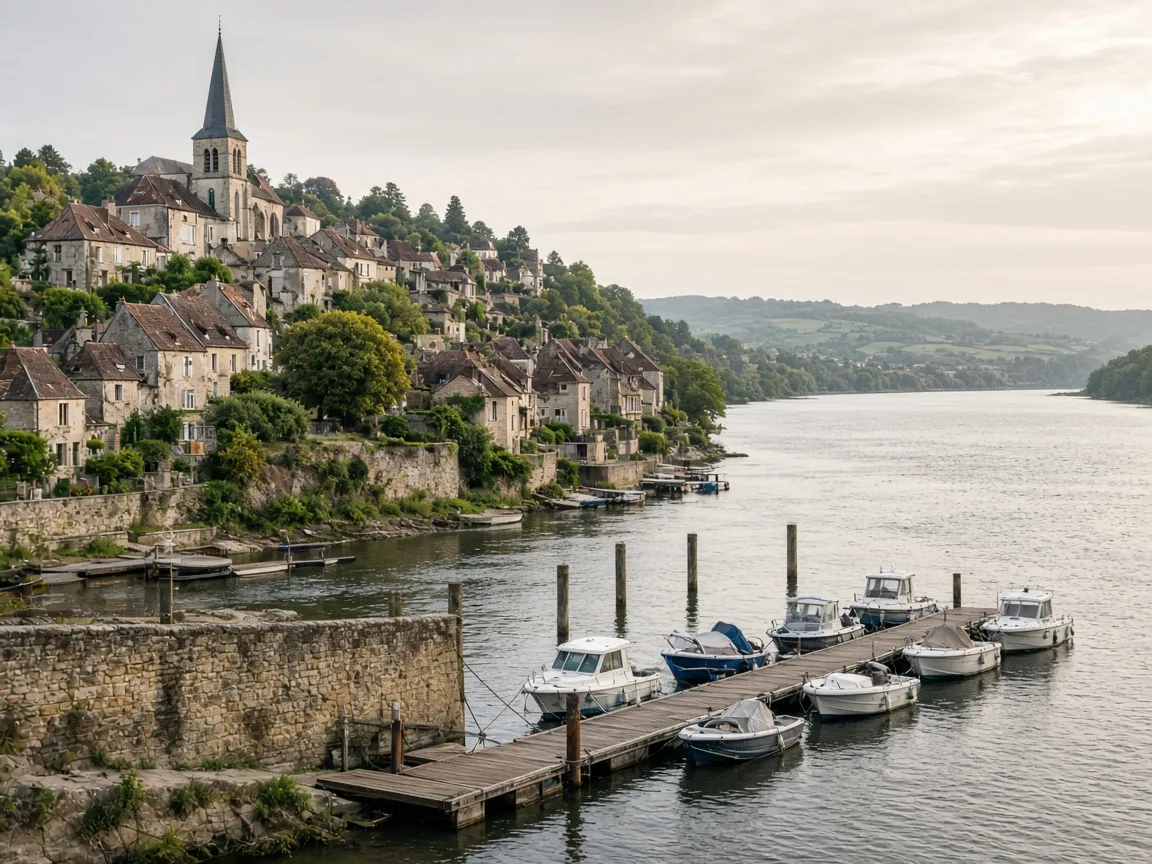
A hillside town where the Dordogne widens into the Gironde estuary, its stone houses and church spire rising above a small quay that sees river cruise ships and oceangoing vessels alike.
Ships once queued at Bourg to load wine, and the town's old warehouses along the quay are a reminder of a busy trade that has largely moved downstream.