
Celebrity Compass
Home port: Budapest
- Guests
- 172
- Staterooms
- Not published
- Length
- Not published
- Year built
- 2027
Inaugural sailing on the Rhine and the Danube in Celebrity's 2027 season.
European river cruise line guide
Celebrity's first river ships arrive in the inaugural 2027 season on the Rhine and Danube.
Celebrity River Cruises is the newest entrant on Europe's rivers, launching its inaugural 2027 season with two purpose-built ships, Celebrity Compass and Celebrity Seeker, each carrying 172 guests on seven-night Rhine and Danube voyages. The debut program opens with a 33-sailing season of Rhine and Danube itineraries, including Christmas-market and New Year's voyages, part of a planned fleet of 20 river ships by 2031.
Celebrity River Cruises launches its inaugural 2027 season with 33 seven-night sailings on the Rhine and the Danube aboard Celebrity Compass and Celebrity Seeker, including Christmas-market and New Year's voyages, with a planned fleet of 20 river ships by 2031.
The fleet
Every ship is verified against the line's own published programs and the European river map. Figures appear only when verified; unverified stats show as 'Not published'.
Home ports: Budapest, Vilshofen.
Home port: Budapest
Inaugural sailing on the Rhine and the Danube in Celebrity's 2027 season.
Home port: Vilshofen
Inaugural sailing on the Rhine and the Danube in the 2027 season.
Routes
Here are the port calls in order for each itinerary, home port first, with the nights, the official source, and a route map framed to that itinerary's ports.
7 nights · Budapest
Route in order
Port calls in sailing order, home port first.
Ships on this route: Celebrity Compass
Route map
Route map on real cartography, framed to this itinerary's ports, with the ports numbered in sailing order and direction arrowheads.
One-way from Budapest to Vilshofen an der Donau
Source: Celebrity Cruises, The Danube: Budapest & Vienna itinerary (celebritycruises.com)
7 nights · Vilshofen
Route in order
Port calls in sailing order, home port first.
Ships on this route: Celebrity Compass, Celebrity Seeker
Route map
Route map on real cartography, framed to this itinerary's ports, with the ports numbered in sailing order and direction arrowheads.
One-way from Vilshofen an der Donau to Budapest
Source: Celebrity Cruises, The Danube: Vienna & Budapest itinerary (celebritycruises.com)
7 nights · Budapest
Route in order
Port calls in sailing order, home port first.
Ships on this route: Celebrity Seeker
Route map
Route map on real cartography, framed to this itinerary's ports, with the ports numbered in sailing order and direction arrowheads.
One-way from Budapest to Nuremberg
Source: Celebrity Cruises, Danube Christmas Markets itinerary (celebritycruises.com)
7 nights · Basel
Route in order
Port calls in sailing order, home port first.
Ships on this route: Celebrity Seeker
Route map
Route map on real cartography, framed to this itinerary's ports, with the ports numbered in sailing order and direction arrowheads.
One-way from Basel to Amsterdam
Source: Celebrity Cruises, The Rhine: Basel to Amsterdam New Year's itinerary (celebritycruises.com)
7 nights · Nuremberg
Route in order
Port calls in sailing order, home port first.
Ships on this route: Celebrity Compass
Route map
Route map on real cartography, framed to this itinerary's ports, with the ports numbered in sailing order and direction arrowheads.
One-way from Nuremberg to Amsterdam
Source: Celebrity Cruises, The Rhine: Nuremberg to Amsterdam New Year's itinerary (celebritycruises.com)
7 nights · Nuremberg
Route in order
Port calls in sailing order, home port first.
Ships on this route: Celebrity Seeker
Route map
Route map on real cartography, framed to this itinerary's ports, with the ports numbered in sailing order and direction arrowheads.
One-way from Nuremberg to Basel
Source: Celebrity Cruises, 2027 holiday sailings on the Rhine (celebritycruises.com)
The itineraries are subject to change at the discretion of the Cruise Company.
The lists of ships and itineraries are not complete and are only illustrative. Reach out to us for a personal no-charge consultation.
Personal travel planning
This guide gives you the ideas; the best vacation starts with a conversation. Tell us who is traveling, when you would like to go, and how you prefer to travel, and we will shape every detail around you.
Tell us who is traveling, when you would like to sail, and which river or ship appeals most. A Destination Engineer will compare routes, ships and cabins with you, at no cost and with no obligation to book.
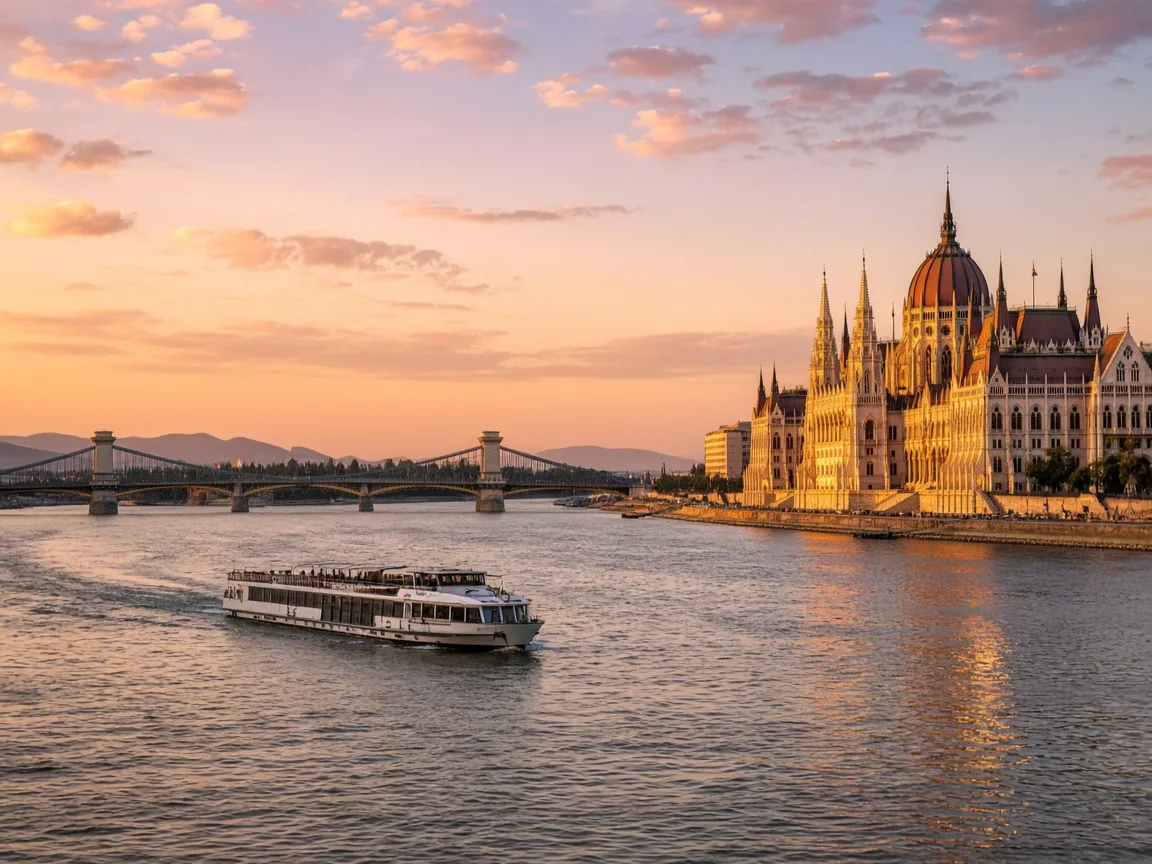
Hungary's magnificent capital on the Danube, where the river divides hilly Buda from flat Pest and the city's parliament, bridges, and thermal baths make it the grand finale of most Danube cruises.
The Parliament building is designed to be exactly symmetric, with the great central hall and dome mirrored by identical wings, yet it is so huge that it contains 691 rooms and over 20 kilometers of stairs.
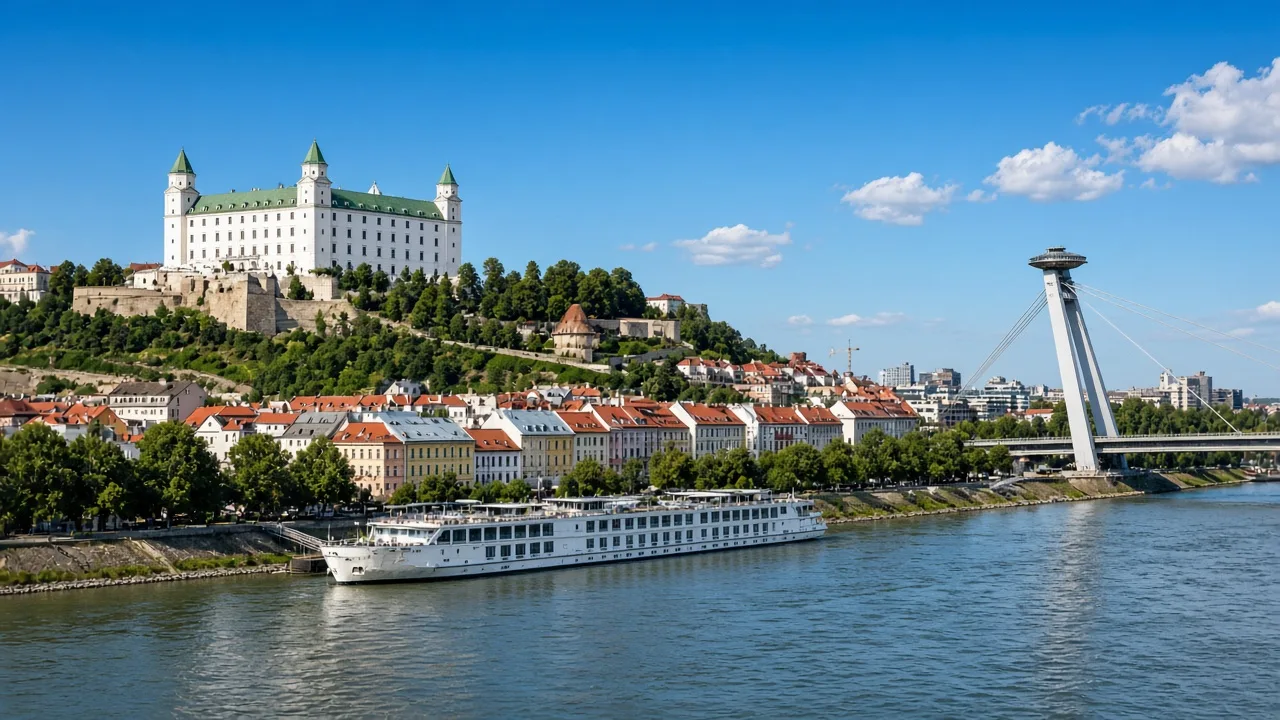
The Slovak capital, a compact old town on the Danube between Vienna and Budapest, with a hilltop castle and a laid-back café life on the river.
Because the city sits so close to Austria, on a clear day you can see Vienna's hills from Bratislava Castle, and the two capitals are only about 60 kilometers apart.
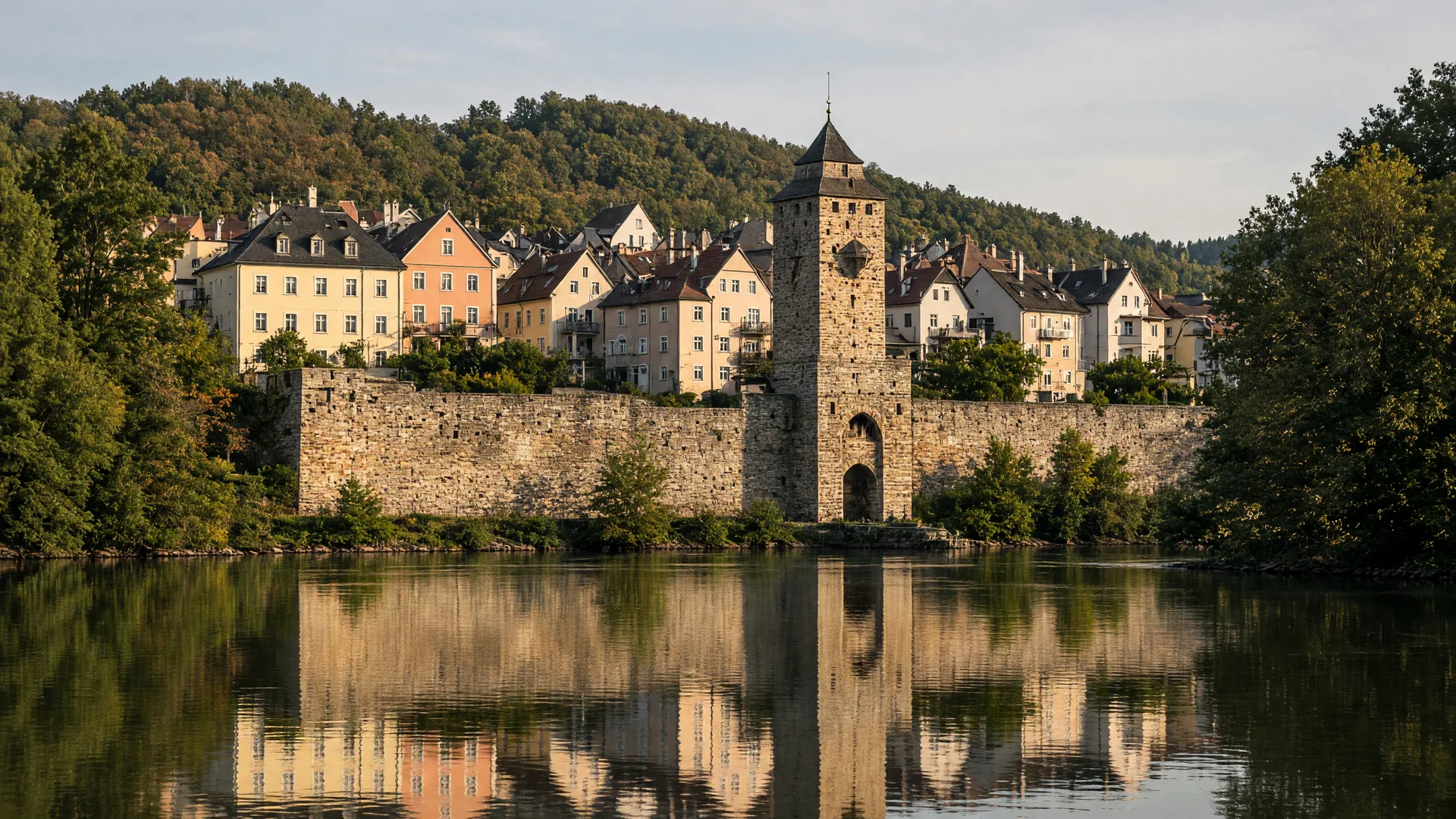
A medieval walled town on the Danube near the Slovak border, where the towering 13th-century Wienertor gate, Roman-era foundations, and the castle hill above the river mark the eastern gateway to Austria's wine region.
Hainburg's castle hill was a medieval refuge and lookout: the fortress above the town watched the Danube's narrow gate, the closest point between two mountain ranges on the route between Vienna and Budapest.
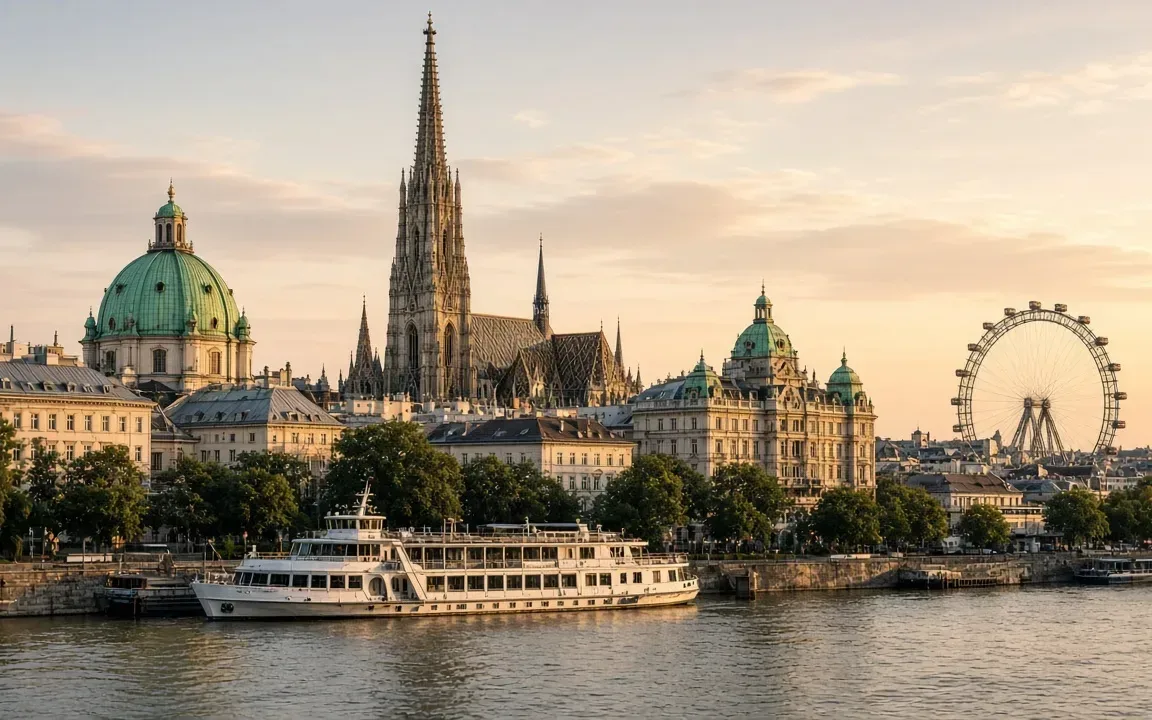
The imperial capital of the Habsburgs and the grandest city on the Danube, where river ships dock within walking distance of palaces, coffee houses, and concert halls.
The Danube that flows past modern Vienna is not the river the Romans knew: the city redirected and regulated the river from the 1870s to control floods, leaving the old river as the Danube Canal through the city center.
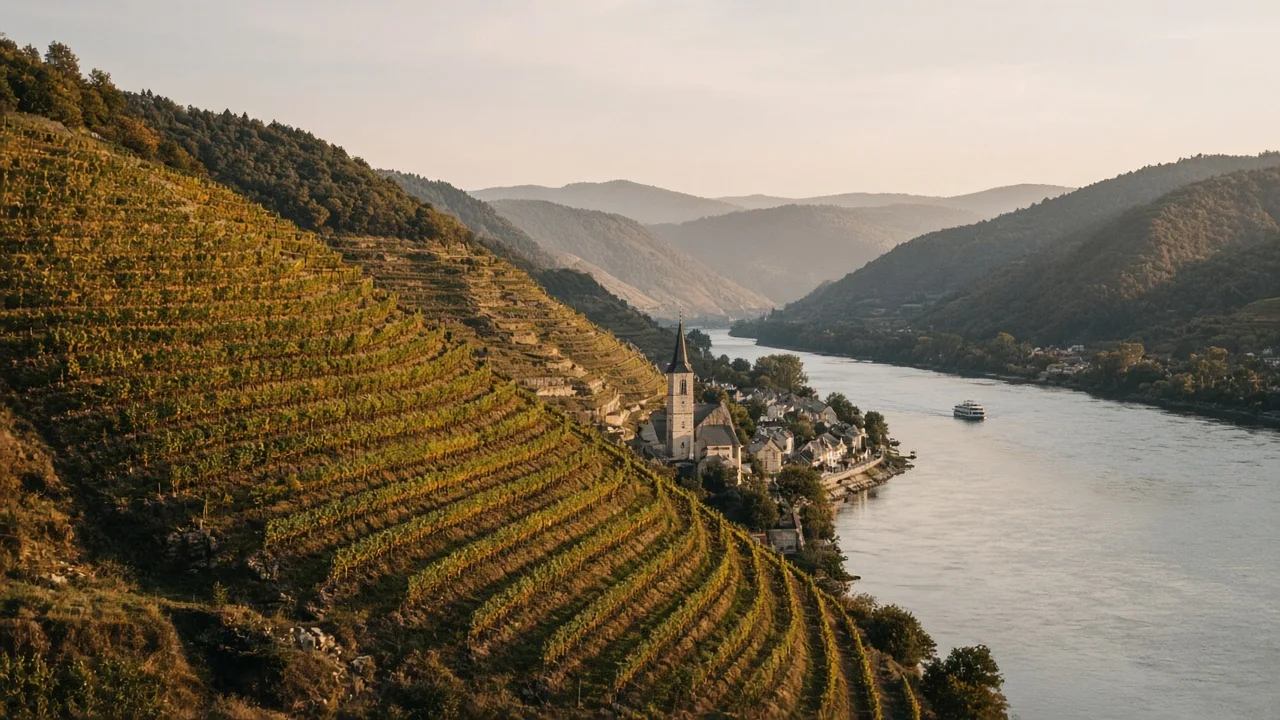
The UNESCO-listed stretch of the Danube between Melk and Krems, where ships moor at small villages such as Emmersdorf and passengers step out into terraced vineyards, apricot orchards, and the blue-towered villages that anchor the most scenic cruising miles in Europe.
The valley's wine terraces slim down to a single steep slope in places, so narrow that some villages have no room for a parallel road between the river and the hillside vines.
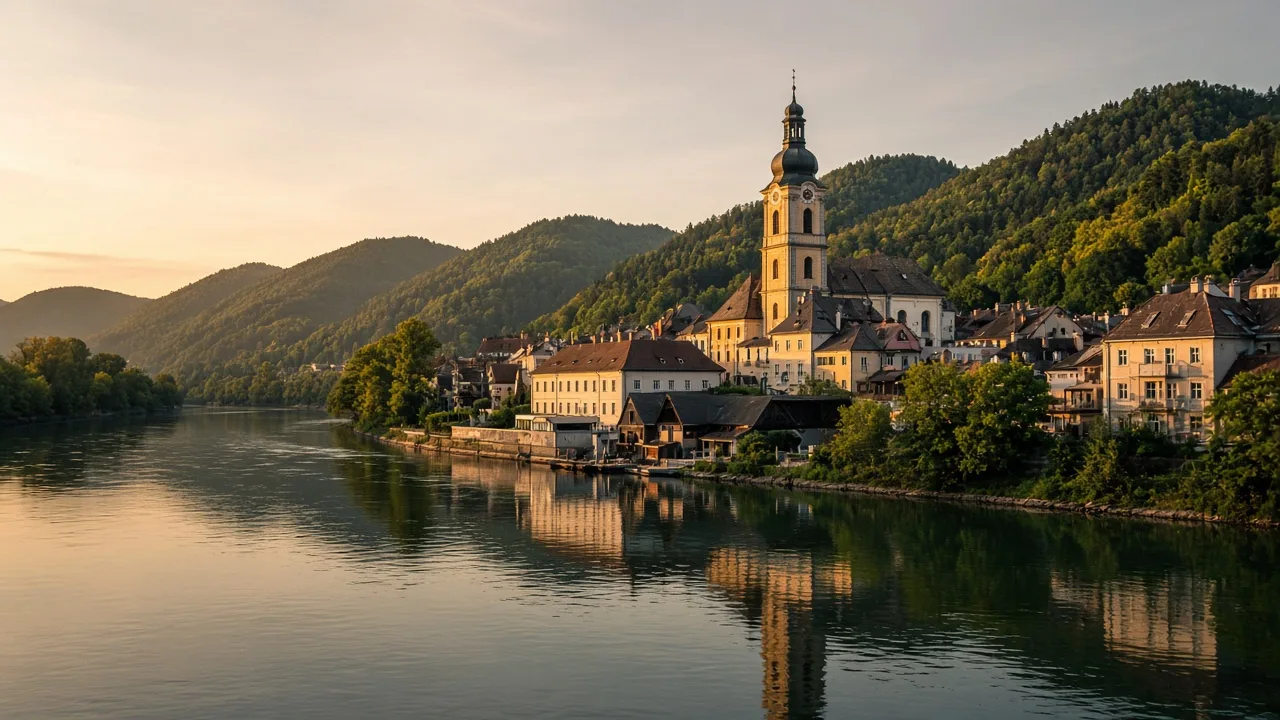
The last Austrian town on the Danube before Germany, a quiet baroque riverside village dominated by the hilltop abbey of Stift Engelszell, Austria's only Trappist monastery.
Monks have lived at Engelszell for centuries, but the abbey's beer is recent: permission from the International Trappist Association was needed for the monks to brew again after the monastery was refounded in the 1920s.
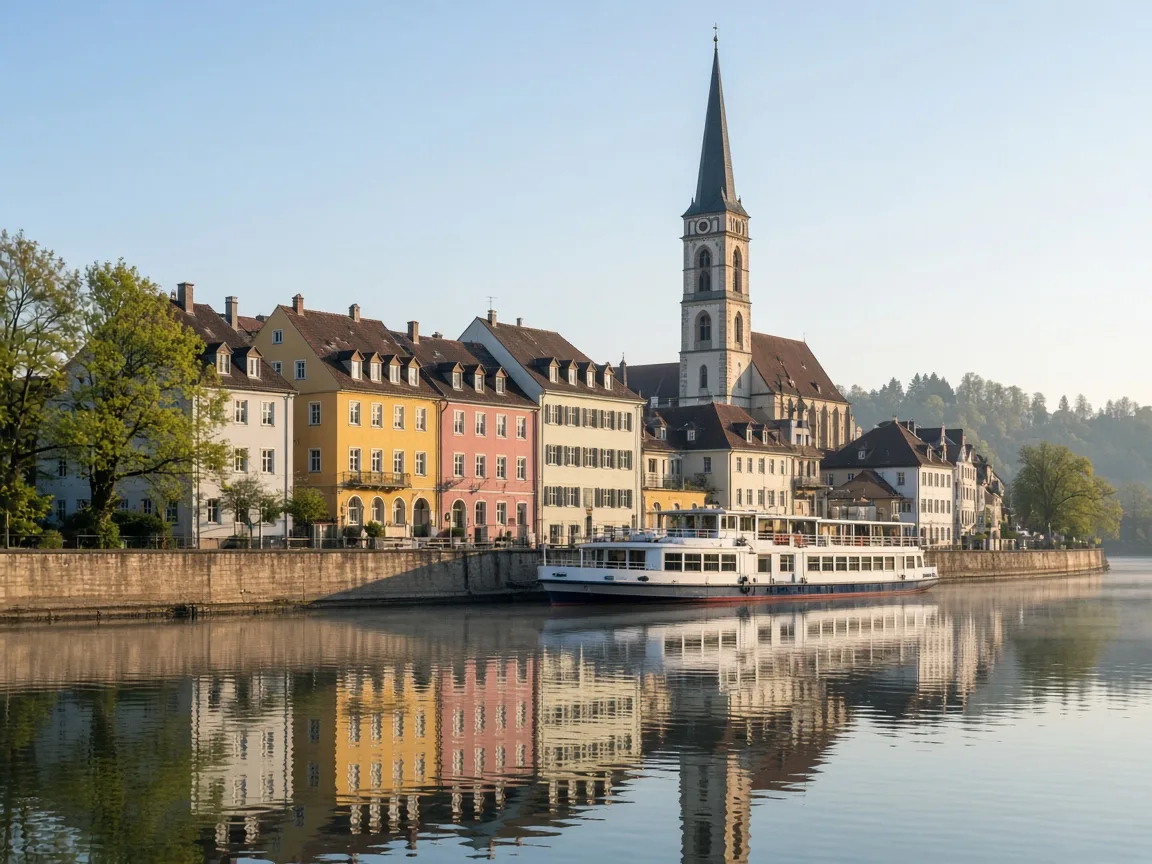
A small Bavarian town at the meeting of the Vils and the Danube, known to river cruisers as a calm embarkation port with an old town of gabled houses and a long riverside quay.
River captains call Vilshofen a turning-basin port: many Danube itineraries that begin in Passau use the town's wider river bend to turn the ship around before heading downstream.
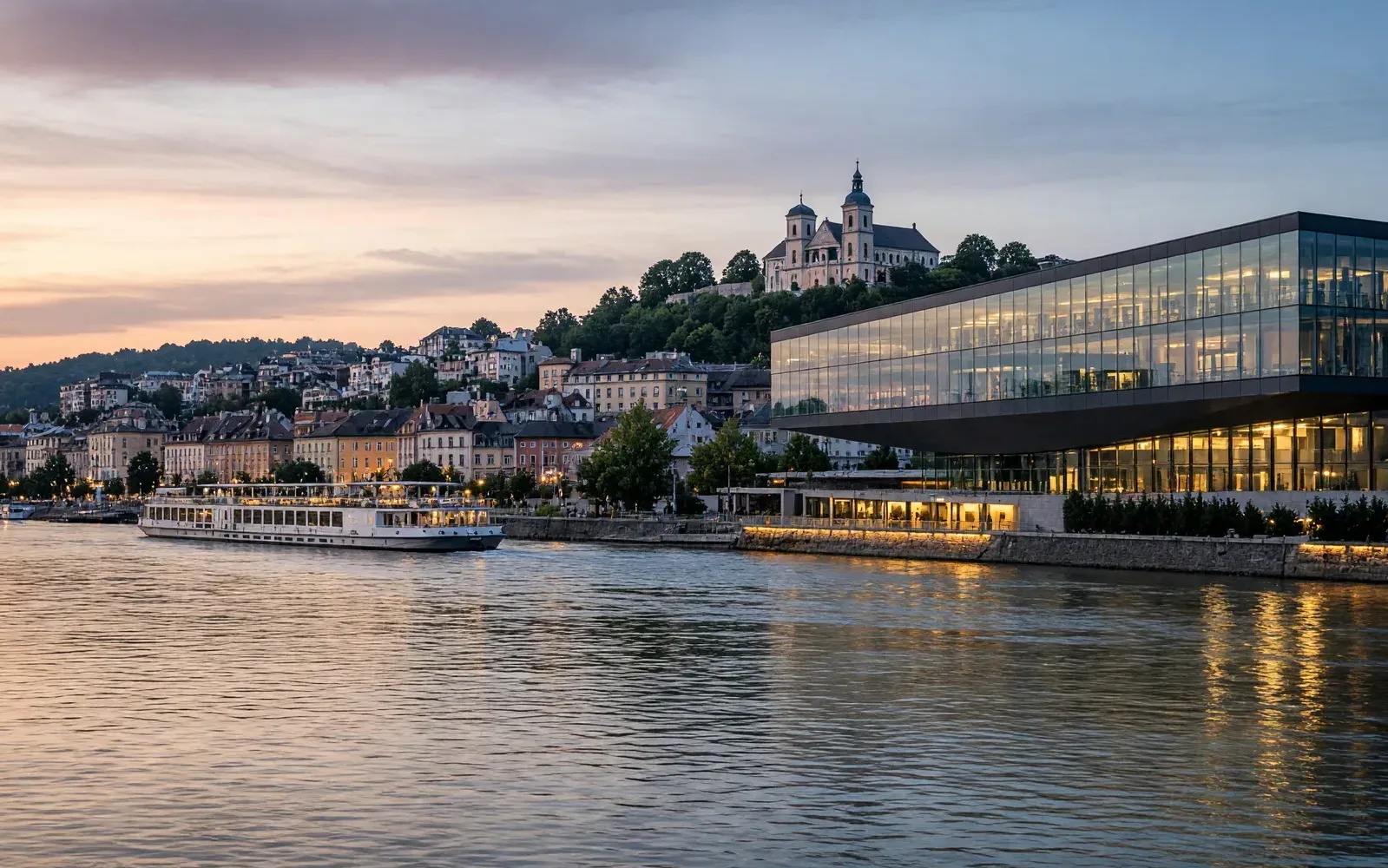
Austria's third city, on the Danube midway between Passau and Vienna, a mix of baroque old town and modern cultural landmarks that most Danube cruises call at.
The Linzer Torte's recipe is documented back to 1653, making it the oldest known cake recipe in the world, still made to that formula today.
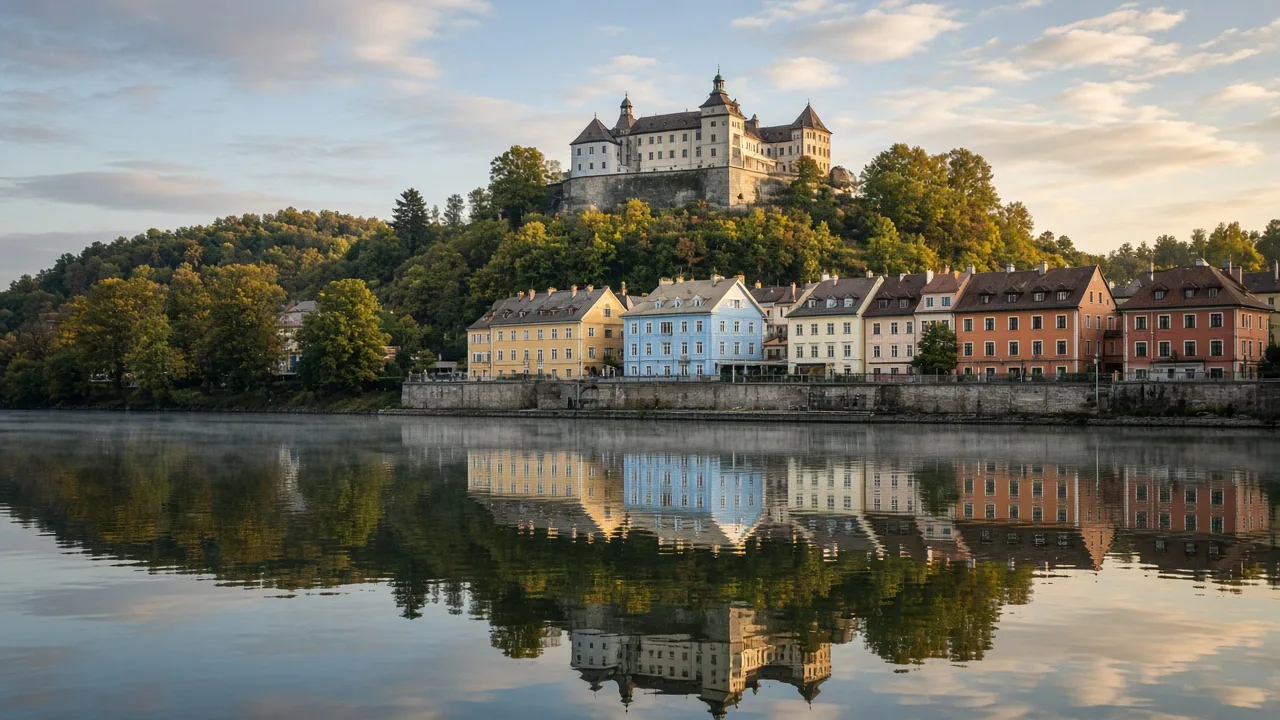
A picture-perfect small town in the Strudengau, the narrow gorge where the Danube squeezes past the oldest residential castle in Austria and a lovingly preserved baroque old town.
Before the river was cleared in the 19th century, the whirlpools of the Strudengau, nicknamed the 'Danube Strudel', were so feared that boats paid local pilots to guide them past the gorge.
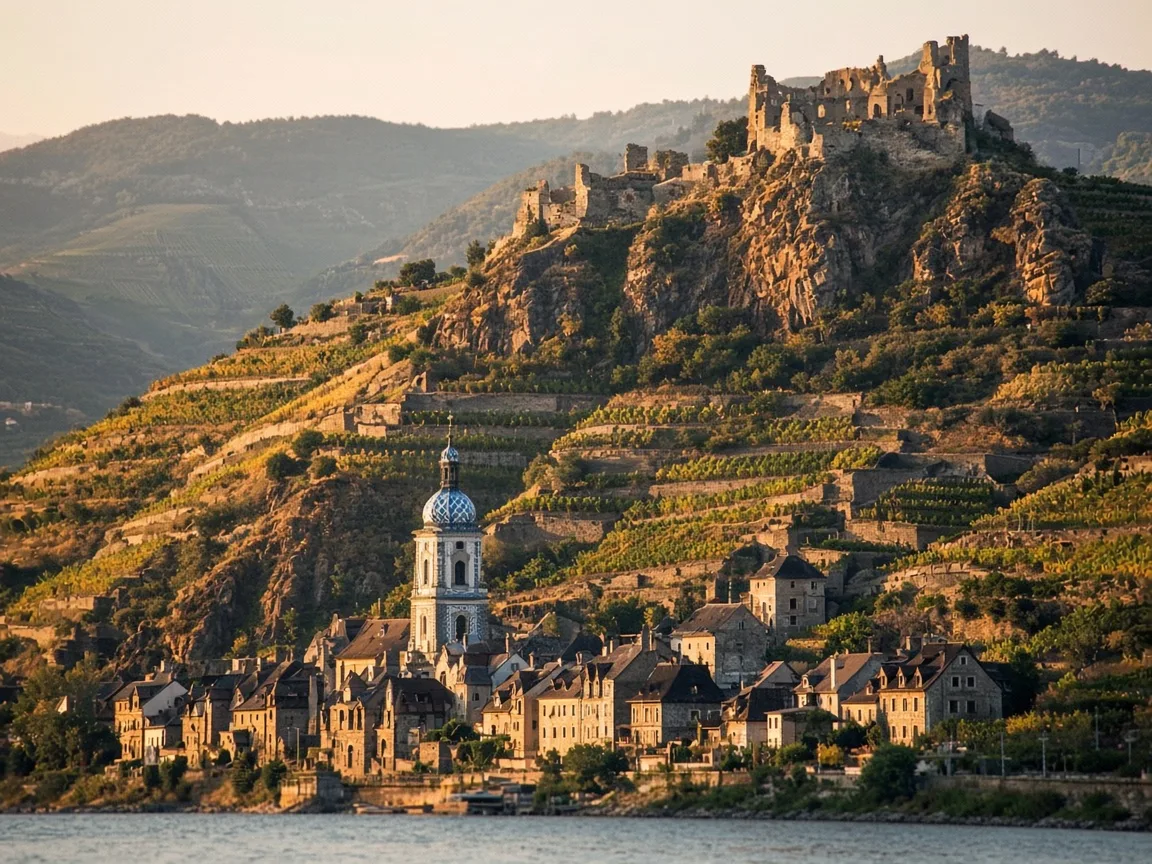
The picture-postcard village of the Wachau Valley, famous for its blue-and-white abbey tower and for the castle ruins where Richard the Lionheart was held prisoner.
According to legend, Richard the Lionheart was found at Dürnstein when his loyal minstrel Blondel sang beneath the castle and heard the king's reply, a story the village still tells today.
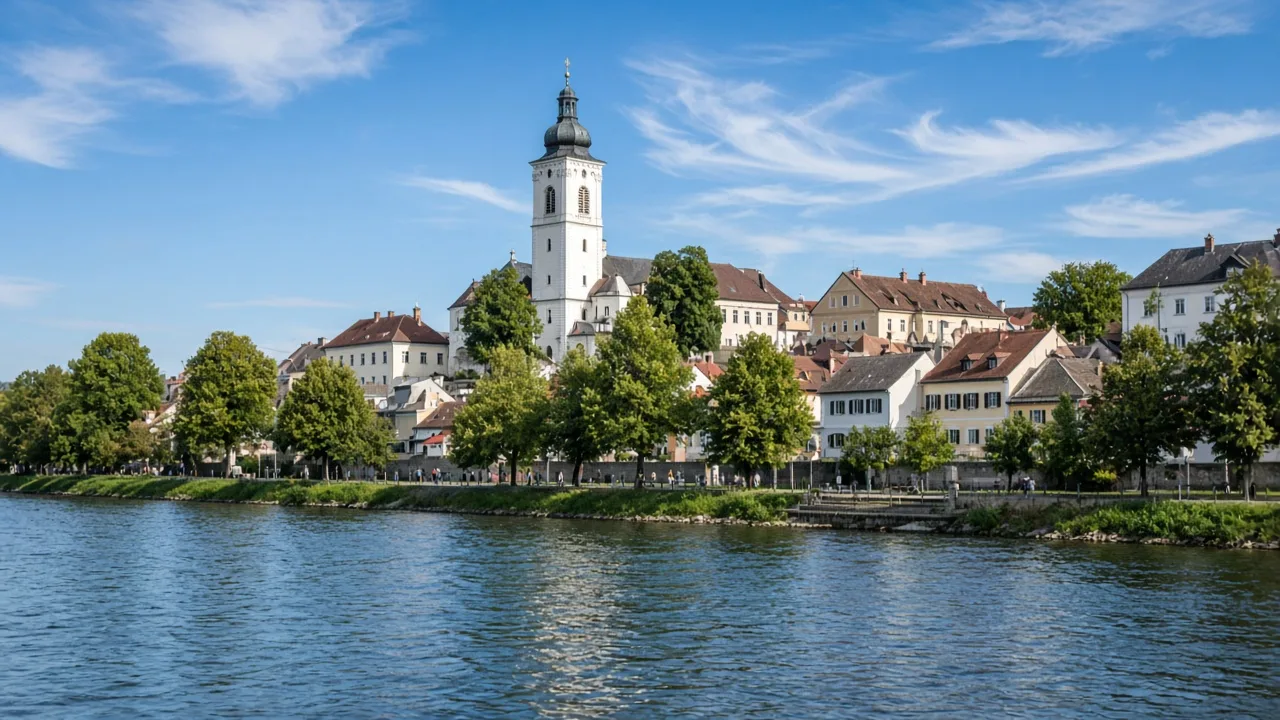
An old Roman town on the Danube west of Vienna, known as the 'flower city' for its long riverside gardens and as the birthplace of the painter Egon Schiele, with a fine main square and a 13th-century Roman tower.
Tulln appears in the medieval Nibelungenlied as the court of Attila the Hun, a legend that gives the Danube town a mythic place in the story of Siegfried.
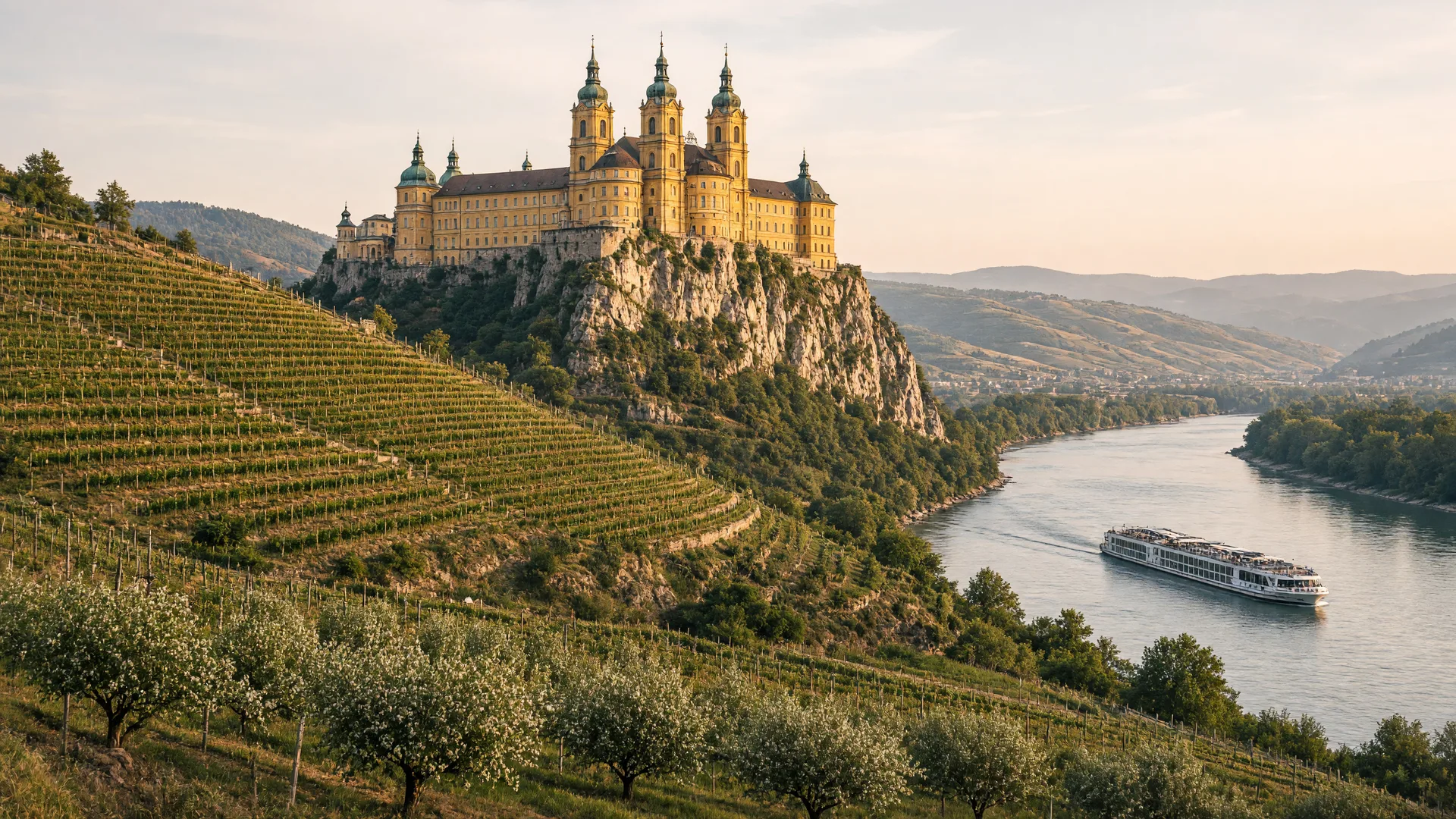
A small town in the Wachau Valley whose colossal golden abbey crowns a bluff above the Danube, the most photographed stop on the classic Vienna-to-Passau route.
The abbey's golden color is not gold at all: the yellow ocher paint was chosen to make the building glow against the green hills, and it is so effective the abbey seems to shimmer in the sun.
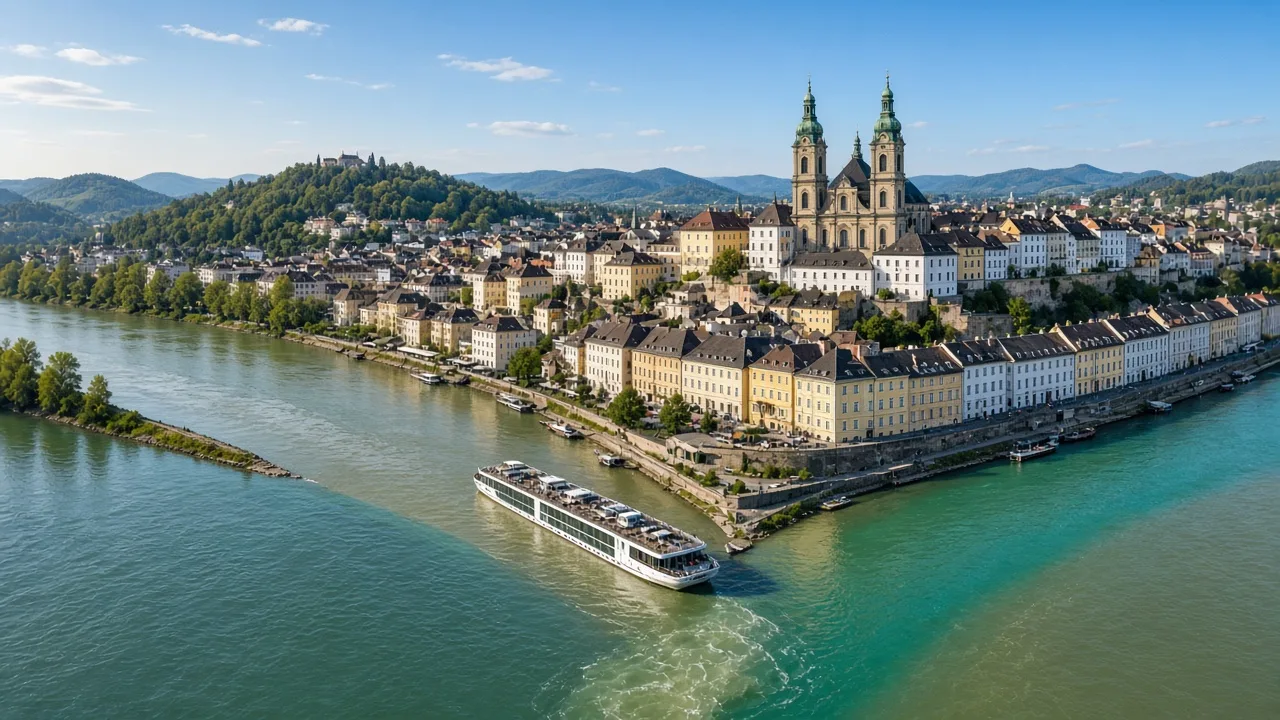
The 'City of Three Rivers,' where the Danube, Inn, and Ilz meet, a baroque old town that is the classic starting or ending point for Danube cruises.
The organ in St. Stephen's has about 17,774 pipes and is played in daily concerts, making Passau one of the few cities where you can hear one of the world's great organs on any given day.
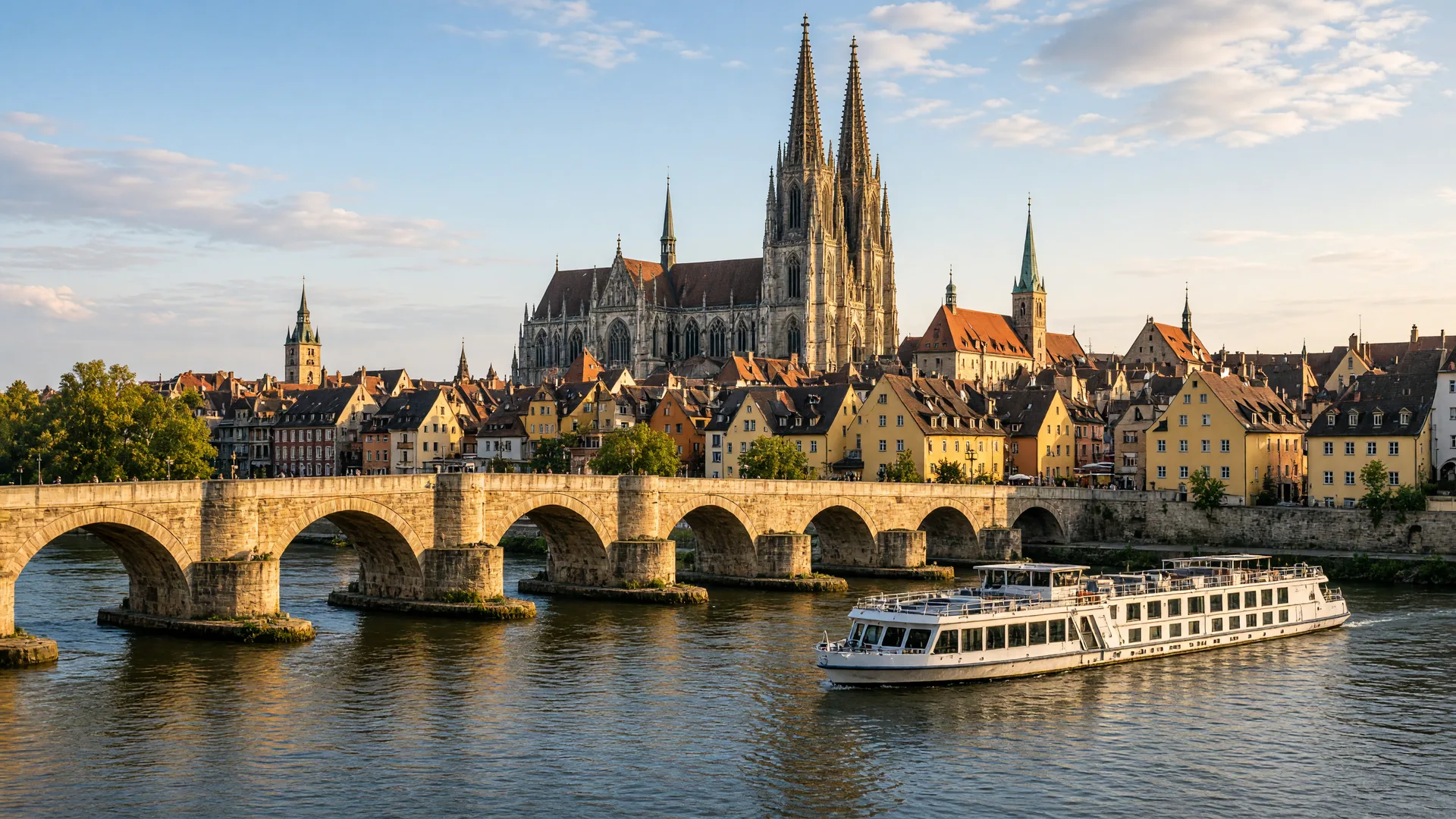
One of Germany's best-preserved medieval cities, on the Danube at the mouth of the Regen river, whose stone bridge and ancient center are a UNESCO World Heritage site.
Legend says the bridge's builder made a pact with the devil, who demanded the first three souls to cross; the clever builder sent a rooster, a hen, and a dog instead.
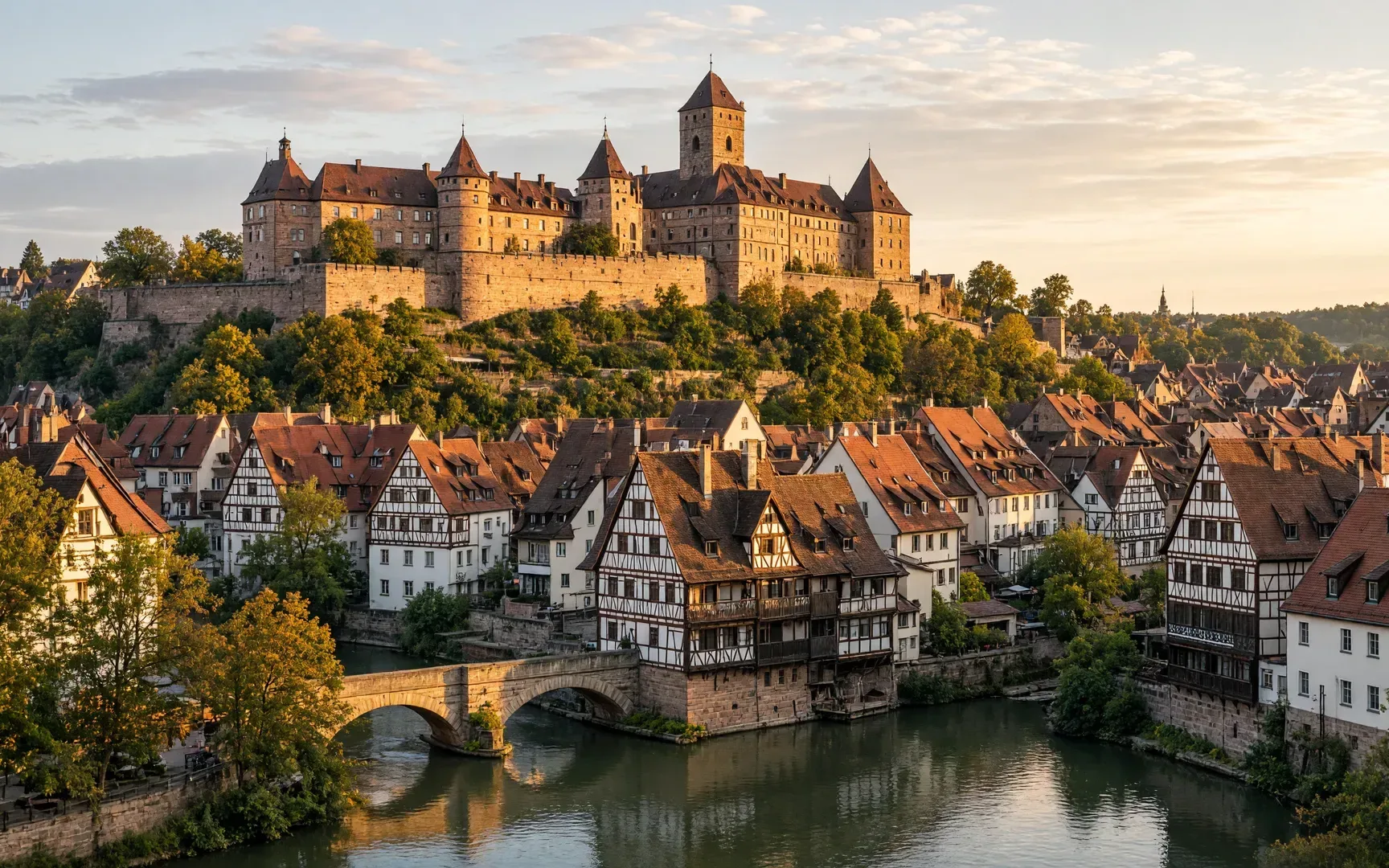
A great imperial city on the Pegnitz, linked to the Danube by the Main-Danube Canal, where a hilltop castle watches over one of Germany's richest medieval old towns.
The city's famous gingerbread, Nürnberger Lebkuchen, has been made here since the Middle Ages and is protected by EU law as a regional specialty.
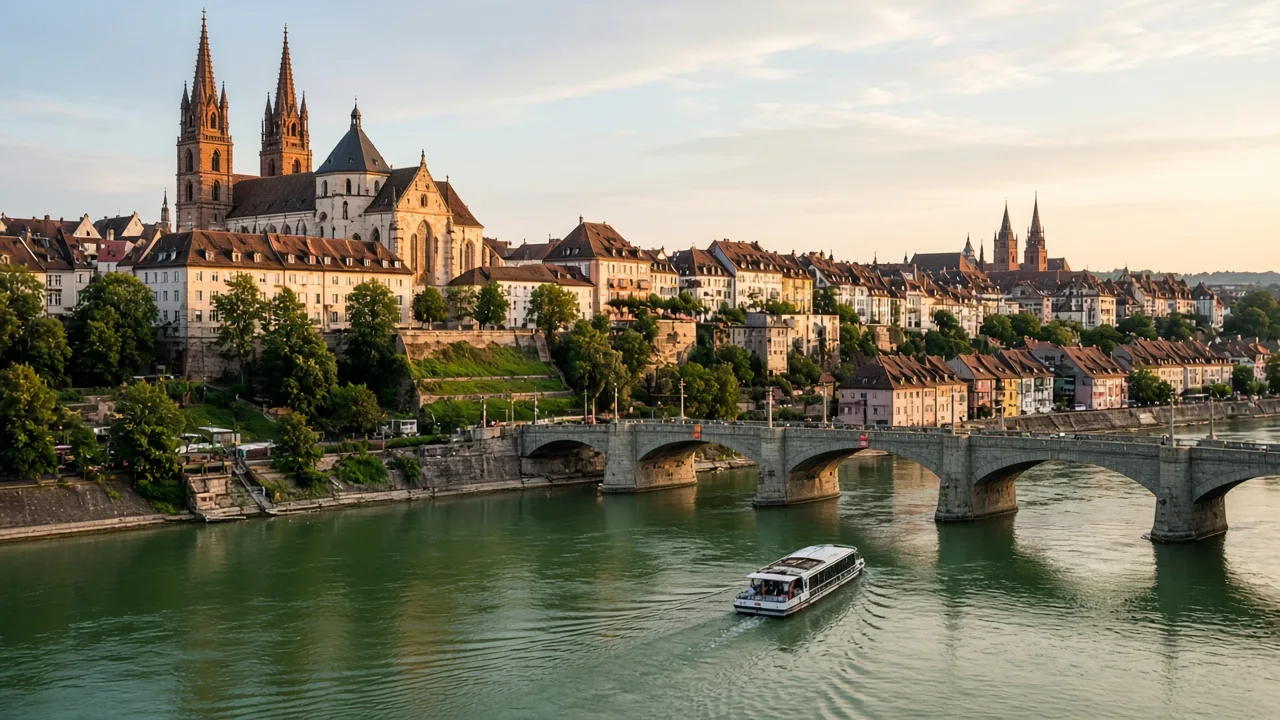
Switzerland's cultural capital on the Rhine, where the river makes a sharp bend around the old town and where many Rhine cruises begin or end.
Basel's historic Rhine ferries have no engines: four small boats are guided across the river entirely by the current and a cable, a tradition dating back centuries.
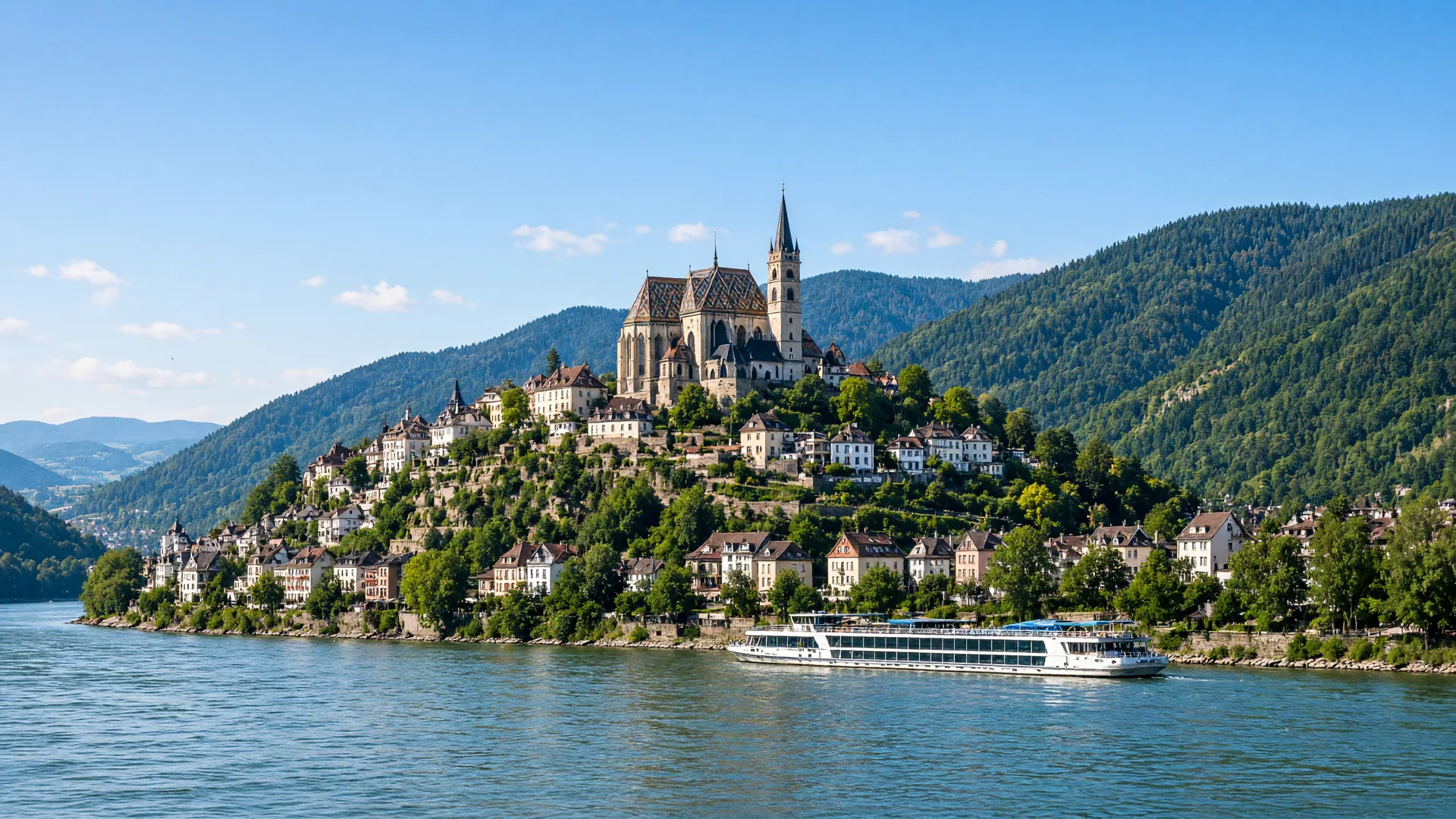
A hilltop town on the Rhine where Germany, France, and Switzerland meet, the standard gateway to the Black Forest and one of the Rhine's most striking silhouettes.
Breisach claims the oldest church bells in Europe: the cathedral's 'Hosanna' bell was cast in the 1200s and still rings today.
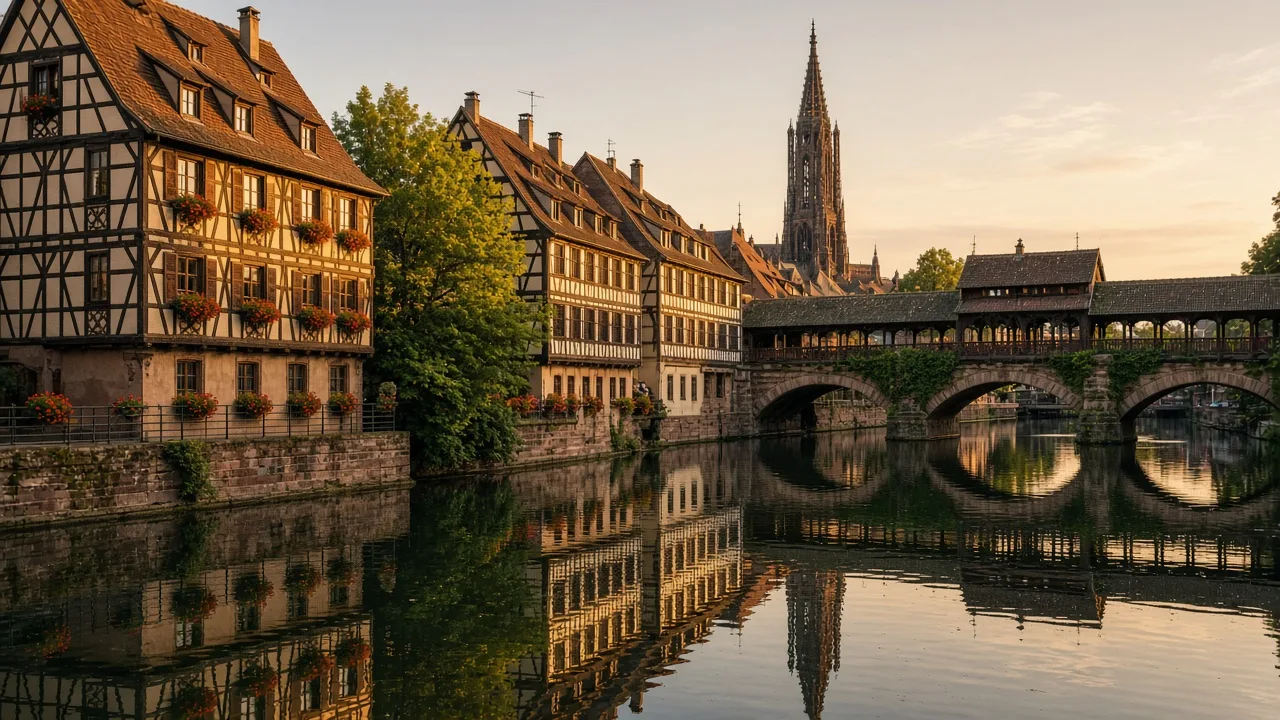
A French city with a German soul on the Rhine border, whose cathedral and half-timbered Petite France quarter make it one of the most photogenic calls on any Rhine itinerary.
The cathedral's astronomical clock draws crowds every day at 12:30 when its figures move, but the clock has been running continuously since 1842, making it a working masterpiece of 19th-century mechanics.
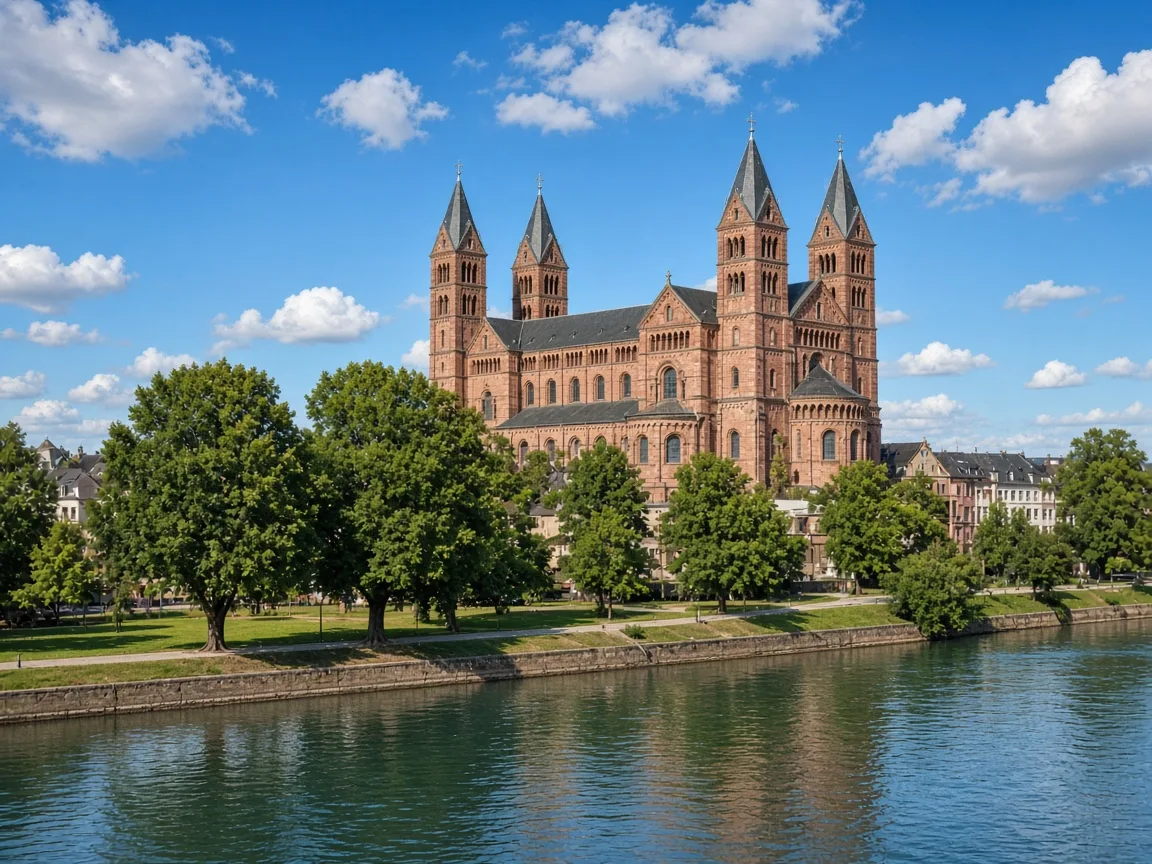
One of Germany's oldest cities, whose four-towered Romanesque cathedral is the largest of its kind in the world and the burial place of emperors of the Holy Roman Empire.
When French troops burned Speyer in 1689, the cathedral survived only as a gutted shell; its new west end, added in the 18th century, is still visibly different from the Romanesque original.
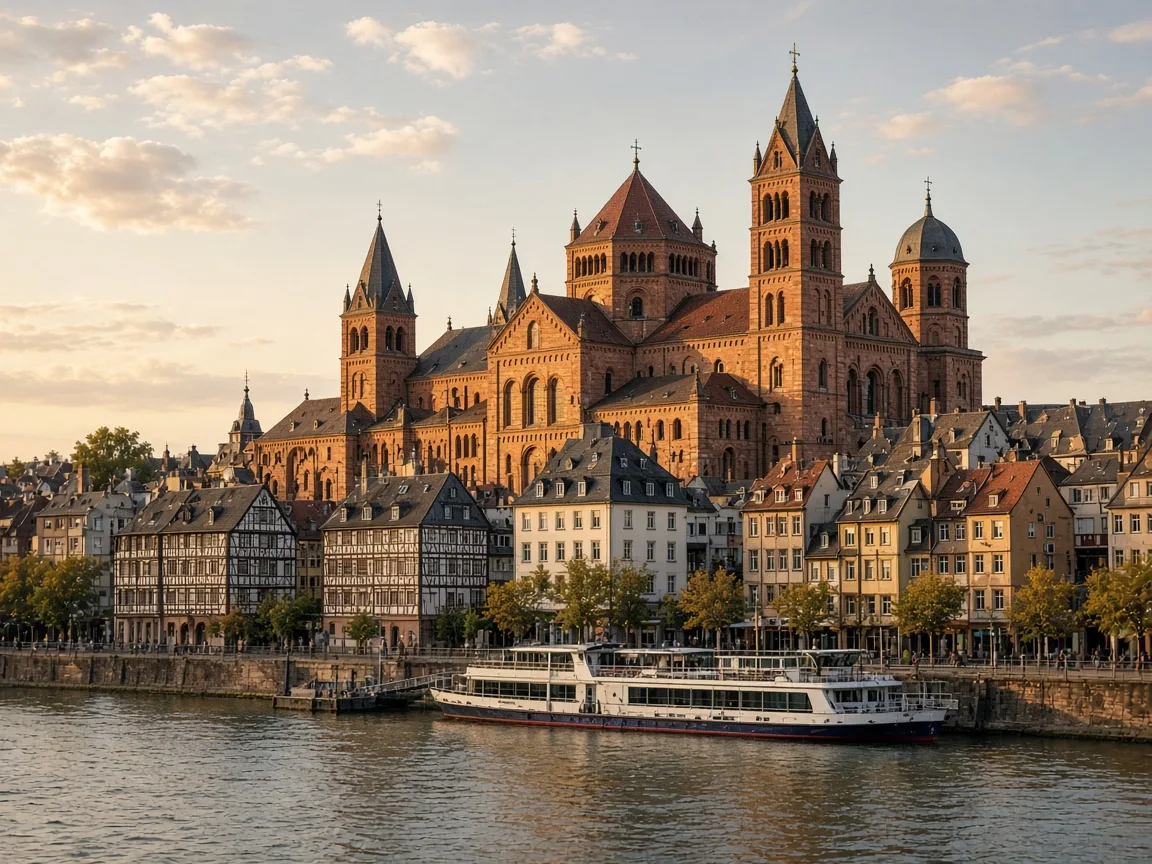
The Roman-founded capital of Rhineland-Palatinate where the Main joins the Rhine, a 2,000-year-old city of the red sandstone cathedral, Gutenberg's printing revolution, and riverfront promenades.
Mainz Cathedral was destroyed by fire on the very day of its consecration in 1009, and the city spent much of the Middle Ages rebuilding it after a series of fires.
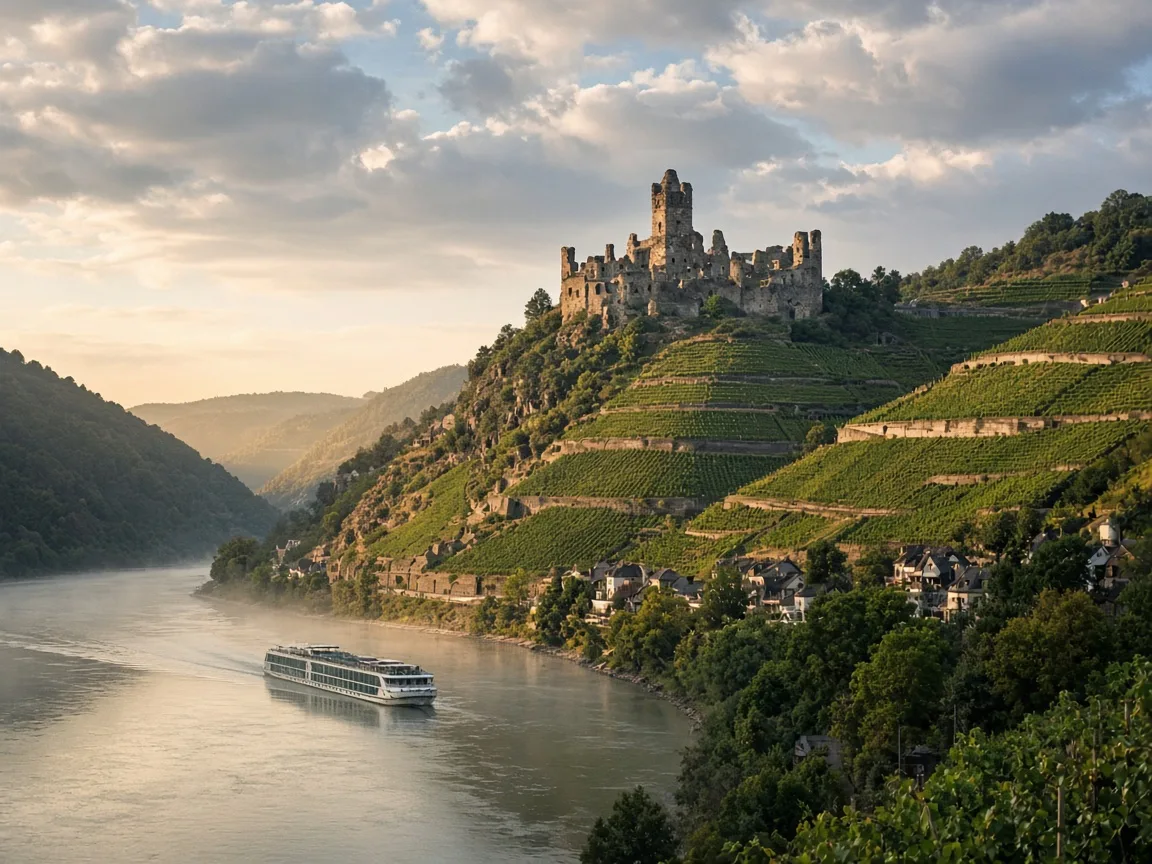
The scenic heart of the Rhine, a UNESCO-listed stretch of river between Rüdesheim and Koblenz where castle after castle crowns the steep, vineyard-terraced slopes.
The Loreley rock is famous for a seven-fold echo, and the legend of the siren who lured boatmen to the rocks was popularized in Clemens Brentano's 1801 ballad.
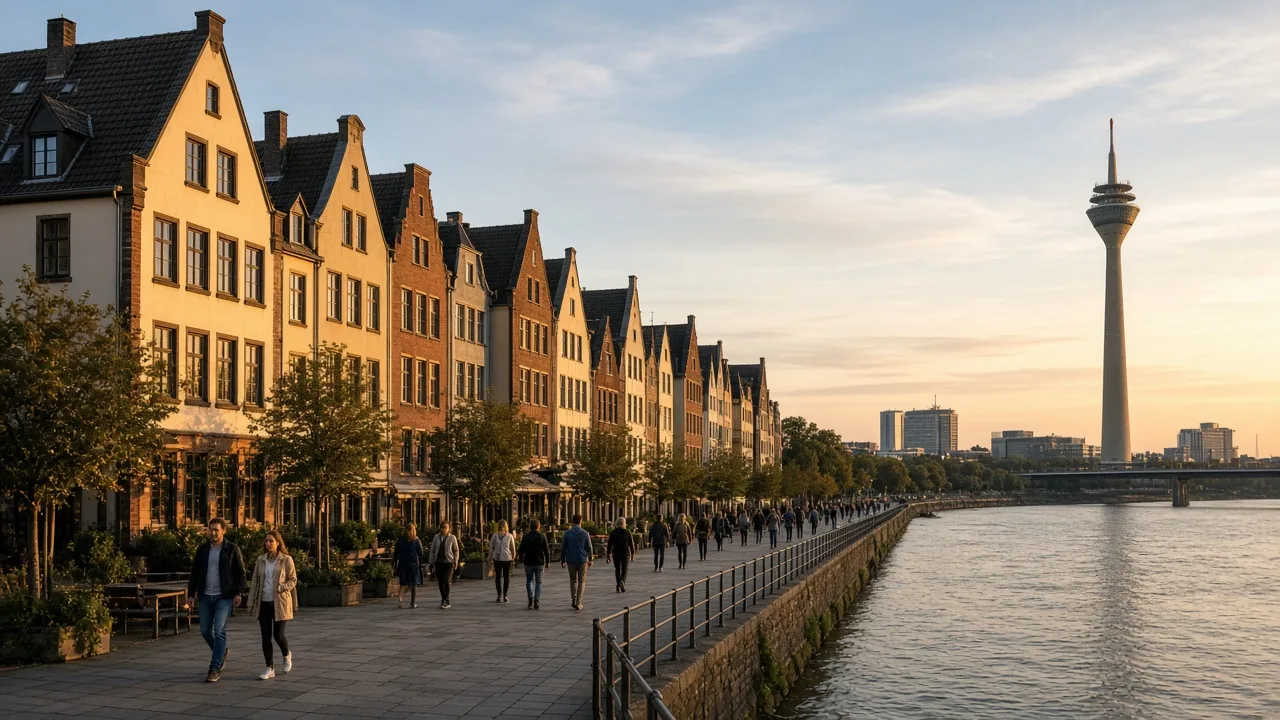
The capital of North Rhine-Westphalia and one of Germany's richest cities, whose Altstadt, dubbed the 'longest bar in the world', and the modern Medienhafen skyline give Rhine cruisers a stylish big-city stop.
Altbier, the Altstadt's signature beer, is a top-fermented ale that the city treats as civic pride: it may only be brewed within Dusseldorf's city limits.

The Dutch capital and the classic starting point for Rhine and Moselle river cruises, where gabled canal houses, museums, and houseboats line waterways that predate the streets.
Amsterdam's canals were never meant to be scenic: the rings of water were dug as defensive moats and drainage works in the 1600s, and the gabled warehouses along them were built for trade, not beauty.
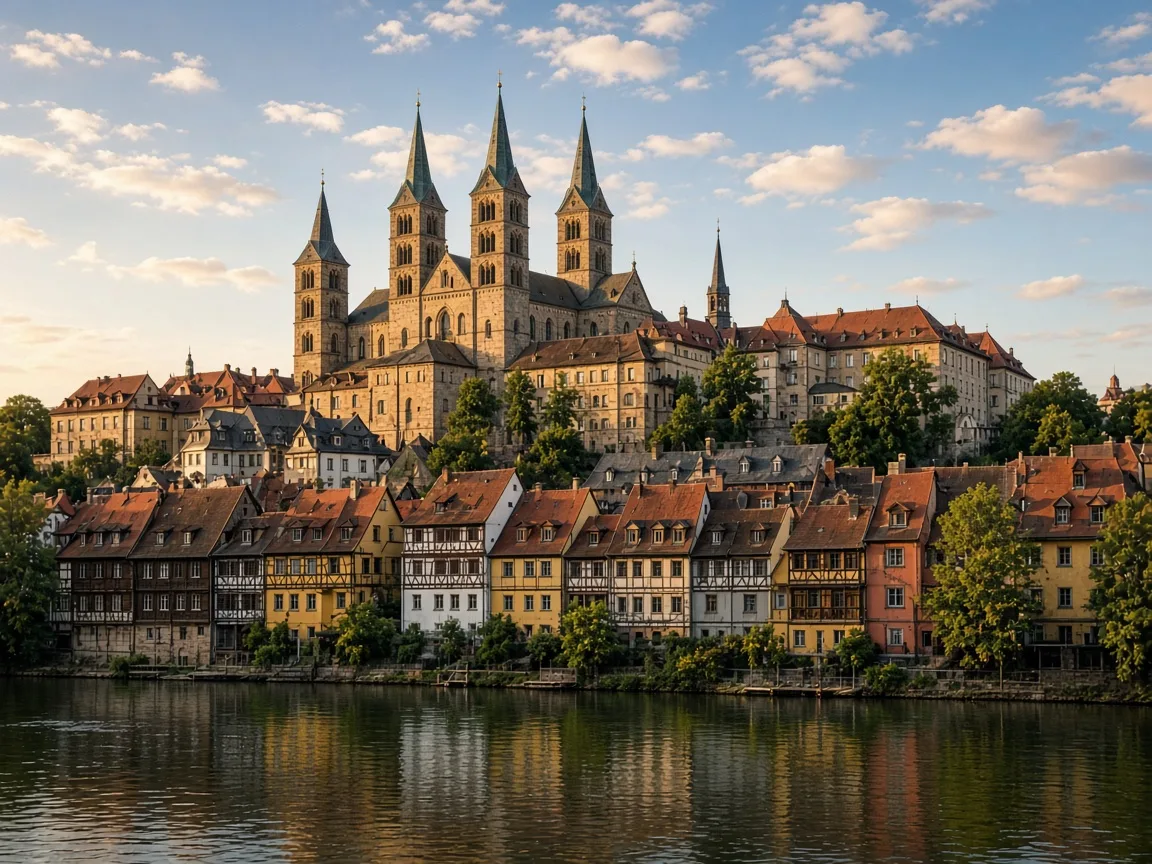
A UNESCO old town built across seven hills and the rivers Regnitz and Main-Danube Canal, famous for the four-towered cathedral, smoked beer, and the Little Venice quarter of old fishermen's houses.
Bamberg's Old Town Hall sits on an artificial island because the prince-bishop was forbidden to build in the citizens' part of town, so the city raised a bridge-house instead.
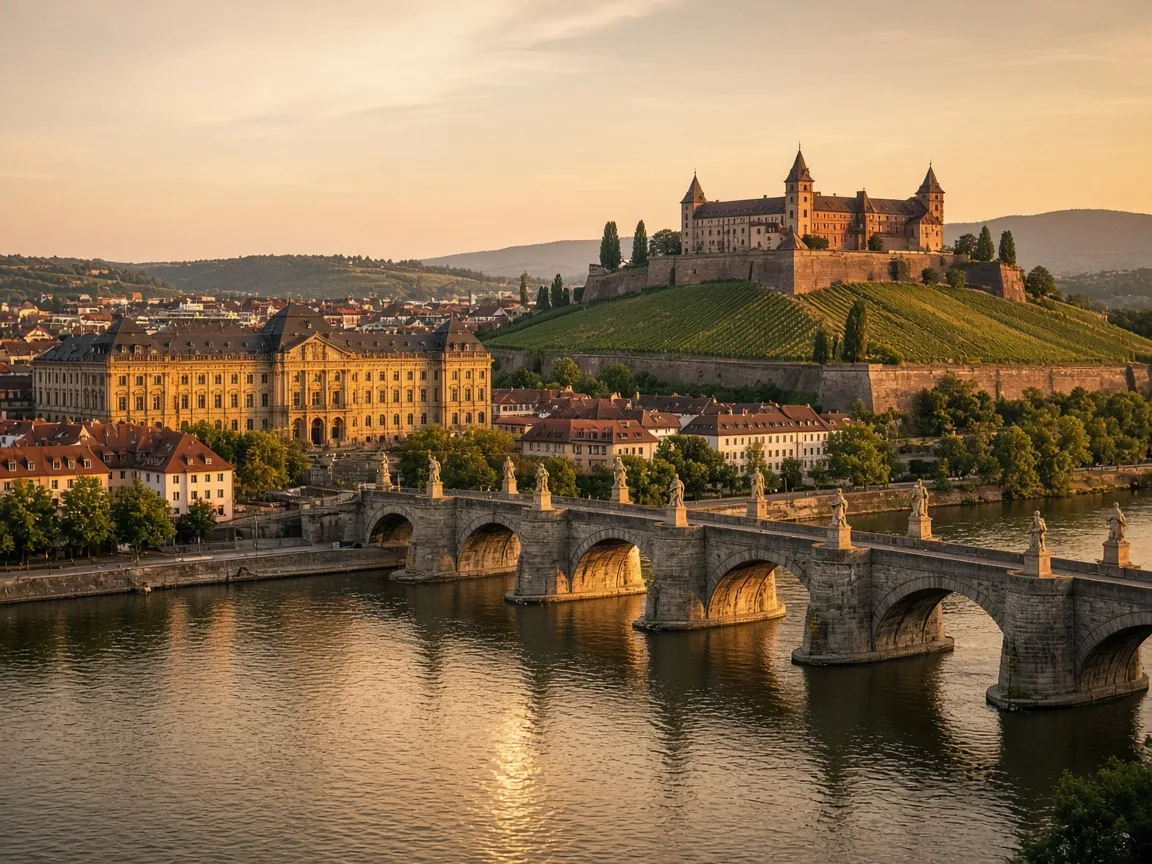
A baroque city of Franconian wine on the Main, where the UNESCO-listed Residence, the Marienberg Fortress, and the statue-lined Old Main Bridge make one of Germany's most beautiful riverfronts.
Tiepolo painted the Residence's 600-square-meter staircase ceiling in the 1750s, and it remains one of the largest continuous frescoes in the world.
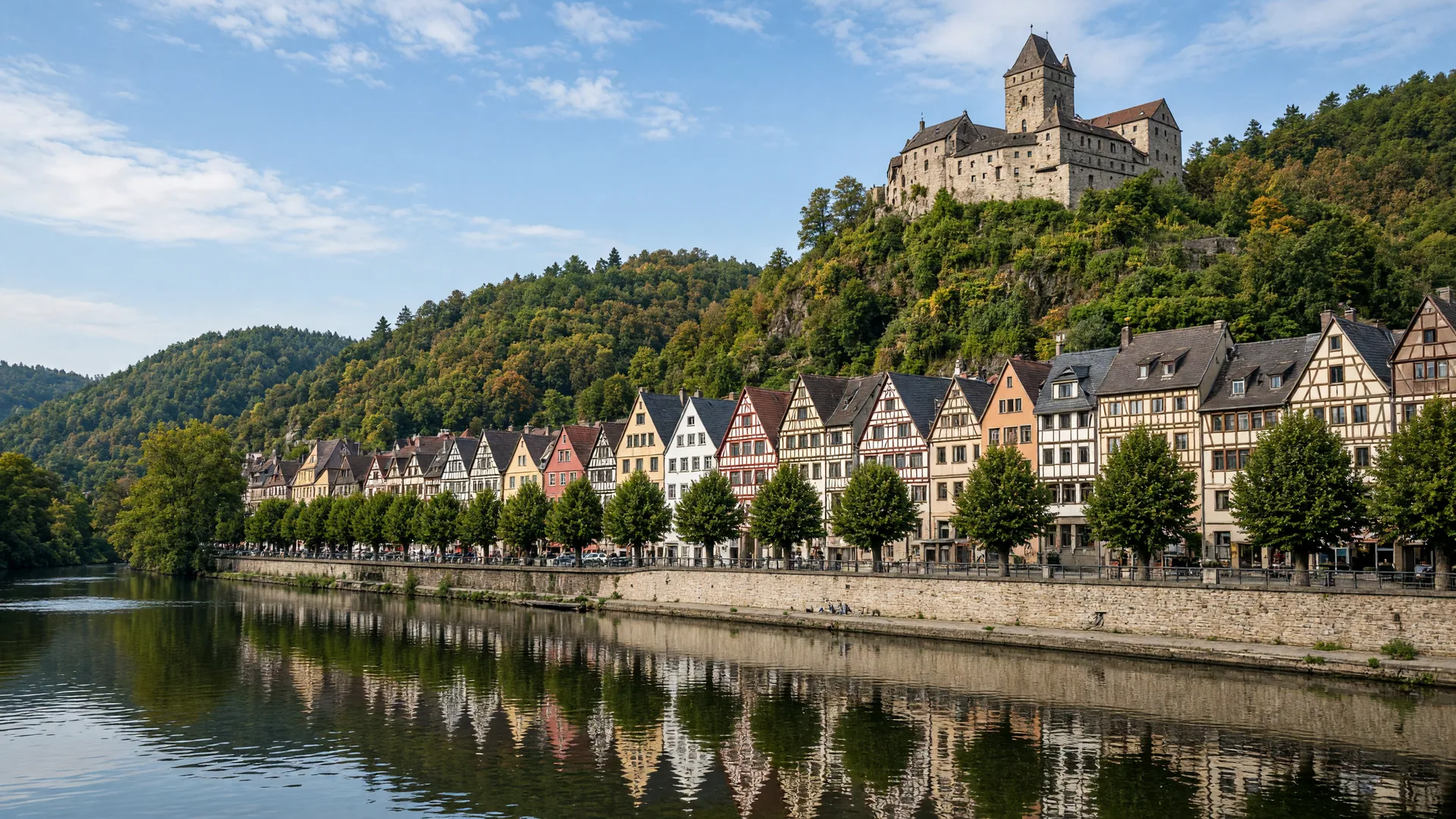
A half-timbered town on the Main at the foot of the Spessart hills, whose picturesque market square, riverside promenade, and hilltop castle make it one of the most photographed river stops in Germany.
The Hotel Zum Riesen was first mentioned in documents in 1411 and claims to be among the oldest inns in Germany, with a guest list that legend says includes Emperor Frederick Barbarossa.
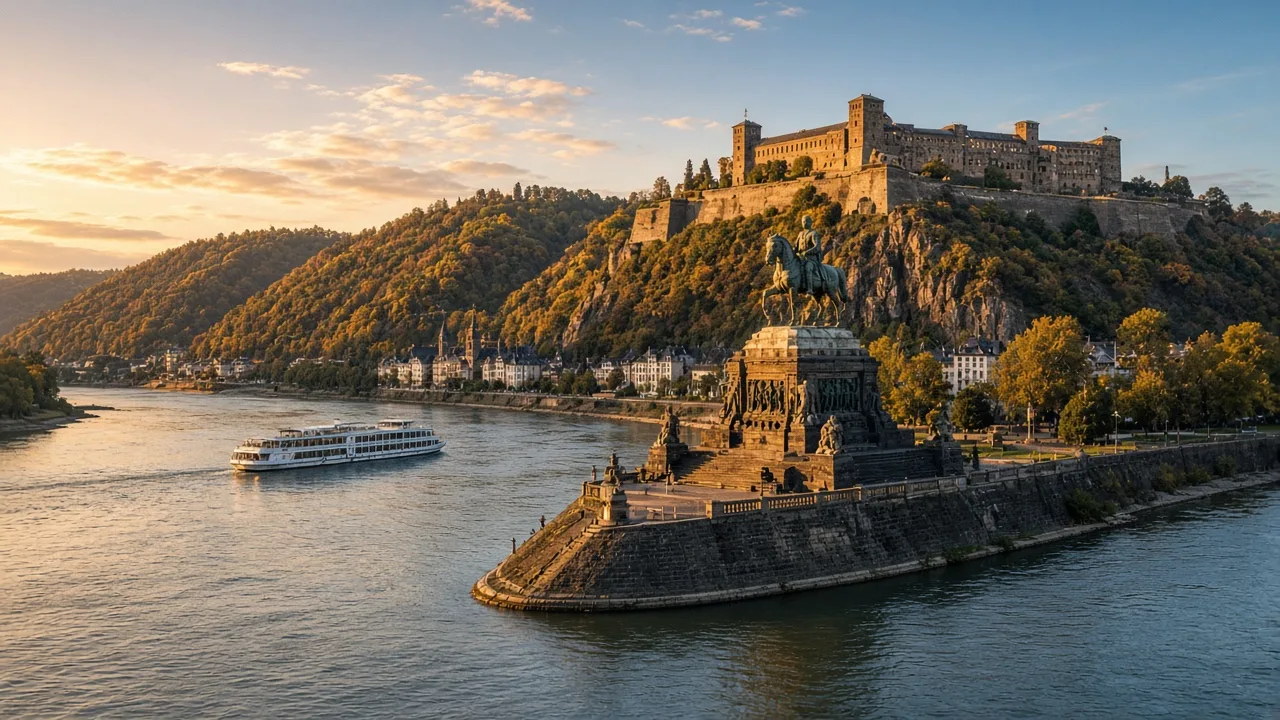
The city at the German Corner, where the Moselle joins the Rhine, a 2,000-year-old river crossroads and the gateway to both the Rhine Gorge and the Moselle wine valley.
The cable car is not just a tourist ride: it carries around 400,000 passengers a year and was built partly to serve the fortress's grounds on the far bank.
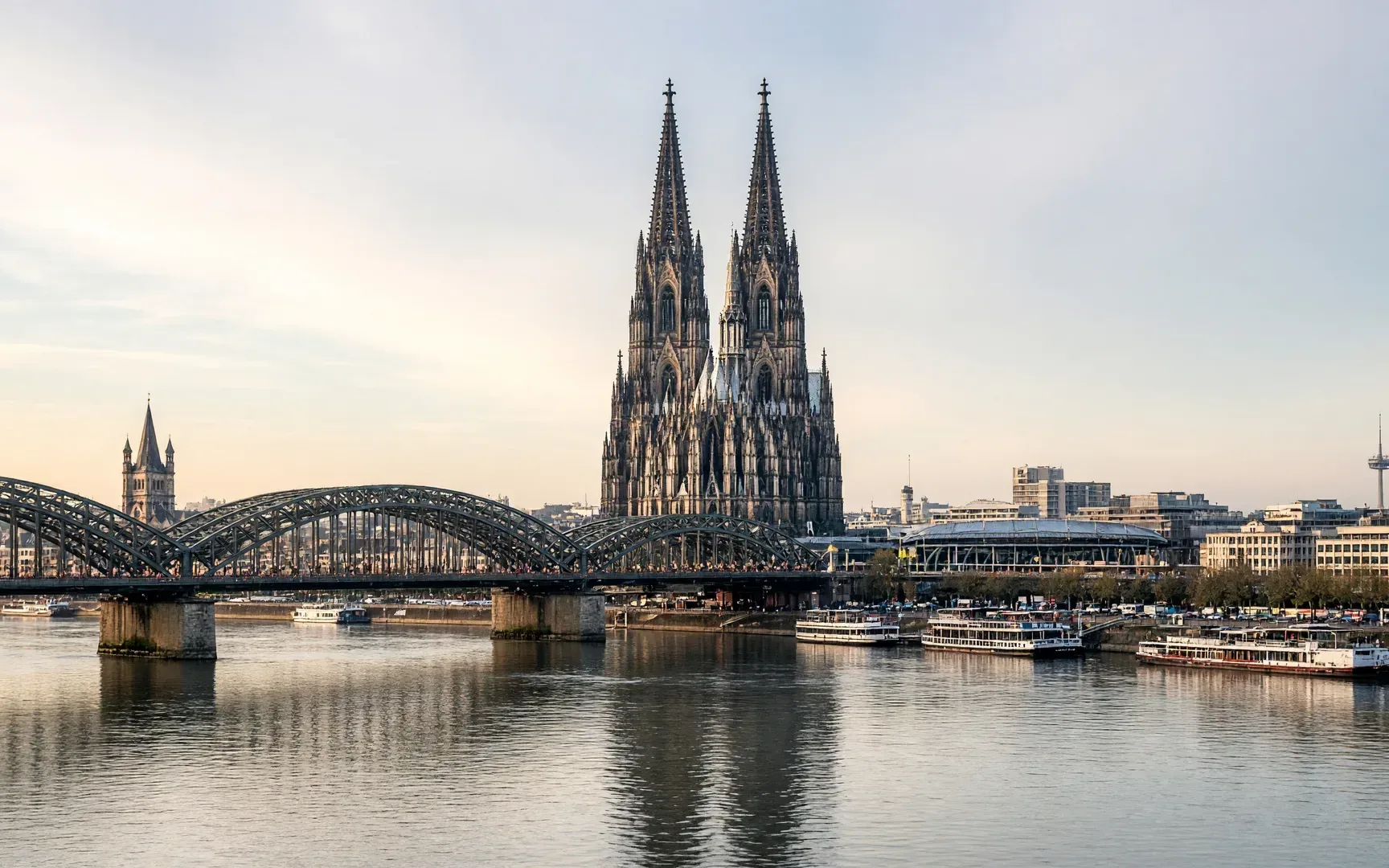
The Rhineland's great cathedral city and the largest city on the Rhine, where the twin spires of the Dom rise over a Roman-founded old town and a lively riverfront of pubs and museums.
The cathedral was built to hold the relics of the Three Kings, which arrived from Milan in 1164, and the golden shrine that houses them still draws pilgrims to the high altar.
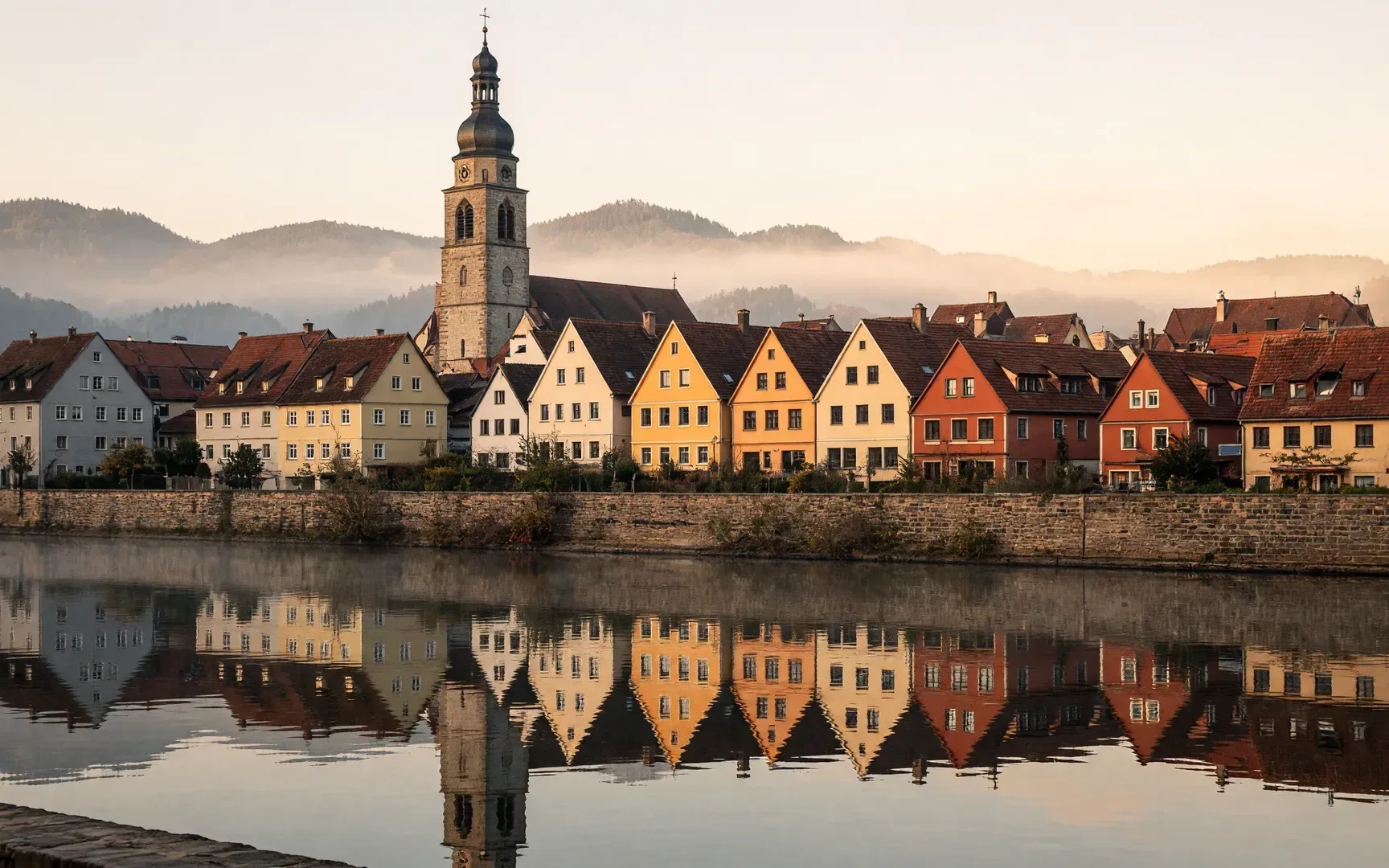
A small wine town on the Main in Lower Franconia, where the gabled houses of the old town climb from the riverside quay toward the vineyards and forests of the Steigerwald, a quiet stop on sailings between Nuremberg and the Rhine.
Eltmann's riverside quay is deliberately low and long: Main cruise ships and cargo barges share a river narrow enough that the town's boats, vineyards, and gabled houses all sit within sight of one another.